Santa Maria-Bonita’s Title IV Community Survey Closes Soon

Jarrod Zinn

SANTA MARIA, Calif. (KEYT) – Parents of Santa Maria-Bonita School District students, campus staff, and community members still have time to help the district shape the future of education.

The community survey for Federal Title IV funds ends this week.

The district is seeking direct input from the community on specific allocations for Title IV funds, which have a narrow focus on health and safety, well-rounded subjects, and effective technology.

In January, your News Channel reported on a similar community survey known as LCAP, which is broadly focused on all district funding for a three-year period.

This Title IV survey is narrowly focused on allocations that provide access to enriched learning experiences and widely ranging subjects in safe and healthy conditions, utilizing technology effectively.

In previous years, the community input from this survey has resulted in the purchase of updated digital technologies designed for higher student engagement.

In addition to your own input, the survey has a function to add emphasis to input from others, allowing the district to determine levels of priority for various issues.

District staff say these surveys are not only critical, they’re invaluable for them to know what’s really important to all parties including parents and the community.

The survey is available on the district’s website which can be accessed by clicking here, and it remains active until this Friday.

The Latest Breaking News, Weather Alerts, Sports and More Anytime On Our Mobile Apps. Keep Up With The Latest Articles by Signing Up for the News Channel 3-12 Newsletter.

Click here to follow the original article.

Fires burn across Colorado, including 350 acres on Fort Carson

Mackenzie Stafford

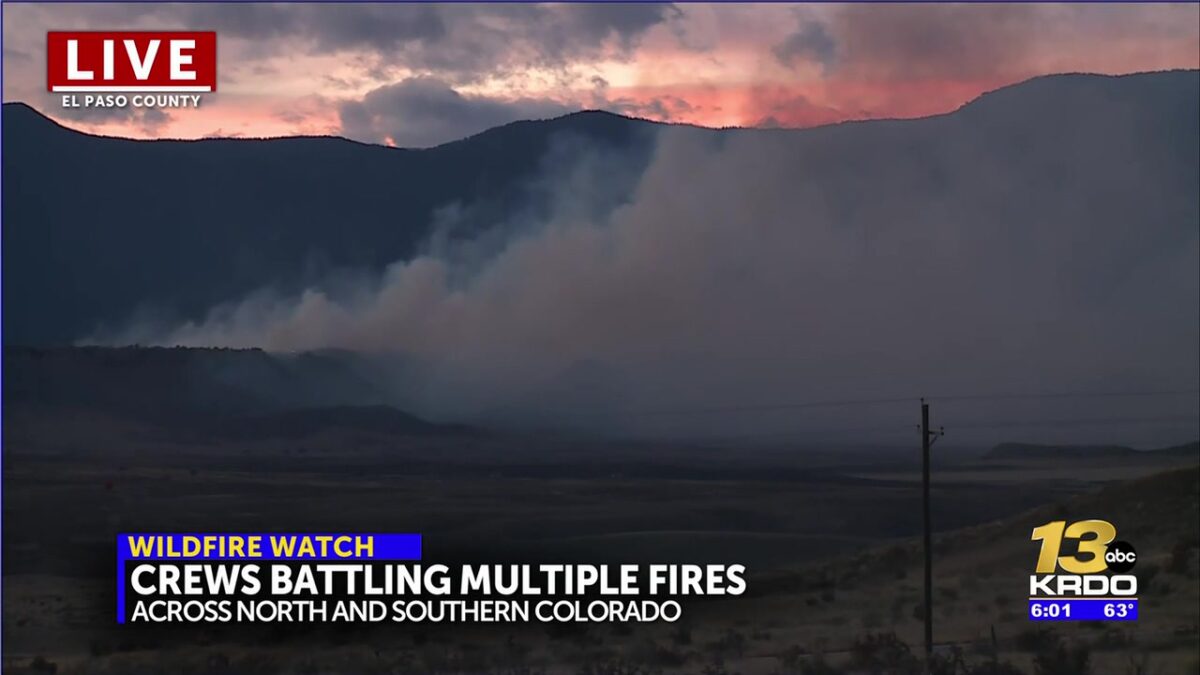
EL PASO COUNTY, Colo. (KRDO) – Across southern Colorado, firefighters are keeping a close eye on elevated fire danger due to weather conditions, including here in El Paso County.

Fort Carson officials confirmed to KRDO13 that there is a fire within Fort Carson’s training area. If you are driving along I-25 or Highway 115, a Fort Carson spokesperson tells us you can expect to continue seeing smoke.

On post, officials say the Fort Carson Fire Department is actively responding and receiving assets and support from city and county partners.

A Fort Carson spokesperson said no injuries have been reported and no infrastructure has been impacted by the approximately 350-acre fire.

This is not the first time a fire has caused smoke to be visible from Fort Carson.

According to the National Weather Service (NWS), a Red Flag Warning is in effect for portions of El Paso County, including Fort Carson. The warning is expected to expire at 5 p.m. Feb. 25. However, another Red Flag Warning has already been issued for Thursday.

The Stormtracker13 Team is also keeping a close eye on strong wind gusts through around 9 p.m.

Two other fires burned in Colorado on Wednesday. In Thornton, the police department said Pinnacle High School and nearby businesses have been evacuated. Police say that officers are performing door-to-door evacuations in neighborhoods to the northeast of the fire.

I-25 was shut down near Thornton due to smoke impacting visibility. The highway has since reopened, as fire crews say they have contained the blaze.

As of 2:45 p.m. on Wednesday, a fire has started burning in Logan County. Officials say evacuation orders have been issued for the town of Padroni and the surrounding area.

Click here to follow the original article.

Lincoln University student stabbing suspect has court appearance delayed

Marie Moyer

EDITOR’S NOTE: AI was used in background research for this article.

JEFFERSON CITY, Mo. (KMIZ)

The Lincoln University student-athlete accused of stabbing her boyfriend to death had her initial court appearance moved to Friday morning.

Denita Jackson, a senior sprinter for the school, is accused of killing 23-year-old Kevaughn Goldson, also a senior sprinter, during an argument on Monday.

The stabbing marks the third homicide investigation in Jefferson City since Jan. 1, a spike that local officials described as unusual for the community.

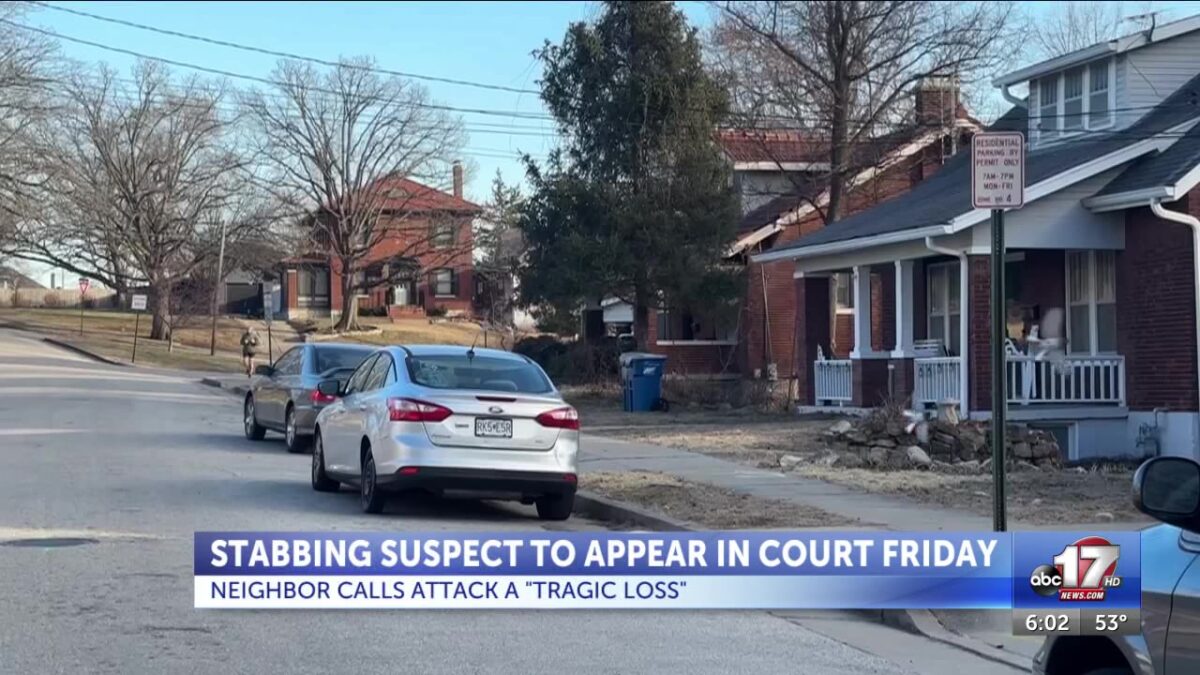
“We had drug dealing, so we would have policemen there, but we have never had a homicide in this street,” neighbor Carolyn Saucier. “In all those years, I felt safe in the evenings, I felt safe at night here, and I still feel safe, but I feel just it’s just weird to know that that happened four doors down.”

Saucier adds that the home where the scene occurred had a history of housing Lincoln University Track students. She called the attack “tragic.”

“It changes the neighborhood in a way, everybody knows what happened in that house,” Saucier said, I think the impact on us is just beginning, and think about the impact on Lincoln University, the track team.

According to court documents, Jackson told police she believed Goldson was having an affair with one of her roommates.

The night of the attack, Jackson had left for work late Sunday but returned home from work early Monday morning and found Goldson and a witness in the bed after using a hairclip to unlock a roommate’s door.

Jackson allegedly jumped onto the bed and grabbed Goldson by his shirt. She told investigators that Goldson kicked her in the stomach and started to choke her. Jackson then grabbed a knife from under the witness’s bed and stabbed Goldson in the back and chest, according to court documents.

After the incident, Jackson called 911 to report the stabbing. Goldson was taken by helicopter to University Hospital, where he died during surgery.

Criminal defense attorney T.J. Kirsch reviewed the case’s probably cause statement filed by Jefferson City Police to give his legal perspective on the attack.

Kirsch said it is too early in the case to predict how the defense and the state plan to take on the suit. Jackson could potentially claim self-defense however, her allegedly initiating the fight may harm the argument.

“There has to be evidence that the person reasonably believed deadly force was necessary to prevent serious physical injury, death or the commission of a forcible felony,” Kirsch said. “Somebody who is an initial aggressor, they can still claim self-defense if they made their intentions clear to retreat or to try to end the conflict.”

Kirsch adds that the decision would also be up to a jury.

Past histories of domestic issues may also be brought to court if the judge allows the evidence.

Jackson is being held in the Cole County jail without bond. Her arraignment is at 10 a.m.

ABC 17 News reached out to Lincoln University and the school’s athletic department but did not hear back.

Click here to follow the original article.

Amur Leopard Demonstration Brings Regional Wildlife Experts to Santa Barbara

Patricia Martellotti

SANTA BARBARA, Calif. (KEYT) – The Santa Barbara Zoo is hosting top animal care teams Wednesday for a hands-on workshop dedicated to advancing animal welfare.

Experts from the Los Angeles Zoo, San Diego Zoo Wildlife Alliance, and The Living Desert are coming together to share science-based strategies that improve care across the region.

Tamur, an Amur leopard, will take center stage with a live enrichment demonstration designed to engage his natural hunting instincts.

The event highlights a growing regional effort to exchange knowledge, tools, and techniques that strengthen animal welfare in Southern and Central California zoos

The Latest Breaking News, Weather Alerts, Sports and More Anytime On Our Mobile Apps. Keep Up With the Latest Articles by Signing Up for the News Channel 3-12 Newsletter.

Click here to follow the original article.

Santa Barbara County Search & Rescue Actively Recruiting To Continue To Be Ready Around The Clock

John Palminteri

SANTA BARBARA COUNTY, Calif. (KEYT) – The Santa Barbara County Search and Rescue team is actively recruiting to increase its members and to be ready to respond to a variety of call outs at any hour of any day.

This could be in the regional area or with other another county’s needs on a mutual response basis.

The all-volunteer Search and Rescue team is often called to local trails for injured or missing hikers. They are used during fire and flood emergencies to reach properties and assess public safety risks or help with evacuations. They have also been used for evidence searches.

The team goes through regular training in all weather conditions including swift water rescues and rope rescues over bridges and on rock formations.

It’s a rapid response team working closely with fire departments, AMR and the Sheriff.

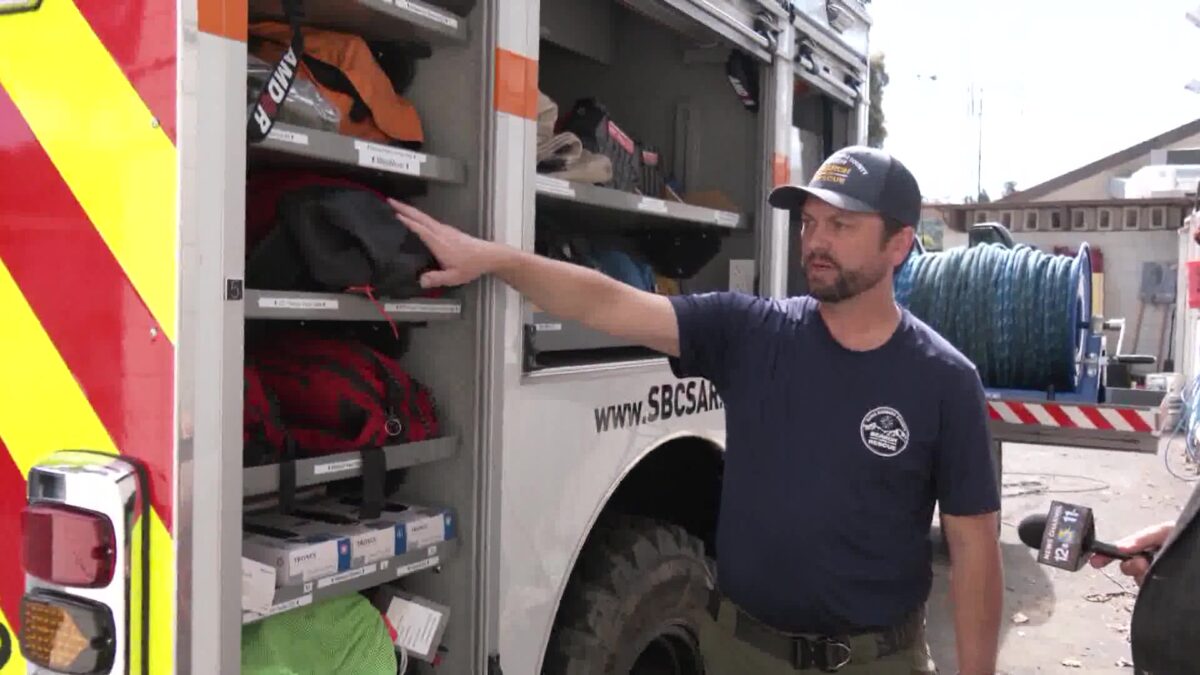
The responders have a fleet of vehicles, fully loaded with gear, safety equipment and supplies for victims they encounter. There is also a full set of communications equipment and authorized connections with other front line agencies via two-way radios.

“You want to help out those people in desperate need and make sure that they come home, to their loved ones, ” said Jason Copus with Santa Barbara County Search and Rescue. “When you do the job and you did it well, and you got somebody home or the medical care that they needed, you know, that you did exactly what you’re trained to do and why you did it.”

Search and Rescue has been on call in Santa Barbara County since the 1970’s.

There are three recruitment meetings coming up. (details below.)

To qualify you have to 

Be at least 18 years old

Be in excellent physical shape

Possess a High School diploma

Have a valid drivers license

Be a US citizen or legal resident

Be of good moral character

Be willing to work as part of a team

No felony convictions

Be willing to commit many hours to the team

For more information go to: Santa Barbara County Search and Rescue

Complete outreach from the Santa Barbara County Search and Rescue via Facebook:

Event by Santa Barbara County Search And Rescue

66 S. San Antonio Road, Santa Barbara, CA, United States, California 93110

Duration: 1 hr 30 min

Public  · Anyone on or off Facebook

Santa Barbara County Search and Rescue Opens Recruitment for 2027 Academy

Santa Barbara, CA – Santa Barbara County Search and Rescue (SBCSAR), the all-volunteer, non-profit organization operating under the Santa Barbara County Sheriff’s Office, is now recruiting dedicated individuals for its 2027 academy. For over 60 years, SBCSAR has provided critical 24/7 emergency search and rescue services across the county’s 2,550 square miles and beyond, responding to lost hikers, injured adventurers, swiftwater incidents, technical rope rescues, alpine/snow & ice operations, and more.

Santa Barbara County Search and Rescue is a professional search and rescue team that responds to emergencies throughout Santa Barbara County in coordination with the Santa Barbara County Sheriff’s Office. SBCSAR’s highly trained volunteers deliver compassionate, professional assistance in wilderness, urban, and mutual aid scenarios, often in partnership with fire departments, U.S. Forest Service, and other agencies.

Santa Barbara County Search and Rescue is seeking individuals who are motivated, reliable, and committed to long-term community service. Membership requires a significant time commitment, beginning with a rigorous academy and continuing throughout a member’s time on the team through training, meetings, and emergency response.

“Being part of SBCSAR is a serious commitment,” said Jason Copus, Recruitment Coordinator for Santa Barbara County Search and Rescue. “Our team trains extensively and responds in challenging environments. Team members gain advanced skills in search techniques, medical response, high-angle rescue, swiftwater operations, human tracking, and more while making a real difference in emergencies. This is not a casual volunteer role. It requires dedication, accountability, and a long-term commitment to serving the community and working as part of a highly disciplined team.”

The 2027 academy is a rigorous six-month program designed to prepare provisional members for the demands of active search and rescue operations. Successful completion of the academy is followed by a one-year probationary period of ongoing training, field experience, and evaluations before full membership.

To apply for the 2027 academy and begin the path to becoming a provisional member, interested individuals must attend one of the upcoming Recruitment Information Meetings. These identical sessions are the required first step: Attendees will learn about team responsibilities, the academy structure, commitment expectations, physical and background requirements, and the full application process. Applications are distributed only at these meetings.

Recruitment Information Meetings (Attend one only – sessions are identical):

Thursday, February 26, 20266:30 p.m. to 8:00 p.m.

Wednesday, March 4, 20266:30 p.m. to 8:00 p.m.

Saturday, March 7, 20269:30 a.m. to 11:00 a.m.

Location for all meetings:Santa Barbara County Search and Rescue66 S San Antonio RoadSanta Barbara, CA 93110

Requirements include being at least 18 years old, in excellent physical condition, possessing a high school diploma and valid driver’s license, U.S. citizenship or legal residency, and a strong commitment to team-based training and operations. The selection process involves application submission, interview by recruitment board, thorough background checks, polygraph, and interviews conducted with the Sheriff’s Department.

These meetings offer an opportunity to meet current members, ask questions, view equipment, and hear real stories from the field. No prior experience is required—just motivation, fitness, and a desire to help others.

Individuals who are interested in serving their community, working as part of a highly disciplined team, and committing to the demands of search and rescue are encouraged to learn more about the recruitment process and what it means to be a member of Santa Barbara County Search and Rescue. The information meetings provide an opportunity to gain a clear understanding of the expectations, training, and long-term commitment required to be part of the team.

For more information, visit sbcsar.org/join or email join@sbcsar.org.

In case of emergency, always call 911.

Contact:Recruitment CoordinatorSanta Barbara County Search and Rescuejoin@sbcsar.org 

See less

The Latest Breaking News, Weather Alerts, Sports and More Anytime On Our Mobile Apps. Keep Up With the Latest Articles by Signing Up for the News Channel 3-12 Newsletter.

Click here to follow the original article.

Better Business Bureau: Creating best passwords for maximum security

Jalen Fong

YUMA, Ariz. (KYMA) – Wireless technologies and the internet have forever changed the way people interact with one another and complete day-to-day activities such as shopping, researching, banking, eating, and communicating.

As more of our lives move online, it’s important to stay alert.

Cybercriminals are always looking for ways to access personal accounts and information. A few smart precautions can go a long way in protecting yourself, and it all starts with a strong password.

Passwords should be different for every one of your accounts that live online, are in the cloud, or are attached to something that retains personal or financial information.

Think about the last time any of your online account passwords were changed. If all of your passwords are the same, are a similar variation of the same password, are too easy to guess, or are easily remembered, it’s time to change them.

According to the Federal Trade Commission, people don’t need to change their passwords as often as they may think; however, ensuring the password is as secure as possible is good practice.

HOW TO CREATE STRONG PASSWORDS AND BEST SECURITY

Think of your passwords as walls. A password or a passphrase should be considered a wall between free access to your personal information and the world. The stronger the wall, the more difficult it is for others to break down. The more walls, the more difficult it is to access the information. Encryption is the easiest way to protect communication between an electronic device and a website or server.

Avoid easy passwords. An example of a weak password is one that is easy to guess information anyone can find on social media sites or through a phishing email or text. A strong password has at least 12 to 16 characters mixed with uppercase and lowercase letters, numbers, and symbols.

Commonly used passwords are your pet’s name, your mother’s maiden name, the town you grew up in, your birthday, your anniversary, etc. Surprisingly, the answers to these common passwords can typically be found online. Even if you don’t consider yourself an active social media or internet user, your information can be found on one forum or another.

Even for passwords that require numbers and letters, some people stick to simple patterns like 0000, 1111, 1234, etc., and you should not be so predictable. Never use the same password for multiple accounts, especially for the most sensitive ones, such as bank accounts, credit cards, legal or tax records, or medically-related files.

Make them creative. Need more creative ideas for different passwords? Can you use song lyrics? Not only is it impossible for hackers to guess what song you are using, but it’s even harder for them to guess which lyrics you’re using.

Use a “passphrase.” Instead of using a single word, use a passphrase. Your phrase should be around 20 characters long and include random words, numbers, and symbols. Think of something that you will be able to remember, but others need help to come close to guessing, such as PurpleMilk#367JeepDog$.

Use multiple passwords. While it may be easier to remember one password for every account, it’s much easier for hackers to break down one wall rather than multiple walls. If hackers can figure out one password, even if it’s to something harmless like your Instagram account, they know the password to every account you own. This includes websites you shop online at, banking accounts, health insurance accounts, and email accounts, you name it.

Use multi-factor authentication. When it’s available and supported by accounts, use two-factor authentication. This requires both your password and additional information upon logging in. The second piece is generally a code sent to your phone or a random number generated by an app or token. This will protect your account even if your password is compromised. Many devices include fingerprint or facial recognition to unlock them, which helps protect any apps on the device if they become lost or stolen.

Consider a password manager. A written list works, but if you’re worried about losing it, type up an electronic list and label it something other than “PASSWORDS.” Keep the list updated, organized, and secret. Avoid keeping the list on the device itself.

You can also use a reputable password manager to create strong, random passwords for you and to store your information. These easy-to-access apps store all your password information and security question answers in case you ever need to remember. However, don’t forget to use a strong password to secure the information within your password manager.

Select security questions only you know the answer to. Many security questions ask for answers to information available in public records or online, like your zip code, mother’s maiden name, and birthplace. A motivated attacker can easily obtain that information. Don’t use questions with a limited number of responses that attackers can easily guess—like the color of your first car.

Wi-Fi is a security concern as well. Check your device settings before surfing the web. Check the validity of available Wi-Fi hotspots. Hackers will set up fake hotspots with the names of stores or institutions you might trust. Be sure all websites you use have “https” at the beginning of the web address. And, install an app add-on that forces your web browsers to use encryption when connecting to websites.

What do I do if I’m notified of a data breach?

If you receive notification from a company about a possible data breach, it is always best practice to immediately change that password, any similar passwords, and passwords to your most sensitive accounts, like bank accounts or anywhere you make payments.

See BBB’s tips on handling a data breach.

Click here to follow the original article.

Drivers feel the pinch as gas prices rise across the state

Luis Avila

COACHELLA VALLEY, Calif. (KESQ) – You may have noticed higher prices at the pump.

According to the American Automobile Association (AAA), within the past month, gas prices have increased by almost 40 cents in California.

Officials say the state’s refinery capacity, environmental regulations, taxes and fees are contributing to the rise.

This comes as state lawmakers introduced a bill on Tuesday to temporarily suspend the state’s gas tax.

Stay with News Channel 3 for more.

Click here to follow the original article.

Idaho Falls man arrested after foot chase leaves deputy with broken arm

Par Kermani

IDAHO FALLS, Idaho (KIFI) — A 29-year-old Idaho Falls man is facing serious felony charges after he led sheriff’s deputies in a foot chase during an attempted traffic stop.

On Feb. 24, the Bonneville County Sheriff’s Office arrested Ryker Thomas Masson on multiple Felony Warrants for Probation Violations, stemming from previous drug-related charges.

Around 4:45 pm, a deputy attempted to initiate a traffic stop on a vehicle Masson was riding in near Broadway and Skyline Drive after recognizing him. Masson fled the vehicle from the passenger side and ran on foot to a nearby alleyway.

Deputies caught up to him when he stopped running. During the chase, officers recovered needles believed to be drug paraphernalia and other items Masson had discarded.

A deputy involved in the initial stop lost his footing while chasing Masson and fell on a concrete curb, breaking his arm. An Idaho Falls ambulance responded to the scene, and the deputy was transported to a hospital for treatment.

Masson was booked on the two outstanding felony warrants and a misdemeanor charge of resisting arrest.

Click here to follow the original article.

Schools continue to work out kinks in new statewide reading test

Emma Epperly

Originally posted on IdahoEdNews.org on February 25, 2026

By: Emma Epperly

Newly released grade-level reading test scores show some hiccups in the rollout of Idaho’s new reading test given to students in grades K-3.

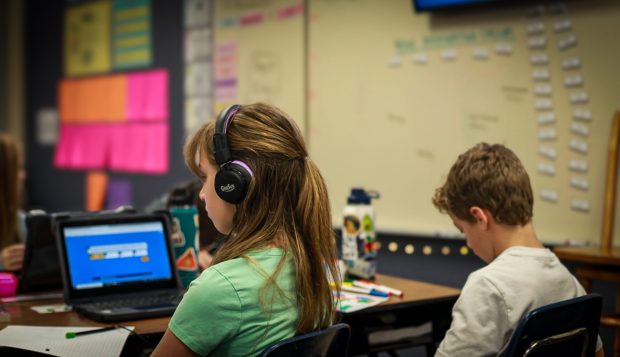
School districts across Idaho are figuring out what works best for testing young students, from headphones to the number of test takers at a time, to what device kids use.

In Boundary County, only 11% of kindergartners scored reading at or above grade-level this fall, the lowest in the state.

That’s due in part to the protective cases on iPads that prevented the testing software from accurately capturing voices,  said Andrea Fuentes, director of curriculum, instruction and assessment at the district.

Scores improved when the district switched students to touchscreen Chromebooks.

The new Idaho Reading Indicator, was given for the first time in October.

The test was redesigned after Istation, the previous test provider, merged with Amira. The old test was multiple choice, while on the new test students read a passage off of a device, which then records and analyzes their response with an AI algorithm.

Idaho Ed News reached out to school districts with variances in proficiency to see if they ran into issues implementing the test. The issues they reported largely had to do with how to administer the test.

“I would say that the rollout was not very smooth for most districts,” said Susan Luke, administrator at Compass Charter.

Still, the Idaho Department of Education says it is confident the scores are an accurate measure of proficiency for most students.

“We have compared them to other school years, and for the most part, they are very similar,” said Kacy Proctor, IRI coordinator at IDE. “Do we have room for improvement? Yes, but it’s the first year of administration.”

More on the fall 2025 statewide results here.

Districts report hardware, testing group size issues

For Boundary County, equipment made an impact on scores, but likely just in kindergarten, Fuentes said.

Students scored proficient or higher in Boundary County at:

11.2% Kindergarten

39.2% First grade

51.4% Second Grade

61.8% Third Grade

Scores improved after teachers fixed the iPad issue.

Gooding: Hindered by iPad tabbing and test-group size

At Gooding Elementary, students from kindergarten through second grade also struggled to take the test on iPads for a variety of reasons, said Principal Brandee Sabala.

The new test is web-based, not in an app like Istation, so students were accidentally clicking out of the tab. They would also rotate the screen, another unforeseen issue.

The largest problem, Sabala said, was getting younger students to speak loudly and clearly enough to register with the program.

“We just found that really difficult for the younger grades to do,” Sabala said.

Students scored proficient or higher in Gooding at:

26.6% Kindergarten

25.3% First grade

39.1% Second grade

71.6% Third grade

While test scores statewide are historically lower in the fall due to learning loss over the summer break, Sabala said the spread between grades in previous years has been narrower.

During training from the state on the test, Sabala was told Amira’s voice detection ability was similar to Amazon’s Alexa speakers, so teachers could test a whole classroom at once if kids were spread out.

But in Gooding, they found it was in students’ best interest to test groups of four to six in the back of a classroom. Teachers then found a quiet activity for the other students during that time.

“It has just been a management thing for teachers,” Sabala said.

About Amira

Istation has been Idaho’s test provider since 2016. In 2024, as Istation merged with Amira Learning, the combined company was selected to administer the Idaho Reading Indicator for another 5 years.

The 2025-26 year is a pilot year, so Amira will not receive any funds, but for each following year the company will be paid $650,000.

Learn more about Amira here.

Learn more about standardized tests here.

Compass: Preparation produced results

When Susan Luke, K-12 administrator at Compass Charter, learned that the new Amira test would require a large speaking component, the school began practicing with iStation’s little-used speaking portion.

That led to the idea of purchasing headsets with microphones for all students to help the program better capture students’ voices.

“That has made a big difference in the accuracy piece,” Luke said.

The school tests half of a class at a time while the other half does a digital assignment. Students from kindergarten through second grade used iPads while third graders used Chromebooks. Luke plans to transition second graders to Chromebooks in the spring after they have learned more keyboarding skills.

Students scored proficient or higher at Compass:

62.6% Kindergarten

75.8% First grade

88.3% Second grade

89.1% Third grade

While the physical gear did help, Luke also attributes the school’s above-average scores to its curriculum, which includes reading throughout the day and focuses on choral reading over students silently reading to themselves.

Teachers also focus on reviewing skills as they build upon them. Those skills include a heavy focus on learning norms at the start of the school year, including digital ones like “think before you click,” Luke said.

Luke agreed with other educators that having Amira only available in a web browser was “unhelpful.”

Luke said that IDE did a good job of addressing issues this fall, but thinks the test scores weren’t as accurate as they could be.

West Ada: Helped by new equipment, teacher training

In West Ada, the state’s largest school district, students completed a practice assessment in September.

Then staff worked out bugs, like having to restart computers or issues with headphones, ahead of the assessment reported to the state in October, said Rhonda McDonough, chief academic officer of teaching and learning.

All students used headphones and the majority used laptops, a small number used Chromebooks.

“We don’t want the equipment to be the variance,” McDonough said.

The district bought 8,845 headsets for this school year for $173,986. Each headset cost $19.50. Some students muted and unmuted their microphone during the test, impacting the results, which led the district to spend an additional $6,500 for capsules to cover the mute button.

The district guidance is to test whole classes at once unless a student has an accommodation that requires small group assessment.

Like other districts, West Ada is in the learning stage, McDonough said. The team met with Amira directly and department of education leaders to learn more about analyzing their data, especially in the new system.

“I think we’re at an advantage because we have such a huge data set,” McDonough said.

Students scored proficient or higher in West Ada:

66.5% Kindergarten

81% First grade

74.4% Second grade

80.3% Third grade

The district rolled out its own phonics curriculum last year for Kindergarten teachers, based on the science of reading research.  Last spring, that resulted in IRI scores over 80%.

McDonough attributes high first grade scores this fall to that program, which has since been rolled out to teachers and interventionists for first and second grades.

IDE: It’s “a learning year”

Overall, the challenges that schools faced this fall are an expected part of rolling out a new exam, said Proctor, who coordinates the exam for the Idaho Department of Education.

Hardware issues like headphones and the number of students being tested at once can make an impact, Proctor said.

“I would say the biggest thing we’ve noticed is districts changing headphones,” Proctor said of things that improved scores.

While Amira says that any group size can be tested with or without headphones, schools have reported that students remain calmer in smaller groups, she said.

Five to seven students seems to be the sweet spot, she said.

One positive to the small group is that teachers can test over a handful of days, Proctor said.

Statewide, the biggest drop in scores was for kindergarteners.

“We can attribute that to many things, one, we’re asking kindergartners to speak,” Proctor said. “Kindergarteners are very shy and maybe they’ve never been away from their parents before.”

The new test also took away the guessing element of multiple choice, she noted.

“The most important thing for school districts to know is that it’s our first year of implementation,”  Proctor said. “It’s really important to take our first year as kind of a learning year.”

Click here to follow the original article.

Public schools will be forced to cut budgets — even if state funding remains flat

Ryan Suppe

Originally posted on IdahoEdNews.org on February 25, 2026

By: Ryan Suppe

Some public school leaders are preparing to cut their budgets if lawmakers keep state funding flat next school year — even though K-12 is exempt from nearly statewide cuts.

Budget-setting lawmakers this month advanced a $2.77 billion public school funding bill for 2026-27. It’s roughly the same amount the state appropriated this school year. And so far, brick-and-mortar public schools have been shielded from proposed spending cuts that apply to most state-funded agencies and institutions. 

But stagnant funding is effectively a reduction amid increasing costs to operate public schools — costs for utilities, employee insurance, computer software, classroom supplies, fuel and other items affected by inflation.

“The cost of doing business has outpaced state funding,” said Republican state superintendent Debbie Critchfield. “Even a flat budget is a cut.”

Public school advocates have pointed to state savings accounts as an option that could spare K-12 from cuts. But Idaho’s $1.3 billion stockpile of reserve funds remains mostly untouched as Republican Gov. Brad Little and the GOP-dominated Legislature consider other ways to balance the budget amid a revenue shortfall. The governor and legislative leaders argue these savings should be used only in a recession.

This means school leaders will have to cover increasing costs by cutting their own budgets, leaning on local reserves or asking property taxpayers for higher supplemental levies.

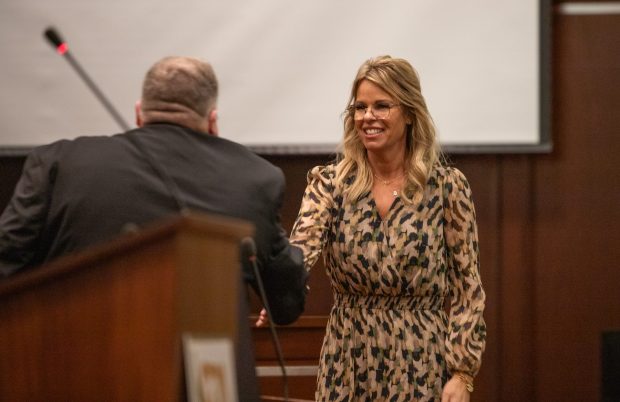
State superintendent Debbie Critchfield shakes hands with Idaho School Boards Association President Jason Sevy at the ISBA Day on the Hill on Feb. 16. (Sean Dolan/EdNews)

School leaders hope to counter ‘held-harmless’ messaging from the Statehouse

The Bonneville School District is planning staff cuts to make up a projected shortfall estimated at $5 million to $6 million. The shortfall is tied to increasing costs for utilities, food and employee health insurance, according to Superintendent Scott Woolstenhulme. 

“We are cutting our budget. I think that’s probably true of almost every district in the state,” Woolstenhulme told a group of public school trustees last week.

Scott Woolstenhulme, Bonneville School District superintendent
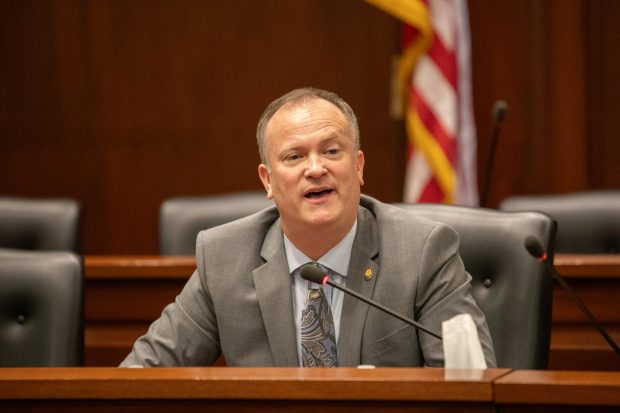
Woolstenhulme was a panelist for a workshop on “overseeing budget reductions” hosted by the Idaho School Boards Association. The advocacy group, composed of trustees from across the state, gathered in Boise for ISBA’s annual “Day on the Hill.” 

Part of the workshop focused on how districts and charter schools could implement cuts in ways that minimize effects on students. The other part focused on how trustees will explain to patrons why cuts are necessary — particularly as state leaders paint a rosier picture of K-12 funding ahead of this year’s election.

Brick-and-mortar public schools are exempt next fiscal year from 5% budget reductions affecting most state agencies, including colleges and universities. The proposed cuts — including 3% from Little and an additional 2% from budget-setting lawmakers — come after state revenue underperformed over the last year, while $453 million in tax cuts and credits took effect. The Legislature passed the GOP-backed tax cuts, and the governor signed them into law. 

During his State of the State address last month, Little touted a 70% increase in state support for public schools since he took office in 2019. And he promised to protect “classroom funding” from the budget cuts. Legislative leaders have also said they’re pushing to hold the K-12 budget harmless

“My message to the Legislature has been very simple: Don’t you dare cut public education,” Sen. Kelly Anthon told ISBA members last week. The Rupert Republican is the Senate’s president pro tem.

Critchfield said she’s “thrilled” that state K-12 funding isn’t going backward. Her top priority this legislative session is keeping the public school budget flat, and she’s been successful for the most part. 

Still, public schools won’t be immune from the impact of the state’s tightening budget: 

The $2.77 billion public schools bill, which the Joint Finance-Appropriations Committee (JFAC) approved on Feb. 13, represents an $18 million increase, or 0.7%. But it doesn’t account for cuts that could come later in the legislative session, including a $33 million reduction to virtual public schools and the state’s online learning platform

K-12 will get about $24 million less through the state’s attendance-based formula, which distributes funds based on “support units.” The metric essentially represents the cost to operate a classroom, and next year’s calculation assumes a small enrollment decline. Fall enrollment this school year was down 1%.

Public schools that aren’t on the state’s employee insurance plan won’t be fully funded for benefit cost increases. While schools that participate in the state plan will get an additional 14.4%, those on a non-state plan will get 10.8%. The unfunded benefits total $9 million statewide, although the local effects will depend on how much each district’s insurance costs change. Some could be higher or lower than 10.8%. 

Budget cuts to other state agencies likely will trickle down to K-12. Taking 5% from the Division of Career Technical Education, for instance, could defund 164 CTE programs in public high schools, according to the governor’s office. 

And the K-12 budget doesn’t include an increase in discretionary funding, which public schools use for operating costs.

Anne Ritter, a trustee at Meridian Medical Arts Charter High School and former West Ada school board member, said during last week’s workshop that local leaders will have to explain these “whys” to their parents and staff. 

“I don’t think a lot of people think that a ‘held-harmless’ budget is something that’s difficult for all of us to deal with,” she said.

Senate President Pro Tempore Kelly Anthon, R-Rupert, speaks to reporters on Jan. 8, at the Idaho Press Club’s legislative preview. (Sean Dolan/EdNews)
School operations funding remains flat amid inflation

Along with Bonneville, administrators in the Coeur d’Alene, Nampa, MiddletonKellogg and Grangeville school districts have said in recent weeks that they’re weighing budget cuts and/or increased supplemental levies. 

Some administrators pointed to static state discretionary funding. Public schools won’t see an ongoing increase in discretionary funding for the second consecutive school year under JFAC’s proposed budget. 

Schools typically use state discretionary dollars for operating costs like utilities, maintenance, supplies and other expenses affected by inflation. They also use it to supplement employee pay and benefits when state funding falls short of their staffing needs.

“Flat isn’t really flat,” Stephany Bales, executive director of community relations for the Coeur d’Alene School District, told EdNews by email. “We’d still be looking at budget reductions as inflation and operating costs (i.e., insurance) increase.”

The last time lawmakers made a permanent increase to discretionary funding was an additional $47 million ahead of the 2024-25 school year. Since then, inflation is about 3%, according to the U.S. Bureau of Labor Statistics’ Consumer Price Index. 

The Nampa School District will have to make “significant cuts” if discretionary funding is flat again, said Matthew Sizemore, Nampa’s director of community and media relations. On top of increasing power and gas prices, software costs are up between 5% and 10%, he said by email. 

“And none of the products we buy for supplies have gotten any cheaper,” he added.

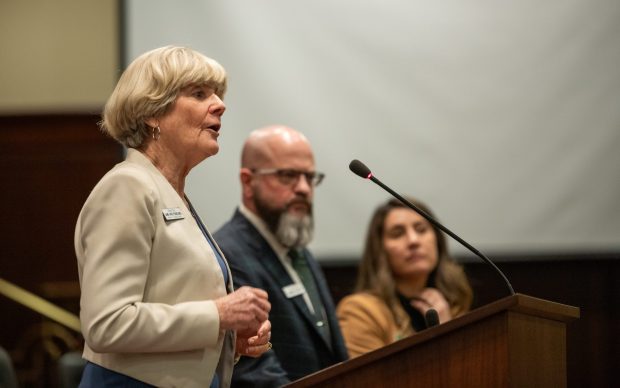
Sen. Janie Ward-Engelking, D-Boise, addresses the audience at the Idaho School Boards Association Day on the Hill on Feb. 16. To her left is Sen. James Ruchti, D-Pocatello, and Quinn Perry, deputy director of the ISBA. (Sean Dolan/EdNews)

But what about the 70% increase to public schools since 2019? 

The 70% increase to public schools since 2019 was largely driven by targeted investments — facilities, teacher pay and literacy — and local leaders have limited flexibility to spend this money.

The $1 billion that districts got for facilities two years ago can be spent only on capital building projects, and $78 million in annual literacy money must support improving reading outcomes.

“They’re not fungible,” Critchfield said. “There’s no flexibility within the categories.”

A school district in the Treasure Valley, for instance, can’t use money earmarked for literacy to pay its bill from Idaho Power, which increased its rates 7.5% this year. 

Previous state increases also fulfilled needs that local taxpayers had covered. Last year, districts requested $234 million in bonds and levies during the May and November elections. That was a 67% decrease since the record-setting March 2017 election when districts asked for $715 million.

And the state has yet to address a glaring hole in local budgets: an estimated $100 million gap between what districts spend on special education and what they get from state and federal governments. Grangeville’s interim superintendent, Amanda Bush, said last week that local funds cover 75% of the newly created district’s special education costs

For Critchfield, this problem traces back to a familiar foe: the state’s antiquated school funding formula, which hasn’t had a major upgrade since 1994. “How we do the funding has not kept pace with what the actual day-to-day operations of a school look like,” she said. 

There won’t be any major formula changes this legislative session. But in the short-term, Sen. Janie Ward-Engelking worries that a flat K-12 budget will shift the burden to fund public schools back onto property taxes — the “most onerous tax of all,” she said.  A Boise Democrat and longtime JFAC member, Ward-Engelking has pushed Republican leaders to cover schools’ increasing costs using state reserves. 

“We’re not using this bucket of money, but districts are going to have to run more levies,” Ward-Engelking told EdNews. “It’s a cost shift.”

Click here to follow the original article.