No injuries in Boone County fire Sunday

Marie Moyer

COLUMBIA, Mo. (KMIZ)

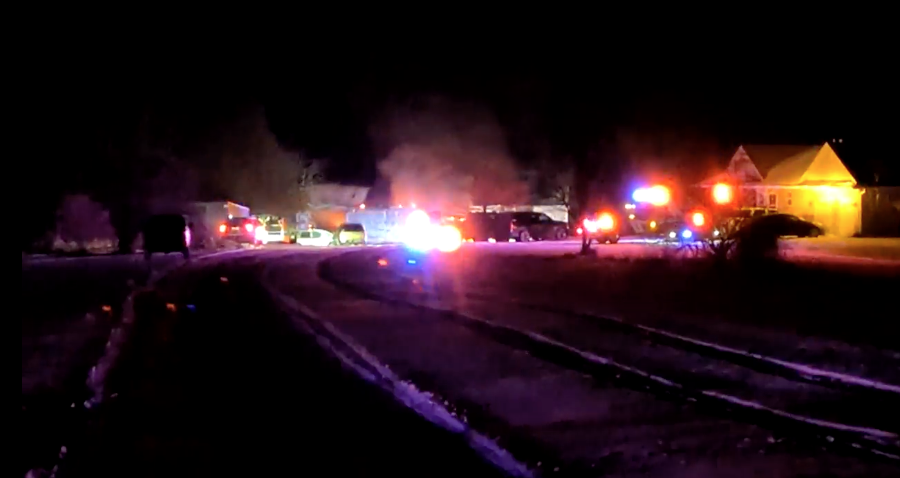
No one was injured following a fire in East Boone County early Sunday morning.

Boone County Fire Protection District Assistant Chief Gale Blomenkamp confirmed with ABC 17 News that crews were called to the 5800 block of Hawk Road at around 3:40 a.m. for a fire in a non-dwelling structure.

Crews found a 40-foot by 60-foot metal workshop with signs of fire.

Three engines, three tankers and 15 firefighters were used at the scene.

The cause of the fire is still under investigation.

Click here to follow the original article.

Gauchos get payback and sixth straight win

Mike Klan

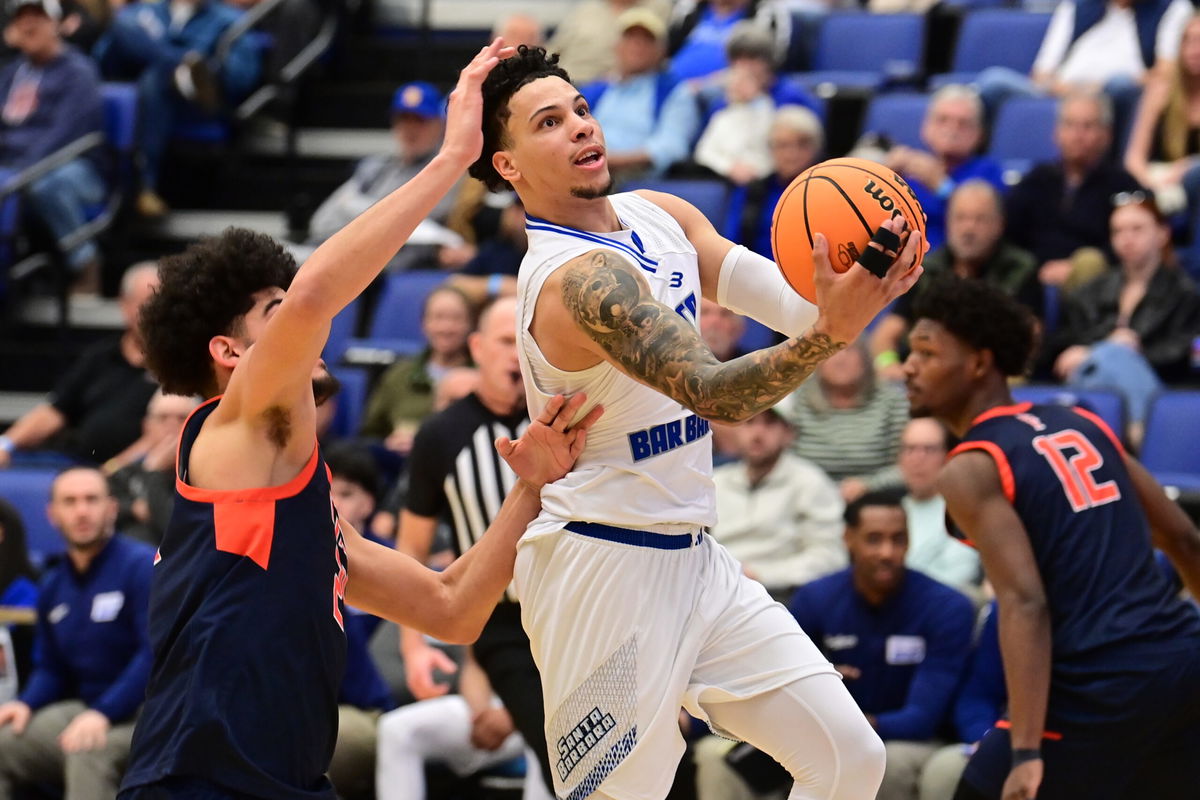
UC SANTA BARBARA, Calif. (KEYT) – The Gauchos got their revenge on Cal State Fullerton as they extend their season-high winning streak to six games in a 83-69 home victory.

UCSB never trailed and led by as many as 27 points to improve to 8-3 in the Big West Conference. The Gauchos are tied for second place with Hawai’i, a half game back of leader UC Irvine.

The Gauchos lost a one-sided game on New Year’s Day at Fullerton.

“This was a big week for us; it wasn’t easy going down to UC San Diego and traveling back to play a team that put up 95 on us last time we played,” said head coach Joe Pasternack. “Fullerton is a good team, and in the first half, we played excellent defense.”

UCSB scored 25 points off of 15 Fullerton turnovers to improve to 15-7 on the season.

(Miro Little had a terrific all-around game for UCSB with 12 points, 7 rebounds and 6 assists. Entenza Deisgn).

Freshman CJ Shaw led a balanced scoring attack with 17 points.

The Gauchos outrebounded the Titans 40-26 with Zion Sensley leading the way with 10 boards to go along with 9 points.

UCSB also had 21 assists to just 7 by the Titans.

Click here to follow the original article.

Two hospitalized following overnight rollover crash in Coachella

Isaiah Mora

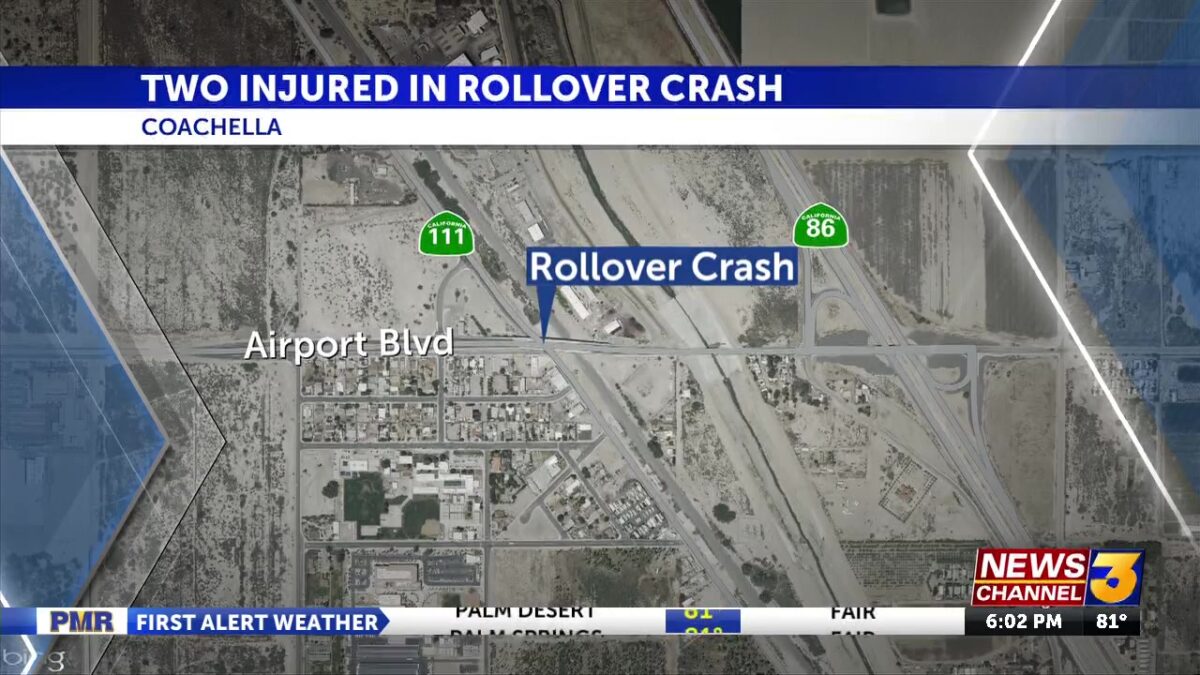
COACHELLA, Calif. (KESQ)- Two people are in the hospital with serious injuries following an overnight rollover crash in Coachella on Sunday morning.

Around 12:37 a.m., Firefighters responded to a reported vehicle rollover near Airport Boulevard and Grapefruit Boulevard. Upon arrival, fire crews reported seeing one vehicle with major damage and two patients that required extrication.

Both patients were extricated from the vehicle and were transported to a nearby hospital, with serious injuries. We’re told one patient was airlifted to the hospital.

California Highway Patrol is investigating what led up to the crash, so make sure to stay with News Channel 3 for any updates.

Click here to follow the original article.

Small quake rattles valley early Sunday morning

Gavin Nguyen

INDIO HILLS, Calif. (KESQ) – A magnitude 3.3 earthquake struck at 1:20 a.m. early Sunday morning.

The small quake was centered in the same area as previous quakes in recent weeks, like a M 4.9 earthquake that rattled the Coachella Valley on January 19th.

We’re keeping a close eye on any other tremors in the area. Stay with us for the latest.

Click here to follow the original article.

Scammers posing as police pressuring kupuna to send thousands of dollars

By Angela Cifone

Click here for updates on this story

    KONA, Hawaii (KITV) — Police officers said they have worked hard to build trust with the communities they serve, but scammers are putting that trust at risk.

Sergeant Wyattlane Nahale at the Kona Community Policing Section said, “We feel we have a great relationship with our community, and to have that trust be placed in jeopardy is really alarming to us.”

Scammers are calling Big Island residents while posing as Hawaii Police Department (HPD) officers.

Their most recent target: a 75-year-old man in Kona who was pressured to send $7,000.

“He received a call from a male scammer claiming to be a police officer. The scammers spoofed the department’s phone number, making it appear the call was coming from the Kona police station,” said Nahale.

Craig Gima, the Communications Director at AARP Hawaii, said, “They don’t care. They just want the money, and they’re very smart at getting it. These guys are professional criminals. They know what they’re doing.”

The call left him shaken and confused.

“He was confused, but I think he was more blown away with the fact that someone would go that far to identify themselves as a former police officer and badge,” said Nahale.

He continued, “They’re posing as police officers, and they’re telling the victims that they have outstanding warrants that they need to pay for right away.”

From there, they demand that money be sent to settle their outstanding warrant.

“This is the trend in scams now: getting people to put money into bitcoin ATMs. They’re all over the place,” said Gima.

Something HPD said would never happen.

“We will never ask for payment of any kind over the phone, nor will we ask for payment at a vending machine, ATM, or through Bitcoin,” said Nahale.

Still, police said it’s easy to be fooled.

“When an individual picks up their phone, and they see a number that resembles a local number coming from the police station, they feel like it’s a valid call coming through,” said Nahale.

“In this case, it was an impersonation scam, but it could be a romance scam. It could be a grandparent scam. This is the way scammers want to take your money now, because it’s new and not a lot of people are familiar with it,” said Gima.

Fortunately, a local business owner stepped in before the man lost any money.

“The clerk is a hero. He or she saw what was going on, and was able to save this man thousands of dollars,” said Gima.

While scams can happen to anyone, officials said kupuna are especially vulnerable.

“I think our most vulnerable group is our kupuna,” said Nahale.

He continued, “Our kupuna are trusting people, and they believe a lot of things that are told to them over the phone.”

Organizations are fighting for a law to help limit the amount of transactions that can be sent, better warning signs, and refunds for fraud.

“So we’re asking for lawmakers to pass the bill, and for the public’s help in supporting efforts to fight fraud,” said Gima.

Police urge everyone to look out for red flags and act accordingly.

“If they’re trying to get you to do something very urgent and threaten you with an arrest or threatening you with consequences, stop, remain calm and try to verify what’s happening,” said Nahale.

For more tips and information, you can visit HawaiiPolice.gov.

Please note: This story was provided to CNN Wire by an affiliate and does not contain original CNN reporting. This content carries a strict local market embargo. If you share the same market as the contributor of this article, you may not use it on any platform.

Hot dog vendor kicked out of normal spot for Super Bowl’s clean zone


KPIX

By John Ramos

Click here for updates on this story

    SANTA CLARA, California (KPIX) — Businesses in San Francisco and Santa Clara are gearing up for what they hope is an influx of customers during Super Bowl week. But one long-time vendor in the South Bay has been shut down, a casualty of what the NFL calls its “clean zone.”

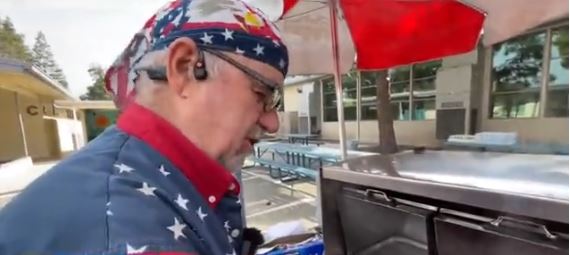
Howard Gibbons knows a good hot dog when he sees it. Known as “The Hot Dog Dude” of Santa Clara, he takes pride in his product.

“Freshly chopped onions. None of that fake bagged stuff,” he said, as he set up his condiments table.

But for Gibbons, the success of his business has always depended on three things: location, location, location. For the last 12 years, his hot dog cart has called the underpass to the Great America VTA station home. But unfortunately, it’s right next to Levi’s Stadium, the home of Super Bowl LX.

“They shut down all vendors,” Howard said. “All street vendors are not allowed within what they call their ‘clean zone.’ Why it’s called the ‘clean zone,’ I don’t know. I didn’t know I was dirty. I thought I was a pretty clean guy.”

On Saturday, he was hired for a private event, providing lunch at a local Adult Education Center.

But as of last Thursday, he’s been kicked out of his normal location, where he serves commuters walking to and from the VTA train station. And for the last three weeks, he’s lost about half his business as the VTA commuter parking lot was closed for the exclusive use of the NFL.

Gibbons finds that ironic since for the last eight years, he said the city has been trying to attract vendors to the area.

“And now they’re being closed down for this event,” he said. “It’s kind of like, you got ’em out of the closet, you got ’em to come out and be clean, and then you tell ’em, well, you don’t get to play in the big game. You’re sitting the big game out.”

As he hung up his “Hot Dog Dude” banner above the serving area, Gibbons said that when the Super Bowl comes to town, the NFL basically owns the area around the stadium, including banning any advertising within the clean zone.

“Me putting this up during the Super Bowl would be, ‘Call the FBI. We got an advertisement violator here,'” he said, laughing.

But Howard is luckier than most. The Bay Area Host Committee has offered to subsidize some of his losses for the weeks before and after the game. His daughter, Wendy Rogers, said it helps that he’s so well-connected in the community.

“He’s pretty well known. I mean, he knows the mayor, he knows everybody,” she said. “You know, I try to call him sometimes and he’s like, ‘I can’t talk, I’m in a meeting.’ He’s at a City Hall meeting, letting ’em know, and fighting for what’s right.”

What doesn’t feel right to Gibbons is what’s happening to all the other vendors, especially with all the big talk about the economic boost of hosting the Super Bowl.

“I guess they’ll play,” he said. “The billionaires will make their money. And they’ll leave a mess, and ‘Y’all have a nice day.'”

Gibbons said he used to operate a full-sized food truck 12 years ago but switched to a hot dog cart when they began building Levi’s Stadium, so he could stay in the area. He said he was allowed to operate when the Super Bowl was last played there in 2016, but this time he’s been completely shut down.

Super Bowl organizers say there are closures to streets and public infrastructure surrounding Levi’s Stadium for safety and security reasons for the event. There are similar closures around the Moscone Center in San Francisco.

All closures for the Super Bowl are available on Santa Clara’s website.

Please note: This story was provided to CNN Wire by an affiliate and does not contain original CNN reporting. This content carries a strict local market embargo. If you share the same market as the contributor of this article, you may not use it on any platform.

Hot dog vendor kicked out of normal spot for Super Bowl’s clean zone

By John Ramos

Click here for updates on this story

    SANTA CLARA, California (KPIX) — Businesses in San Francisco and Santa Clara are gearing up for what they hope is an influx of customers during Super Bowl week. But one long-time vendor in the South Bay has been shut down, a casualty of what the NFL calls its “clean zone.”

Howard Gibbons knows a good hot dog when he sees it. Known as “The Hot Dog Dude” of Santa Clara, he takes pride in his product.

“Freshly chopped onions. None of that fake bagged stuff,” he said, as he set up his condiments table.

But for Gibbons, the success of his business has always depended on three things: location, location, location. For the last 12 years, his hot dog cart has called the underpass to the Great America VTA station home. But unfortunately, it’s right next to Levi’s Stadium, the home of Super Bowl LX.

“They shut down all vendors,” Howard said. “All street vendors are not allowed within what they call their ‘clean zone.’ Why it’s called the ‘clean zone,’ I don’t know. I didn’t know I was dirty. I thought I was a pretty clean guy.”

On Saturday, he was hired for a private event, providing lunch at a local Adult Education Center.

But as of last Thursday, he’s been kicked out of his normal location, where he serves commuters walking to and from the VTA train station. And for the last three weeks, he’s lost about half his business as the VTA commuter parking lot was closed for the exclusive use of the NFL.

Gibbons finds that ironic since for the last eight years, he said the city has been trying to attract vendors to the area.

“And now they’re being closed down for this event,” he said. “It’s kind of like, you got ’em out of the closet, you got ’em to come out and be clean, and then you tell ’em, well, you don’t get to play in the big game. You’re sitting the big game out.”

As he hung up his “Hot Dog Dude” banner above the serving area, Gibbons said that when the Super Bowl comes to town, the NFL basically owns the area around the stadium, including banning any advertising within the clean zone.

“Me putting this up during the Super Bowl would be, ‘Call the FBI. We got an advertisement violator here,'” he said, laughing.

But Howard is luckier than most. The Bay Area Host Committee has offered to subsidize some of his losses for the weeks before and after the game. His daughter, Wendy Rogers, said it helps that he’s so well-connected in the community.

“He’s pretty well known. I mean, he knows the mayor, he knows everybody,” she said. “You know, I try to call him sometimes and he’s like, ‘I can’t talk, I’m in a meeting.’ He’s at a City Hall meeting, letting ’em know, and fighting for what’s right.”

What doesn’t feel right to Gibbons is what’s happening to all the other vendors, especially with all the big talk about the economic boost of hosting the Super Bowl.

“I guess they’ll play,” he said. “The billionaires will make their money. And they’ll leave a mess, and ‘Y’all have a nice day.'”

Gibbons said he used to operate a full-sized food truck 12 years ago but switched to a hot dog cart when they began building Levi’s Stadium, so he could stay in the area. He said he was allowed to operate when the Super Bowl was last played there in 2016, but this time he’s been completely shut down.

Super Bowl organizers say there are closures to streets and public infrastructure surrounding Levi’s Stadium for safety and security reasons for the event. There are similar closures around the Moscone Center in San Francisco.

All closures for the Super Bowl are available on Santa Clara’s website.

Please note: This story was provided to CNN Wire by an affiliate and does not contain original CNN reporting. This content carries a strict local market embargo. If you share the same market as the contributor of this article, you may not use it on any platform.
Man celebrates “second birthday” after surviving cardiac arrest

By Kennedy Cook

Click here for updates on this story

    BOULDER, Colorado (KCNC) — For the past eight years, Louis “Lou” Cicio has celebrated Jan. 30 as his “birthday.” Not because it’s the day he was born, but because it’s the day he nearly died — and survived.

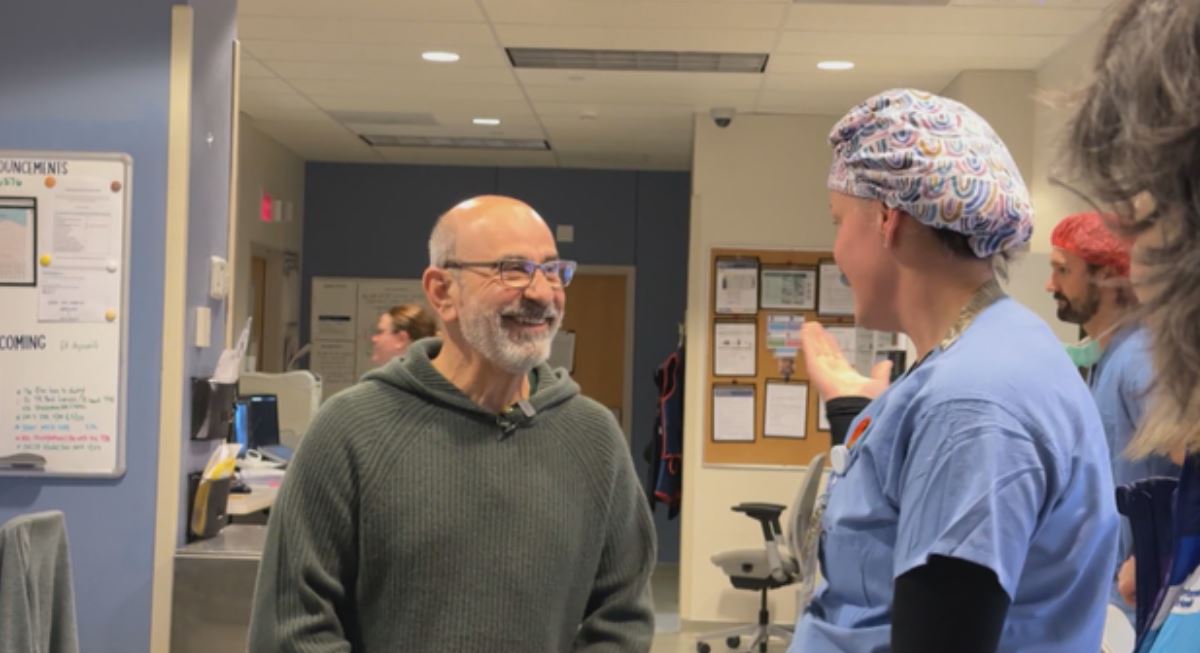
On Friday, the Boulder man was reunited with the doctor and medical staff who saved his life.

“I was brought to Good Samaritan because I had a cardiac arrest,” he said. “I was resuscitated in my office and brought here, and that started this journey where they saved my life.”

Doctors told him he had only about a 40% chance of surviving that day.

“When you’ve had cardiac arrest, that means you’ve already died once,” said Dr. Shaheer Zulfiqar, an interventional cardiologist with Intermountain Health. “So the mortality with cardiac arrest is pretty high.”

But Cicio’s story beat the odds.

Not only did he survive — he returned to his everyday routine, riding his bike, exercising, and living a healthy life. And every year on the anniversary of his cardiac arrest, he comes back to the hospital where his life was saved.

“I come back every year on the anniversary day,” Cicio said. “Thank you to the staff.”

His way of saying thanks? Delivering fresh fruit to every department that helped save his life.

“Generally, when physicians come across a story like this, it makes you feel good about your profession,” Zulfiqar said. “Somebody who probably otherwise would not be around is biking, surviving, and living a healthy life — that’s the good outcome you hope for in medicine.”

Hospital staff say patient visits like Cicio’s are rare and deeply meaningful.

“They don’t get too many patients visiting them,” one staff member said.

For Cicio, the gratitude runs deep.

“It is amazing what we have as a health system to take care of someone like me,” he said.

Please note: This story was provided to CNN Wire by an affiliate and does not contain original CNN reporting. This content carries a strict local market embargo. If you share the same market as the contributor of this article, you may not use it on any platform.

“Salt Cure” restaurant fund launches to support Twin Cities eateries

By Adam Duxter

Click here for updates on this story

    MINNEAPOLIS (WCCO) — A new, online fundraiser now aims to support Twin Cities restaurants financially impacted during Operation Metro Surge.

Titled “The Salt Cure,” the new fund launched Friday and aims to support as many restaurants as it can, dishing out needs-based grants to applying eateries.

For food journalist Stephanie March, who worked to launch the fund, the help couldn’t come soon enough.

“It’s been devastating, quite honestly,” March said. “I don’t even think our own people know what’s going on.”

March says Operation Metro Surge has led many restaurants to drive employees to and from work. Others have had staff taken by federal agents. Others are struggling with a lack of patrons during an already quiet month in the service industry.

“There’s a lot of fear. Our city is draped in fear and anger and concern,” March said. “What I’ve heard from some very significant restaurateurs in the Twin Cities is that they are all probably one to two payrolls from either laying off their staff or shutting down completely.”

The fund, run through the Minneapolis Foundation, will have no end date, March says. Applicants will be screened and approved based on needs. March says her hope is for the community to rally around the restaurant scene.

“It’s kind of on us to continue to invest in our community and continue the richness,” March said. “We’ve been awarded for our restaurant scene. We have to keep it going.”

Please note: This story was provided to CNN Wire by an affiliate and does not contain original CNN reporting. This content carries a strict local market embargo. If you share the same market as the contributor of this article, you may not use it on any platform.

“Stories of Survival: Object, Image, Memory” showcases items brought to America by survivors of Holocaust, other genocides

By Joe Donlon

Click here for updates on this story

    CHICAGO (WBBM) — A simple object can symbolize both despair and promise. That’s just what happened for survivors of the holocaust and other genocides, who brought pieces of their past to America.

They left their homes with little or next to nothing, but found ways to keep the connection.

“It’s unbelievable that people had kept these things,” said Holocaust survivor Ralph Rehbock.

They fled unspeakable horror through sheer will. Now, 60 survivors of the Holocaust and other genocides are sharing some of their most prized possessions.

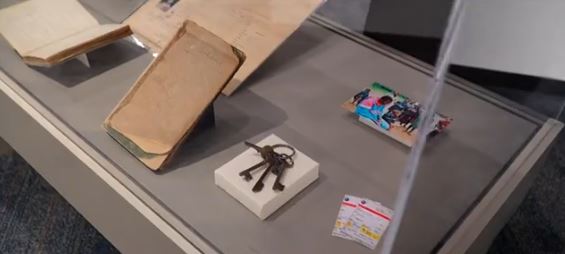
They are in the exhibition “Stories of Survival: Object, Image, Memory” at the Illinois Holocaust Museum presents Experience360 at 360 N. State St. in Chicago.

It features objects that survivors were able to bring with them when they started their new lives in America.

Kelley Szany, VP of education and exhibitions at the museum, gave a tour of the exhibit.

“To me, the stories that stand out are the basic everyday items like teacups, a teddy bear, or wedding announcement that might seem like a mundane everyday object but really have these profound personal stories,” she said.

There are actual objects, like a suitcase belonging to a man who served in the Belgian underground in World War II, a uniform donated by a man who survived four concentration camps. Airline tickets saved by an Iraqi refugee symbolize his freedom.

There are also images of objects created by photographer Jim Lommasson.

Prisoners wrote recipes in secret during the war in Bosnia in hopes that imagining food would ease their hunger.

A son got a Russian towel from his parents, who were later burned alive by Nazis. Some items were smuggled out.

“There is a coin in the exhibition from an Armenian genocide survivor who brought the coin sewed into the seam of her dress,” Szany said.

Other objects, like the teddy bear, were kept safe thanks to the kindness of others.

“Before this family left, they actually turned objects over to their non-Jewish neighbors, who were able to bury them during the Holocaust. Luckily, the family survived, and they were able to come back and retrieve their items,” Szany said.

Still other possessions were sent ahead to relatives already in the U.S.

Rehbock, now 91, was just four when his father bought this electric train set for him. It was 1938, and German Jews were square in Adolph Hitler’s line of fire.

“The Nuremberg Laws of 1935 took away our citizenship, and my parents decided it was time to leave Germany for America,” he said.

So, Ralph’s father shipped the train set to his cousins in Chicago. It was waiting for Ralph when he arrived. In time, it became part of the Rehbock family story.

“It was a great toy which was appreciated by me, and my children, and my grandchildren through the years,” he said.

Each image in the collection includes a story written by hand, either by the survivor or a family member.

There’s a wedding announcement of a man who fled Austria to escape the Nazis and the Chicago woman he married in 1948. Years later, they added the handprints of their children and grandchildren.

“Because of this uniting and marriage, look at the generations that were able to happen,” Szany said.

Dresses that are also on display belonged to the daughters of a woman named Immaculee, who survived the genocide in Rwanda. Her husband and their daughters did not.

“And the only way she was able to identify her young daughters was by their clothing,” Szany said.

Whether it be an urn from Cambodia or a prayer book that made it to the promised land, all of the objects and images send a message.

“There are several ways to keep memories alive. This is another step,” Rehbock said.

“No matter our background, no matter our religion or our race, whatever our story is, there is still something that unites us as human beings,” Szany said.

That, she said, is love, hope, and the need to tell these stories.

“Stories of Survival: Object, Image, Memory” will be on display through June.

Please note: This story was provided to CNN Wire by an affiliate and does not contain original CNN reporting. This content carries a strict local market embargo. If you share the same market as the contributor of this article, you may not use it on any platform.