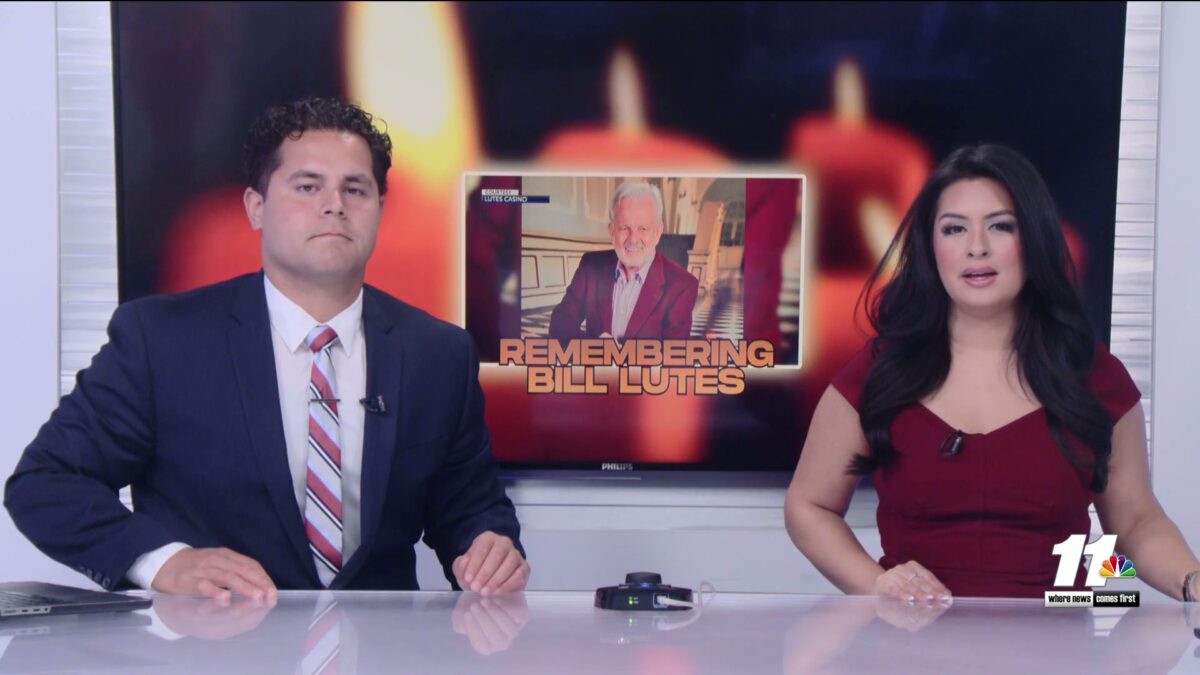
Local reaction to the passing of Bill Lutes

Eduardo Morales

YUMA, Ariz. (KYMA) – Family and friends are remembering the life of local co-owner for Lutes Casino, Bill Lutes.

Bill passed away at the age of 88-years-old on January 23.

Bill, along with his brother, Bob Lutes, helped transform Lutes Casino into the iconic Yuma restaurant it is today.

The brothers took ownership of the establishment in the 1960s.

Bob reminisced about his time building up the restaurant’s business.

“It wasn’t easy but we didn’t have any choice, it was sink or swim but it was a good ride and many memories,” says Bob.

He says he will always remember his brother.

“I miss him, he was a big asset, he could fix machines, play the piano, we were a good team,” Bob explains.

Bill’s nephew, Mike Lutes, says his uncle  was essential in developing the restaurant.

“He was a building block, I mean they went through some rough times starting out too, this place was only half the size so he would always come and play the piano during lunch during the winter season, him and my dad really started this and made it take off,” says Mike.

He shares what the restaurant meant to his uncle and what it means to his father.

“Well, it probably meant everything to my uncle and my father also, it still does, my father still works everyday, comes in about two-three hours a day, he’s 90 so they worked a lot to get this place going,” Mike says.

The family says they plan to hold a celebration of life sometime in the spring.

Click here to follow the original article.

Elemental LifeSpa celebrates grand opening in Yuma

Abraham Retana

YUMA, Ariz. (KYMA) – A health and wellness business opened its doors in Yuma.

Elemental LifeSpa provides a variety of preventive and body recovery services, including weight control, and pain reduction.

Owner Brian Nance says being local gives him the opportunity to give back to the community.

“Once I got my mind right and I got body right, I decided to take care of my community moving forward. In a couple of weeks, we are going to have big announcements sone expansion announcements great partnerships with great people to bring more health and wellness to Yuma,” said Nance.

Elemental LifeSpa is located at 3150 S. Winsor Avenue, near the Yuma Golf and Country Club.

Click here to follow the original article.

Passengers on the Central Coast Can Fly Again Without a Real ID or Passport, but it Comes With a Cost

John Palminteri

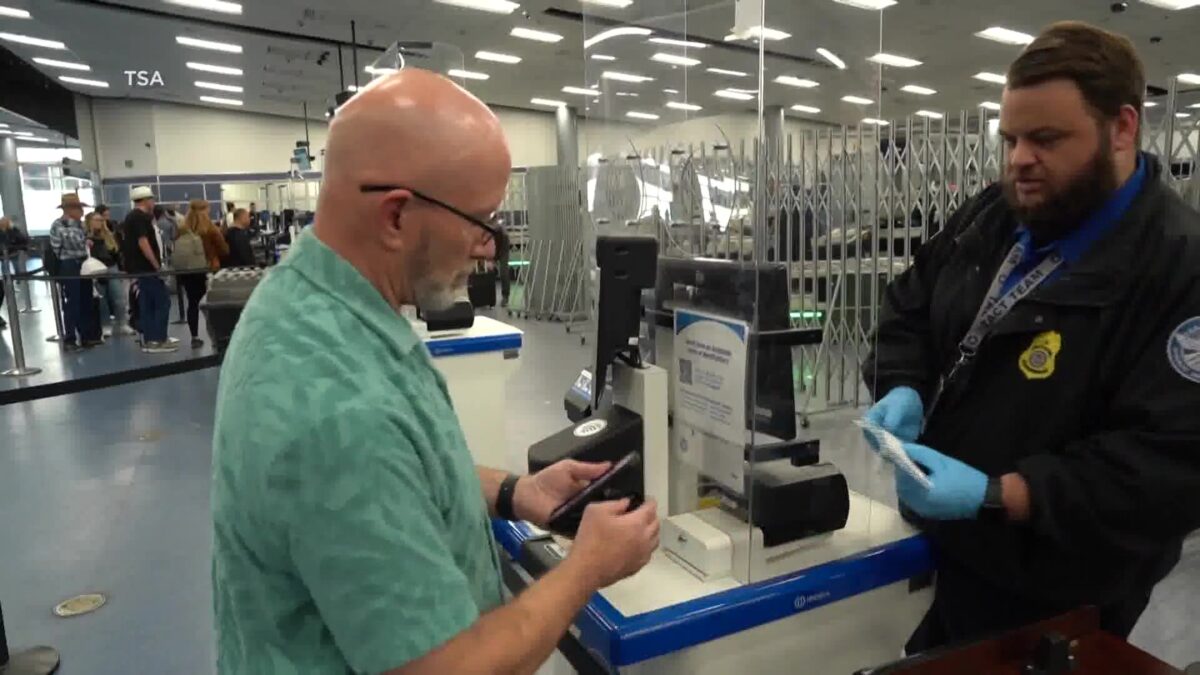
SANTA BARBARA, Calif. (KEYT) –  For about seven months, passengers could not fly in the United States without a Real ID or a passport.  That’s now changing and many Central Coast passengers are on the move again.

Under an adjusted rule, passengers who do not have that type of identification can get through TSA by filling out a form and paying $45.

It’s advised you do it in advance through a service called ConfirmID.

Lisa Hoeft was arriving to fly out of the Santa Barbara Airport and said, “if you are a frequent flyer I guess I would rather have a Real ID than to pay the $45 each time but if you have a Passport  you can use that for free so I guess it doesn’t matter.”

Craig Smith a Santa Barbara law instructor said he thought it was a good idea and and a good back up. “Just more convenient.   If anything happens. I have been flying with my passport but you know, one thing can get stolen it’s always good to have a belt and suspenders.”

He says the policy change will likely be an immediate and future benefit. “If encourages people to go ahead get a Real ID   and even if they don’t,  they can go on line and  do it in advance of the trip and it is good for ten days.”

The policy change now gives passengers more than two ways to get on board and that was given a positive review.

NIck Brown came in to the Santa Barbara Airport from New Jersey and said it was a good decision. “If you forget it, it helps you out , but if you got  a passport why not just bring your passport ? ” He also said he felt safe with the screening of all passengers.

Heading up to TSA, Cheryl New said, “I think the process is as secure as it can be and I think there are so many other things  to worry about in the world that  now  flying is down here (putting her had down low) that’s my personal thought yes. “

Shahin Nabidavoodi said he felt flying was ” an assumed risk everytime you go. I don’t mind it.  It is not going to prevent me from going where I want to go.  I think all in all we are in good hands. “

This comes at a time when Central Coast airports are getting busier than ever. The Santa Barbara Airport saw nearly 1.5 million passengers in 2025.

The San Luis Obispo County Regional Airport also had improved business with just over 800,000 passengers, a new record.

Click here to follow the original article.

New stop sign to be installed in El Centro

Dillon Fuhrman

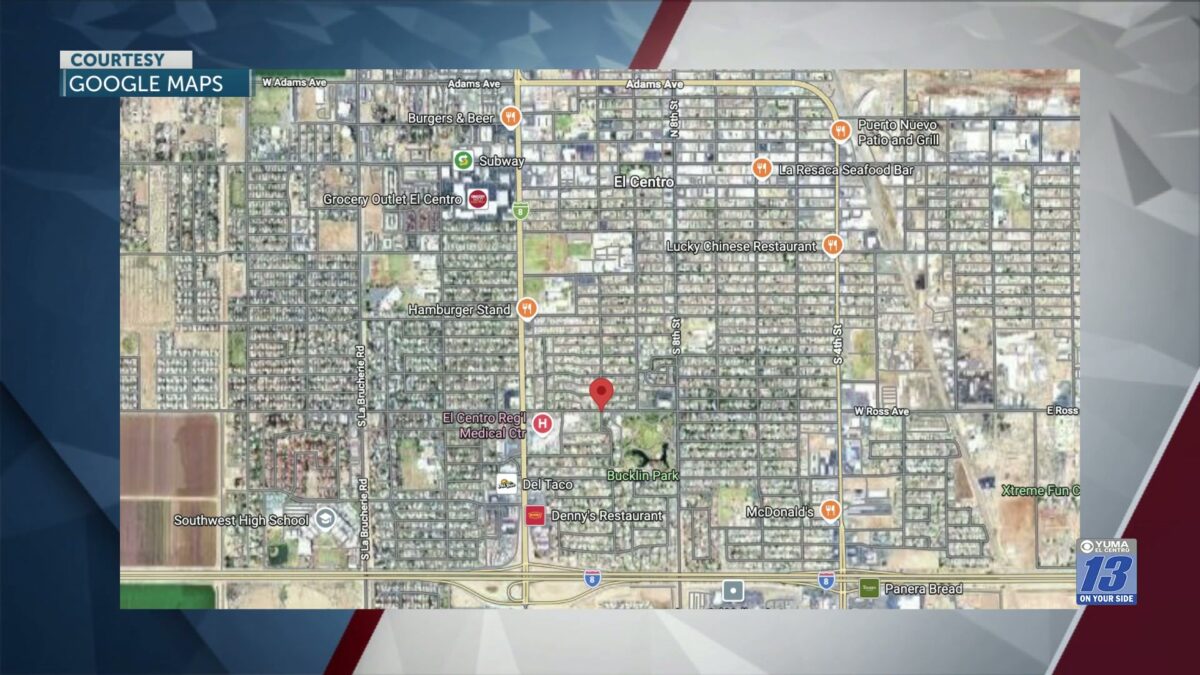
EL CENTRO, Calif. (KYMA) – The City of El Centro says a new stop sign will be installed later this week.

According to a press release, the new stop sign will be installed Wednesday at the intersection of Ross Avenue and 12th Street.

The City says the new stop sign is to “improve safety and traffic operations at the intersection,” and says they are reminding drivers to “come to a complete stop and proceed” when it’s safe.

Drivers are also encouraged to be alert, obey posted signs and use caution when driving through the area during and after the sign is installed, according to the City.

To learn more about this, call the City’s Engineering Division at (760) 337-5182.

Rossand12thStopSignPREngDownload

Rossand12thStopSignPRSpaDownload

Click here to follow the original article.

Back to school with Adam Reader, “The Professor of Rock”

Linda Larsen

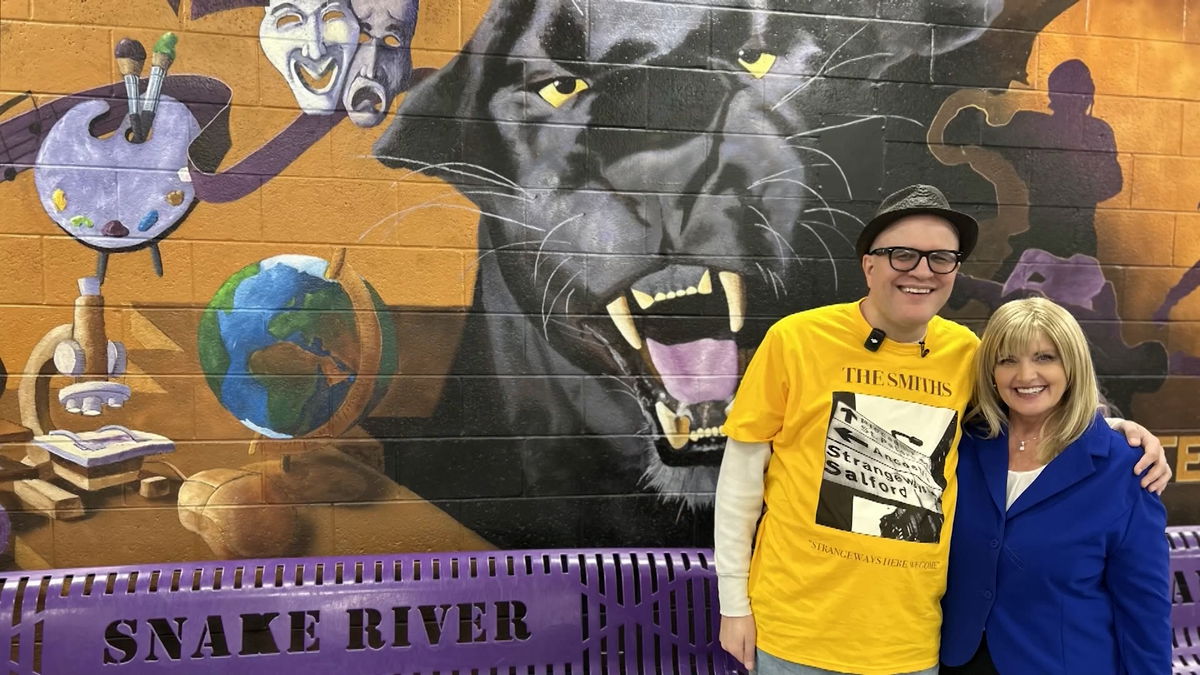
Blackfoot, ID (KIFI) — The hallways of Snake River High School have seen thousands of students come and go, but few return with a title quite like “Professor.”

Adam Reader isn’t an academic in the traditional sense, but to millions of music fans worldwide, he is the Professor of Rock. Recently, the Professor walked back through the familiar doors of his alma mater to reflect on a journey that didn’t begin in a high-tech recording studio, but in the front seat of his father’s pickup truck.

You can watch our full interview with Adam below:

A Connection Forged in Vinyl

Adam has been passionate about music for as long as he can remember. He reminisced about the times he and his late father Steve Reader would drive around Blackfoot and talk about music.

“We butted heads. We didn’t see eye to eye on many things,” Adam admitted. “But music and baseball, we did. He would quiz me on songs and say, ‘All right, for $100 or for a pop, (or) I’ll buy you a pop if you can name this song, or what year this came out?’ And we started doing these types of things with the oldies stations that were playing these one hit wonders. And I started getting them every time.”

Those drives became a masterclass in storytelling. As the oldies station played one-hit wonders, Adam’s father would share the memories he had attached to the melodies. “What I love most is that he would tell me the stories of his life connected to the song,” Adam said. “That connected me to him.”

The “Useless Information” That Built a Following

Not everyone saw the value in Adam’s obsession early on. He recalls being scolded in class for hiding Rolling Stone magazines inside his textbooks.

“The teacher would call me out in calss and say, ‘This is Adam Reader, the king of useless information. He’ll never use it in his life,’” Adam laughed. Today, he uses that “useless” information every day to fuel a YouTube channel with over 1.5 million subscribers and hundreds of millions of views.

As a teen, Adam spent his weeks transcribing Casey Kasem’s American Top 40 countdown, memorizing every chart-topper. He says it became his window to the world. This dedication eventually led him to interview over 800 musical icons, from Journey and Toto to the Beach Boys—the latter of whom actually gave him his “Professor” moniker.

“They said, You know more about us than we do, you’re like a professor of rock, if there were such a thing,” he recalled.

Meeting a Beatle and Staying Grounded

Despite his massive success, Adam remains a “fan first.” His interviews are built around his personal interactions with the songs he loves, remembering all the moments of our lives tied to the tune of each song.

Even after meeting Ringo Starr—an experience he joked could have been his retirement moment—Adam remains focused on the “checkpoints of our personal histories.”

“I met Ringo, and he gave me a pair of drumsticks. When he said, ‘Adam, Professor of Rock,’ I thought, ‘Okay, I’m done. I can retire now. I’ve met a Beatle,” Adam said. But the mission was far from over.

The Hall of Fame

Today, Adam’s portrait hangs in the Snake River High School Library’s Hall of Fame. While he has won numerous prestigious awards, he says this local recognition means the most to him.

“It means so much to me that the community would recognize me,” Adam said while standing in the school library. “No matter where we go, there’s always that same small town in each of us where we came from, our roots.”

Adam’s success proves that people still crave depth. By returning to his roots at Snake River High School, he’s reminded us that you don’t need a Hollywood zip code to change the cultural conversation. You just need a passion for the truth and perhaps a few good records borrowed from your dad.

From the halls of Snake River High School to international fame, the professor’s mission remains clear, making sure the soundtrack of our lives is never forgotten.

“Music is the common denominator,” he concluded. “It’s the great uniter. No matter what hardships we go through, there’s always music to help us through.”

You can follow Adam Reader on his YouTube channel, Professor of Rock.

Click here to follow the original article.

Mosaic leader Pat Dillon to be honored with ‘Northwest Missouri Citizen of the Year’ by regional coalition

Cameron Montemayor

JEFFERSON CITY, Mo. (News-Press NOW) — A coalition of regional officials from Northwest Missouri have announced a special honor for a long-serving community leader in St. Joseph.

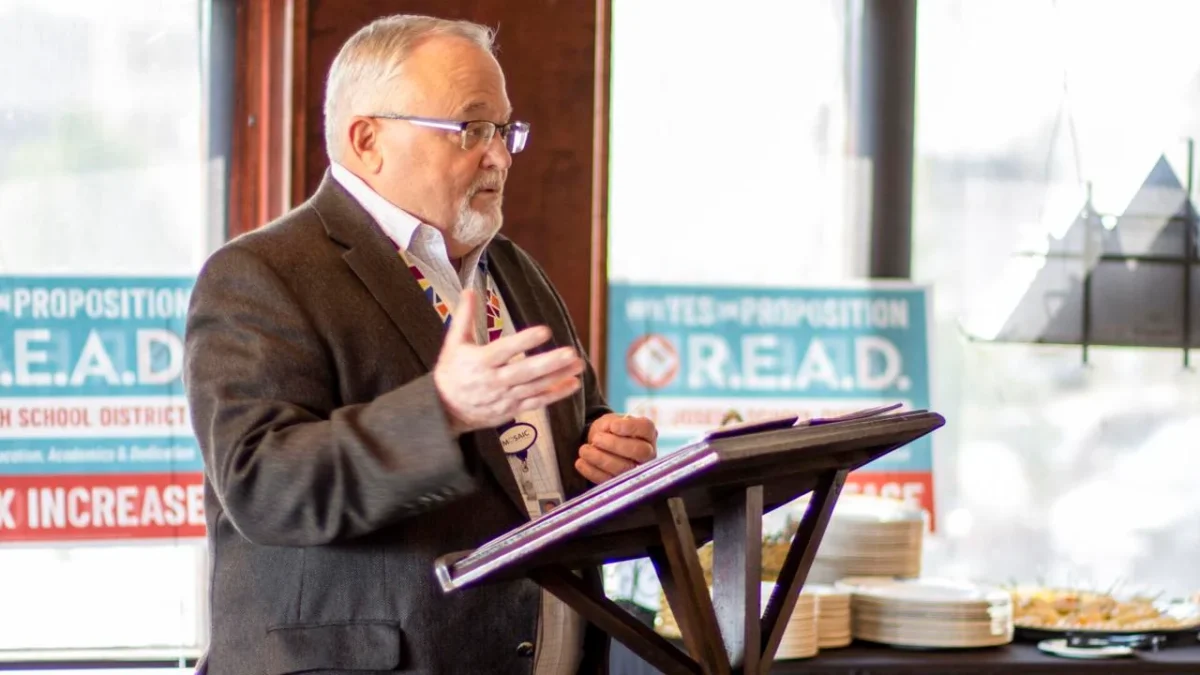
As representatives from 19 counties in Northwest Missouri converge in Jefferson City this week to discuss the region’s top legislative priorities — a long-held annual gathering called Great Northwest Days — the key event will also include an evening of recognition for St. Joseph’s Pat Dillon, chief government and community relations officer with Mosaic Life Care.

Officials with Great Northwest Days announced Dillon is set to receive the award for Northwest Missouri Citizen of the Year during a reception on Feb. 3. Dillon will receive the award after being nominated by fellow peers and selected by the Great Northwest Day Steering Committee.

A member of numerous nonprofit boards in St. Joseph, from United Way and the Chamber of Commerce to local service clubs like the St. Joseph Sertoma Club, Dillon invests countless hours toward community initiatives and engagement, most recently being recognized as one of Ingram’s “50 People in Missouri You Should Know.”

Pat and his wife, Nancy, have two adult children and two granddaughters. Dillon has served as chief government and community relations officer at Mosaic Life Care since 2019 after serving as vice president of advocacy/government relations.

More information on Great Northwest Days, which takes place from Feb. 3 to Feb. 4 this year, can be found at greatnorthwestday.com.

Click here to follow the original article.

Minnesotans in Coachella Valley are speaking out against Trump administration

Daniella Lake

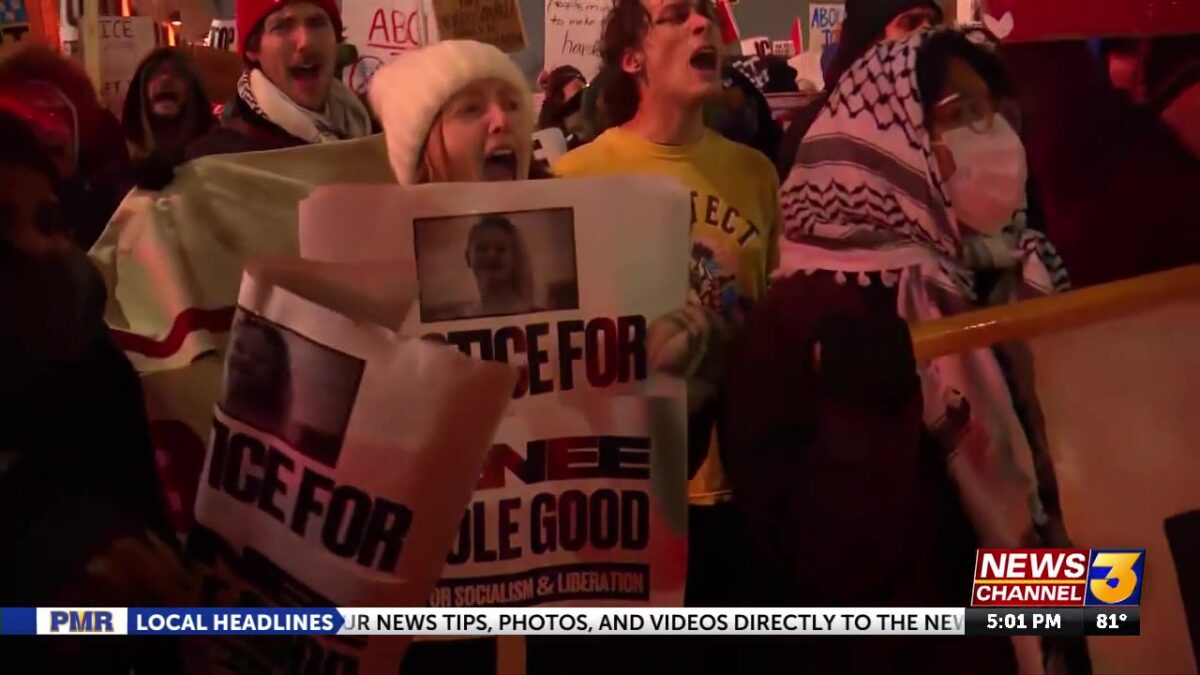
INDIO, Calif. (KESQ) – Democrats of Sun City Shadow Hills, a political organization based in Indio, have several members from Minnesota who are speaking out against the Trump administration and recent ICE operations nationwide. This weekend, the group held their first “signs of fascism,” protest, which they say they plan to hold weekly until they see a change.

Dan Larkin recently moved to the Coachella Valley from Minnesota. He says friends and family back home are in a constant state of hyper vigilance.

“They’re all worried about when is the next murder going to take place? Who is it going to be? When are they going to kidnap a child from my school or from my neighborhood?,” he says.

Dan Larkin and his wife Mary Larkin say the with shootings of Renee Good and Alex Pretti, along with ICE activity throughout the city, Minnesotans feel “terrorized.”

“It’s perpetually feeling as if you could be assaulted at any time,” says Mary Larkin.

The Larkins are encouraging others to support Minnesotans from wherever you are.

“Right now it’s a Minnesota problem. But tomorrow it’s coming to another city and it may be ours,” says Dan Larkin.

The Minnesota Council of Nonprofits has put together a list of ways to support the Minnesota community.

Click here to follow the original article.

SJSD evaluates reorganization costs, estimates $678K so far

Prajukta Ghosh

ST. JOSEPH. Mo. (KQTV) — The St. Joseph School District Board of Education and administration discussed Plan 4BR reorganization-related costs at its last board meeting.

Plan 4BR, which supports a two-high-school model between Benton and Central, would make Spring Garden, Truman, Bode and Lafayette all middle schools.

The plan has Hosea, Hyde, Pickett, Parkway, Skaith, Coleman, Edison, Bessie Ellison, Carden Park, Lindbergh, Oak Grove and Robidoux as elementary schools.

Plan 4BRDownload

So far, reorganization costs are estimated to be around $678,000.

District administration gave a presentation during the Jan. 26 Board of Education meeting, breaking down what funds are needed and where they’re going.

SJSD estimates $513,000 will go toward Benton Classroom Reconfiguration, detailing in a memo that it would, “allow for better equity at each High School and help accommodate the increase in student population.”

“So, part of the design development the DLR is going to do is to look at Benton and to ensure that you know we have the classroom spaces for some of the programs,” said Robert Hedgecorth, SJSD assistant superintendent of business and operations.

Per Plan 4BR, with Robidoux Middle School being converted into an elementary school, the district estimates around $150,000 to relocate playground equipment from Eugene Field and Pershing elementary schools to Robidoux.

Additionally, the district said Robidoux will also need age-appropriate restroom fixtures installed, as the current fixtures will not accommodate younger students. The estimated cost for this project is expected to be around $15,000.

“We will need to move some of the playground equipment from Field and Pershing elementary over to Robidoux, so those kids have the same equipment that they have at the other elementary schools,” Hedgecorth said.  

The district also detailed teacher relocation expenses, which are currently “To Be Decided,” per the memo.

Relocation expenses would entail hiring a moving company through a “Request for Proposal” process. The moving company would provide boxes and relocate the teachers’ supplies and furniture to their new location.

20260121 District Reorganization Construction CostsDownload

Hedegcorth also said the biggest challenge in dealing with all the new changes is the pressure to have everything done on time.  

“When school ends in late May, you have a certain (period) where that building may be empty, also depends on whether there will be summer school held in that building or not,” Hedgecorth added.  

The financial impact of the reorganization will be spread across the current and upcoming fiscal years. 

He said expenses tied to this fiscal year will be addressed in the June budgeting process.  

“So a lot of this stuff is getting done in the summer, some of these expenses will come on this fiscal year and then some will start in the new fiscal year. Any expenses we think will be in the new fiscal year, we will budget for in June,” Hedgecorth said.  

Hedgecorth said major reorganizations often come with unavoidable costs to ensure buildings are ready for their new purpose. 

Click here to follow the original article.

A prosecutor’s 18-year-old child was there when Charlie Kirk was shot. Is that a conflict of interest?

CNN

Originally Published: 02 FEB 26 04:00 ET

Updated: 02 FEB 26 08:00 ET

By Andi Babineau, CNN

(CNN) — The 22-year-old man charged with the murder of conservative political activist Charlie Kirk is due back court this week in Utah in his bid to get the prosecutor’s office tossed from the case.

Tyler Robinson’s defense team argues the county attorney’s office should be removed from the death penalty case because a deputy prosecutor’s 18-year-old child was at the September speaking engagement at Utah Valley University at which the conservative political activist was killed.

The county attorney’s office has denied any conflict of interest, saying the 18-year-old UVU student “did not see Charlie get shot” and “did not see anyone (in the crowd or elsewhere) with a gun,” court documents show.

On the heels of similar claims in two other high-profile murder cases, here’s what legal experts told CNN about whether the UVU student’s presence at the event where Kirk was slain could pose a conflict of interest:

What constitutes a conflict of interest?

The defense asserts the entire office of County Attorney Jeffrey Gray should be removed because “no effort was made to shield their prosecution of this case from his conflict,” according to a motion to disqualify filed in December.

Robinson’s defense cited Utah’s Code of Judicial Administration, which states attorneys can’t be involved in cases with “a concurrent conflict of interest,” which may include “a personal interest of the lawyer.”

But courts rarely accept conflict of interest arguments, said Paul Cassell, a criminal law professor with the University of Utah’s S.J. Quinney College of Law.

“There’s a presumption of good faith for prosecutors, and more broadly the government, and without some clear showing that there is reason to doubt the fairness of the proceedings, generally the proceedings will move forward,” Cassell said. “The chances of this prevailing based on other similar claims that have been presented are very, very low.”

Still, the court in Provo will weigh whether the parties “are making decisions predicated upon the merits, the facts, the law, and the circumstances only and that there are no outside influences that are going to impact the judgments that are being made,” CNN legal analyst Joey Jackson said.

Could a whole office be disqualified?

The defense has estimated some 3,000 people were at the event, according to a filing with declarations from five witnesses, some of whom described the scene as “pure panic” and “chaotic,” with one disclosing, “I thought I was about to die.”

The prosecutor’s office has said the 18-year-old would not be called as a witness because their knowledge of the incident “is based entirely on hearsay.”

The county attorney’s office, in its opposition to the disqualification motion, said comparing the defense’s witness statements to that of the prosecutor’s child shows “just how unnecessary (the child’s potential testimony) is in the case.”

“It’s ultimately going to turn on: How did the (adult child) witnessing that impact, impair, affect the decision, if at all?” Jackson said. “The issue before the court is whether an actual conflict – not a perceived conflict – has been presented and can be established based upon the chain of events.”

When Robinson’s case resumes Tuesday, Gray will finish his testimony before the defense calls three more witnesses: the prosecutor in question, his adult child and an investigator with the county attorney’s office.

If the judge agrees there is a conflict of interest, the response would more likely be “disqualifying a person who has been tainted by a particular conflict,” rather than an entire office, Cassell said. The latter would be a serious step, he said, because the Utah County Attorney is an elected official.

“If you disqualify an entire office, you’re essentially invalidating the results of the election,” he said.

If it happened, the case would likely be reassigned either to another prosecutor’s office in a neighboring county or to the state Attorney General’s office – all options which come with their own drawbacks.

Salt Lake County has resources similar to Utah County, but unlike Gray, its district attorney is a Democrat, which could impact the approach to the case. Counties to the south are smaller and may not have the resources necessary to prosecute a case of this magnitude, while reassigning it to the Attorney General’s office would remove it from the hands of an elected county official, Cassell said.

Did a conflict of interest play into death penalty pursuit?

The alleged conflict of interest may have influenced the prosecution’s decision to pursue the death penalty so quickly in the case, the defense further implied in its filing.

In Utah, prosecutors have 60 days after an arraignment to file notice of intent to pursue the death penalty against a defendant.

Robinson will not be arraigned until after his preliminary hearing, which is scheduled to begin May 18 and last three days. As such, he has not yet entered pleas to charges including aggravated murder, felony use of a firearm, obstruction of justice and witness tampering.

“The rush to seek death in this case evidences strong emotional reactions” by the county attorney’s office, the motion says.

The county attorney’s office pushed back in its response, saying, “There is nothing unusual or untoward about filing a death penalty notice before a preliminary hearing.”

The evidence and circumstances of the case “justify the death penalty,” and a delay “would have been unnecessarily unsettling and painful to Charlie Kirk’s loved ones and does not promote justice for anyone,” the court filing said.

“There’s going to be all kinds of information, of facts, that are going to come out in the hearing to determine if there was an … actual conflict,” Jackson said. “You want, at the end of the day, fairness in a system that doesn’t take anything into account but the case.”

Other high-profile conflict of interest claims

Though conflict of interest claims can be infrequent in court, they’re not unprecedented.

Attorneys for Luigi Mangione, the 27-year-old man accused of gunning down UnitedHealthcare CEO Brian Thompson on a Manhattan sidewalk in 2024, filed a motion to bar the death penalty in his case over a conflict of interest with US Attorney General Pam Bondi.

Mangione’s attorneys argued Bondi should have recused herself from decision-making in the case because she had previously worked for Ballard Partners, a lobbying firm that represents UnitedHealth Group, before she joined the Trump administration.

The judge in that case ruled Friday that Mangione won’t face the death penalty – but not because of the conflict of interest claim.

She dismissed the federal murder charge he was facing, his only charge carrying the death penalty, because it hinged on his stalking charges being classified as “crimes of violence,” which the judge disagreed with based on Supreme Court precedent.

Brian Kohberger, who pleaded guilty in July to the gruesome stabbing deaths of four University of Idaho students, faced a conflict of interest issue with his own attorney.

His appointed public defender, Anne Taylor, had previously represented the parent of one of the victims, a 2023 court record shows.

Taylor told the court though she represented the former client for roughly three months, she had never met them nor provided any legal advice. The record shows the judge, with Kohberger’s agreement, allowed Taylor to continue representing him.

The-CNN-Wire™ & © 2026 Cable News Network, Inc., a Warner Bros. Discovery Company. All rights reserved.

Click here to follow the original article.

Program cuts, staff cuts, furloughs: Education leaders say budget cuts would cause fallout

Ryan Suppe

Originally posted on IdahoEdNews.org on January 30, 2026

BOISE, Idaho — Another round of budget cuts would force immediate staff cuts and furloughs across Idaho campuses, college and university officials said Friday.

The cuts would lead to larger classes and reduced student support.

And cuts could affect some of higher education’s highest-profile programs. The University of Idaho would have to cut back its longstanding medical school partnership with the University of Washington, a training ground for Idaho doctors since the early 1970s. Boise State University said cuts could affect even its athletics programs — which is bankrolled largely by boosters and ticket and TV revenues.

Colleges and universities — and most state agencies — submitted budget-cutting scenarios to legislative staff Friday. The submissions capped a tumultuous third week of the 2026 legislative session, as key lawmakers cranked up the pressure to cut budgets in 2026 and 2027.

How we got here: a wild week in review

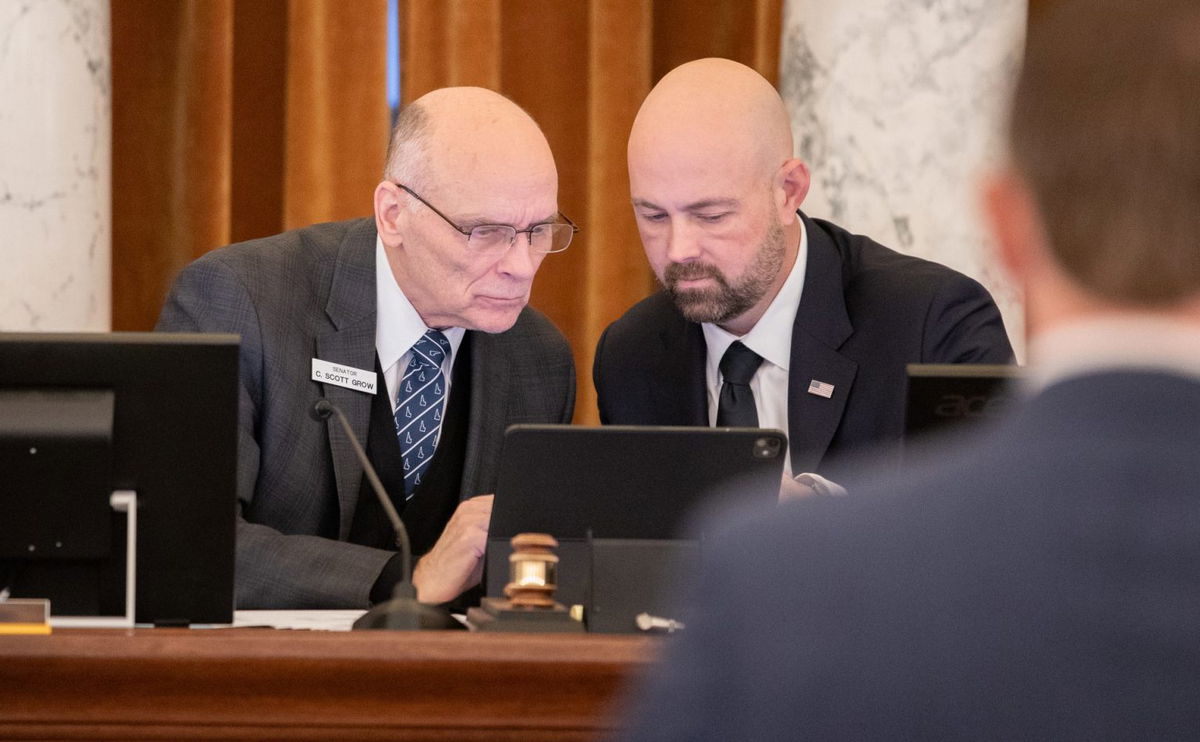
On Monday, legislative staff directed most state agencies to submit budget-cutting plans for 2026 and 2027 — setting a noon Friday deadline. The memos came at the behest of the co-chairs of the powerful Joint Finance-Appropriations Committee: Sen. C. Scott Grow and Rep. Josh Tanner, both R-Eagle.

The Monday memo exempted public schools. But on Wednesday, Grow and Tanner directed the Idaho Department of Education and the state’s Medicaid program to submit similar budget memos, also by noon Friday.

Tanner has said budget cuts are not a done deal. “We want to make sure all the options are on the table as we’re continually working through this,” he told EdNews earlier this week.
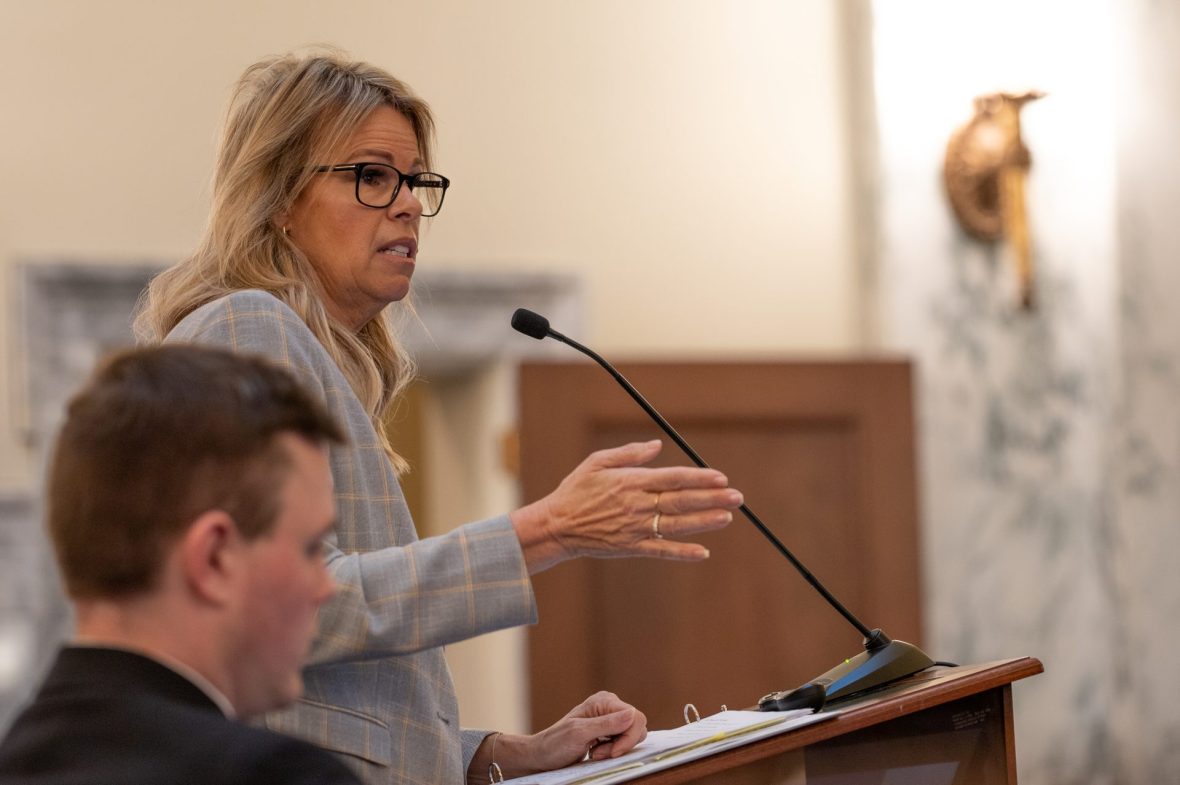
Superintendent of Public Instruction Debbie Critchfield speaks to legislative budget-writers on Jan. 21. (Sean Dolan/EdNews)

But the memos have caused consternation around the Statehouse — and drew a sharp response from state superintendent Debbie Critchfield. On Thursday, she said she would refuse to turn in a plan for budget cuts to public schools.

Friday’s submissions

Many of the agency submissions painted a grim short- and long-term budget picture.

State Board of Education Executive Director Jennifer White noted that colleges and universities have already absorbed budget cuts — starting in August, when Gov. Brad Little ordered most state agencies to reduce spending by 3%. For example, Lewis-Clark State College has already cut $400,000 for adjunct faculty positions, which means students “will face larger classes, fewer class options and sections, and reduced or delayed academic support.” Another round of cuts, across the board, and in the final months of the current budget year, ending June 30 — could lead to unintended damages and “are not a substitute for thoughtful reform,” White wrote in a memo Friday.
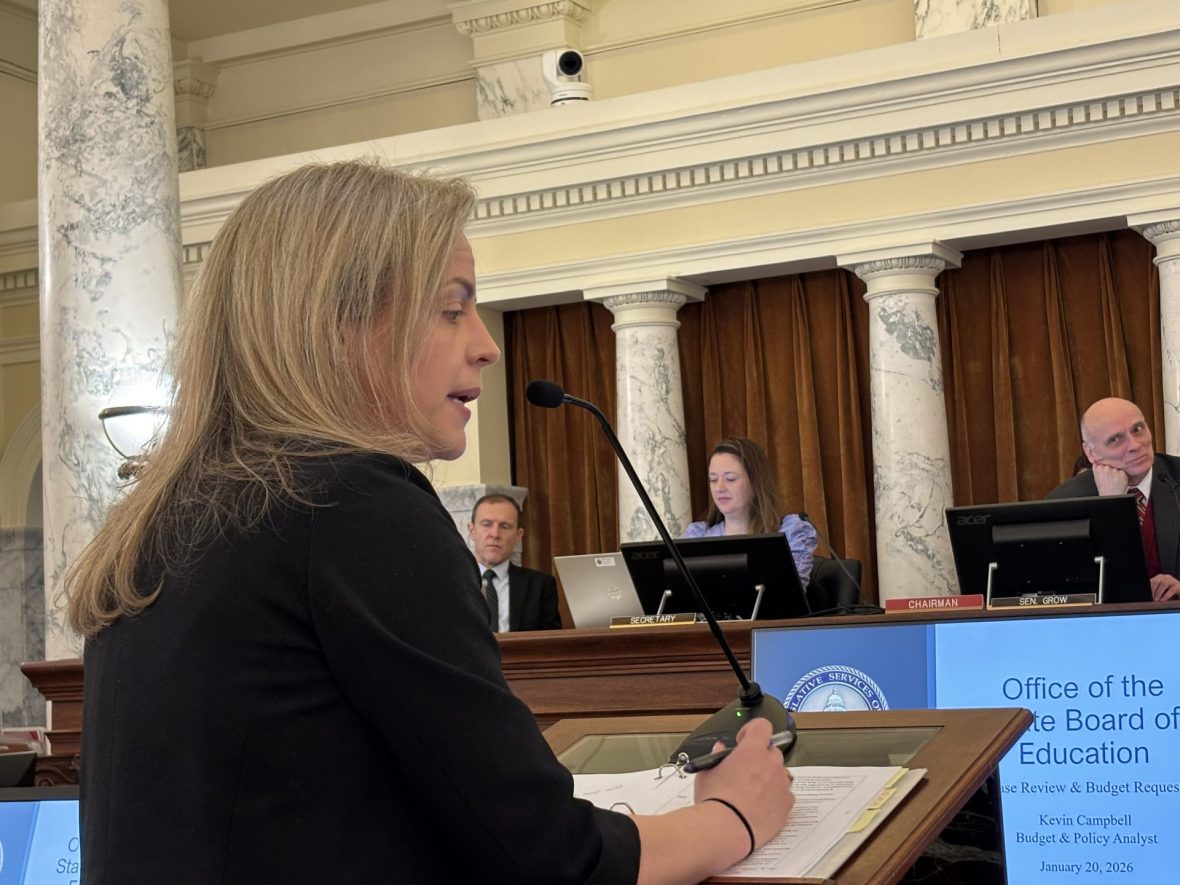
State Board of Education Executive Director Jennifer White fields a question during a Jan. 20 Joint Finance-Appropriations Committee hearing. (Kevin Richert/Idaho EdNews)

“We have prepared good faith submissions, but do not recommend or support further reductions,” she said.

Little’s budget chief said agencies made a good-faith effort to paint an honest picture. The scenarios track with what Little’s office saw last summer, when it explored cuts of 2%, 4% and 6%.

“There’s a reason we landed at (a) 3% (cut),” Division of Financial Management Administrator Lori Wolff told reporters Friday afternoon.

Beyond the education realm, other agencies said cuts could have even more dire impacts. The Idaho Department of Correction said it would have to furlough staff, with “far-reaching consequences across prison operations.” Idaho State Police furloughs would leave the agency with “fewer personnel for patrol and active threat response.”

Not every agency was required to turn in a cost-cutting plan, however. The directives applied only to agencies that receive state general funds — such as proceeds from sales and income taxes. For example, the Workforce Development Council was exempt. Its $75 million Idaho Launch postsecondary aid program and its staff costs all come from dedicated funds. 

What’s in the memos — and education thumbnails

The state agencies were asked to address a series of budget-cutting scenarios: 1% and 2% cuts in the current budget year, ending June 30, and 1% and 2% cuts in the following budget year, which begins July 1 and runs through June 30, 2027.

Here’s a thumbnail look at key education-related agencies:

Public school support

1% cut, $27.5 million per year

2% cut, $55.1 million per year

EdNews first reported Thursday on Critchfield’s pointed response to JFAC. “The public schools budget is more than numbers on a spreadsheet,” she said in her letter to Grow and Tanner. “It represents every one of our students, classrooms, teachers and communities.”

In an EdNews interview, the Republican Critchfield said she “already fulfilled the assignment” by cutting her $2.7 billion public school support budget before the legislative session. This included pulling back a $50 million special education block grant proposal that would have addressed about half of the state’s special education funding gap.

“I will not be recommending further cuts to the public schools budget,” she wrote Thursday.

Critchfield’s letter does not preclude lawmakers from cutting K-12 funding, the largest of all state budgets.

As a statewide elected official — as opposed to a hired or appointed agency head — Critchfield has more power to push back against legislative orders. And two other statewide officials, Secretary of State Phil McGrane and Attorney General Raúl Labrador, did not cut their office budgets after Gov. Brad Little imposed a 3% budget holdback across most of state government.

Colleges and universities

1% cut, $3.8 million per year

2% cut, $7.7 million per year

Boise State University said it could need to delay up to nine faculty hires “for in-demand career programs” such as engineering, health sciences and education. The university might also need to cut staff salaries in university research support and admissions and student support programs. The university also said the cuts could have an impact on charitable giving. “Donors have expressed frustration about being asked to fund basic university operations.” 

Boise State’s memo also addressed its most public-facing program: athletics. Cutting the athletics budget “undermines our ability to compete nationally,” and could translate into a $100,000 hit on maintaining aging facilities used by 600,000 spectators per year.  

University of Idaho officials say they would need to cut staff this year and next, leading to higher student-t0-teacher ratios and curtailed student support and advising programs. Undergraduate research programs would be cut. Faculty searches in research and ag extension programs would be put on hold. The U of I’s longstanding but controversial partnership with the University of Washington medical school — known as WWAMI, for the member states of Washington, Wyoming. Alaska, Montana and Idaho — could face $300,000 in cuts over two years. “A 2% budget reduction … would necessitate downsizing and reallocation of the (WWAMI) faculty workforce.”

Idaho State University would impose mandatory furloughs this budget year, affecting all employees making more than $60,000 per year. In 2026-27, Idaho State would make most of its cuts through staff reductions and restructuring. “(This) will impact student services and support and planned expansion of high-demand workforce programs,” Idaho State wrote. In 2026-27, Idaho State also would launch a $500,000 early retirement program “for eligible contracted employees.”

Cuts also could “jeopardize” a dental education partnership with Creighton University in Omaha, Neb.

Lewis-Clark State College says it could absorb a 2% this year through one-time savings, from midyear staff retirements. But that option would go away next year, and the college would have to cut five positions permanently. Three of the cuts would directly affect the classroom: a full professor’s position in physical life sciences, an associate professor’s post in English and an instructor’s job in social sciences.

Career-technical education

1% cut, $958,000 per year

2% cut, $1.9 million per year

A 2% budget reduction would force the Division of Career Technical Education to cut two full-time state positions. It would also defund CTE programs and faculty support for both K-12 and higher education, and it would defer training, including for rural and volunteer firefighters.

“Reductions affect students today and weaken Idaho’s long-term economic competitiveness by disrupting Idaho grown talent pipelines, reducing employer readiness, and limiting community stability, particularly in rural areas,” Director Pete Risse and other CTE staffers wrote in a memo to JFAC.

Community colleges

1% cut, $684,000 per year

2% cut, $1.4 million per year

College of Eastern Idaho said it would freeze most vacant positions and eliminate seven “crucial” roles in instruction, student support and student life. CEI also would have to reduce cohorts of students entering “high-demand” programs in medical and technology fields.

College of Southern Idaho said it would eliminate one-full time instructor position. Under a 2% cut, it would also lose about $320,000 in operational funds that cover outreach efforts and pay for supplies in science and medical classes. “Students may be asked to absorb some of those costs in order to successfully complete their programs of study.”

College of Western Idaho said every 1% the state cuts would eliminate funding for 2.25 full-time positions. CWI said it would also delay exemptions in “high-demand” and “high-cost” fields.

North Idaho College said it would enact a partial hiring freeze this year, and would limit travel, including for athletes. Next fiscal year, NIC would implement an “early retirement” program that leaves some positions unfilled while others are filled at a lower salary. “While this reduces personnel costs, it removes experienced and knowledgeable employees whose institutional expertise and knowledge cannot be readily replaced.”  

Health education programs

1% cut, $296,000 per year

2% cut, $590,000 per year

This program, which covers residencies for medical school graduates, is a rare growth area in Little’s budget proposal. He has recommended spending an additional $900,000 this year to add 15 residencies. Cuts this year and next year would undermine existing contracts and threaten the effort to grow the program. Cuts are unsustainable, said Ted Epperly, Moe Hagman and Lisa Nelson of the State Board’s Graduate Medical Education Committee in a memo to board leaders.

“The Legislature has made it clear that developing the health care workforce … (is) key in solving Idaho’s physician workforce problem,” they wrote Thursday. “Cutting funding for this priority simply doesn’t make sense.” 

Idaho Department of Education

1% cut, $120,000 per year

2% cut, $241,000 per year

While Critchfield declined to recommend cuts to the public school support budget, she sent JFAC a plan for cuts to her department, which administers public school funds and enforces rules.

Faced with 1% or 2% cuts, Critchfield proposed reducing funding for two “passthrough” programs: Advanced Opportunities and the Local Innovation School Act.

But she warned that the Trump administration’s plans to dismantle the U.S. Department of Education — which Critchfield supports — could mean the state will have a growing responsibility to distribute federal funding to schools.

“I believe it will require continued state funding for the department and its requirements to fulfill state and federal laws,” she said.

Commission for Libraries

1% cut, $49,700 per year

2% cut, $99,400 per year

Idaho State Librarian Dylan Baker said the commission would hold off on filling two “critical” vacancies — deputy state librarian and library consultant — this budget year to save 2%. Next fiscal year, Baker proposed eliminating two contracts through the state’s Libraries Linking Idaho database.

“This action would directly impact Idahoans by reducing access to statewide online research and information resources used by students, job seekers, educators, and the general public.”

STEM Action Center

1% cut, $34,000 for this year

2% cut, $67,000 for this year

Unlike many state agencies, the STEM Action Center only submitted a plan to cut this year’s budget. Staff savings would cover a 1% cut. But if the cut increases 2%, the center would have to reduce aid for rural students hoping to attend cut would affect science and engineering fairs.

Idaho Public Charter School Commission

1% cut, $2,000 per year

2% cut, $4,000 per year

The small commission, which oversees most of the state’s charter schools, would  “significantly limit travel and apply heightened scrutiny to all travel requests.”

Click here to follow the original article.