Skijoring: The wild blend of horses and skis that was the Winter Olympics’ first ever demonstration sport


CNN Newsource

By Jack Bantock, Patrick Sung Cuadrado, Frank Nunns O’Connell, CNN

(CNN) — On Friday, a highly-anticipated winter sporting competition with a rich history will get underway – and it’s not just the Winter Olympics in Italy.

Over 5,400 miles away from the opening ceremony in Milan, thousands will flock to the Ford Idaho Center in Boise, Idaho to watch skiers hurtle around a course of jumps, rings, and gates.

Some of these competitors will reach speeds of 40 miles an hour – an impressive feat given they are essentially racing on a flat course. Though these skiers have a trick up their sleeve – or, more accurately, a trick galloping at the other end of their rope.

Yeehaw! Don your cowboy hat and canter into the wild world of western-style skijoring – otherwise known as “Ben Hur on snow.”

History

Exhibited at Chamonix, France in 1924, skijoring holds the honor of being the first ever demonstration sport at a Winter Olympics, yet the discipline’s origins extend well beyond its Games debut.

Practiced differently across continents, the history of skijoring is a complex one. Fortunately, there exists a one-woman fountain of knowledge for all things skijoring in Loren Zhimanskova, President of SkijorUSA and Skijor International.

A key coordinator for American skijoring and central to the sport’s growing reputation in the region, Zhimanskova’s passion for skijoring is matched only by her seemingly endless knowledge of its history and its people.

Born in Europe, skijoring has taken many forms over the years. It began with skiers being pulled by reindeer in Lapland, before trying their hand behind horses, dogs and – popularized in the 1950s – behind motorcycles and cars.

Zhimanskova has even heard of skijorers being towed by airplanes, though she insists that skiers let go before take-off.

St Moritz’s frozen lake – host to the glitzy annual White Turf event since 1907 – has been described as the sport’s spiritual home, but skijoring took a trip across the Atlantic not long after and has since blossomed into an ever-growing discipline in America.

To rider or not to rider?

The central difference to the European version of skijoring is that in the US, the horse has a rider.

While in Switzerland many competitors grow up on horse ranches and ski, in the US most are either very accomplished horse riders or very accomplished skiers.

For many American riders and skiers, the start line will be the first time they meet each other.

“They just put their talents together and give it their best shot – it’s fun that way,” Zhimanskova told CNN Sports in 2022.

At White Turf, competitors race twice around a full, flat, oval track – leaving gates at the same time – whereas the Western style sees skijorers navigate an obstacle course spotted with jumps, hoops to collect, and gates to pass through in a time-trial format.

White Turf has been described as the “playground of the rich and famous,” with sponsors ranging from BMW to Credit Suisse, and Zhimanskova finally realized her dream of experiencing the glamor first-hand in 2016.

“When I walked onto that frozen lake, I felt like this was hallowed ground,” Zhimanskova said.

“As a historian, I’m really here and I’m really going to see this. And it was every bit as spectacular as I had imagined.”

It also gave Zhimanskova the opportunity to share with locals how the sport was being done differently in the US.

Their reaction? “You’re crazy.”

“They had no idea how we were skijoring here,” Zhimanskova said.

“And I said, ‘Well that’s funny you say that because when I describe how you do skijoring in Switzerland … we think you’re crazy!’ So we had a good laugh.”

Professional Western-style skijorer Megan Smith agrees with the Swiss assessment of the variation.

“An average person couldn’t do it. This is crazy,” Smith told CNN Sports earlier this year.

“It’s super risky. Anything to do with animals is risky. You know, the horses really get into it, and they go really, really, really, really fast, and the skiers sometimes get tangled up in the rope.

“So you have to be a certain kind of skier that’s willing to do some crazy things too. Like I said, I don’t think the average person could do it.”

American hospitality

Despite some old events like Leadville, Colorado – a 77-year-old venue that sees competitors race through the town’s main street – the US does not have a showpiece event like White Turf, yet this is by design.

The soul of American skijoring is its sprawling diversity and uniqueness from venue to venue. While White Turf takes place once a year across three Sundays in February, the US skijoring season runs from early January to mid March with venues spread from Calgary down the spine of the Rocky Mountains to Ridgway.

While racers can expect a broadly similar format in terms of track length and snow depth, all races are independently run – each sculpted to the desires of the organizers.

Some events, like Leadville, are run down a main street. Others – like the Boise event on PRO Skijor’s Frontier Tour – take place in a horse park, hay field or rodeo grounds. The key, though, is the emphasis on the crowds of spectators.

“The more you interact with the crowd, the more they holler. And I think that’s fun,” Smith said. “So you know, racing, and you can kind of look over and give a big smile, and people root and root for you. The announcers are there; there’s lots of music playing.”

All have different prize pots – ranging as high as $40,000 to a simple jackpot made up of registration fees. Some races will even reward the victorious skijorer with a horse or custom saddle.

Incorporating skijoring as the centerpiece of a wider weekend festival – flushed with food and live music – is an increasingly popular trend, but two-day, standalone racing formats remain.

“Everybody really does want to do it their way … I respect this, it is the nature of sport in the US to be supple,” Zhimanskova said.

“I think as a community we’re very united, it’s just that all of our events need to have their own local flavor.”

Cowboy camaraderie

As such, Zhimanskova and SkijorUSA acts as the coordinating central hub of skijoring in the region.

Supported by Zhimanskova’s relentless efforts, skijoring in the US has enjoyed a golden age over the last decade. Thirty-one races – in addition to two exhibitions and one event for 6-14 year olds – are slated for 2026, with even more events planned in 2027.

The rapid growth of the sport originally suprised Smith, who describes it as a “wild ride, literally and figuratively.”

“The sport has grown so exponentially in the last two years, it’s almost unrecognizable. I mean, it went from nobody knows about it to we’re talking (about the) Olympics,” she said.

“We’re talking professional athletes. My friends have sponsors. I have a company that sent me clothes and ones they want me to wear during my races.

“It’s becoming a huge deal, and I think there’s no glass ceiling on it. We have had most of our races switch to invite only because the registrations were filling in 15 minutes.”

Despite skijoring’s expansion and the swathes of new faces, the core community remains incredibly tight knit. For Zhimanskova, permanently on the road, this camaraderie lies at the heart of her love for the sport.

“When I travel, I don’t like to feel like a tourist,” Zhimanskova told CNN Sports.

“I like to integrate, I like to be able to hang out with people at the local bar and just chat about life in that town. Everybody’s having a great time and everybody’s helping each other, which is wonderful.

“Yes, it’s a competition, but it’s that kind of rodeo cowboy culture where you need to have your buddy’s back because you never know when your horse trailer is gonna break down and you’re going to need somebody to help you.”

Operation Olympics

While Zhimanskova is doubtful that skijoring would ever be slated on the official Olympic schedule – citing reasons surrounding the Games’ complicated relationship with animals – she would be keen to reignite the demonstration tradition or incorporate it into the opening ceremony for a forthcoming Games.

Not least because 2024 was the 100th anniversary of skijoring at the Olympics and Salt Lake City having been named the host city for the 2034 Games.

Picture the scene: a cowboy or cowgirl riding a horse into the opening ceremony bearing the American flag, followed in tow by a skier carrying the Olympic torch.

“I think it really represents the American spirit,” Zhimanskova said.

“The freedom, the love for the outdoors and the environment, the ability to come together from different backgrounds, different worlds and compete as a team.

“Of course, the horse is also just an iconic animal that’s been so important to our growth as a country.”

For Smith, nothing is impossible and she sees the Olympics as a realistic goal if the skijoring community comes together.

“If we can come together as athletes and figure out what we want our sport to be, we can do that. It would be amazing to be able to show that to the world and what talent we have here in the United States, that the Wild West is still thriving,” she said.

“Like I said, I don’t think there’s a glass ceiling on it. People are working on it. There are a lot of good things in progress right now.

“I think it’s just more conversations, and we’re right there knocking at getting it done.”

The-CNN-Wire™ & © 2026 Cable News Network, Inc., a Warner Bros. Discovery Company. All rights reserved.

Click here to follow the original article.

Retro Con pushes ahead with new organizer in preparation for May event in St. Joseph

Patrick Holleron

ST. JOSEPH, Mo. (News-Press NOW) — Amid changes to event production, St. Joseph Retro Con will still be held as initially planned.

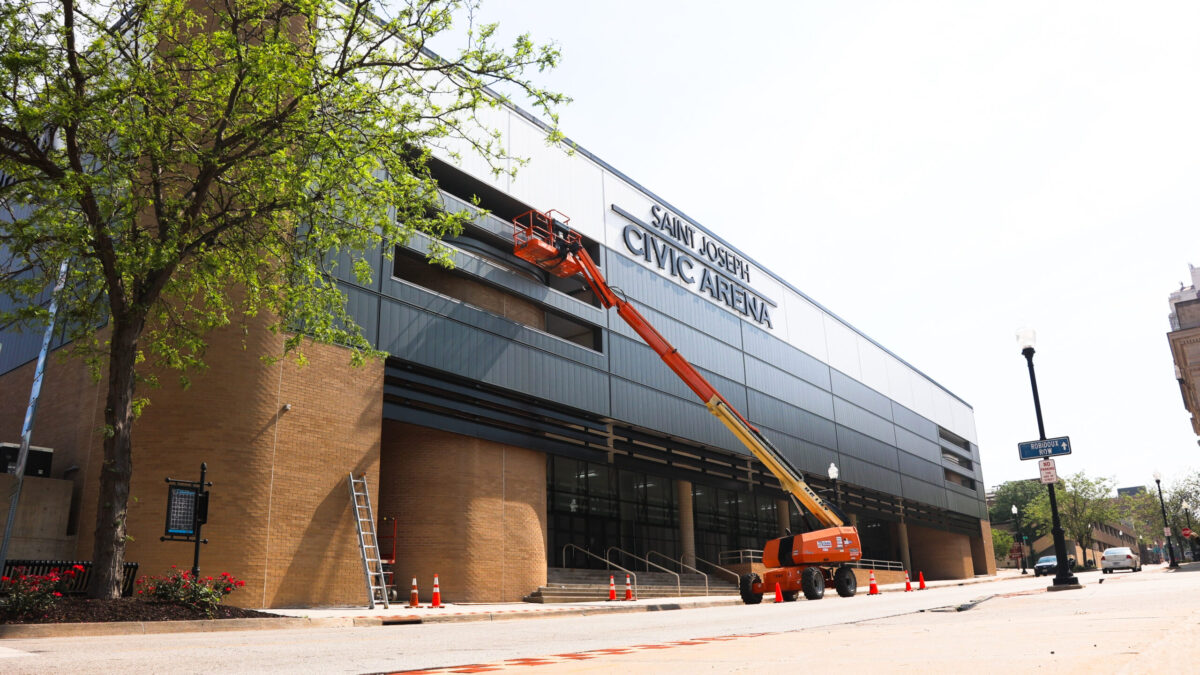
Hawkins Event Consulting and Logistics, based in Kansas City, will now be overseeing all aspects of Retro Con which will be held from Saturday, May 2, to Sunday, May 3 at Civic Arena on 100 N. Fourth St.

The decision to change event production comes after a fallout with an individual no longer associated with Fanarchy Media.

“This is a community driven event and we really want to show that. Events like Retro Con are big and need to continue to happen especially in places like St. Joseph,” Matthew Hawkins, the owner of Hawkins Events Consulting, said. “We don’t want to disrupt and let people down even more, I think it would be a bigger disservice. You can’t let one bad apple spoil the bunch. It would be easier to refund vendors (their) money and call it quits, but it’s not fair to everyone else.”

Despite the changes in leaderships, Retro Con will still be held as is with all previously announced guests and vendors still set to be in attendance. The only changes will be new policies made to protect attendees and not alter the function of the event.

When the change in Retro Con’s leadership was first announced, a few vendors had questions and concerns promoting the details of refund policies. The message Hawkins Events echoed during this time was providing transparency and honesty.

“We wanted to provide full transparency moving forward. It’s really important to utilize upfront honesty to have trust established,” Matthew said. “I don’t understand why it’s such a hard concept for people to understand. If you are honest with people, it will go a long way. We had a couple vendors reach out asking what our refund policy will be if they choose to leave. I told them I have to go through all the contracts and see what the verbiage says, but we also don’t want to pressure people to come if they don’t feel comfortable.”

Anyone seeking additional information or questions regarding the changes can visit their Facebook Page or email staci@hawkinsevent.com.

Click here to follow the original article.

Columbia could change part of COLT Railroad into public trail

Madison Stuerman

COLUMBIA, Mo. (KMIZ)

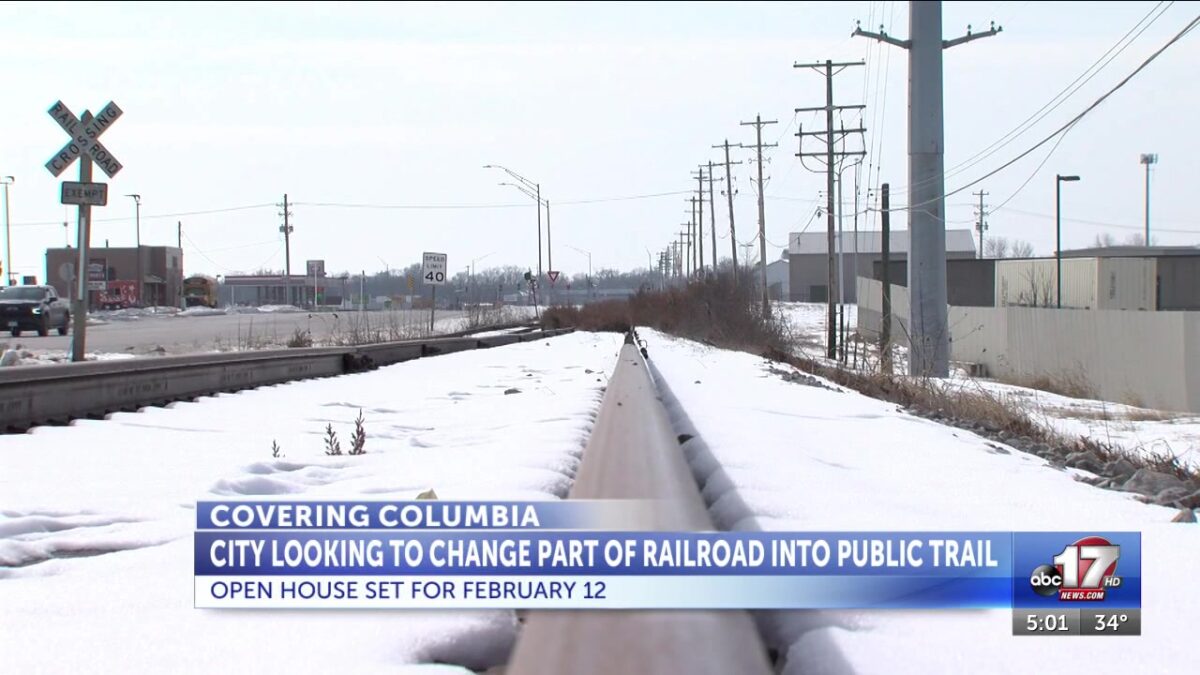
Columbia’s city staff is seeking public feedback on a proposal to convert a 2.5-mile section of the COLT Railroad into a public-use trail.

The project focuses on a stretch of track located along Paris Road, extending from Rogers Street to East Brown Station Road. City officials are gathering community input to decide whether to proceed with transforming the unused railroad corridor into a recreational trail.

This initiative would use railbanking, a process previously used in Mid-Missouri to establish Katy Trail State Park.

The feedback would help the city determine what to do with the railroad section that is no longer in service. Community members can submit their thoughts and comments regarding the proposal via the BeHeardCOMO.

The 2.5-mile stretch runs specifically along Paris Road on the city’s east side. The proposed trail would start at Rogers Street and end at East Brown Station Road.

An open house is scheduled for Feb. 12 at City Hall.


Click here to follow the original article.

Festival Theaters in Palm Springs to screen Udo Kier films

City News Service

PALM SPRINGS, Calif. (KESQ) – Festival Theaters in Palm Springs will screen a series of films featuring Udo Kier, the late Palm Springs resident and German actor, starting Thursday.

Check Out: Festival Theaters Enters New Era Focusing on Independent, International Films and LGBTQ+ Films

The film series, “Remembering Udo Kier: Palm Springs’ Valentine,” will be held though March 5 at 789 E. Tahquitz Canyon Way.   

Kier died on Nov. 23, 2025 in Palm Springs at the age of 81. He appeared in more than 200 roles in films such as “Ace Ventura: Pet Detective,” “Johnny Mnemonic,” “End of Violence” and “Flesh for Frankenstein.”  

“From cult horror to new queer cinema to arthouse prestige, the slate offers audiences a chance to revisit Kier’s work while highlighting his deep personal connection to Palm Springs, a city he embraced,” officials said.  

The tribute kicks off Thursday with “Blood for Dracula,” a 1974 horror film written and directed by Paul Morrissey. It will screen at 7 p.m. Thursday, at noon Feb. 7, at 7 p.m. Feb. 8-11, and at noon Feb. 12.

Director Gus Van Sant’s 1991 drama “My Own Private Idaho” will screen Feb. 13-19 at 8 p.m. each night.

Danish filmmaker Lars von Trier’s 2011 science fiction fable “Melancholia” screens Feb. 20 at 7:30 p.m., and Feb 21-26 at 7 p.m.

Finally, the 2021 comedic drama “Swan Song,” which stars Kier as a flamboyant retired hairdresser who embarks on an odyssey to confront the ghosts of his past, will screen at 7 p.m. Feb. 27-March 5.  

Tickets can be found at festivaltheaters.com/home/.

Click here to follow the original article.

Missouri State Capitol Commission moves forward with master plan

Madison Stuerman

JEFFERSON CITY, Mo. (KMIZ)

The Missouri State Capitol Commission is moving forward with renovation plans for the state Capitol totaling nearly $600 million.

The commission approved a motion Monday allowing the Office of Administration to begin the process of hiring an “owner’s representative” to oversee the project.

A $595 million budget has been set aside for the work. The approved motion authorizes the state to prepare a request for proposals for the representative position, which will help manage the multi-million dollar budget.

The renovation will include building restoration and updated parking around the Capitol grounds. The project includes upgrades to ensure the building meets Americans with Disabilities Act requirements.

State Rep. Rudy Veit (R-Wardsville) serves as the chair of the Capitol Commission. During the meeting, Veit explained that hiring an owner’s representative will help the commission manage the large-scale project and its costs.

“This will allow them to address issues and stay on budget,” Veit said. He added that the oversight would also help the commission “stay fiscally responsible” throughout the renovation process.

The Office of Administration will now move forward with preparing the request for proposals for the owner’s representative.

Click here to follow the original article.

Average Riverside County Gas Price Records Largest Increase Since Nov. 5

City News Service

RIVERSIDE, Calif. (KESQ) – The average price of a gallon of self-serve regular gasoline in Riverside County today recorded its largest increase since Nov. 5, rising 3.6 cents to $4.262, its 12th increase in 13 days.

The average price has increased 13.9 cents over the past 13 days, including two-tenths of a cent Monday, according to figures from the AAA and Oil Price Information Service. It rose six consecutive days, dropped one-tenth of a cent Wednesday and resumed rising Thursday.

Check Out Our Gas Gauge Section For Lowest Prices in the Coachella Valley

The average price is 12 cents more than one week ago and 11.3 cents higher than one month ago, but 12.9 cents less than one year ago. It has dropped $2.111 since rising to a record $6.373 on Oct. 5, 2022.

The average price rose 4 cents on Nov. 5.   

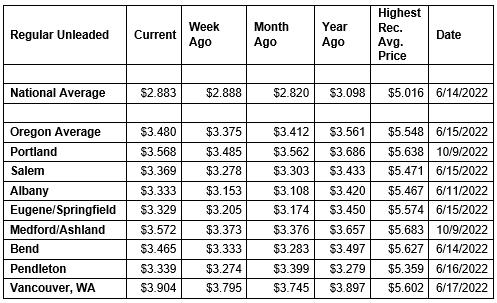
The national average price rose eight-tenths of a cent to $2.883, one day after a half-cent increase. It is a half-cent less than one week ago, 6.3 cents more than one month ago and 21.5 cents lower than one year ago.   

The national average price has dropped $2.133 since rising to a record $5.016 on June 14, 2022.

“While oil prices jumped to their highest level in months amid geopolitical tensions, a weakening U.S. dollar, and supply concerns, the national average price of gasoline saw little change compared to a week ago,” Patrick De Haan, head of petroleum analysis at GasBuddy, which provides real- time gas price information from more than 150,000 stations, said in a statement released Monday.  

“Just over half of states saw gas prices decline, led by Indiana, Ohio, and other price-cycling states that had previously seen prices jump but have since started to fall. Meanwhile, prices are rising across much of the West Coast as the transition to summer gasoline begins, and attention turns to another refinery shutdown in California expected in April.   

“Over the coming weeks, we’re likely to see more states experiencing increases than decreases.”

Click here to follow the original article.

Marshall man charged with armed robbery in Cooper County

Ryan Shiner

COLUMBIA, Mo. (KMIZ)

A Marshall, Missouri, man was charged on Monday with a pair of felonies in Cooper County after he was accused of pulling out a gun while trying to take a phone.

Dontri Harris was charged with first-degree robbery and illegal gun possession. A $100,000 warrant was issued on Tuesday. He was not listed on the Cooper County Jail’s online roster on Tuesday afternoon.

The probable cause statement says Boonville police were called at 8 a.m. Jan. 22 for an assault that occurred earlier in the morning.

The statement says the victim drove to a coworker’s residence to pick them up when Harris drove by and eventually walked up to her vehicle. He then allegedly opened her driver-side door and demanded the victim to give him her phone. The victim allegedly saw a gun in Harris’ waistband.

A struggle over the phone ensued and Harris allegedly pressed the barrel of the gun on the back of the victim’s head, the statement says. The coworker then came out of the residence and Harris threw the phone into the back of the vehicle before running away, the statement says.

Click here to follow the original article.

MILITARY MATTERS: New Veterans Breakfast Group

Manoah Tuiasosopo

YUMA, Ariz. (KYMA) – In this week’s Military Matters report, a new social group for local Veterans is growing fast, building fellowship, connection and support for those who have served.

Every Friday morning in the foothills, local Veterans gather at Daybreakers Café.

The Veterans Breakfast Group has only been meeting for a few weeks, but organizer Rick Black says it’s already making a big impact.

“A lot of people in this group have already dealt with the issues that other people may come to us with. We’re just a happy group here. We get along great. I’ve got people roughly about 260 some odd people that I contact every week,” Black shared.

If anyone is interested in participating in the group, they meet every Friday at 8:00 a.m. at Daybreakers Café, located at 10800 N. Frontage Road.

Click here to follow the original article.

Crude oil impacts: Oregon gas prices rise by a dime, AAA says; Bend’s average jumps 13 cents

Barney Lerten

PORTLAND, Ore. (KTVZ) – Crude oil prices jumped to four-month highs above $65 per barrel last week, driven by geopolitical tensions between the U.S. and Iran as well as significant production disruptions caused by severe winter weather in much of the U.S., AAA Oregon/Idaho reported Tuesday.

This has led to higher gas prices in more than half of all states this week, including Oregon, AAA said in their weekly report on Oregon gas prices, which continues below:

Oil prices have settled down to start this week. However, we’re entering the time of year for seasonal increases at the pumps. Here on the West Coast, the annual transition to summer-blend gas is already beginning, which is tightening supplies in the region.

For the week, the national average for regular slips half a cent to $2.88 a gallon. The Oregon average jumps 10 cents to $3.48 a gallon, while Bend’s average was up 13 cents, to $3.46 a gallon.

National State Local Gas Prices 2-3-26

Crude oil prices jumped above $65 per barrel last week, the highest price since last September, on escalating tensions between the U.S. and Iran after the Trump Administration warned of possible U.S. military action.

A weak U.S. dollar also put upward pressure on crude oil prices. Crude oil is traded globally in U.S. dollars, and when the value of the dollar falls, it takes less foreign currency to buy oil. The cheaper price can increase demand for oil, putting upward pressure on oil prices.

Crude oil prices have fallen to start this week, after President Trump said he was hopeful about negotiations with Iran.

“It’s likely we’ve already seen the seasonal low prices for gas in 2026. We’re entering the time of year for refinery maintenance and the annual switch to summer-blend fuel, which is more expensive to produce than winter-blend fuel,” says Marie Dodds, public affairs director for AAA Oregon/Idaho.

The Oregon average for regular gas began 2026 at $3.42 a gallon. The highest price of the year so far is today’s average of $3.48. The lowest price of the year so far is $3.33 on January 20.

The national average began 2026 at $2.83 a gallon. The highest price of the year so far is $2.89 on January 27. The lowest price of the year so far is $2.795 on January 11.

Demand for gasoline in the U.S. gasoline increased from 7.83 million b/d to 8.76 million for the week ending January 23. This compares to 8.30 million b/d a year ago. Total domestic supply of gasoline increased from 257 million barrels to 257.2 million. Gasoline production increased last week, averaging 9.6 million barrels per day, compared to 8.8 million barrels the previous week.

Gas prices typically rise starting in mid-to-late winter and early spring as refineries undergo maintenance ahead of the switch to summer-blend fuel, which is more expensive to produce and less likely to evaporate in warmer temperatures. The switch occurs first in California, which is why pump prices on the West Coast often rise before other parts of the country.

The East Coast is the last major market to switch to summer-blend fuel. Most areas have a May 1 compliance date for refiners and terminals, while most gas stations have a June 1 deadline to switch to selling summer-blend. Switch-over dates are earlier in California with some areas in the state requiring summer-blend fuel by April 1. Some refineries will begin maintenance and the switchover in February.

Gas prices usually drop in the fall, due to the switch from summer-blend to winter-blend fuel, which costs less to produce. The switch starts in September. Many areas, including Oregon, can sell winter-blend fuel starting September 15.

However, Northern and Southern California require summer-blend fuel through October 31. Prices usually decline to their lowest levels of the year in late fall and early winter before increasing again in the late winter and early spring.

The U.S. price of crude oil (West Texas Intermediate) has mostly been in the upper $50s to mid-$70s since September 2024.

WTI is trading at $63 today, compared to $62 a week ago and $73 a year ago. In 2025, West Texas Intermediate ranged between $80.04 (January 15) and $57.46 (October 16) per barrel. In 2024, WTI ranged between $66 and $87 per barrel. In 2023, WTI ranged between $63 and $95 per barrel. WTI reached recent highs of $123.70 on March 8, 2022, shortly after the Russian invasion of Ukraine, and $122.11 per barrel on June 8, 2022. The all-time high for WTI crude oil is $147.27 in July 2008.

Crude prices are impacted by economic news as well as geopolitical events around the world including the current economic uncertainty, the current situation in Venezuela, tensions over Greenland, protests in Iran, sanctions on Iran’s oil, unrest in the Middle East, the conflict between Israel and Hamas, and the war between Russia and Ukraine. Russia is a top global oil producer, behind the U.S. and Saudi Arabia.

In addition, production cuts by OPEC+ in previous years tightened global crude oil supplies, which continued to impact prices. But in 2025, the cartel boosted production which put downward pressure on crude oil prices. For 2026, OPEC+ says it’s not planning any production hikes in the first quarter of the year due to lower demand.

Crude oil is the main ingredient in gasoline and diesel, so pump prices are impacted by crude prices on the global markets. On average, about 47% of what we pay for in a gallon of gasoline is for the price of crude oil, 16% is refining, 20% distribution and marketing, and 17% are taxes, according to the U.S. Energy Information Administration.

Meanwhile, crude oil production in the U.S. remains at or near record highs. The U.S. Energy Information Administration (EIA) reports that crude production in his country is at 13.70 million barrels per day for the week ending January 23. Production has been at 13.5 million barrels per day many times since October 2024. The U.S. has been the top producer of crude oil in the world since 2018 and has been increasing its oil production since about 2009.

Quick stats

Oregon is one of 29 states with higher prices now than a week ago. California (+12 cents) has the largest week-over-week increase in the nation. Nevada (+11 cents) has the second-largest, and Oregon (+10 cents) has the third-largest increase in the country. New Mexico (-11 cents) has the biggest week-over-week decrease in the country.

Hawaii ($4.40) has the most expensive gas in the nation for the eighth week in a row. California ($4.37) is second. These are the only states with averages at or above $4 a gallon. This week five states and the District of Columbia have averages in the $3-range. There are 43 states with an average in the $2 range this week.

The cheapest gas in the nation is in Oklahoma ($2.37) and Arkansas ($2.44) and. No state has had an average below $2 a gallon since January 7, 2021, when Mississippi and Texas were below that threshold. At the time, the COVID-19 pandemic drove significant declines in crude oil and gasoline demand in the U.S. and around the world.

The difference between the most expensive and least expensive states is $2.03 this week, compared to $2.00 a week ago.

Oregon is one of 34 states with higher prices now than a month ago. The national average is six cents more and the Oregon average is seven cents more than a month ago. Colorado (+36 cents) has the largest month-over-month increase in the country. Alaska (-9 cents) has the nation’s largest month-over-month drop.

Oregon is one of 49 states and the District of Columbia with lower prices now than a year ago. The national average is 22 cents less, while the Oregon average is eight cents less. Iowa (-40 cents) has the largest year-over-year drop in the nation. Alaska (+13 cents) is the only state with a year-over-year increase.

West Coast

The West Coast region continues to have the most expensive pump prices in the nation with all seven states in the top 10. It’s typical for the West Coast to have six or seven states in the top 10 as this region tends to consistently have fairly tight supplies, consuming about as much gasoline as is produced. In addition, this region is located relatively far from parts of the country where oil drilling, production and refining occurs, so transportation costs are higher. And environmental programs in this region add to the cost of production, storage and distribution.

Rank
Region
Price on 2/3/2026

1
Hawaii
$4.40

2
California
$4.37

3
Washington
$3.96

4
Nevada
$3.49

5
Oregon
$3.48

6
Alaska
$3.44

7
District of Columbia
$3.10

8
Pennsylvania
$3.08

9
Arizona
$3.07

10
Maryland
$2.99

As mentioned above, Hawaii has the most expensive gas in the country for the eighth consecutive week. California, Washington, Nevada, Oregon, and Alaska round out the top six. Arizona is 9th. Oregon moves up to fifth after three weeks at sixth.

Five of the seven states in the West Coast region have week-over-week increases: California (+12 cents) has the largest increase in the country and the region. Nevada (+11 cents), Oregon (+10 cents), Washington (+9 cents), and Arizona (+8 cents) also have week-over-week jumps. Alaska (-3 cents), and Hawaii (-1 cent) have week-over-week declines.

The refinery utilization rate on the West Coast declined from 82.2% to 81.7% for the week ending January 23. This rate has ranged between about 70% to 93% in the last year. The latest national refinery utilization rate fell from 93.3% to 90.9%.

The refinery utilization rate measures how much crude oil refineries are processing as a percentage of their maximum capacity. A low or declining rate can put upward pressure on pump prices, while a high or rising rate can put downward pressure on pump prices.

According to EIA’s latest weekly report, total gas stocks in the region decreased from 31.50 million bbl. to 30.45 million bbl. for the week ending January 23. An increase in gasoline stocks can put downward pressure on pump prices, while a decrease in gasoline stocks can put upward pressure on pump prices.

Oil market dynamics

Crude oil prices have backed away from last week’s four-month highs on deescalating tensions between the U.S. and Iran, which has helped to ease supply concerns.

Meanwhile, the EIA reports that crude oil inventories decreased by 2.3 million barrels from the previous week. At 423.8 million barrels, U.S. crude oil inventories are about 3% below the five-year average for this time of year. 

At the close of Friday’s formal trading session, WTI slipped 21 cents to close at $65.21. At the close of Monday’s formal trading session, WTI dropped $3.07 to close at $62.14. Today crude is trading around $63, compared to $62 a week ago. Crude prices are about $10 less than a year ago. ($73.16 on February 3, 2025)

Drivers can find current gas prices along their route with the free AAA Mobile app for iPhone, iPad and Android. The app can also be used to map a route, find discounts, book a hotel and access AAA roadside assistance. Learn more at AAA.com/mobile.

Click here to follow the original article.

Savannah to be featured in Missouri Humanities ‘Small Town Showcase: Show Me 250’

Leah Rainwater

SAVANNAH, Mo. (KQTV) — The City of Savannah, alongside other Missouri small towns, will be featured in the 2026 Missouri Humanities Small Town Showcase: Show Me 250 digital storytelling initiative.

After a month-long voting period, the City announced it came in first place, with a total of 16,693 votes, in the running to be featured in the showcase.

Waynesville, Neosho, Excelsior Springs and Perryville will also be featured, after being runner-ups in the competition.

Small towns like Lexington, Weston, Ozark, Blackwater, Jackson, Mineola, Kirksville, Sedalia, Sikeston, Belle and Caledonia were also nominated to compete.

Stories of Savannah will be told through podcasts and short films highlighting its heritage and culture, commemorating 250 years of American history.

In 2025, Missouri Humanities featured Tarkio, Sainte (Ste.) Genevieve, Potosi, Elsberry and Prairie Home as its “Featured Five” communities.

In the announcing Facebook post, Missouri Humanities encouraged interested viewers and listeners to “tune in,” as it works on releasing the features about each community.

Click here to follow the original article.