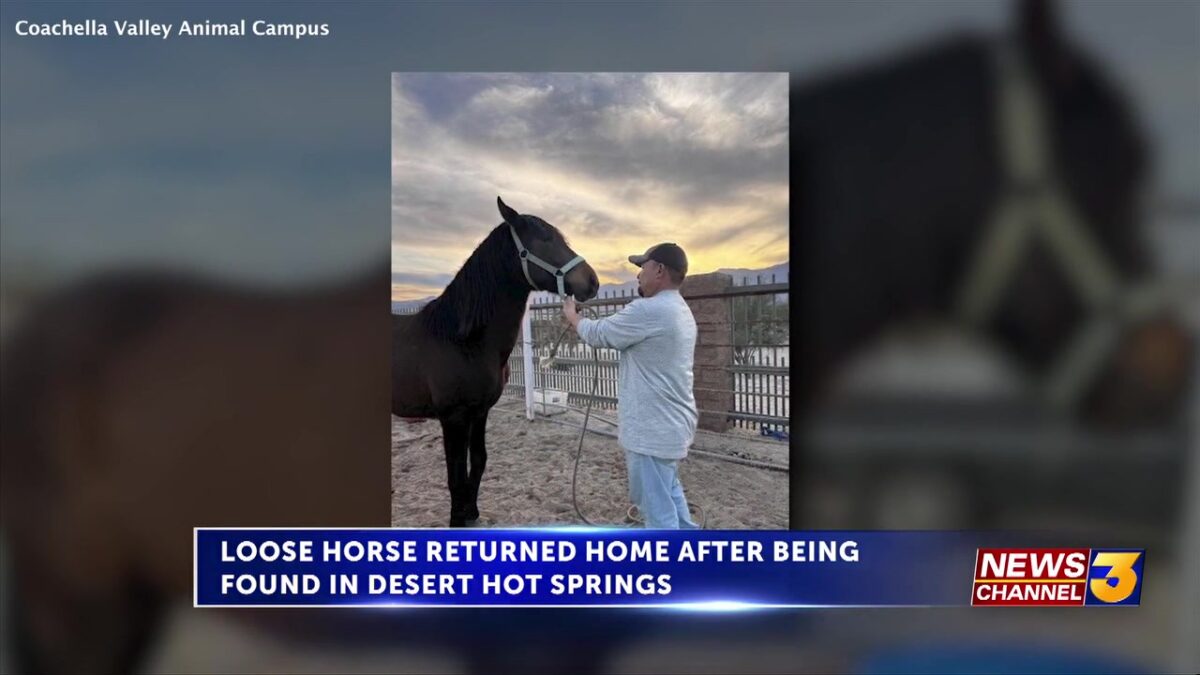
Loose horse returned home after being found in Desert Hot Springs

Shay Lawson

DESERT HOT SPRINGS, Calif. (KESQ)  – A loose horse that drew multiple emergency calls late Sunday night was safely returned to its owner after an unexpected adventure through the desert.

Matthew Perez, Animal Control Officer, said initial calls described a horse loose on the side of the road off of Dillion Road and Johnson Road.

He said it’s a situation that can be dangerous for both animals and drivers.

“We were worried about it getting hit by a car. We get those a lot,” Perez said.

Before officers arrived, Perez said a good samaritan who works at a horse ranch located the animal inside a trailer park and used his own equipment to secure and contain the horse until help could arrive.

“I was able to come straight to our shelter, pick up our horse trailer and head right out there,” Perez said.

Perez said the horse ran into a slow-moving vehicle that was attempting to assist in keeping it off the roadway, breaking the car’s side mirror but not harming the horse.

He said loading the horse into a trailer presented another challenge.

“He is young. He’s 4,” Perez said. “A lot of times when they’re that young and they’re not trailer trained they do get intimated.”

Perez praised the cooperation between the Coachella Valley Animal Campus, Riverside County Sheriff’s Department and California Highway Patrol.

“The sheriff’s department was there. They helped get the horse,” Perez said. “CHP helped on the vehicle side of the accident and made sure everyone was safe.”

Perez said the horse escaped because a gate didn’t latch properly. He gave a message to horse owners.

“Make sure all your latches are fixed and are latched properly,” Perez said. “We do recommend a 2 latch system or a 2 gate system. If the first one fails, the second one would also keep it down. But we also ask you to microchip your horses.”

He said the horse was identified through a microchip and reunited with his owner the next day.

“It felt amazing,” Perez said. “The owner was really happy that we had it.”

Click here to follow the original article.

COD president shares updates on expansions to programs and services

Peter Daut

PALM DESERT, Calif. (KESQ) – Some big changes are in store for College of the Desert. The college is expanding programs and services for its more than 14,000 students across multiple campuses from Mecca to Palm Springs.

There are new buildings going up in Desert Hot Springs, Palm Springs, and Mecca. There is also a new athletic field being built at the main campus in Palm Desert, as well as an upgraded science building.

COD says it’s working to provide access to students across the valley.

“We’re looking to really help the community as far as making sure we have an accessible workforce, but that for our workforce education is affordable,” said COD president Val Martinez-Garcia.

News Channel 3’s Peter Daut spoke in depth with COD Superintendent / President Val Martinez-Garcia

Click here to follow the original article.

Oliver Books in Prineville sparks community connection with month-long reading challenge

Claire Elmer

(Update: adding video)

PRINEVILLE, Ore. (KTVZ) — A bookstore in Crook County is turning the month of February into a community-wide celebration of reading.

Oliver Books in downtown Prineville is hosting a month-long reading challenge designed to bring people together, support local business, and share a love of literature.

The challenge is open to readers of all ages, and parents are encouraged to read along with their children. Participants can track their reading, share book reviews, and earn store credit — all while supporting a homegrown, independent bookstore.

Owner Hannah Oliver said Tuesday the heart of the challenge is about more than just numbers or prizes — it’s about connection.

“I’m hoping that it just achieves a love for reading, especially amongst our youth. I feel like it just stirs excitement in the community for something to do,” Oliver said.

“I believe that literacy is really important, reading is really important. By doing this, I believe that it helps people learn to love to read. It’s something that’s really important to me, and I hope that it encourages people to read more.”

Oliver said community members have already embraced the idea, with dozens of reading packets handed out and some readers already turning in their completed challenges.

The reading challenge runs through the end of February. Sign-up packets are available in person at Oliver Books, or you can find the PDF version to print at home below.

Rules (from Oliver Books):

Read 6 books in the month and get $10 in store credit for completing the challenge, and additional $5 if you bought at least three of the books from Oliver Books.

Kids have to read 10 books for $10 store credit, and buy 3 books from us for an additional $5.

You get an extra $5 in store credit if you make up a book review for your favorite book that will be shared on social media and the book will be added to inventory if it’s not already in the store.

You will also be entered to win an additional $50 in store credit if you write up a review.

book challengeDownload

Click here to follow the original article.

OSU-Cascades study reveals tourism costs outweigh benefits for residents in popular destinations

Harley Coldiron

BEND, Ore. (KTVZ) – Oregon State University-Cascades has published the findings of a years-long study of sustainable tourism, revealing that the costs of the industry are beginning to outweigh the economic benefits for residents in many popular destinations.

The research suggests that local communities are increasingly reaching a breaking point where tourism pressures negatively impact their quality of life.

The university conducted interviews with people living in tourism hubs across Central Oregon, the United States and international locations.

While tourism remains a vital economic driver—accounting for approximately 10.2% of global gross domestic product—the study highlights a growing backlash fueled by externalities such as traffic congestion and housing pressures.

The study found that residents often serve as the earliest and most sensitive indicators of a destination’s strain. While physical or environmental limits can be difficult to quantify, researchers noted that sociocultural carrying capacity is frequently reached first. This occurs when residents experience a decline in their quality of life or perceive that the social costs of tourism have become too high.

Todd Montgomery leads the Sustainable Tourism Lab at OSU Cascades and served as a primary researcher for the multi-year study. He proposed addressing these community imbalances through structured pricing strategies that differentiate between residents and visitors.

“So we propose a set of guidelines around fees that incentivize and give breaks the locals, but also apply the fees of the impacts to tourists,” Montgomery said.

Evaluating-Economic-Policy-Responses-to-Appease-Growing-Dissent-in-Tourism-Montgomery-Dec-2025Download

A hypothetical application of these guidelines includes implementing a dual-rate system for public services. Under this model, residents in an area like downtown Bend could receive significant discounts on parking fees, while tourists are charged a higher rate to help mitigate the costs of congestion.

The economic significance of tourism remains substantial in Oregon, where the industry functions as an export by bringing outside money into local communities.

In Bend, tourism-generated tax revenues provide about $9 million a year to the city’s general fund. That represents nearly 5% of the city’s total tax revenue and supports essential services such as fire protection, emergency response and public safety. Research indicates that traditional models focused solely on marketing and increasing visitor numbers may be unsustainable.

Historically, many communities developed tourism organically without long-term management structures. This often led to unintended consequences as destinations reached a growth phase characterized by high-volume arrivals and increased pressure on local infrastructure.

The full findings of the study are available to the public in a report published on the OSU Cascades Sustainable Tourism Lab webpage.

Click here to follow the original article.

Columbia Fire Department now carries EpiPens as calls climb for youth experiencing anaphylactic shock

Nia Hinson

COLUMBIA, Mo. (KMIZ)

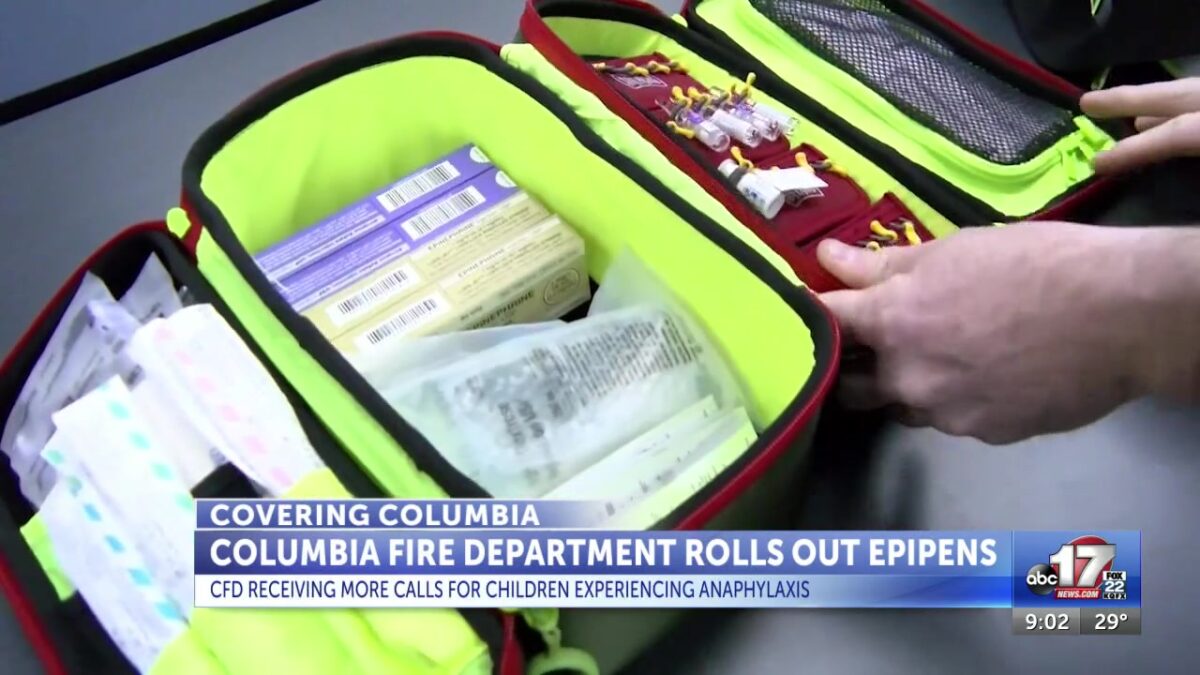
A small tool now being used by the Columbia Fire Department could be the key to saving lives.

CFD began carrying EpiPens in January, a decision that had been about a year in the making. According to CFD Chief Brian Schaeffer, every fire apparatus is stocked with at least one EpiPen and is located within the emergency medical equipment.

The drug works to treat a severe allergic reaction, as known as anaphylaxis and has the ability to save a someone’s life.

“When we’re making that decision on what type of equipment to carry, what type of supplies to purchase, this is really a no-brainer for us. We haven’t had them before, so we’re moving forward,” Schaeffer said.

According to Schaeffer, CFD went through a period of training and worked with its medical doctor from MU Health Care before rolling them out. Schaeffer said all firefighters have been trained on how to use the EpiPens. They cost between $200-$300 each, depending on the brand, and last for about a year. Thirteen EpiPens were ordered, along with one spare.

When Fire Station 10 opens, one will be purchased for that station, according to EMS Battalion Chief Edward Kehrer. The EpiPens were paid for by money budgeted through the city.

Schaeffer said the fire department has been seeing a larger number of calls for children that are experiencing anaphylactic shock from accidentally eating a peanut they were allergic to, or another allergy of some sort.

Although they haven’t had to use the EpiPens since rolling them out, Schaeffer said it allows them to have the answer in case there is an emergency in any of Columbia’s neighborhoods.

“This is a situation where we’ve needed the tool and we haven’t had it. From our experience, we don’t want to be in a situation where we have to wait or we have to rely on a neighbor or somebody else’s dose to be able to access the life-saving medication,” Schaeffer said. “It certainly has the potential to reverse the consequences of anaphylaxis and save people’s lives. Everybody from a child all the way up to the end of life.”

ABC 17 News reached out to MU Health Care and Boone Health, who are both in support of the changes. MU Health Care spokesman Eric Maze wrote via email that the hospital believes it will allow for rapid administration, a sentiment echoed by Boone Health spokesman Christian Basi.

“It’s yet one more way that the first responders here in Columbia team together to do our best and protect the health of our community. The Boone Health team is very appreciative of the collaboration we have with other first responders in mid-Missouri,” Basi wrote in a Monday statement.

CFD is also utilizing other approaches to provide more advanced life support. It requested $133,500 from the city to start a paramedic pilot program. The funding was approved by the Columbia City Council during its Jan. 5 meeting, according to the city’s agenda.

According to a council memo, the funding was requested to buy two cardiac monitors, all needed advanced life support supplies needed for two fire companies, as well as EpiPens for all frontline apparatus.

The memo points to changing ambulance deployment rates and response of the two advanced life saving providers over the years. It states both providers face constant challenges, such as staffing problems and the increasing cost for service, all of which can lead to patients waiting longer to receive care.

According to Schaeffer, the pilot program will launch sometime in March. It will consist of at least one paramedic at Stations 2 and 5 each day. The program means that the fire department’s response to medical calls will look a lot different, and paramedics will carry medications that people would typically see in an emergency department.

Schaeffer said this will allow them to be able to treat people in their homes, on the street, or anywhere else they’re asked to respond to.

The paramedics will have a “dual role” of firefighter and paramedic, meaning they can potentially transition from fighting a fire, to providing care to someone in need. Schaeffer said 58% of CFD’s incidents are EMS related.

He also said paramedics will only serve a certain neighborhood or battalion, meaning they won’t be sent out of town on transfers. Schaeffer said they’ve budgeted roughly two years into their timeline to gather data for the program and determine if it’s something they want to roll out for the entire city.

Schaeffer also said as Columbia grows, the EMS system that the city has continues to have other responsibilities, such as providing care to surrounding cities, which can create challenges.

Schaeffer said their paramedics will work with paramedics that are on ambulances to ensure there isn’t a gap in care. He said that oftentimes CFD is the first one on scene, and instead of waiting for the paramedic to arrive, they can begin care and then transition it to the transporting paramedic.

“That’s what a good EMS system looks like and that’s where we’re hoping to get to, but we don’t know until we gather the data. So, we’re going to be running this pilot which is two companies and see how it goes,” Schaeffer said. “See if our organization can support it and if the outcomes that we expect are actually what are realized, if having paramedics truly helps people stay healthier, if they’re able to reverse consequences, severe injury or illness.”

According to Schaeffer, the city decided to roll the program out in fire stations two and five after using its AI-powered software, Darkhorse Emergency. He said the software has the capability to look at calls, frequencies, distribution and consequences and then model that into the future. He said they came up with scenarios with an overlay of critical calls that have occurred within the past five years; and out of that recommendation came Station 2 and 5.

“We expect to have the most experience in the quickest time at those two stations. That’ll give us data that we need to make further decisions as we move toward a decision,” Schaeffer said.

The long-term impact of funding for the program will depend on the two-year trial.

ABC 17 News asked the Boone County Fire Protection District if it’s considering carrying EpiPens. Assistant Chief Gale Blomenkamp said they’re in the process of figuring out where they would keep them and when they plan to deploy them.

“We’ve all been trained on the use of the EpiPen. We can use other people’s EpiPens if it’s prescribed to them, we can assist them in using it. But as far as carrying it, we’re still in that process working with our medical director to make that happen,” Blomenkamp said.

The Jefferson City Fire Department also does not currently carry EpiPens.

CFD ALS programDownload

Click here to follow the original article.

Inside the Tannehill Apartments: After years of setbacks, former Moberly school reborn as senior housing

Mitchell Kaminski

MOBERLY, Mo. (KMIZ)

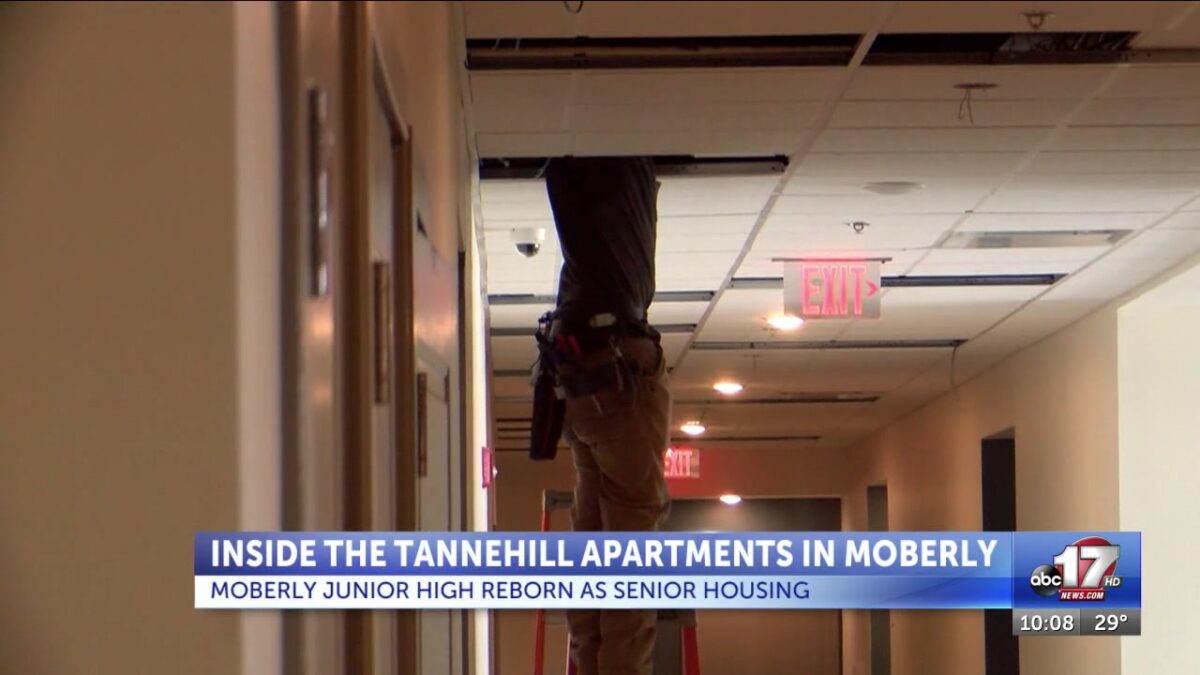
After sitting vacant for years and surviving multiple failed redevelopment attempts, the former Moberly Junior High and High School is nearing a new chapter as Tannehill Apartments, a 40-unit affordable housing complex for residents 55 years old and older.

The $22.1 million project is a partnership between ND Consulting Group and the Northeast Community Action Corporation, combining the renovation of the historic school building with new construction on the site. Sixteen apartments were created inside the original school, while 24 new units were added to the rear of the property. It is expected to open by Feb. 15.

The project is part of a growing trend across the US of adaptive reuse projects that turn former public school buildings into living spaces. In 2024 alone, nearly 2,000 apartments were created from former schools. 

Ken Nuernberger, president of ND Consulting Group, said former schools often translate well into housing because of their layout.

“Schools are ideal because the classrooms run between 800-and-1,000 square feet, which is about the size of an apartment,” Nuernberger said, noting the abundance of windows allows for natural light in both living spaces and bedrooms. 

He added that the old Moberly Junior High School worked particularly well for conversion into 16 units inside the original structure. But preserving the building was far from simple.

Nuernberger said earlier redevelopment proposals stalled largely because of an addition on the back of the school that included a gymnasium on the upper floors. Renovating that portion of the building proved too costly and impractical, leading to repeated rejections from the Missouri Housing Development Commission.

“We decided that the best way to get this building on the front saved is to add an additional 24 units on three stories to the rear,” Nuernberger said. Those units were designed specifically for seniors and allowed the project to move forward financially.

Cost challenges plagued the site for years. Nuernberger said a previous developer attempted to use the lower level of the school, which resulted in expensive and unattractive units. Historic tax credit requirements also limited design flexibility, forcing the development team to repeatedly revise plans.

“In some cases, if you are going to use historic tax credits, some of the standards for the interior of the building would have made it less practical to use it,” Nuremberg said, “So in the end, the combination over time to continue modifying, adapting the plan to what you will see today as a renovated 16 units and a new construction of 24 units was really the challenge.” 

Construction broke ground just more than two years ago, though post-COVID-19 supply chain issues and rising costs slowed progress. Crews are now installing final finishes and preparing units for occupancy.

“It was a community project,” Nuernberger said, crediting support from the city, the historic society and downtown business leaders. “They also liked this project because instead of building a new senior project on the prairie outside of town, this is right in the core of the town.” 

Tom Sanders, Moberly’s Public Works director, said many residents and elected officials have personal ties to the 1930s-era Moberly school, which was attended by Gen. Omar Bradley. 

“A lot of residents, former council members and current council members had attended school here,” Sanders said, “So everybody has a story of what’s important to them.”

Sanders said the city had supported earlier redevelopment efforts for nearly 20 years, but repeated changes to the project model prevented it from gaining traction. ND Consulting became involved about six years ago, bringing a plan that finally aligned preservation goals with financial feasibility.

“The gym on the back was a big factor that it wasn’t going to be financially viable,” Sanders said. He said the city temporarily took ownership of the building and agreed to demolish the gym in 2018 in exchange for parking improvements for the nearby aquatic center.

The city spent $84,000 to remove the gym, a move that reduced redevelopment costs and strengthened the project’s tax credit application.

“It was a mutually beneficial thing,” Sanders said. “A lot of credit doesn’t go to the city for the efforts they make to save old buildings, but they have to be viable projects for it to happen.”

Sanders said the project also addresses a growing housing need in Moberly. A 2018 housing study showed the city needed roughly 400 additional units over a decade. While construction had historically averaged about 20 units per year, development surged recently, with 89 units added last year alone.

Tannehill Apartments includes one- and two-bedroom units ranging from 632-1,000+ square feet. Rents range from about $650 for one-bedroom units to $680 to $725 for two-bedroom units. All one-bedroom apartments have been rented, and most two-bedroom units are already occupied.

Apartments include furnished kitchen appliances, washer and dryer hookups, centralized mailboxes and secure key-card entry. Section 8 vouchers are accepted.

Funding for the project includes a $2.6 million home loan from the Missouri Housing Development Commission, along with federal and state low-income housing tax credits. Those credits generated roughly $10.5 million in equity, with investments from Midwest Housing Equity Group and Monarch Private Capital.

When renovations are complete, the 1930s-era school will reopen as Tannehill Apartments, preserving a landmark while meeting the city’s growing demand for affordable senior housing.

Click here to follow the original article.
Former Deer Ridge officer caught in illicit prison relationship loses certification for life

Harley Coldiron

MADRAS, Ore. (KTVZ) – State officials revoked the certification of Emily Fisk, a former corrections officer at Deer Ridge Correctional Institution, following an investigation into a sexual relationship she had with an inmate. Fisk resigned from her position in 2022 instead of termination after authorities discovered the unauthorized relationship and determined she had been untruthful during an internal inquiry.

The Corrections Policy Committee found that Fisk engaged in sexually harassing conduct and misused her position to develop an inappropriate relationship with an adult in custody. While Fisk initially provided misleading information to the Department of Corrections, investigators confirmed she had sent the inmate sexually explicit letters and participated in a plan to provide him with contraband.

The investigation sustained findings that Fisk authored four sexually explicit letters to the inmate. In one of the letters, Fisk wrote that she “was all his,” a statement she initially denied making. Investigators also found that she had added the individual as a friend on Facebook.

Corrections Policy Committee, Minutes 11-12-25Download

Fisk reportedly admitted to writing four letters only after she was confronted with evidence, having previously claimed there was only one. She also falsely claimed the letters were written during her trial service period, though they were actually written after that period had ended. Melissa Lang-Bacho, the professional standards compliance coordinator who presented the review, noted during the proceedings that Fisk was “incapable of telling the truth” throughout the process.

The Corrections Policy Committee identified multiple moral fitness violations, including dishonesty and misuse of authority. Fisk’s actions were found to have threatened the efficient operation of the Department of Corrections by violating the federal Prison Rape Elimination Act. The report noted that the inmate involved was legally unable to provide consent.

Officials expressed specific concern regarding a request from the inmate for Fisk to provide him with contraband. According to the committee report, Fisk took steps to contact a third party as part of a plan to supply the prohibited items. While there was no evidence that contraband was actually delivered, the report stated that Fisk attempted to set up a post office box for the inmate. The third party involved ultimately chose not to participate in the scheme.

A search of public records indicates Fisk has not faced criminal penalties related to the investigation. This differs from a previous case at the same facility involving Jobett Zamora, a former contract worker. Zamora served 10 days in jail last year after it was discovered she had a sexual relationship with an inmate at Deer Ridge.

The Jefferson County District Attorney’s office has not yet provided information regarding why criminal charges have not been filed against Fisk. A request for comment was left with the office seeking clarification on the status of the case.

KTVZ News wants viewers to know that we have firsthand witnessed many positive programs happening at the Correctional Facility. In 2025, we captured a historic basketball game between the inmates and guards. It’s part of a larger program to show inmates their true potential.

We’ve also reported on the many educational programs they have inside the prison.

Click here to follow the original article.

Warm Springs man sentenced to 20 years in federal prison for abusing two minors

Barney Lerten

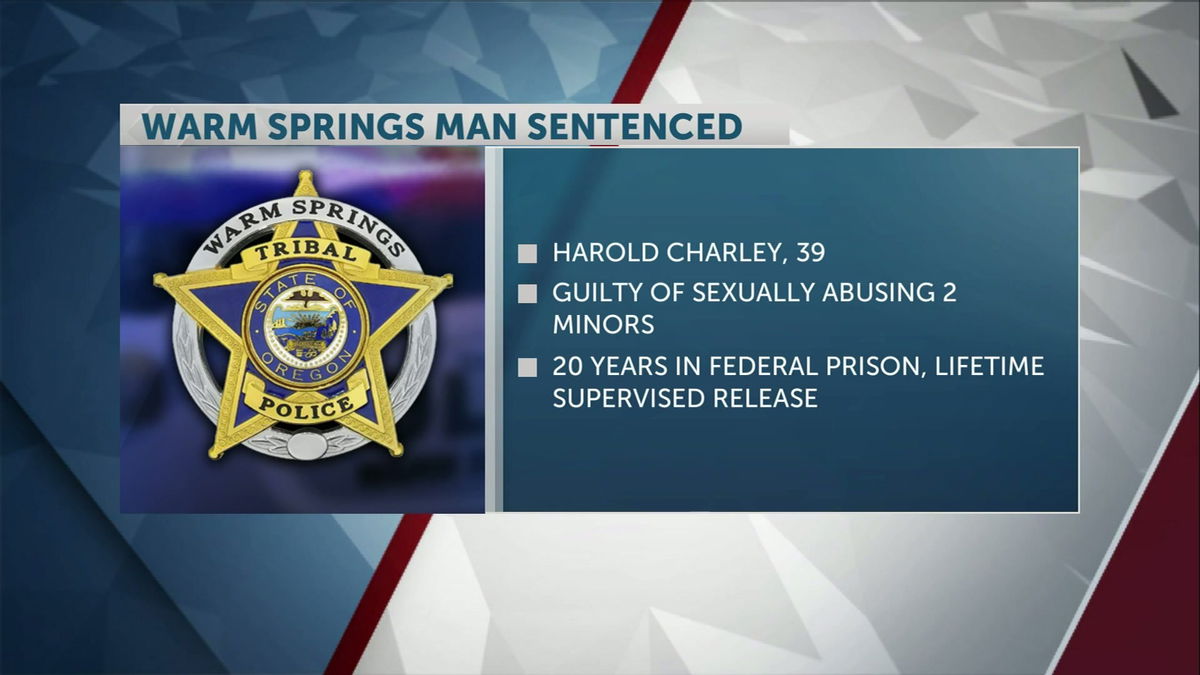
PORTLAND, Ore. (KTVZ) — A Warm Springs man who admitted last fall he sexually abused two minors on the Warm Springs Indian Reservation in 2024 was sentenced Tuesday to 20 years in federal prison.

Harold Charley, 39, also was sentenced to a lifetime term of supervised release, federal prosecutors said in a news release.

According to court documents, in January of 2024, Charley, a prior sex offender, “engaged in sexual abusive contact with two minor victims between the ages of 12 and 16 over the course of several weeks on the reservation,” they said.

Last Sept. 23, Charley was charged with two counts of abusive sexual contact. Two weeks later, he pleaded guilty to the charges.

This case was investigated by the FBI, with help from the Warm Springs Police Department. It was prosecuted by Assistant U.S. Attorney Pamela Paaso.

This case was brought in collaboration with Project Safe Childhood, a nationwide initiative to combat the growing epidemic of child sexual exploitation and abuse, launched in May 2006 by the Department of Justice.

Led by the U.S. Attorneys’ Offices and the DOJ’s Child Exploitation and Obscenity Section, Project Safe Childhood marshals federal, state, and local resources to locate, apprehend, and prosecute individuals who exploit children, as well as identify and rescue victims.

For more information about Project Safe Childhood, please visit www.justice.gov/psc.

Click here to follow the original article.

Springfield MO police say fewer pedestrians stand in medians after city passed 2018 ordinance

Marie Moyer

COLUMBIA, Mo. (KMIZ)

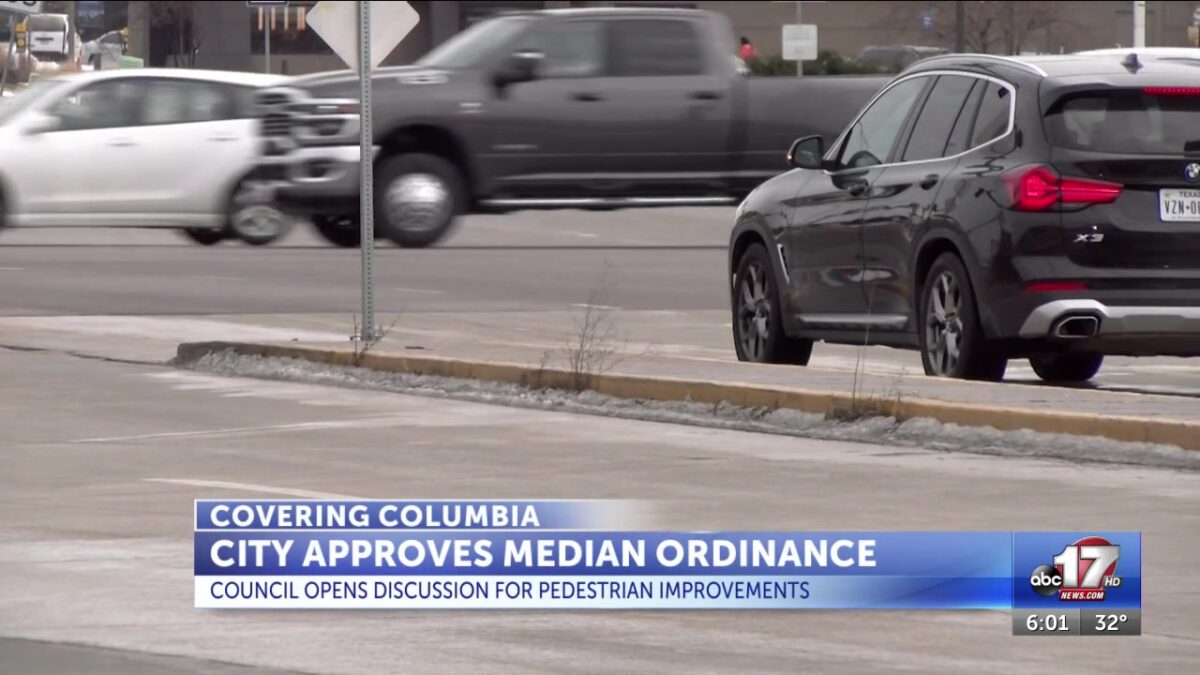
Starting July 1 this year, the City of Columbia is set to roll out its recently approved median ordinance.

The City of Springfield, Missouri, has had a similar median rule in place since 2018. Both ordinances focus on medians in intersections with speed limits of 35 miles per hour or higher, average daily traffic volumes of at least 15,000 vehicles, or medians narrower than six feet.

The City of Columbia’s ordinance also will:

Prohibit crossing a major road anywhere except in a crosswalk, a pedestrian-control signal, or an intersection if those things aren’t available.

Prohibit being on a median fewer than 6 feet wide except when crossing the road.

Prohibit getting out of cars while in a traffic lane or within a major intersection.

Prohibit approaching cars on a major road unless the car is legally parked.

Prohibit people in vehicles from engaging with pedestrians at major intersections.

According to Maj. Eric Reece with the Springfield Police Department, the rule has made a difference in the number of pedestrians at medians.

“Yes, our hazardous intersections definitely have less people in the area, hopefully that’ll keep everybody safe,” Reece said.

Columbia’s median ordinance faced pushback the City Council approved it with a 5–2 vote on Monday night, with 39 speakers voicing concerns on the rule potentially targeting homeless individuals. Additional concerns include how the rule will be enforced by police.

“Enforcement is one of those questions that came up a lot in council last night, ‘well, how would this be enforced? Will enforcement make situations more dangerous than they are?’ and that was certainly some of my concerns,” said Mike Burden, who is the chief executive officer of the Columbia pedestrian and cyclist advocacy group Local Motion.

Reece said the Springfield Police Department handles median enforcement similar to traffic enforcement by adding it to typical patrol responsibilities for officers.

“We always try to educate first and then we move towards enforcement later on, so it’s really about the discretion of the officer,” Reece said.

Burden added while there may be community concerns about the ordinance targeting certain groups, he is looking to work with the city on other pedestrian safety legislation.

“We didn’t really feel like the ordinance was the right tool to improve pedestrian safety in our community,” Burden said. “However, I’m heartened by the conversations I heard from council members and members of the public who said, ‘this conversation continues.'”

Columbia is currently working on a pedestrian and road study on Business Loop 70, funded by a $2.1 million Reconnecting Communities and Neighborhoods Grant from the U.S. Department of Transportation.

“The team has been working on site surveys of the planning area in preparation for some input meetings in the next couple of months,” Carrie Gartner, executive director of The Loop CID, said in a statement.

Click here to follow the original article.

‘Likely the largest structure fire to occur’: No injuries and multiple building loss reported in massive Cameron fire

Leah Rainwater

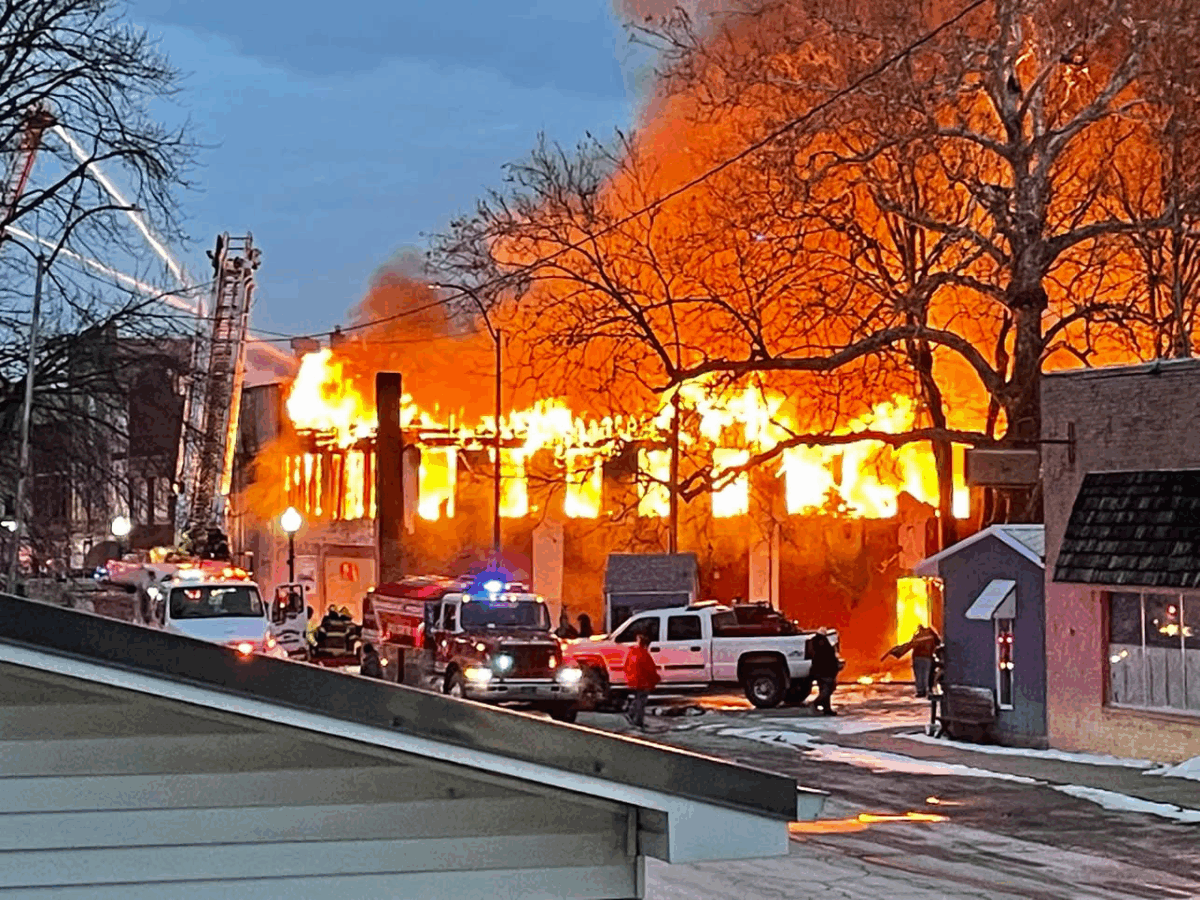
CAMERON, Mo. (KQTV) — No injuries were reported in one of the largest structures fires to occur in Cameron, Missouri, history on Tuesday.

Cameron Police Department Captain Ryan O’Boyle said a call came in around 2 p.m. Tuesday for a structure fire on West Third Street.

Police arrived on scene at 2:02 p.m. and the Cameron Fire Department arrived at 2:04 p.m.

Smoke and flames were still seen across the city, over six hours later.

O’Boyle said the fire caused a complete loss to several buildings, which included businesses and the apartments above them.

news release from the Cameron Police and Emergency Management said, “This was likely the largest structure fire to occur in Cameron in the past 20 years.” 

O’Boyle said the fire wouldn’t have been contained without the help of several other surrounding fire agencies, as an incident of this magnitude could not have been managed by one department alone.

“It was a great effort though…Had multiple agencies from all around. (Central) DeKalb County, St. Joe, of course, the Cameron Fire Department,” said O’Boyle. “They had seven total that showed up.”

The Osborn Fire Protection District, the Hamilton Fire Department, Union Star Fire Department, Clarksdale Fire Department, Sweartsville Fire Department and KAW Fire District also assisted in the mutual aid response.

O’Boyle said the fire was about 95% contained just before 8:30 p.m.

All animals, including an iguana, multiple cats and multiple dogs were also accounted for.

The news release detailed that the Cameron Utility and Street crews played a vital role throughout the incident, while additional law enforcement agencies provided traffic control, barricades and helped keep onlookers safe at a distance. 

During the response, Cameron Police and Emergency Management said businesses and organizations like Walmart, Casey’s General Store, Wood Shed, Pizza Hut, McDonald’s and others provided supplies.

“A huge thank you to…local businesses and community members who stepped up with food, drinks, handwarmers and other supplies to help take care of crews on scene,” said the news release.

The Cameron Area Chamber of Commerce issued a statement on its Facebook page about the incident.

“Our hearts are heavy as the impact of the fire on 3rd Street continues. We are keeping the business owners, employees and families affected in our thoughts and prayers during this incredibly difficult time.”

Cameron United Methodist Church also said, as of 8:40 a.m. Wednesday, the families affected by the fire are working with the Red Cross, and a list of needs is being compiled.

The church said it will post a list on its Facebook page and other places when it becomes available. 

Other individuals and organizations are also working on collecting items for those affected by the fire. 

The cause of the fire is now under investigation. 

Click here to follow the original article.