Gunfire in Banning park prompts investigation

City News Service

BANNING, Calif. (KESQ) – Gunfire today in a Banning park prompted an immediate police response, but the parties doing the shooting fled before officers arrived, with no indications of injuries.

The “shots fired” call was received shortly before noon Thursday in Repplier Park, adjacent to the Playhouse Bowl in the 300 block of West George Street, according to the Banning Police Department.

“Witnesses in the park reported hearing shots and observing subjects running from the park,” police Capt. Brandon Smith said. “Officers … located expended shell casings at the location. The subjects involved in the incident were reported as being young adult males.”

There was nothing to suggest anyone was injured because of the gunfire, he said.

“Schools in the area were on brief lockdown but resumed normal operations after the scene was determined to be safe,” according to the captain.  

The investigation is ongoing. Anyone with information was asked to contact the police department at 951-922-3170.

Click here to follow the original article.

Free Mental Health Counseling Now Available to City College Students

Alissa Orozco

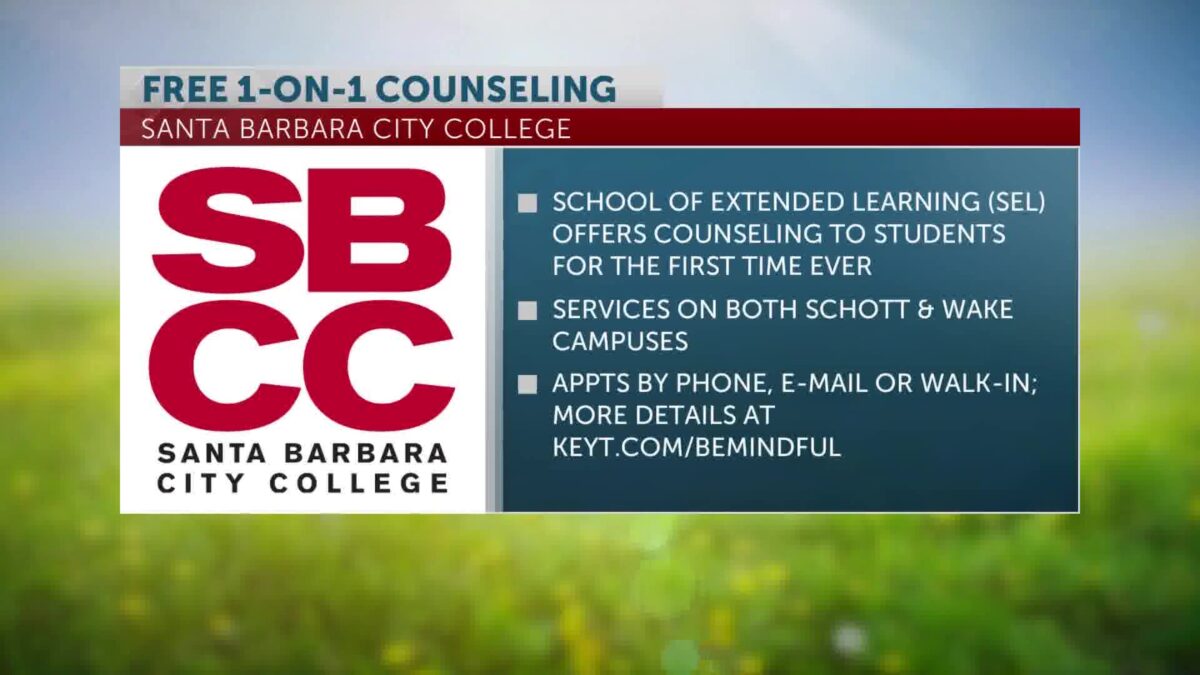
SANTA BARBARA, Calif. (KEYT) – As part of Santa Barbara City College’s School of Extended Learning (SEL), students can now receive one-on-one mental health counseling at no cost for the first time ever.

Counseling and referrals to resources will now be available to students on both Schott and Wake campuses assist students with a wide variety of issues, both personal and academic. The college says the services aim to help students with coping/stress management skills, emotional support, and general life management skills. 

“The mental health counseling will help SEL students enrich and enhance their personal lives and personal growth, which will then advance them in achieving their educational goals,” said Monica Campbell, Director of SBCC’s School of Extended Learning. 

Students can access these services by visiting the SBCC Mental Health Counseling Department, call (805) 898-8190, or emailing at selmentalhealthcounseling@pipeline.sbcc.edu

The Latest Breaking News, Weather Alerts, Sports and More Anytime On Our Mobile Apps. Keep Up With the Latest Articles by Signing Up for the News Channel 3-12 Newsletter.

Click here to follow the original article.

New Mexico Governor signs multiple bills into law

Valeria Medina

SANTA FE, New Mexico (KVIA) — New Mexico Governor Michelle Lujan Grisham signed four bipartisan bills today halfway into the legislative session. These bills are aimed at improving infrastructure, expanding the health care workforce, and addressing immigration detention concerns.

The bills the governor signed are: 

House Bill 9: Immigration Safety Act — Prohibits state and local governments from entering into or renewing agreements to detain individuals for federal civil immigration violations and requires termination of any existing such agreements. The bill also prevents public entities from using public property to facilitate immigration detention while preserving law enforcement’s ability to conduct lawful stops and detentions. 

Senate Bill 1: Interstate Medical Licensure Compact — Makes practicing medicine in New Mexico easier for physicians licensed in other compact states.

House Bill 50: Interstate Social Work Licensure Compact — Streamlines licensure process for social workers.

Senate Bill 2: Transportation Bonding Bill — Gives a reliable source of funding for infrastructure projects across the state; this includes projects for roads, bridges, and transportation systems.

Governor Lujan Grisham issued a statement, saying, “These bills represent major progress on issues that matter to working families, including safer roads, and more doctors and social workers to serve our communities. I look forward to getting even more done with lawmakers during the second half of the session.”  

Click here to follow the original article.

Low snow prompts Oregon Adaptive Sports to move two upcoming youth events from Hoodoo to Mt. Bachelor

Barney Lerten

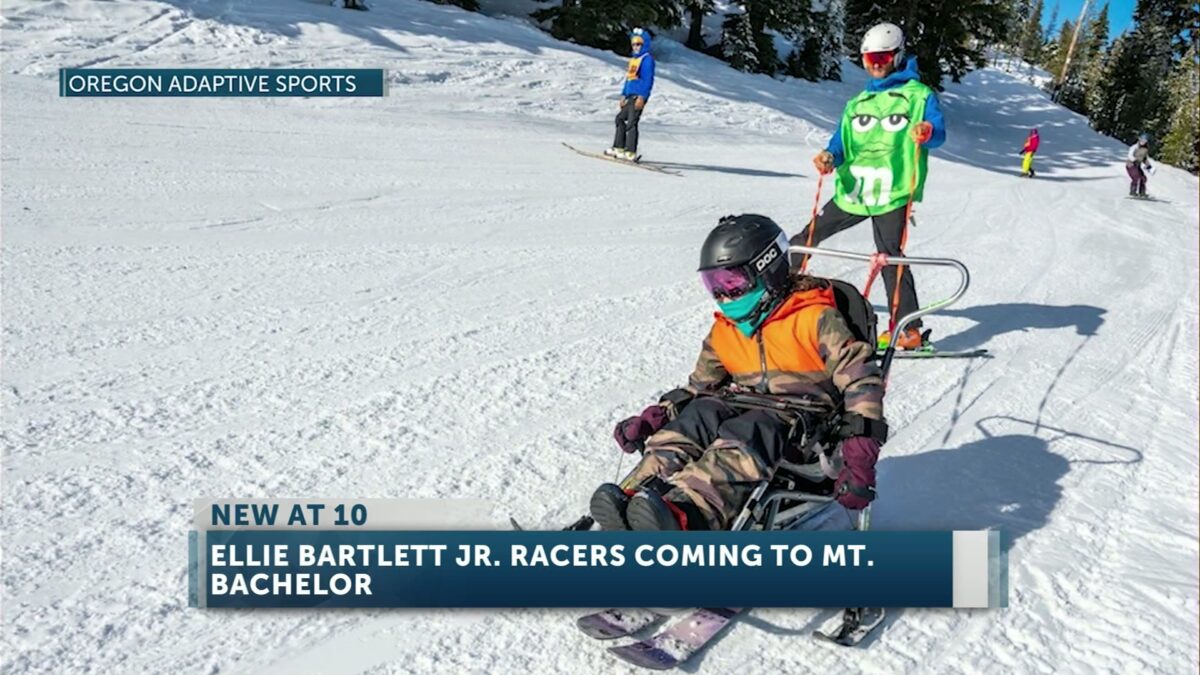
BEND, Ore. (KTVZ) — Low snow conditions have prompted Oregon Adaptive Sports to move this Saturday’s Ellie Bartlett Junior Racers adaptive skiing event and the following weekend’s CamPAH! snowsports camp from Hoodoo Ski Area to Mt. Bachelor.

The junior racing event provides young athletes with disabilities a low-barrier entry point into alpine sports. The program focuses on a non-competitive experience for youth in Central Oregon.

The events are typically held at Hoodoo Ski Area but was relocated to Mt. Bachelor this year due to challenging snow conditions. Organizers said the temporary move allows them to maintain safety and appropriate on-snow conditions for participants while continuing the seasonal program.

The Bartlett Junior Racers event is structured to prioritize time on the snow, rather than competition. Participants ski in a supported environment that emphasizes exploration and repetition.

This non-competitive approach is designed to encourage participation among children and young adults with disabilities.

The event is named in memory of Bartlett, who was a prominent member of the Oregon Adaptive Sports community. Bartlett was known for her work recruiting and organizing volunteers from the University of Oregon to support adaptive programs.

The Bartlett Memorial Fund provides financial support for the event to ensure it remains a low-barrier opportunity for youth athletes.

For more information about Ellie Bartlett Junior Racers or Oregon Adaptive Sports youth programs, visit:https://oregonadaptivesports.org/sport/ellie-bartlett-jr-racers/

OAS also will host CamPAH!, a deaf-centric adaptive snowsports camp for deaf and hard of hearing youth, on Feb. 14–15. Traditionally held at Hoodoo Ski Area over President’s Day weekend, CamPAH! will take place at Mt. Bachelor this season due to low snow conditions.

CamPAH! serves deaf and hard of hearing youth athletes ages 10–19 who want to learn or improve their skiing or snowboarding skills in an environment designed specifically for visual communication and cultural connection.

The camp operates entirely in American Sign Language, with volunteer coaches who are fluent in ASL and are Deaf, CODA, and/or professional interpreters, ensuring direct communication and meaningful access on snow.

Since its founding in 2013, CamPAH! has supported nearly 200 Deaf and Hard of Hearing youth athletes as they begin and continue their snowsports journeys. Founded with leadership from Cara Frank, Development Director at Oregon Adaptive Sports, the program was created to establish a Deaf-friendly space on the mountain where access is foundational rather than accommodated. 

The program’s name, CamPAH!, reflects the ASL sign “PAH,” which conveys a sense of “finally” or “success at last” in an upbeat, celebratory way. That meaning echoes the experience many athletes and families describe — the impact of participating in a program where communication access is built in, not adapted as an afterthought.

CamPAH! continues to demonstrate the importance of Deaf-centered instruction and culturally responsive access in outdoor recreation. Parents consistently point to both skill progression and confidence gained through the program.

“You all did an amazing job. I can’t stop talking about the positive impact this had on my son. He engaged in a different and more sophisticated way, and his skiing skills improved over the weekend. We came for exposure to Deaf culture and to try something new — I didn’t expect him to love skiing, love his teachers, and grow so much. Now he wants to do it every weekend. We can’t wait to come back next year.”— Parent of CamPAH participant 

CamPAH! is one of the few deaf-centric adaptive snowsports camps of its kind in the United States and highlights the value of culturally responsive programming and community-led access in outdoor recreation.

For more information about CamPAH! and OAS programs, visit oregonadaptivesports.org/sport/campah/.

Oregon Adaptive Sports, founded in 1996 provides adaptive outdoor recreation throughout the year.

The organization offers various programs for children and young adults with disabilities across Central Oregon, including Alpine skiing, snowboarding, Nordic skiing, cycling, mountain biking, hiking, paddling, and golf. These programs aim to provide consistent access to outdoor activities in the region.

Click here to follow the original article.

MSHP warns of growing number of cryptocurrency fraud across the state

Leah Rainwater

MISSOURI (KQTV) — The Missouri State Highway Patrol’s Division of Drug and Crime Control is warning the public about a growing number of cryptocurrency fraud cases reported across the state.

Investigators have seen a considerable increase in scams often targeting older adults and other members of the public, resulting in significant financial loss.

MSHP said criminals are using the internet, social media, email, dating sites, end-to-end encrypted messaging apps and phone calls to convince victims to send money through cryptocurrency, like Bitcoin or other cryptocurrencies.

The scams are designed to appear legitimate and frequently rely on urgency, fear or promises of guaranteed returns. MSHP said that many times, the victim will be groomed and have established mutual trust with the scammer before money is requested.

Anyone who believes they have fallen victim or if someone suspicious has reached out is encouraged to call local law enforcement as soon as possible.

Common warning signs of cryptocurrency fraud include:

Pressure to act quickly or claims that immediate action is required to avoid arrest, financial loss or legal trouble.

Requests for payment in cryptocurrency, gift cards, wire transfers, Bitcoin ATM (or kiosk).

Unsolicited contact from individuals claiming to represent government agencies, financial institutions, tech support or investment firms.

Promises of guaranteed profits or “risk-free” investment opportunities.

Instructions to keep the transaction secret, including requests not to tell family members, friends, law enforcement or bank employees.

Online relationships (romance schemes) that quickly turn into requests for money or investment assistance.

Requests for personal or financial information are sent through email, text message, or social media.

MSHP said legitimate agencies and law enforcement do not request payment in cryptocurrency, gift cards or wire transfers. Reporting the scams as soon as possible will help assist in the recovery of funds.

Scammers often impersonate trusted organizations or individuals to gain credibility with the potential victim.

Cryptocurrency owners should never share their wallet’s seed phrase and should always confirm the legitimacy of the websites and apps before logging into their accounts.

If individuals are asked to withdraw or deposit cash into a Bitcoin (BTC) kiosk, pause and read the kiosk’s disclaimers carefully, as they often include fraud warnings.

MSHP encourages cryptocurrency users to take time to verify requests for money or information, talk with a trusted family member, friend or financial professional before making financial decisions and to report suspected fraud immediately to local law enforcement and MSHP.

Cryptocurrency owners should always use two-factor authentication on all crypto accounts, keep their devices updated and use strong passwords.

MSHP said anyone who believes they have been targeted or victimized by a scam should contact the Attorney General’s Consumer Protection Hotline at 800-392-8222 or file a complaint online at the Attorney General’s website.

Click here to follow the original article.

St. Joseph health officials warn of highly addictive opioid compound being sold in stores

Patrick Holleron

ST. JOSEPH, Mo. (News-Press NOW) — The St. Joseph Health Department is alerting the community about an increase in a dangerous and highly addictive opioid being found in retailers known as 7-hydroxymitragynine, a concentrated form of kratom.

According to the Missouri Department of Health and Senior Services, the substance can be 13-times more powerful than morphine or heroin, posing a serious risk for a fatal overdose. It also presents a significant risk of respiratory depression, a dangerous condition where breathing becomes abnormally slow and shallow.

“It’s very disturbing that this new concentrated form of kratom can be obtained with no restrictions. It is so powerful that it takes two to three times the medication that we use on patients who are addicted to fentanyl. The nickname for 7-OH is ‘gas station heroin.’ I don’t feel that any drug this powerful should be available to the general public,” said Dr. Robert Corder, medical director at the St. Joseph Health Department, in a new release on Thursday.

Small traces of 7-OH tend to occur naturally within the kratom plant, but is now being found in both concentrated and unregulated forms for recreational use in cases of stimulant, sedation or pain relief.

7-OH products are typically sold at public stores such as gas stations, convenience stores and smoke and vape shops, a growing number of which are popping up in St. Joseph. It can be found within powders, beverages, edibles, capsules or beverages along with being packaged as candy or snack based products.

According to the city, the U.S. Food and Drug Administration has recommended scheduling action under the Controlled Substances Act for certain products containing 7-hydroxymitragynine. Neither kratom nor 7-OH has an FDA-approved medical use. In early December, federal authorities seized approximately 73,000 units from warehouses, including two in the Kansas City area.

The St. Joseph Health Department strongly recommends residents to consult a healthcare provider before using supplements marketed for pain, energy or mood relief. If someone becomes unresponsive after using a product containing or believed to contain 7-OH, call 911 immediately and administer naloxone if available.

Click here to follow the original article.

Rancho Mirage issues ‘stop work order’ to Omni Rancho Las Palmas Resort & Spa

Shay Lawson

RANCHO MIRAGE, Calif. (KESQ) – Some Rancho Las Palmas Country Club homeowners are raising concerns about the Omni Rancho Las Palmas Resort & Spa bringing in heavy equipment, fencing, portable restrooms and piping a week ago without obtaining permits.

Lisa Christensen

Gabe Codding, Rancho Mirage Director of Marketing, confirmed the city issued a stop-work order as the proper permits had not been secured.

Codding added that, “Due to the ongoing nature of this active Code Compliance investigation, that is all the information we can provide at this time.”

News Channel 3 reached out to the Omni Rancho Las Palmas Resort & Spa.

In a statement a spokesperson said:

“Omni values its longstanding relationship with the Rancho Las Palmas community and is thoughtful about the future of the resort. No construction has begun at the property. Materials were delivered to the site, but Omni will not start work without all required permits. Permits have been delayed, and Omni is fully complying with the City’s stop-work order as the process moves forward. At this time, there is no confirmed timeline to resume work.”

Stay with News Channel 3 for continuing coverage as Shay Lawson speaks with concerned homeowners.

See the full report at 10 p.m. and 11 p.m.

Click here to follow the original article.

Idaho House passes bill to nullify local LGBTQ+ protections

Seth Ratliff

BOISE, Idaho (KIFI) — The Idaho House of Representatives approved legislation Thursday that would strip 13 cities of their ability to enforce local anti-discrimination ordinances protecting LGBTQ+ residents. House Bill 557, titled the “Uniformity in Local Antidiscrimination Ordinances Act,” passed in a 53-16 vote and now heads to the State Senate for consideration.

If passed, the bill would prohibit cities and counties from enforcing civil rights protections that exceed those recognized under state law. Because Idaho’s state-level Human Rights Act does not currently include sexual orientation or gender identity as protected classes, the move would effectively nullify existing local protections across the state.

RELATED: Idaho Bill seeks to nullify local LGBTQ+ anti-discrimination ordinances

Religious Freedom vs. Public Accommodations

The bill, sponsored by Rep. Bruce Skaug (R-Nampa) and drafted by the conservative Idaho Family Policy Center, was framed by supporters as a necessary shield for religious liberty and local business owners.

In debate, Representative Barbra Ehardt (R-Idaho Falls) reflected on her time running for the Idaho Falls City Council in 2013, as the City first passed a non-discrimination ordinance protecting against LGBTQ+ discrimination. She argued that while original advocates for these ordinances focused on housing and employment, the real goal was forcing business owners to violate their beliefs in the public sphere.

“As it was being pushed forward, everybody pushing it only addressed employment and housing because they wanted us to believe that somehow those of our friends who are LGBT would be kicked out of their housing or removed from their employment,” said Ehardt. “What they really wanted was public accommodations.”

Public accommodation laws ensure that businesses providing goods or services to the general public—such as restaurants, hotels, and retail shops—must provide equal access regardless of disability, race, color, religion, or national origin.

In the case of LGBTQ+ protections, public accommodations laws became the central issue in the 2018 U.S. Supreme Court case involving Colorado’s Masterpiece Cakeshop, where a baker refused to create a wedding cake for a same-sex couple. The Supreme Court found that Colorado Anti-Discrimination Act violated the store owner’s constitutional rights.

Ehardt’s arguments echo statements by the Idaho Family Policy Center, arguing that such ordinances are frequently weaponized against small business owners who don’t want to participate in events that violate their sincerely held religious beliefs.

“That’s what public accommodation does. It raises rights that I would say are not there to usurp a person’s deeply held religious beliefs,” Ehardt told lawmakers.

Perceived Hostility to the LGBTQ+ Community

Opponents warned that the bill sends a damaging message to those outside the state. House Democratic Rep. Ilana Rubel argued that her contacts in the business world have struggled to recruit top talent to the state because of perceived hostility to the LGBTQ community.

“One of the things that gives them that comfort is that we have these municipal nondiscrimination ordinances. This is actually extremely helpful to our business community in being able to recruit and retain top talent,” Rubel told lawmakers. “Stripping these protections away at the municipal level will send a very hostile message.”

Debate over Local Control

All nine house democrats and a handful of republicans opposed the bill. Dissenting House Republicans expressed concerns over a perceived overreach of state power. Rep. Mark Sauter, R-Sandpoint, argued that “local control is a pillar of our state.”

“It just feels like this bill is really using a sledgehammer to kill a fly. And honestly, I don’t feel like we need to have a belt and suspenders,” Sauter told lawmakers.

According to reports by the Idaho Capital Sun, Sandpoint repealed its own anti-discrimination ordinance in November after complaints about a transgender woman allegedly using the women’s facilities at the local YMCA. He noted the city recently managed the difficult choice through community hearings and a council vote.

“We have local control. Sandpoint showed that it worked,” stated Sauter.

Rep. Skaug defended the measure by stating that local governments only hold the authority delegated to them by the state. He argued that the Idaho Legislature has already established a comprehensive framework and that local governments “should not independently meddle with that framework.”

State Democrat, Rep. Monica Church, called the argument for the supreme authority of the state by state Republicans, a “Fever Dream.”

“If we are truly worried that Idaho would fall prey to the urban majority rule, as many of our neighboring states have done, this is literally the worst thing that we could do,” said Church. “Removing local power. This kind of law makes statists and communists salivate.”

Click here to follow the original article.

Supreme Court upholds private education tax credit

Ryan Suppe

Originally posted on IdahoEdNews.org on February 5, 2026

by Ryan Suppe, IdahoEdNews.org

BOISE, Idaho — The Idaho Supreme Court upheld the state’s private education tax credit Thursday. 

The five-member court unanimously agreed that challengers failed to show the Parental Choice Tax Credit violates the state constitution’s mandate that the Legislature fund public schools. The credit is Idaho’s first private school choice program, enacted last year through House Bill 93.

The court also granted attorney fees to the Idaho State Tax Commission, which defended the credit and was represented by Attorney General Raúl Labrador’s office. 

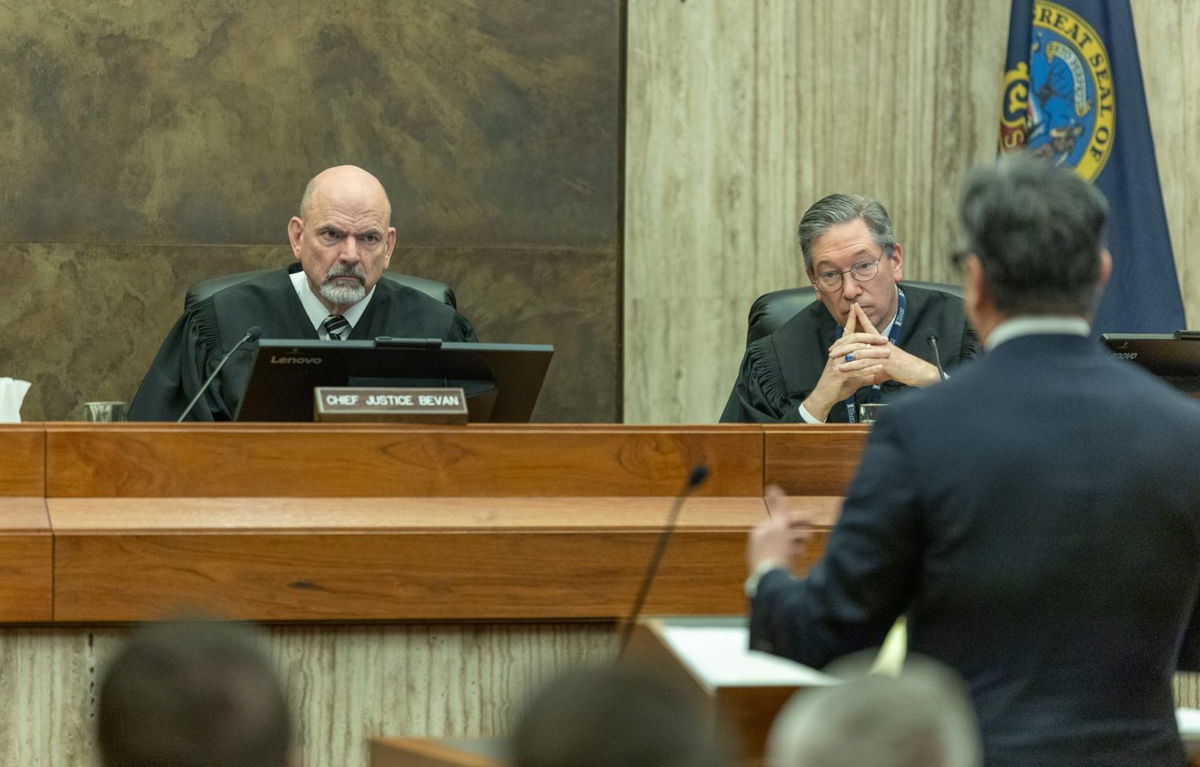
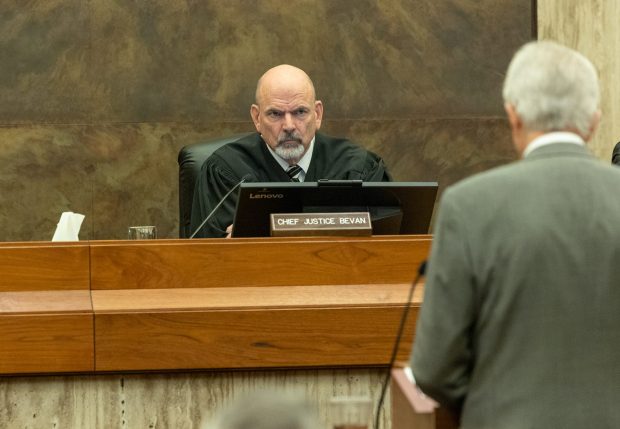
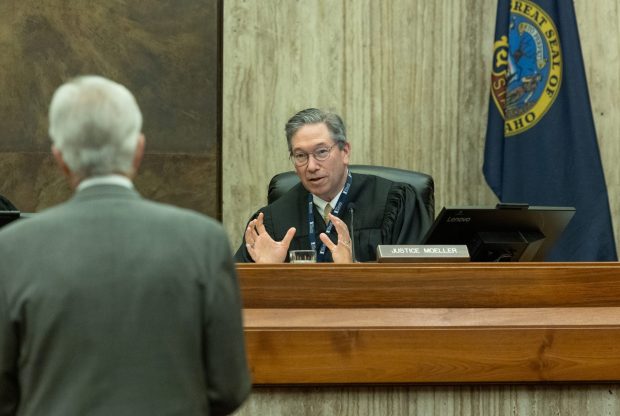
Chief Justice G. Richard Bevan wrote Thursday’s opinion. Justices Robyn Brody, Colleen Zahn and Cynthia Meyer concurred. While Justice Gregory Moeller also concurred, he wrote a separate opinion.

Chief Justice G. Richard Bevan listens to oral arguments at the Idaho Supreme Court on Friday, Jan. 23, 2026, in Boise. (Sean Dolan/EdNews)

The court ruled that a coalition of challengers — including the Idaho Education Association (IEA) and Moscow School District — failed to show that the tax credit violated Article IX Section 1 of the Idaho Constitution. The provision says that the Legislature has a “duty” to “establish and maintain a general, uniform and thorough system of public, free common schools.”

The coalition argued that taxpayer funding for private education creates a separate system that’s tuition-based and not open to all students. 

The court concluded that this reading of the constitution is “inapt.” The interpretation is “unduly restrictive” and disregards the Legislature’s “plenary power” to enact laws that aren’t prohibited by the state or federal constitutions, Bevan wrote in the opinion. 

“Rather, it establishes a floor, and not a ceiling,” Bevan wrote. “When a constitutional provision mandates the legislature do something that it has authority to do, it is not reasonable to read that mandate as restricting the legislature’s broader power to do something more.”

The opinion comes less than two weeks since the court heard oral arguments in the case.

In a joint statement Thursday, the coalition said that while the court found the tax credits “are not unconstitutional,” this “does not mean that they are good policy.”

“Despite this setback, our organizations will continue to advocate for Idaho’s students and public education and believe the Legislature and the voters of Idaho should look critically at this program,” the coalition said.

Justices also rejected the coalition’s argument that the tax credit violates the “public purpose doctrine” implicit in the Idaho Constitution. This legal principle requires that the state spend taxpayer dollars in the public interest, not in private interests. 

The tax credit may “incidentally benefit private enterprise,” Bevan wrote, but this doesn’t transform its purpose into a private one. The chief justice noted that the credit covers more than private-school tuition — it also can be claimed for books, curriculum and other expenses in private- and home-school settings. 

“The fact that some educational services are provided by private actors who may limit the scope of admission to their schools does not make the educational services less beneficial to the public as a whole,” Bevan wrote.

Justice Gregory Moeller speaks during oral arguments at the Idaho Supreme Court on Friday, Jan. 23, 2026, in Boise. (Sean Dolan/EdNews)

Moeller agreed with the other four justices. But he also penned an addendum directed at court-watchers who might call the decision a “landmark” or “watershed” that would make a “fundamental change in the constitutional landscape.”  

“I wish to stress that I do not believe that is what has occurred today,” Moeller wrote. 

He went on to write that the “constitutional foundation for public education…remains firmly intact.” The coalition brought its challenge before the tax credits have been distributed, and the harms they claimed were “hypothetical and speculative.” 

“(Y)et they may be reexamined in the future when the impact of this legislation can be properly ascertained,” Moeller wrote. 

This is a breaking story and will be updated.

Click here to follow the original article.

Phelps County house fire ruled accidental, caused by electrical issue  

Ryan Shiner

COLUMBIA, Mo. (KMIZ)

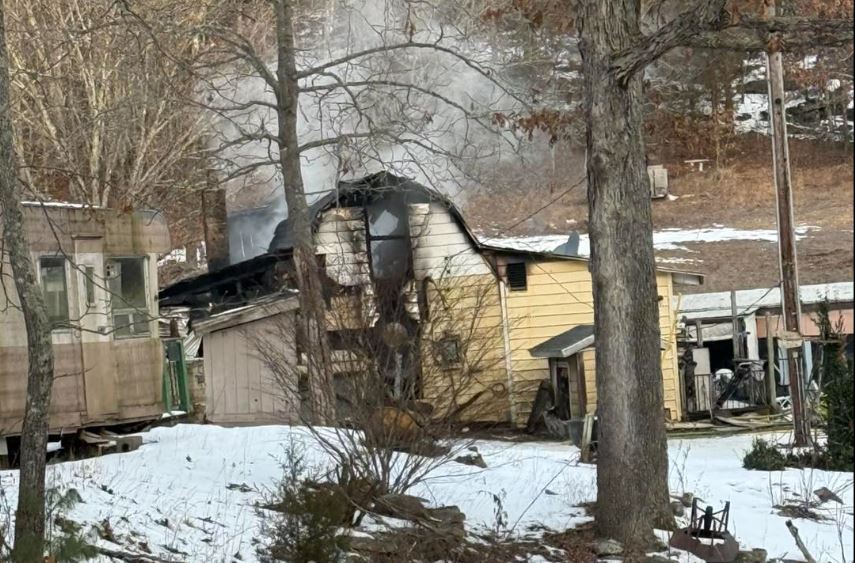
A house that caught fire early Thursday on Route T in Pettis County was accidentally caused by an electrical issue, the Doolittle Fire Protection District announced in a social media post.

Crews were called a 6 a.m. near Poncho’s Garage on Route T for a house fire after residents in the area could see heavy fire, the post says.

Fire was found on the first floor and extended into the second floor and attic, the post says.

“Fire crews initiated an interior fire attack through the front entrance; however, operations were transitioned to a defensive posture due to concerns regarding structural integrity. Personnel remained on scene for approximately three hours conducting fire suppression and overhaul operations,” the post says.

Click here to follow the original article.