INL unveils $15M molten salt testing capability for advanced reactors

David Pace
ATOMIC CITY, Idaho – Idaho National Laboratory is unveiling a new way to test fuel technology for advanced nuclear reactors at the Materials and Fuels Complex, west of Idaho Falls.
“This is a capability that doesn’t exist anywhere else in the world,” said National Reactor Innovation Center Program Manager Josh Gillespie. “When we look at all the different kinds of nuclear reactors that are out there in the world, molten salt reactors are the ones that we have known the least about.”
The new research capability for advanced reactors, known as the Molten Salt Thermophysical Examination Capability (MSTEC), has a price tag of $15 million and took approximately five years to design and construct.
“It’s a new capability we have here … to examine molten salts and to work with our commercial partners to help them drive forward the commercial nuclear industry,” Gillespie said. “… Before we can go off and commercialize these [molten salt] reactors and obtain a lot of the great benefits that they provide, we need to go get a lot of data so we can do this safely, so we can go off and enable the technology.”
Part of the National Reactor Innovation Center, MSTEC is housed at the Fuel Conditioning Facility at the Materials and Fuels Complex.
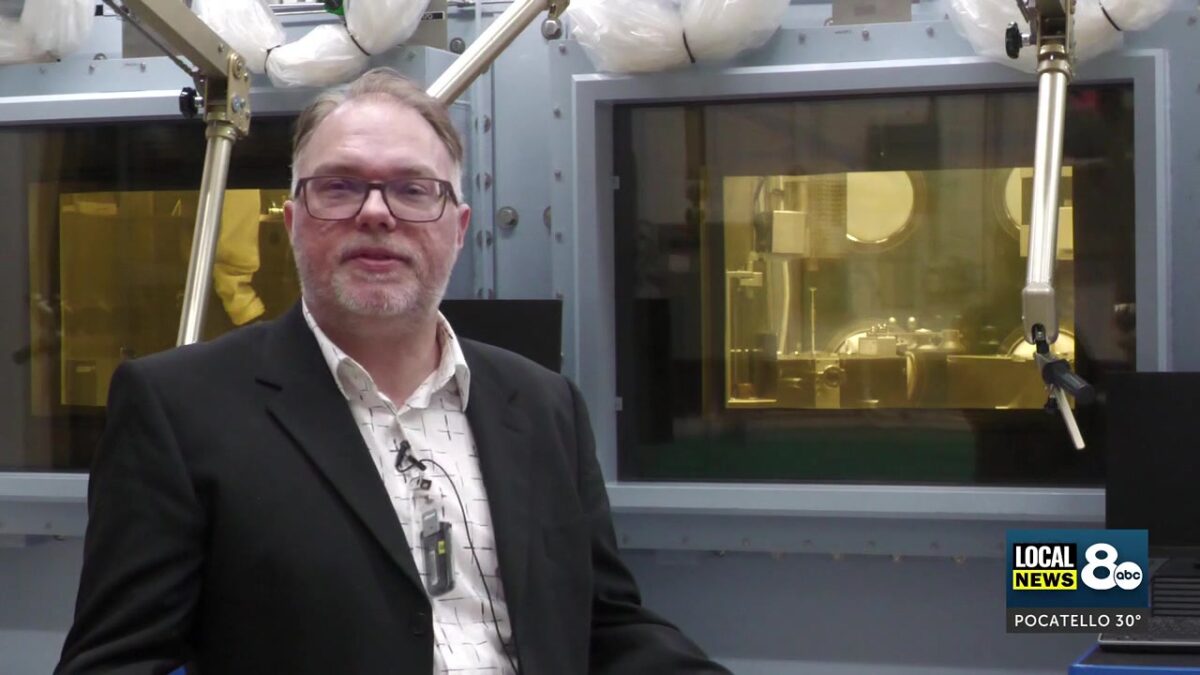
The MSTEC consists of a “state-of-the-art, shielded argon glove box for irradiated and nonirradiated materials, specifically high-temperature liquids such as fuel salts,” according to an INL press release.
“The primary operation, or the primary function, of a glove box is just to keep our researchers safe,” explained MSTEC System Engineer Nathan Petersen. “The stuff that they work on is hazardous, and so we want to make sure that they can perform their research without any kind of ill effects happening to them.”
The glove box contains eight robotic arms. It is designed to research the characteristics of molten salts deployed in certain advanced reactors – measuring up to 1000 degrees Celsius, viscosity, melting temperature and heat transfer, according to MSTEC Research Leader Mikael Karlsson.
Molten salt reactors can use special salt as a fuel, INL researchers said.
“The technology is not as well explored as a traditional reactor, right. So to be able to deploy the new reactor types, we need to be able to collect good experimental data,” Karlsson said.
Idaho National Laboratory is collaborating with partners such as Oklo, Saltfoss Energy, and others to help develop the fuel cycle.
 The Molten Salt Thermophysical Examination Capability (MSTEC) is ready for its debut at Idaho National Laboratory.