Diggs-Johnson Museum dedicated to historians who kept stories alive

By Jennifer Franciotti
Click here for updates on this story
WOODSTOCK, Maryland (WBAL) — A small museum in Woodstock is dedicated to two historians who were passionate about the history of African American life in Baltimore County.
Black history is being preserved inside a restored church from 1887 in Woodstock. The church itself served the Black community after emancipation and the Civil War.
Today, it’s home to the Diggs-Johnson Museum, which is named after Lenwood Johnson, a former Baltimore County government planner, and for Louis Diggs, an author.
“(They’re) two historians, local historians, who researched 40 African American communities and Mr. Diggs put those communities (into) 13 books,” said Betty Stewart, the museum’s historian.
The museum houses many of Diggs’ books that chronicle African American life throughout Baltimore County, starting with his first book, “It All Started on Winters Lane.”
He wrote books on African Americans from Baltimore County who served in various wars, and those he called the “forgotten road warriors” of an all-African American Maryland National Guard unit, of which he was a member.
“He was a substitute teacher at Catonsville High School, and the kids were doing genealogy, and the kids would ask him, ‘Mr. Diggs, we can’t find our history.’ This was the African American kids,” Stewart told WBAL-TV 11 News.
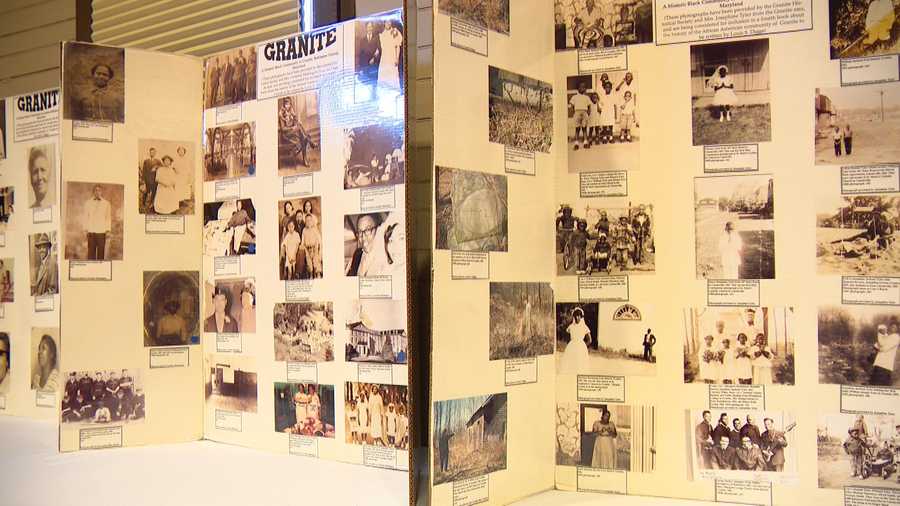
So, he found their history, writing about life in 40 communities. While Diggs died in 2022, his legacy lives on in traveling storyboards created for each community that he wrote about. There is one about the Granite community that focuses on its residents. Stewart said it’s quite emotional for those who see them.
“One lady stood here, crying, saying, ‘My goodness, that’s my mother and father.’ These are the things that some of them have never seen before they asked me. ‘Can I take a picture of it?'” Stewart told WBAL-TV 11 News.
Stewart has made it her mission to keep Diggs’ legacy alive and said it’s fitting that the museum is in a church.
“The church anchored communities, and he wanted the stories (to be told) about not just the people that the communities, (but) the churches, the schools that he thought were so important. He just said ‘Betty, it’s too much to not be told,'” Stewart told WBAL-TV 11 News.
The museum takes visitors by appointment only. Stewart is leading a Black History Month event at the Halethorpe community center on Feb. 28 replete with storyboards of that community and several others nearby.
Please note: This story was provided to CNN Wire by an affiliate and does not contain original CNN reporting. This content carries a strict local market embargo. If you share the same market as the contributor of this article, you may not use it on any platform.