Researchers aim to bring truth to light for racially motivated civil rights cold cases

By Madeline Montgomery
Click here for updates on this story
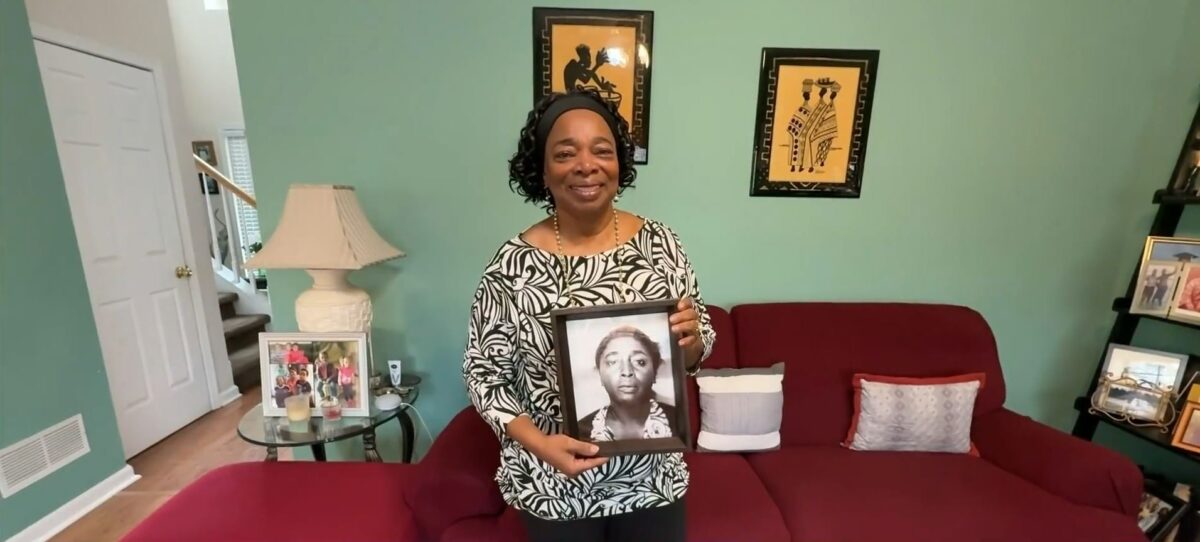
ELLENWOOD, Georgia (WUPA) — A DeKalb County woman now knows the truth of what happened to her grandmother due to records being released by the Civil Rights Cold Case Review Board.
Now, a new bipartisan bill authored by Georgia Sen. Jon Ossoff has passed the Senate and is waiting to pass the U.S. House, which would extend the review board and allow it to keep doing its work.
The goal of the board is to bring justice and closure to families who lost loved ones in racially-motivated killings that have gone unsolved.
“My grandmother lived in Autaugaville, Alabama,” Ellenwood resident Mary DeBardelaben said. “She was a very strong woman. Strong-willed. You know, and she took care of all of her children. She was a sharecropper.”
DeBardelaben never met her paternal grandmother, Hattie.
“My father never said a word about his mother’s death. I think because it was so traumatizing,” DeBardelaben said. “He witnessed her death. So, he was afraid of the police. So, I think one month after her death, he changed his name and moved to Birmingham … My mother is the one who told us she was killed by the police, federal officers, and a deputy.”
Mystery surrounded her death until the family received a letter from the National Archives.
“It said that they wanted to release my grandmother’s files to the National Archive so that in the future people would have access to those files and they would know what happened to my grandmother,” DeBardelaben recalled.
The details were overwhelming for the Georgia woman.
“I sat there at the table and cried until I couldn’t read anymore,” she said.
According to the Civil Rights Cold Case Review Board, four law enforcement officers approached Hattie DeBardelaben while she was washing clothes in her yard in 1945. The review board says the officers were looking for illegal whiskey. After she allowed them to search her home, the review reports that an officer hit her nephew, James Collier. She defended him, and that’s when the records show they began to beat her.
“They killed her by the way they hit her in her own yard. And she was there just trying to wash her clothes. And they knocked her down, even into the boiling pot, you know, of water. So she died a horrible death,” Mary DeBardelaben said.
The details were in the review board’s case summary.
“What we are doing is simply trying to, you know, excavate the records and get them released, review them, review them with the FBI, review them with the Department of Justice, review them with the National Archive,” said Emory University Professor Hank Klibanoff, a co-chair for the Civil Rights Cold Case Review Board.
Congress created the review board in 2018 to help solve thousands of racially motivated crimes and other civil rights violations.
“There’s got to be a reason that this became a bi-partisan bill,” said Klibanoff. “It’s time we look this straight into the eyes and say, ‘This is the record.'”
The National Memorial for Justice and Peace in Montgomery, Alabama, honors the legacy of the thousands of Black people lynched in the United States between 1877 and 1950. The Equal Justice Initiative believes that between the Civil War and the civil rights movement, over 4,400 Black Americans were killed in lynchings.
Monuments stand with many of these victims named, separated by state and county. There is a memorial for people killed in Autauga County, Alabama, but Hattie DeBardelaben’s name isn’t on there. Her granddaughter wants to change that.
“I want the world to know what happened to my grandmother. I want the world to know what happened during the Jim Crow era, you know, was very devastating. And they have no idea how it affected different families,” DeBardelaben said.
The review board has released 40 cases so far, which equals thousands of pages of records. Members of the board hope to release more, giving other families the answers they need.
“If you put the FBI records of whatever nature with the records we get from the NAACP, and local news clips,” said Klibanoff. “There’s just no way we’re ever going to come together as a people unless the truth is out there.”
It’s a difficult truth for many families.
“It’s a terrible story, and I thank the Cold Case Review Board for bringing those last documents to me because they made everything clearer,” DeBardelaben said.
Please note: This story was provided to CNN Wire by an affiliate and does not contain original CNN reporting. This content carries a strict local market embargo. If you share the same market as the contributor of this article, you may not use it on any platform.