Possible “frost quake” causes soil buckling in Metro Detroit

By Ahmad Bajjey
Click here for updates on this story
ST. CLAIR SHORES, Michigan (WWJ) — Residents and business owners in St. Clair Shores, Michigan, near 11 Mile Road and Little Mack, experienced a rare weather phenomenon on Tuesday
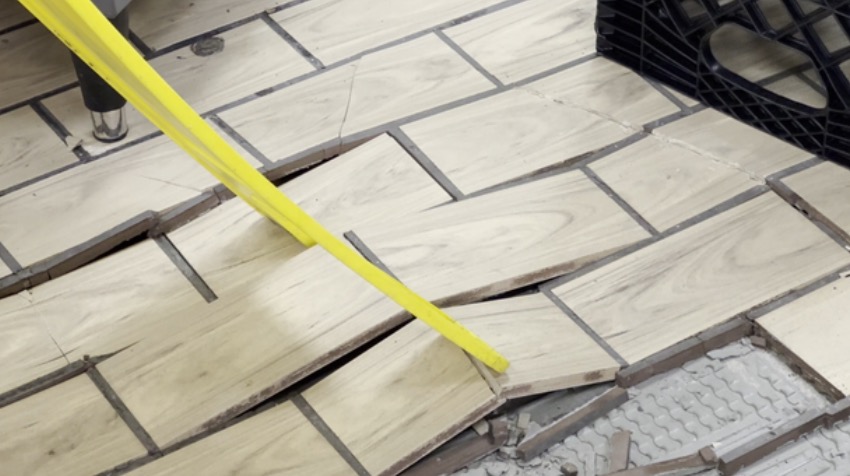
CBS News Detroit received multiple reports of a slight shake, and even some floor damage, due to a potential cryoseism, commonly known as a “frost quake.”
Our news crew on the scene was able to see the buckled tile floor inside a 7-Eleven store.
What is a Cryoseism?
A cryoseism occurs when water in the ground freezes and expands.
Under specific conditions, this expansion puts significant stress on the surrounding soil and rock until it suddenly fractures, sometimes creating a loud boom and ground tremors.
After discussing our working theory about this with the National Weather Service, we are able to add in the sandy soil composition; therefore, the most likely reason the ground had a surface rupture. Unlike clay, which solidifies into a dense block when frozen, the soil in this area is predominantly sand.
Sand is generally more mobile and less cohesive. The ground is made of multiple layers of different soil and moisture content.
The mechanics of Tuesday’s event involve two factors:
Deep pressure: A deeper layer of frozen ground was under tremendous pressure. Surface thaw: As temperatures warmed today, the top layer of soil experienced a minor thaw and weakening. This weakened the containment of the top layer, allowing the built-up pressure from the ice below to release suddenly. This rapid release likely caused the soil to heave upward, resulting in the minor floor damage.
Please note: This story was provided to CNN Wire by an affiliate and does not contain original CNN reporting. This content carries a strict local market embargo. If you share the same market as the contributor of this article, you may not use it on any platform.