Historian spotlights Francis Harper, first Black woman to have poems published

By Jenyne Donaldson
Click here for updates on this story
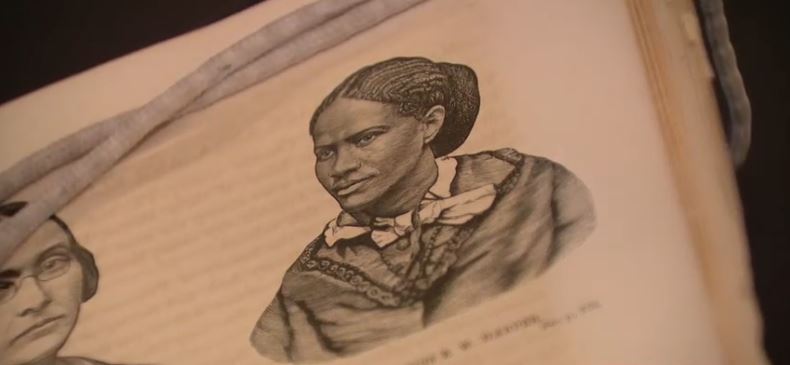
BALTIMORE (WBAL) — Frances Ellen Watkins Harper is a name that people may or may not have heard before.
The Baltimore-native was born born in Baltimore in 1825 and fought for voting rights, women’s rights and an end to slavery. Harper was a poet, abolitionist, suffragist and writer who believed strongly in freedom and equality.
Harper wrote a poem while watching chained slaves being sold at the Inner Harbor. She was a social justice advocate, prominent poet and writer, and she traveled the country, lecturing on anti-slavery.
“She’s (going to) ride the circuit of being abolitionist and being very outspoken. She even writes for the ‘AME Recorder,’ which is one of their newspapers as well, and she serialized one of her novels in that paper as well. So, she was very clear on writing her story, telling stories and really giving voice to Black women’s experiences in the situation of being free, female and African American,” said Ida Jones, the associate director of special collections at Morgan State University.
Harper was a survivor who was orphaned at 3 years old, widowed and preceded in death by her daughter. Her legacy lives on through her novels, short stories and poetry. She was the first published African American woman in the U.S., writing a book of poetry in the 1840s.
“Where is the physical copy? They could not find it,” Jones told WBAL-TV 11 News.
Jones said scholars spent decades searching for Harper’s works. The treasure hunt ended when a Ph.D. student discovered the book tucked inside another book at the Maryland Center for History and Culture.
“Lo and behold, a Ph.D. student working in some obscure collection found this book in the collection,” Jones told WBAL-TV 11 News. “Eyes (were) popping out of everyone’s head because it existed. It was printed in 1845. Where are the majority of African Americans in 1845? They are enslaved.”
Harper was heavily involved in the women’s suffrage movement until she delivered a speech in 1867 that caused great division.
“She talks about (how) we’re bound up together, and she says, ‘I don’t believe white women are just dew drops that hail from heaven. They’re the good, bad and the ugly, and they will vote according to those categories. So, if the vote comes down to women or men, then let the men have the vote because African American women have no voice in politics,'” Jones said.
Harper was cast out and scrubbed from the movement’s history. She founded multiple organizations, including the National Association of Colored Women’s Clubs, and spent the rest of her life fighting for equality, leaving her mark in Baltimore, Pennsylvania and Ohio.
“We need to put a face and a name to these ‘chattel’ who are called property. We need to put a face and a name to this woman who is the wife, daughter, mother of sans her individuality. So, when we start to put identity and dimension to these things, then now all of a sudden we realize we’re richer together, and that is what we’d learned from her,” Jones told WBAL-TV 11 News.
Harper’s works are on display at the Maryland Center for History and Culture.
Please note: This story was provided to CNN Wire by an affiliate and does not contain original CNN reporting. This content carries a strict local market embargo. If you share the same market as the contributor of this article, you may not use it on any platform.