Stephens College students return to campus days after carbon monoxide scare

Nia Hinson
COLUMBIA, Mo. (KMIZ)
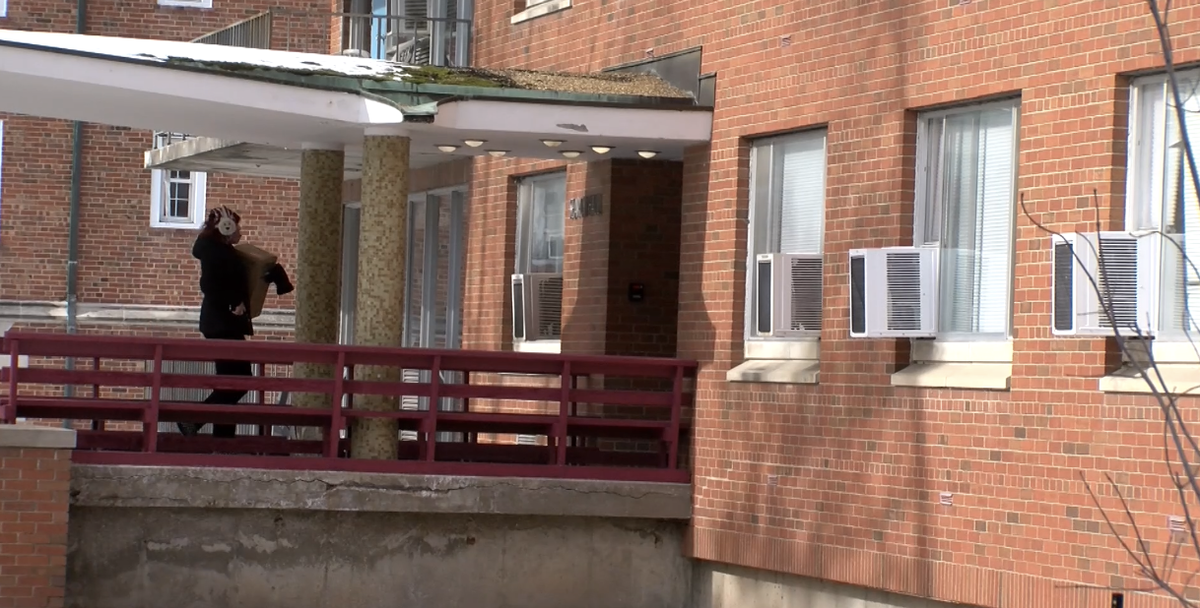
Some Stephens College students returned to their residence halls Monday morning following a carbon monoxide scare this past Wednesday.
Searcy and Prunty Halls were evacuated last week after a carbon monoxide sensor was activated on Wednesday night. The school then closed the two residence halls and shut down the boiler of both buildings.
The school announced on Monday morning that students were able to safely return to the residence halls after “extensive safety inspections” and equipment upgrades. According to a release, the school worked with the City of Columbia Assistant Fire Marshal and upgraded its carbon monoxide monitoring and detection infrastructure across campus.
There are carbon monoxide sensors on every floor of every residence hall, the release says.
Heating system repairs were completed for both residence halls and new boilers were also installed.
The school also said that residence life staff and campus security are completing training on how to monitor carbon monoxide sensors. Student life leaders are expected to meet with students for a review of emergency procedures.
“The College acknowledges the disruption experienced by students and families over the past week and emphasizes that student safety and well-being remain its highest priorities,” the release says.
Charlie Keefe is a sophomore at Stephens College who said she returned home from her internship on Wednesday and saw a swarm of Columbia Fire Department vehicles. Keefe said she was quickly told by firefighters that the resident halls were being evacuated and said she spent the next few days in a Hampton Inn while the halls remained closed.
Keefe said that she was glad she was able to move into her dorm quickly and said the incident was unexpected, but said she was thankful for how the school handled the situation.
“I’m super happy that they’re installing these new detectors. They put them in all the campus buildings, so it’s not just our dorms that have the upgrade, which is really great piece of mind for sure,” Keefe said. “And then we’ve gotten like a bunch of email communication from different leaders on campus to make sure that like if we need counseling services or reimbursement for travel if we had to stay somewhere outside of the hotel, things like that.”
Keefe also said her resident assistant scheduled a meeting with residents for Monday night to go over how the detectors work.
Columbia Fire Chief Brian Schaeffer said on Monday that firefighters were called to the campus and found several carbon monoxide alarms going off. Schaeffer said firefighters went to the basement and found an old boiler that was being used as the primary heating source for both buildings.
As part of their normal practice, crews turned on their monitor and checked for four conditions; carbon monoxide, oxygen deficiency and upper-and-lower-explosive limits.
Schaeffer said they found about 100 parts per million on the first, second and third floors of the building, which is too high. However, the main area where the boiler is located had about 300 parts per million.
Schaeffer said they’d typically like to see anything fewer than nine.
Firefighters were able to safely monitor the air area using self-contained breathing apparatus, had to change the way they ventilated the building and had to force air inside of it due to it being subterranean. Crews also found a tunnel that connected the basement to Prunty hall, which was found with readings between 45-70 parts per million of carbon monoxide. Firefighters then worked to evacuate the buildings.
According to Schaeffer, several students on scene reported not feeling well and were evaluated by a paramedic but refused further treatment and transportation to a hopsital. Several students were later evaluated at Boone Hospital.
Stephens College said it received official permits to allow students to return to the residence halls after an inspection was completed on Friday night. Schaeffer said inspections typically work by having firefighters go to each floor with a gas detector.
“They monitored floor-to-floor, length of the entire building and all of the areas and all the potential dead spaces to make sure when the furnace is running, that they don’t have any measurable carbon monoxide and then they determine it to be OK to occupy, or safe to occupy,” Schaeffer said.
Schaeffer also commended the help of Ameren in its response and said their help is crucial.
Schaeffer also said that they learned from students who said they heard a beeping noice coming from the carbon monoxide alarms off for a while, but that they were unsure what the sound was. He said the fire department believes there may have been a delay in reporting the incident, although it is still investigating.
“Every incident that we have is an opportunity I think to learn as a community and from a community risk reduction standpoint, education is a big piece for us as well as engineering. So, if there’s a way to tie those carbon monoxide detectors into one so that it’s engineered to respond as a system and then to also educate folks to know what that means,” Schaeffer said.
Schaeffer said he reccomends that people change the batteries to their carbon monoxide detectors every six months and test to make sure the audible speaker works by pressing the button. He also said people should keep the sensor away from anything that could cover it.
It’s also recommended that you have a carbon monoxide monitor on every floor of your home and to make sure it isn’t more than 10 years old. Anyone who hears the alarm going off should immediately leave and call 911.
Stephens College is also reinforcing the use of “pet-in-residence” signs in their residence halls for students with pets to ensure that they are accounted for during emergencies. The college is also working with students who need to be reimbursed while they were temporarily relocated, the release says.