MU officials raise concerns as Missouri Gaming Commission denies NCAA player prop bet ban

Mitchell Kaminski

JEFFERSON CITY, Mo. (KMIZ) 

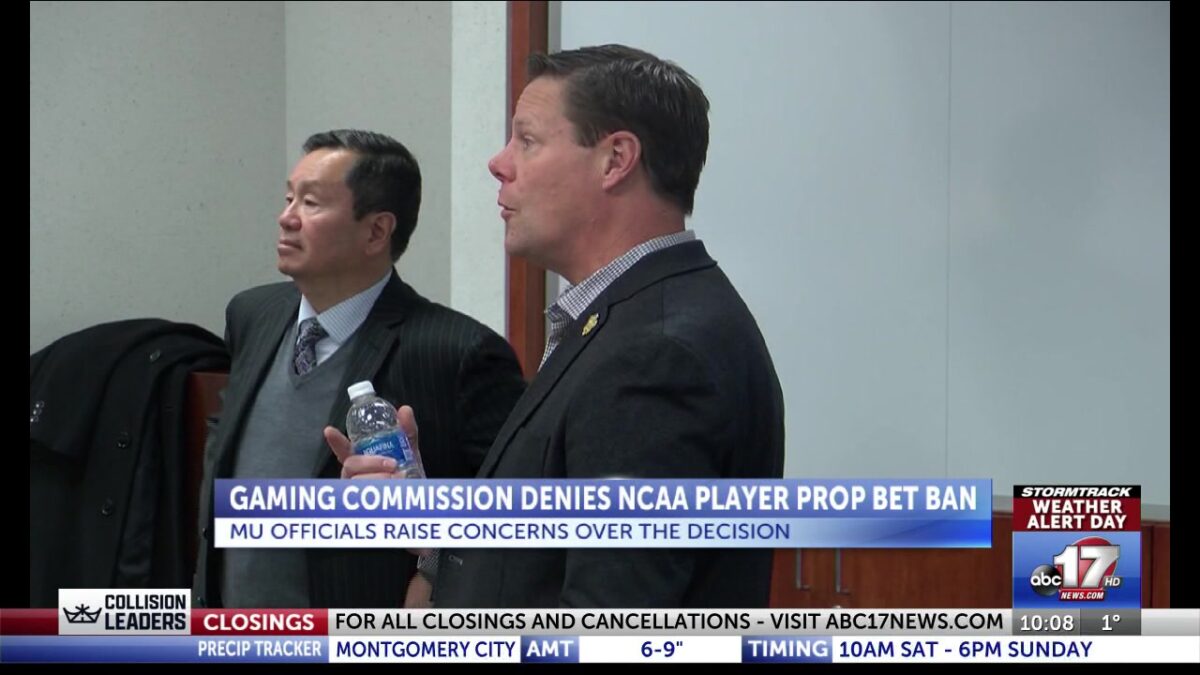
The Missouri Gaming Commission has denied a request from the NCAA to ban wagers on individual student-athlete performance, including player prop bets and first-half wager spreads on college basketball games.

NCAA President Charlie Baker sent a letter to the commission on Jan. 15 urging the state to restrict these bets, citing concerns about harassment, manipulation and the well-being of more than 550,000 student-athletes nationwide. The association noted its enforcement staff has opened investigations into roughly 40 student-athletes across 20 schools over the past year. Eleven student-athletes from seven schools were found to have bet on their own performances, shared insider information with bettors or engaged in game manipulation.

University of Missouri officials were asked about the topic during Thursday’s MU Faculty Council meeting, with MU Athletics Director Laid Veatch and UM System President Mun Choi echoing Baker’s concerns 

“The concern over the influence for our student athletes from a gambling standpoint is a very real, very high-level concern,” Veatch said. “You hear the president, Charlie Baker of the NCAA, that’s a hot button topic for him. And it is very real because we have student athletes that feel a lot of pressure and get a lot of social media harassment.” 

Veatch added that when student-athletes are paid and sports betting is legal, prop bets “make it far easier for them to become involved.” Choi also said the university monitors social media to track whether student-athletes are being harassed.

“When the NCAA decided it would be OK for student-athletes to bet on pro sports, we came out as a conference and said that we think that’s a bad idea. When it comes to gambling, we’re evaluating the situation of what other universities are doing,” Choi said.

The NCAA cited harassment and the solicitation of insider information as major risks associated with player prop bets. Surveys indicated 36% of Division I men’s basketball players reported harassment from someone with a betting interest. The NCAA also highlighted the risks of “spot-fixing,” where a portion of a contest — such as a first-half under spread — could be manipulated.

Ryan Butler, senior editor at Covers, said the NCAA has been focusing on first-half under wagers and individual player props for more than a year. 

“It is hard in a team sport to rig a game. It really is. But it is easy to make you miss that extra free throw, maybe have a turnover,” Butler said. “That’s ultimately the biggest concern.”

The Missouri Gaming Commission received three comments from operators and one from a resident, all opposing the ban. Seven of the eight sportsbooks in Missouri also spoke against the measure. 

“I understand the schools and the NCAA wanting to protect those students. But I don’t feel personally that I have enough information to make an informed decision at this time,” Commissioner Jan Zimmerman said during Thursday’s commission meeting. 

Butler added the sports books opposing the ban had a “legitimate argument,” but that it would not be a make-or-break deal if the Gaming Commission later decided to revisit the issue. 

“The sportsbooks want more betting options. I think in context, though, college prop betting is a small fraction of their overall handle,” Butler said. “The argument, which carries a lot of weight and which is accurate, is that if someone is so corrupt that they’re willing to try to manipulate a college basketball game, they’re probably not even going to use a legal sportsbook. They’re going to go do this through nefarious means. And if they’re honestly dumb enough to try to do this through a legal sportsbook, they’re going to get caught.” 

Only four of the 39 states with legalized sports betting have banned player prop bets. While Missouri’s constitution already prohibits wagers involving college athletes in the state of Missouri, the commission said it may revisit the issue once more information is available.

The NCAA has urged state regulators to allow it a “formal seat at the table” with gaming operators and to implement stricter accountability for bettors who harass student-athletes. In recent years, Louisiana, Maryland, Ohio and Vermont have banned individual college athlete prop bets, and two additional states are considering similar legislation in 2026.


Click here to follow the original article.

CEI new tech building update

Par Kermani

IDAHO FALLS, Idaho (KIFI) — If you have driven past College of Eastern Idaho lately, it would be hard to miss the construction of the brand new Battelle Energy Alliance Future Tech building that is nearing completion. 

“We are very excited that both Frontier Credit Union and Battelle Energy Alliance came together to name this building, and it’s going to house some of our most high-tech programs here on campus,” says CEI President Lori Barber.

The Battelle Energy Alliance Future Tech Building now dominates the campus skyline. Introduced last August, Barber says the facility is designed to address a growing demand for skilled workers in science, technology, engineering, and math fields throughout eastern Idaho.

College officials will be given the keys to the building in July, which allows teachers time for a summer move-in before students begin using the classrooms and spaces at the start of the fall 2026 semester.

The facility will serve as the primary home for several of the college’s most advanced technical programs. Its halls will house the cybersecurity, mechatronics, and energy systems engineering transfer programs, alongside specialized spaces for surgical technology.

Beyond its laboratory capabilities, the building is intended to solve space problems for the campus. 

“So we have a really big campus, but it has historically been a commuter campus,” said President Lori Barber. “So we don’t have a lot of spaces for students to gather, study, and collaborate. And so this building is going to be full of those spaces.”

Click here to follow the original article.

Bald eagle lays first egg of 2026 season at Big Bear nest

Jesus Reyes

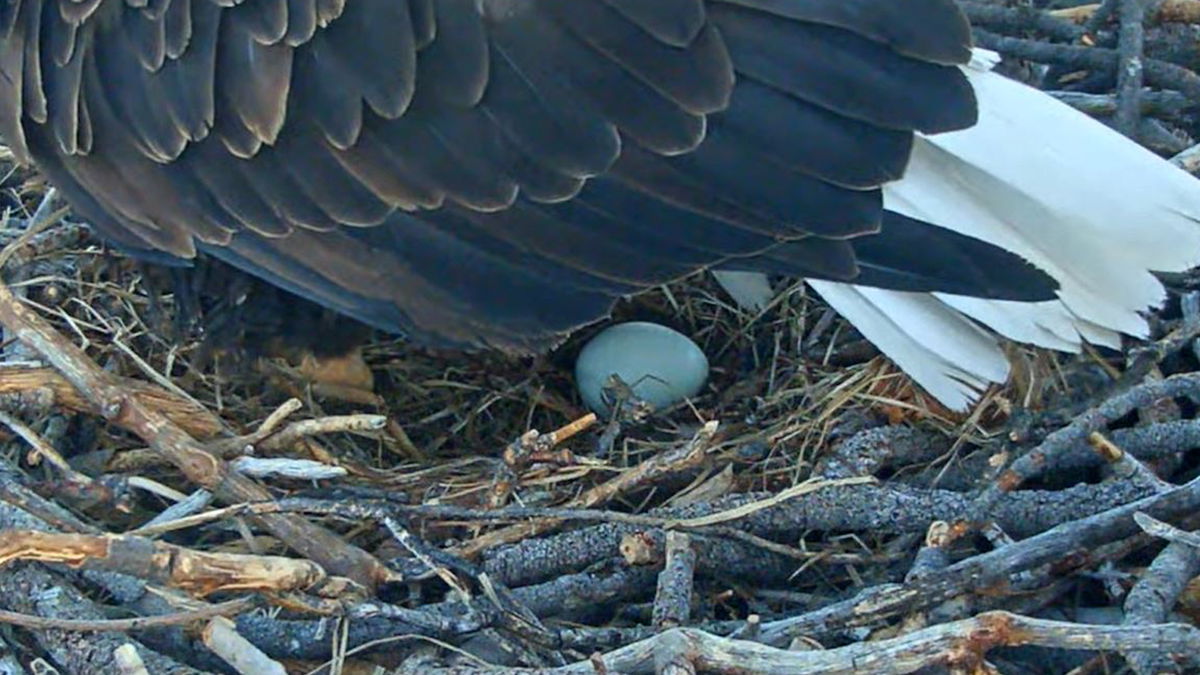
BIG BEAR, Calif. (KESQ) – Jackie the bald eagle has laid her first egg of the 2026 season at the Big Bear nest!

The egg was first visible on the nest livestream at around 4:32 p.m.

Last year, Jackie laid her first egg on Jan. 22. She laid a second egg about a little over a week later.

Check out the livestream from the Friends of Big Bear Valley (FOBBV) below:

Stay with News Channel 3 for any updates.

Click here to follow the original article.

Deals, Dining, & Lodging: SYV Restaurant Weeks Return with Even More to Offer

Alissa Orozco

SANTA YNEZ VALLEY, Calif. (KEYT) – Locals and tourists are in luck – Santa Ynez Valley’s Restaurant Weeks has returned and so has their great deals on food and wine.

Shelby Sim from Visit Santa Ynez Valley visited the Morning News to preview everything the Valley has to offer. The President and CEO says the event runs through the 31st, and is a yearly tradition.

“It gives everybody an opportunity to come out and try, you know, we have over 30 restaurants participating,” said Sim. “We have five Michelin restaurants in the Santa Ynez Valley, and they are all participating, so it’s an opportunity for everybody to go out and try things that they may not be able to try any other time.” 

A full list of wineries and restaurants of all different cuisines and price ranges are participating in the event, offering something for everyone.

If that wasn’t tempting enough, hotels throughout the Santa Ynez Valley will have their own special offer now through the end of March.

Anyone who books two nights, Sunday through Thursday in the Valley, will receive a $100 bill. Sims says he hopes the incentive will get more people out the Valley during a not so crowded time.

For more information on Restaurant Weeks and hotel information, visit SYV.com

The Latest Breaking News, Weather Alerts, Sports and More Anytime On Our Mobile Apps. Keep Up With the Latest Articles by Signing Up for the News Channel 3-12 Newsletter.

Click here to follow the original article.

Arizona has new committee focusing on innovation and artificial intelligence

Eduardo Morales

YUMA, Ariz. (KYMA) – The House Committee on Artificial Intelligence and Innovation is meant to create a place where experts, industry leaders, and members of the public can discuss A.I.

According to the Pew Research Center over 60% of United States adults say they interact with A.I. several times a week.

Rep. Junelle Cavero sits on the committee and shares how it is meant to help the state and those in it move forward.

“To educate the state and the body as a whole, to understand where artificial intelligence is best used and best practices, how technology can be done for the good and to ensure bad actors are held accountable,” Rep. Cavero says.

Janeen Anderson, a local winter visitor, says she is all for this new group.

“They couldn’t possibly keep their eyes open wide enough because it’s so pervasive, it’s just everywhere, when you see something on your phone on the tv screen, whatever, you’re not sure that that’s really what you’re seeing,” Anderson explains.

Rep. Cavero shares how this is committee is adapting to the current technological landscape.

“This committee is a response to the current state of our economy, which is driven by technology, which is therefore driven by AI, as AI has revolutionized all different areas,” she says.

She explains how this is also meant to protect people from A.I.

“I’m fairly certain the committee will be looking at how to regulate and ensure that certain practices, especially those that impact children, are minimized,” Rep. Cavero explains.

The committee held their first lunch and learn on Wednesday to understand how the state government currently uses A.I.

Click here to follow the original article.

Local health officials urge caution as freezing temperatures move in

TaMya Bracy

ST. JOSEPH, Mo. (KQTV) — Bitterly cold temperatures are expected this weekend and local health officials are urging residents to prepare themselves.

According to the American Heart Association, when exposed to the cold, the body can lose heat faster than it’s produced.

Kristi Billings, interim clinic supervisor at the St. Joseph Health Department, said the body prioritizes protecting major organs when exposed to cold.

“Moving blood supply from the hands and feet, all the organs that are not needed to survive,” she said.

Billings said shivering is the body’s first line of defense against freezing temperatures.

“It tries to keep the internal organs warm. The shivering causes your body to try to build on its heat supply,” Billings said. “When you stop shivering is when you should be concerned,” she said. “That means the body is no longer in response to the cold. That’s probably when you should seek medical attention.”

Billings said there are several signs of hypothermia and frostbite that can develop quickly.

“Numbness, cold, burning, losing color in hands, feet and face. Any confusion or delayed slurred speech,” Billings said. “Depending on your body, maybe five and 30 minutes. It’s all different for each person, so it doesn’t take super long for those to occur.”

Billings recommended dressing in layers when it’s freezing.

“You want to make sure the first layer you’re wearing keeps moisture off your body so you don’t become wet that causes more problems,” she said. “Then you want to add another layer on, and your outer layer should be your biggest.”

Staying indoors is the most effective way to be protected from the cold.

“Making sure they’re (people) not standing outside long if they have to be out there, make sure if they’re traveling, keep supplies to keep warm,” she said. “If they are going be outside, make frequent go inside to get warm. Don’t stay out too long.”

Billings said if possible, try to stay indoors during the freezing temperatures.

Click here to follow the original article.

“Dear America, Love Arizona” postcard campaign connects Arizona classrooms statewide

Danyelle Burke North

YUMA, Ariz. (KYMA) – A statewide postcard campaign is connecting classrooms statewide. The Arizona America250 commission partnered with the Arizona Department of Education to launch their “Dear America, Love Arizona” postcard campaign this week.

The nation is getting ready to celebrate America’s 250th anniversary. With the campaign, students statewide can fill out free postcards and write why they love Arizona and what they hope for America’s future.

“We’re doing a bunch of different stuff including the traveling museum. This postcard writing campaign and these are ways for us to celebrate our country and what we’re proud of and what we’re excited for for the next 250 years of United States,” said Visit Yuma Executive Director Marcus Carney.

Several completed postcards will be displayed at traveling museum stops and the Arizona capitol this spring.

Schools can request postcards from now until February 9 here.

Click here to follow the original article.

No snow? No problem, but watch out for road crews

Ariel Jensen

IDAHO FALLS, Idaho (KIFI) – Just because there’s no snow on the road doesn’t mean that plow operators aren’t on the roadways. Normally, this time of year, Local News 8 warns drivers to be vigilant on icy roads, as snowplow crashes are pretty common.

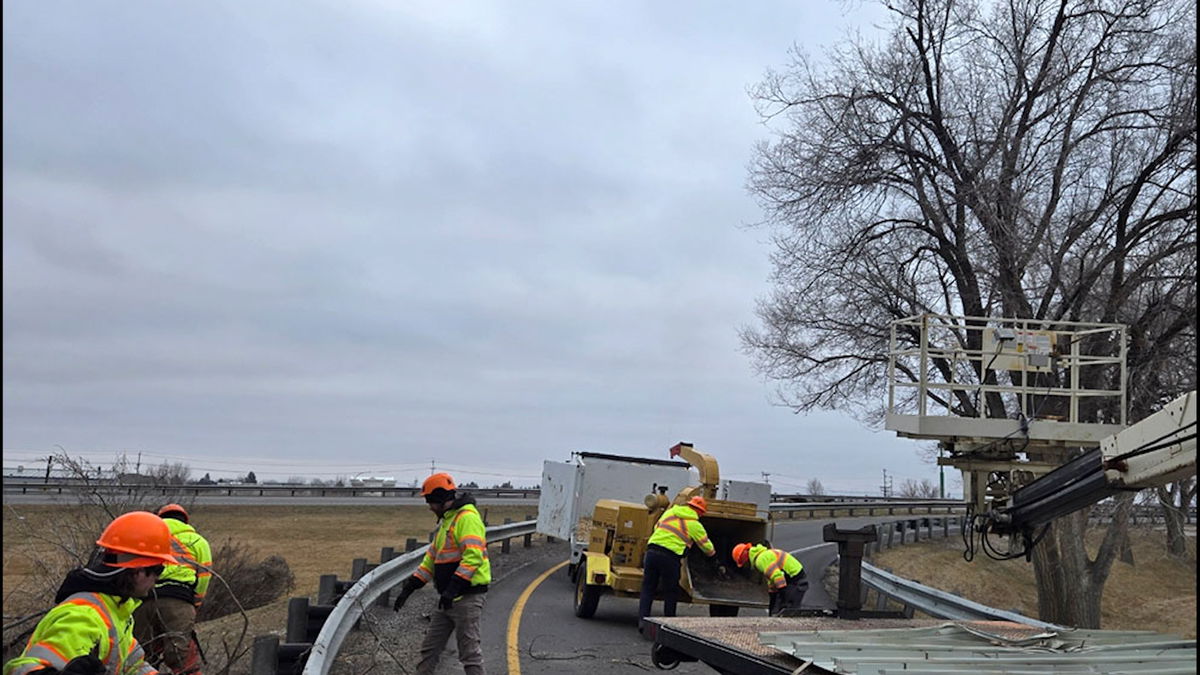
This year, the Idaho transportation department is taking advantage of the lack of snow. They are working on things like asphalt repair, guardrail repair, and tree removal. ITD is still asking drivers to look out for crews on the roadways.

“So this winter, as you’re driving, I guess just be more cautious of those traffic control devices in places that you might not typically expect to see them for January and February, but at least that means we are getting caught up and making sure that the road is as good as it can be all year long,” said Sky Buffat Public Information Officer for the Idaho Transportation Department.

Just because it has been a mild winter, Buffat says they are prepared for weather changes and will adjust their crew schedule accordingly. 

Click here to follow the original article.

Incarcerated man ruled dead after found unresponsive in cell

Caleb Nguyen

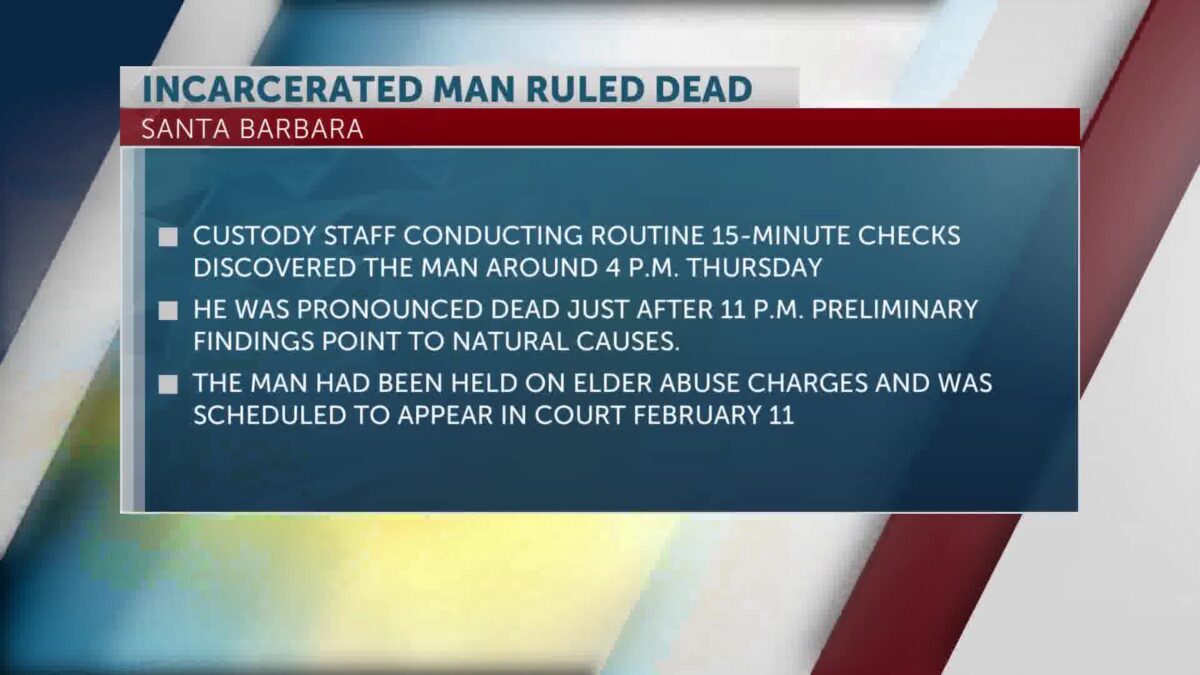
SANTA BARBARA, Calif. (KEYT) – A 65-year-old incarcerated man, held for elder abuse charges, died after being found unresponsive in his cell Thursday, according to the Santa Barbara County Sheriff’s Office.

Custody staff did normal 15-minute interval checks when the man did not respond from his single cell around 4:00 p.m. Thursday, according to the SBCSO.

Firefighters and medics took the man to a local area hospital, where he suffered cardiac arrest and could not be resuscitated, according to the SBCSO.

First responders ruled the man dead at the hospital just after 11:00 p.m. Thursday and a preliminary investigation indicates natural causes as the result, according to the SBCSO.

The man’s next court hearing was scheduled for Feb. 11, and a full death investigation is underway for an official cause and manner of death, according to the SBCSO.

Click here to follow the original article.

Former BYU Baseball Player Candon Dahle released early from jail following controversial plea deal

Seth Ratliff

FREMONT COUNTY, Idaho (KIFI) — Candon Dahle, the former BYU baseball player whose controversial plea deal after crimes against a minor sparked widespread public outcry, has been released from custody weeks ahead of schedule.

According to VINELink, the national victim notification system, the 22-year-old was released from the Fremont County Jail on Jan. 21, 2026, at 5:59 AM. Dahle’s original sentence had him scheduled for release on Feb. 14, according to reports by ABC4 in Utah.

The Controversy Behind the Plea Deal

In August 2025, Dahle pleaded guilty to two felony counts of injury to a child through a binding plea agreement, a common legal tool where the defendant and prosecution agree on a specific resolution. The sentencing sparked immediate backlash across Idaho and social media due to the specific terms of the agreement.

Dahle was initially facing one felony count of lewd conduct with a minor child under 16, which carries much stricter penalties. Under Idaho law, the “injury to a child” charge does not require the defendant to register as a sex offender.

The public backlash was so severe that the Idaho Judicial Branch was forced to issue a formal statement condemning “unacceptable” threats directed at the presiding judge and his family.

RELATED: Idaho Judicial Branch condemns “unacceptable” threats in wake of Candon Dahle sentencing

While the plea deal itself sparked backlash, the judge actually exceeded the requests of both the prosecution and defense by sentencing Dahle to 180 days of jail time in addition to eight years of probation.

While Dahle has been released early, a 10-year prison term that could be reinstated if Dahle violates any conditions of his probation.

Click here to follow the original article.