Savannah in the running for “Small Town Showcase” recognition from Missouri Humanities

Patrick Holleron

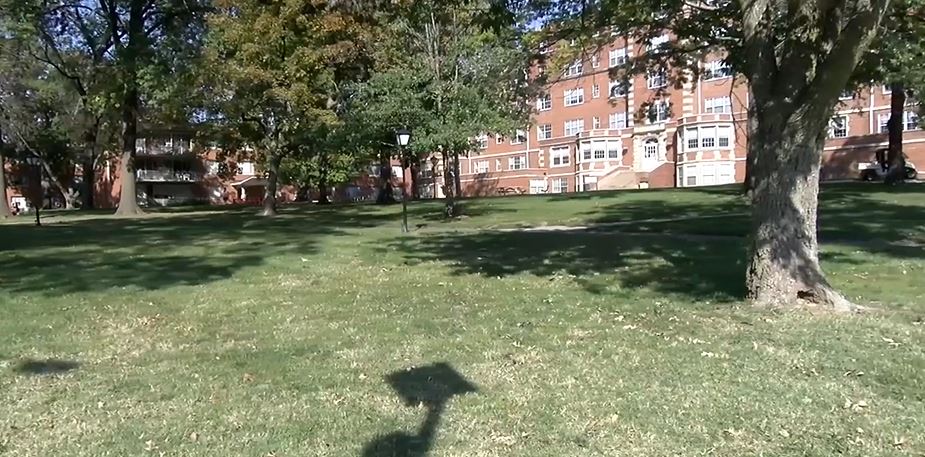
ST. JOSEPH, Mo. (News-Press NOW) — An Andrew County community is in the running to potentially have it’s history and culture featured in the spotlight.

Now going on it’s fifth iteration, the Missouri Humanities’ “Small Town Showcase” allows viewers to vote and have five Missouri towns display its culture, history and atmosphere through podcasts and short films. Savannah is one of 16 towns in the running for five nominations.

“Savannah is a community in Northwest Missouri that people may overlook because it’s in a congressional district that is very big,” Missouri Humanities Program Director Caitlin Yager said. “We’ve worked with towns up Northwest Missouri before like Albany and it really started to open our eyes to the ongoing development in that area. We’ve seen a lot of growth in Downtown businesses, the museums and main streets to show it’s not just a desirable place to visit, but also to live or start a business.”

In the past, the criteria for a town to be featured was was having a maximum population size of 10,000 people or less. However, with 2026 marking the United States’ 250th anniversary, the limit for the population was increased to 25,000 people.

“For this particular season, we are in the semi-quincentennial year being 2026, celebrating 250 years since the creation of the Declaration of Independence. We decided to expand the population size for towns seeking to apply because of the special year,” Yager said. “It will still showcase smaller communities in Missouri compared to college towns or bigger cities in the state. We’re hoping to spotlight the small town stories and communities in Missouri who helped Missouri’s cultural heritage and overall story contribute to 250 years of American history.”

While the idea of possibly expanding or modifying the format of “Small Town Showcase” has been discussed, the current success and flow of the series is something Missouri Humanities wants to remain consistent.

“I wouldn’t say expansion is anything necessarily (planned) in the future. We’ve kind of hit a really good rhythm of having five communities each year, which produces five short films and five episodes of a podcast,” Yager said. “We considered doing a micro version of Small Town Showcase where we focus on neighborhood river towns or a particular story instead of a whole town in general.”

“There’s many directions we can go. Right now, working with each of these communities is the priority. We’re hoping people maintain their interest and keep wanting to tell their stories,” Yager said.

To listen to past towns featured and vote on the current group of towns up for nomination visit mohumanities.org/small-town-showcase.

Click here to follow the original article.

Gas prices remain flat in Missouri following winter storm

Danielle Bailey

ST. JOSEPH, Mo. (News-Press NOW) — Gas prices in Missouri remained steady in the wake of a winter storm that impacted the state last week.

According to AAA, the average statewide price for gasoline in Missouri is $2.49 per gallon for regular unleaded fuel, a decrease of 37 cents from this day last year and no change from the previous week.

In St. Joseph, the average gas price is $2.37 per gallon, lower than the average price of $2.71 motorists saw at this time last year.

Drivers in major metropolitan areas are paying slightly more. In Kansas City, Missouri, the average price is $2.44 per gallon. Motorists in St. Louis are paying the most at $2.63 per gallon.

A combination of tight supply from reduced refinery operations and stronger demand has caused an increase in crude oil prices, resulting in a pause on gasoline price decline.

Click here to follow the original article.

Stephens College closes 2 dorms after carbon monoxide issues led to evacuations

Ryan Shiner

COLUMBIA, Mo. (KMIZ)

Two residence halls on Stephens College’s campus have been closed after they were evacuated on Wednesday for carbon-monoxide-related issues, according to a letter from the college’s president.

The letter from Stephens College President Shannon Lundeen says a carbon monoxide sensor was activated on Wednesday night. A resident adviser at the dorm called EMS and Searcy Hall and Prunty Hall were evacuated “due to an elevated level of carbon monoxide,” the letter says.

The boilers of both residence halls were shut down and will be replaced “as soon as possible with installation and systems to be inspected before the end of the weekend,” according to the letter. Both residence halls will stay closed in the meantime, the letter says.

The letter says students “who wished to be evaluated for potential carbon monoxide exposure were transported to Boone Hospital and assessed by medical professionals” and were eventually returned to campus.

The college is arranging temporary accommodations for affected students throughout the weekend, though the letter and school did not say where they would stay.

ABC 17 News reached out to the Columbia Police Department and Columbia Fire Department.

Click here to follow the original article.

Stroke Prevention Day: Recognizing the signs, symptoms of stroke

Peter Daut

COACHELLA VALLEY, Calif. (KESQ) – Today is “Stroke Prevention Day,” a time for everyone to remember the signs of stroke, which is a leading cause of death and disability in the United States.

Stroke is a medical emergency where every second counts. Remember the warning signs of stroke with the acronym “BE FAST.”

B is for balance

E is for eyes

F is for face drooping.

A is for arm weakness.

S is for speech difficulty

T is for time to call 9-1-1

“The good thing with stroke is basically it is something we can reverse, which means we can prevent permanent disability and we can improve the quality of life. so if one identifies stroke it is crucial to call 911 and get to the right hospital at the right time,” Dr. Rahul Jadhav of the Comprehensive Stroke Center at Desert Regional Medical Center.

Every 40 seconds, someone in the U.S. has a stroke.

Click here for more information on the signs of stroke and what to do.

Click here to follow the original article.

Experts Talk About Plans to Energize Retail in Santa Barbara

John Palminteri

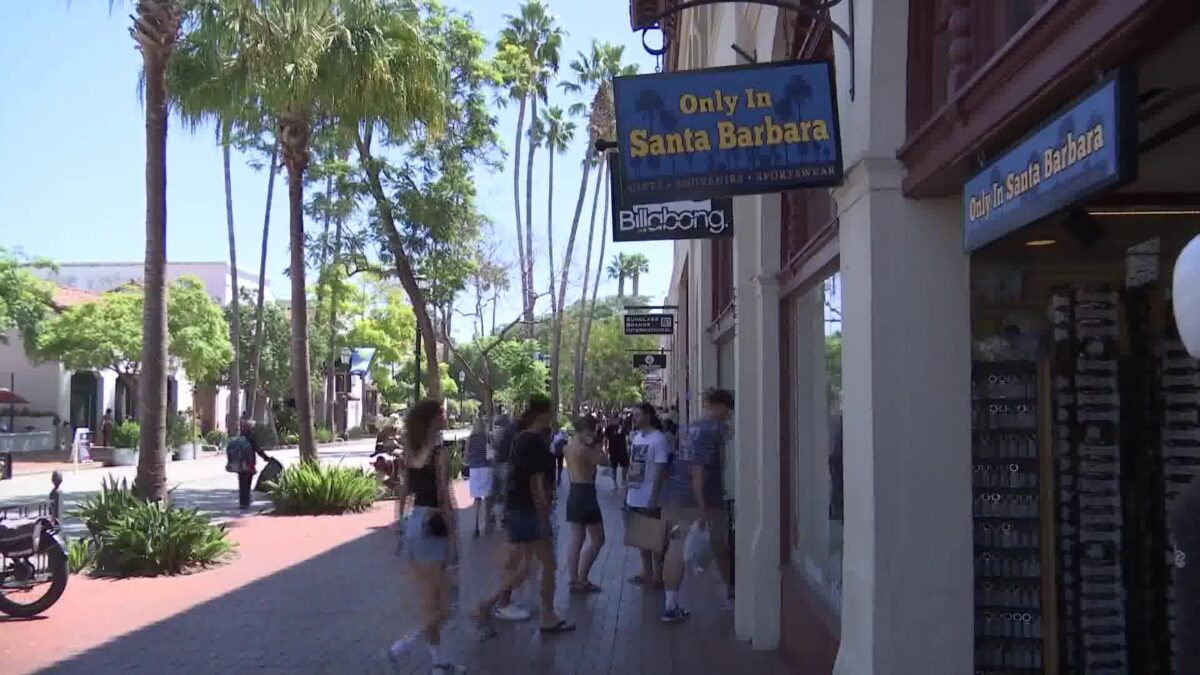
SANTA BARBARA, Calif. (KEYT) – Ongoing concerns about a sluggish pace for the retail future in Santa Barbara may get a turnaround after an exchange or ideas from experts gathering in a special session with the City Council and staff.

Councilmembers heard from Rachel Michelin from the California Retailers Association, Rick Lemmo with Caruso Properties and Mark Ingalls the Property Manager from the Camino Real Marketplace in Goleta.

The retail symposium took place in the Faulkner Gallery at the library. The public attended and filled the room.

The solutions covered a wide area of suggestions but it was clear it won’t be done with a big shopping center concept you might have seen 25 years ago.

  One concept is to possibly not look at the core area of State Street as one big ten block area. Ingalls said, “it is a main street  and I think it needs to be paired down into blocks.  I like the idea of districts. The  arts district, bars and restaurants and  retail and scaled to be more supportive by the residents of Santa Barbara.”

Cutting the red tape and the time line on projects was also viewed as a faster track to a completion and to make the financial start up costs go farther and get done faster.

That includes possibly cutting some permit fees and saving months on reviews.     It may look favorable to a developer and there is a return for this.

Lemmo said, “we want them here for the benefit we get and there is public  benefit.   I think the most important benefit is get the time down .” He said waiting two years for. restaurant go through a development plan is not a successful business model for the owner.

As a statewide leader in retail analysis Michelin said, all levels of government should realize the benefits of having projects finished on a better timeline. “We want to see more investment in our community. We need to streamline the regulatory process, we need to need to make it easier.”

One of the concepts that was getting a favorable reaction was to not build a large scale housing project but to add some housing on top of or behind some of the existing buildings in the downtown business area.

“Just as important is to have a mix from an efficiency standpoint,” said Ingalls. One and two bedroom units can be available for area workers , and for someone who wants to move out of their house in a neighborhood to a downtown environment. He said “it frees up a house.” 

Lemmo said, the city should work with what it has including its rich history. “Most of the elements exist. We have to put a spotlight on them, we have to put a magnifying glass on them.”

Smaller areas with success stories were also an option Ingalls favored. He said, “I think there should be more districts and I think the Funk Zone is a  perfect example of when you tee it up and get it out of the way.”

There was also a suggestion to bring college students into the conversation with their ideas and designs. The suggestions coming from that demographic may help to create appropriate housing using modern and future style elements. It may also come with a price point they can afford after they graduate.

The session was coordinated by the State Street Master Planner Tess Harris who may be showing new ideas in the Spring for downtown. That could include a mix of areas for dining, shopping, bikes, cars and pedestrians that has the blend the city is looking for to create a vibrant economy.

It is still to be determined how some of the changes will be funded.

No one on the panel addressed how the larger retail sites downtown, including the vacant former Macy’s store and the vacant former Nordstrom’s store could be reused. Project under consideration included multiple housing units, a new grocery store and paseo walkways into the mall retail area.

The Latest Breaking News, Weather Alerts, Sports and More Anytime On Our Mobile Apps. Keep Up With the Latest Articles by Signing Up for the News Channel 3-12 Newsletter.

.

Click here to follow the original article.

Isaiah Veal named San Marcos head football coach

Mike Klan

SANTA BARBARA, Calif. (KEYT) – San Marcos announced Isaiah Veal as its new Head Football Coach.

Veal is a Bishop Diego graduate and was a member of their 2017 State Championship team, He was named All League and All-CIFSS the same year. He then played at College of Idaho from 2018-2022. While there, the team won three conference championships and was named a first team All-Conference Wide receiver as well as being a Scholar-Athlete award winner. Most recently he has been a Wide Receiver/Defensive Backs coach as well as being a Special Teams assistant. He is currently the Director of Operations for the Page Youth Center where he runs programs for over 3000 athletes across multiple sport programs.

Coach Veal quote – I am honored to be named the Head Coach at San Marcos. I’m excited for the opportunity, ready to get to work, and committed to building a disciplined, tough program that develops young men and represents this community with pride.

Athletic Director Solis quote – We are very excited to have Coach Veal here at San Marcos. His energy and culture building is going to help redefine success on and off the field. We have a very bright future ahead of us.

Principal Holdren quote – “We are thrilled to welcome Isaiah to San Marcos. He brings high character, excellent experience, and a commitment to developing the program. It’s going to be fun to watch.”

(Article courtesy of San Marcos Press Release)

Click here to follow the original article.

Missouri mother helps spearhead grassroots bill to criminalize child sexual grooming

Cameron Montemayor

ST. JOSEPH, Mo. (News-Press NOW) — For nearly two years, Madison Royer’s closest family members, younger sisters Sophie and Evelyn, were sexually groomed by someone close to them who they believed in and trusted.

“They think it started when they were 14 and 16, very slowly, and then it picked up when they turned 15 and 17,” said Royer, a mother of three from Bolivar, Missouri. “We found out in late March 2025, four days before my sister tried to commit suicide.”

Sexual grooming is a repeated, proven and specific pattern of sexually deviant behavior, used by adults to establish an emotional relationship before exploiting and abusing a vulnerable minor, an act that often leads to significant psychological trauma to victims and their families.

In this case, the man was Sophie and Evelyn’s martial arts instructor. The warning signs first appeared when he took the two home one night after midnight from a concert while their parents were out of town, later staying in his truck for a concerning amount of time after the event. An invitation to one of his dentist appointments raised even more red flags, before Royer and her parents discovered what was occurring, including secret texting. 

“My parents thought he would never do something like that. She looked at their phone and then saw what was going on,” Royer said. “They don’t just groom the child, they also groom the community and they put themselves in a place of being a pillar of the community. She felt like she couldn’t tell anyone because they wouldn’t understand.”

The family later reported the man to the FBI and the Department of Social Services, which thoroughly investigated the case, including forensic interviews and reviewing numerous communications between them.

Sexual grooming differs from crimes like enticement of a child, which occurs when an adult attempts to lure or induce a minor to enter a vehicle, building or secluded area with the intent to commit a crime against them. Current laws often fail to cover most sexual grooming cases and make them difficult to prosecute unless physical abuse has occurred.

“DSS gave their conclusion which was that he didn’t break the law because he hadn’t physically sexually abused them,” Royer said. “They concluded his behavior was inappropriate and could constitute grooming but it was not illegal. The caseworker who was working the case, the investigator from the state, he was like, ‘This guy’s a monster.'”

Missouri, like 36 other U.S. states, has no explicit laws criminalizing sexual grooming despite its occurence in almost all child sexual abuse cases. Research by the National Institute of Health indicates sexual grooming is involved in 99% of child sexual abuse cases, with child predators using it as a way to avoid detection and prevent disclosure.

For Royer’s family, the inability to prosecute the case was a devastating blow despite the confirmed red flags and work by law enforcement. The trauma has had a devastating impact on Royer’s sisters, both of whom contemplated suicide.

Now, it’s become one of the driving forces behind sweeping new legislation in Missouri called “Sophie and Evan’s Law,” which defines and criminalizes the offense of grooming a minor, making it a Class B felony punishable by a prison sentence of 5 to 15 years.

Not long after the investigation, Royer launched a grassroots effort with friends and family called Missourians for Child Protection, to push for stricter laws like “Sophie and Evan’s Law” and close state loopholes to help prosecute cases. 

Royer’s advocacy efforts quickly gained the attention and support of state lawmakers like Sen. Jill Carter, Rep. Christopher Warwick and public safety officials who helped craft the bill and bring it before the state legislature.

“We went public with my sister’s story because we wanted to protect the community. So many people reached out to us and were sharing their stories of how their children or how they themselves were sexually groomed,” Royer said. “We held a town hall. Sen. Carter was there and a bunch of lawyers and judges and prosecutors, they all came and we literally wrote this bill.”

According to language in the senate bill, the offense of sexual grooming would occur when an adult (18 or older) engages in a pattern of conduct with at least one overtly sexual act directed towards a minor that infers the intent to prepare, condition or manipulate them for sexual conduct, sexual exploitation or sexual trafficking.

The offense would be a class B felony unless sexual conduct, sexual exploitation or sexual trafficking occurs, in which case it will be a class A felony. Those found guilty would be ineligible for probation, parole or conditional release until serving a minimum of five years.

Royer has made several trips to Jefferson City in the time since to advocate for the measure in public hearings. The measure — inspired by similar legislation passed in Ohio — has thus far received bipartisan support from lawmakers, recently being referred to the Judiciary, Civil and Criminal Jurisprudence Committee in the Missouri Senate on Jan. 21.

“I went and I spoke to two victims recently whose children were groomed and trafficked. It just pushes me all the more. Being a mother, I have three girls. And the fact that it’s only getting worse,” she said. “I think people are waking up and they recognize this bill is very necessary. A lot of citizens, constituents, they don’t know this isn’t illegal.”

According to the CDC, 1 in 4 girls before the age of 18 will be sexually abused, with an increasing number of cases occurring since the COVID-19 pandemic.

“We understand better now how sexual and child sexual abuse happens, because there’s been a lot more research on it,” she said, citing numerous studies including one from the Department of Justice. “It has identifiable red flag behaviors, and a lot of states are forgoing their enticement laws in favor of sexual grooming laws.”

Major warning signs of sexual grooming include excessive communication, intense secrecy, isolation of victims, behavioral changes, normalization to sexual touch and attempts to turn victims against their parents to divide them.

The senate bill in Missouri would also establish harsher penalties for those convicted of sextortion, which involves threatening or blackmailing someone to distribute private and sensitive material in exchange for money or sexual favors.

That component of the bill is named after Evan Boettler, a 16-year-old from Aurora, Missouri, who committed suicide in 2024 after being sextorted by someone on Snapchat. Boettler’s parents also worked extensively on the measure with Royer and state officials.

“We partnered with them and it’s been amazing. They’re incredible people,” Royer said. “The Boettlers started Evan’s Voice to educate on sextortion and prevent it. And then they came to the Town Hall to discuss Sophie’s Law.”

Royer’s testimony in Jefferson City even inspired one Kentucky representative to pursue a similar law this year. She was told by officials in Ohio who helped pass a similar measure in 2025 that the state has seen an increase in prosecution rates and investigations since its passage.

With a growing number of states now passing anti-sexual grooming laws or in the process of crafting legislation to strengthen protections for children, Royer hopes approval in Missouri will continue a domino effect across the country and lead to more justice for individuals and families impacted. 

“That’s something I really hope for. It started with Illinois, then Ohio, then Texas, now Missouri, now Kentucky,” she said. “I think it’ll be incredibly vindicating. I think it’ll give justice to a lot of children.”

Click here to follow the original article.

CSUSB’s FLOWS program expands to Palm Desert campus

City News Service

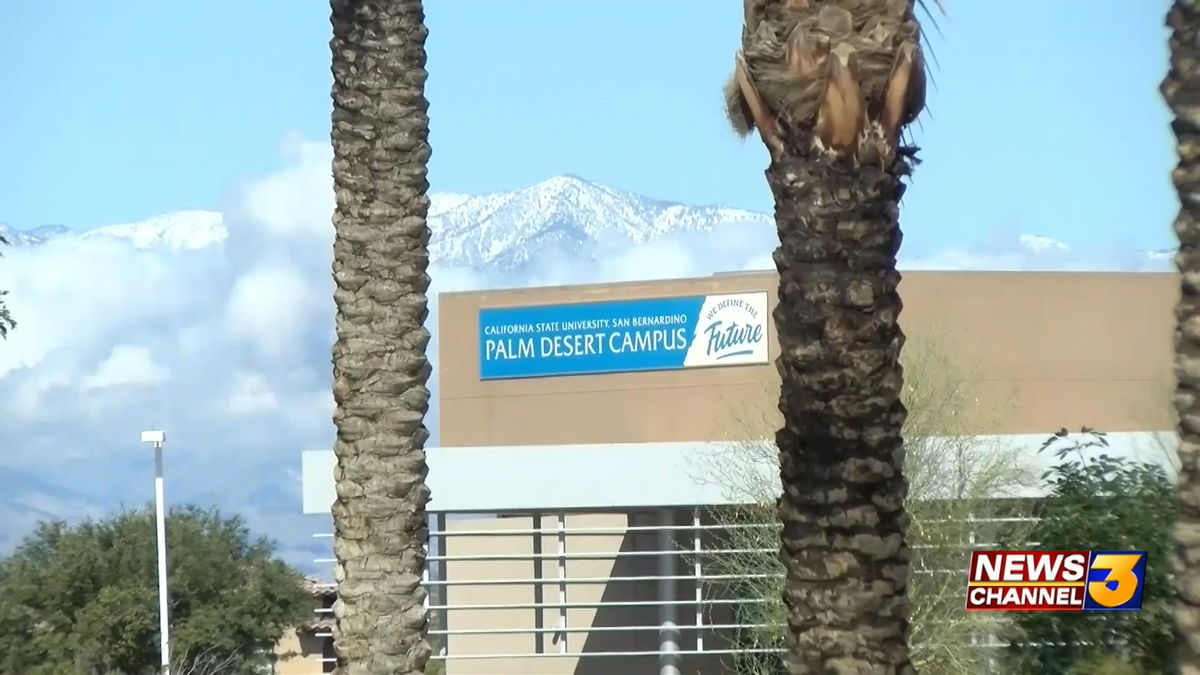
PALM DESERT, Calif. (KESQ) – A program aimed to provide university students with field-based geospatial research that prepares them for diverse career opportunities has expanded to Cal State San Bernardino’s Palm Desert campus, it was announced today.   

Field-based Learning, Outreach and Workforce Scholarship program has reached Palm Desert campus students to expand community-driven environmental workforce training across Southern California.  

The program provides research and service learning opportunities to students by connecting them with local, regional and state natural resource practitioners, community members and Tribal leadership.

Housed at CSUSB’s Institute for Watershed Resiliency, the partnership with Palm Desert campus means students can explore and learn about the Coachella Valley’s desert regions through desert-based environmental learning. 

Officials said this year’s FLOWS cohort includes eight students from CSUSB and Cal State Northridge.

This month, fellows partnered with Agua Caliente Band of Cahuilla Indians, Native American Land of Conservancy and the Audubon Society to study regional water systems, restoration efforts and Indigenous governance.   

“The FLOWS program that took place in the Coachella Valley was a wonderful experience for students that gave us practical knowledge and skills essential for careers in the environmental field,” Matthew Scully, an environmental studies major and FLOWS fellow, said in a statement.   

A number of activities and applications during the program includes engaging with Tribal communities or organizations to explore Tribal perspectives of water issues, data collection and analysis and meeting resource practitioners to learn about programs, projects and career opportunities.

“By expanding collaboration with the Palm Desert campus, FLOWS continues to demonstrate how universities can address real-world environmental challenges while strengthening regional partnerships and workforce pathways,” officials said.

Click here to follow the original article.
Lompoc’s River Park RV Campground Is Back Open With Fresh Renovations

Jarrod Zinn

LOMPOC, Calif. (KEYT) – The City of Lompoc is inviting folks out to the Lompoc Valley at the recently re-opened River Park RV campground.

The soft opening follows a nearly 3-year process.

In 2022, renovations began on 9 original RV sites at River Park, and 26 sites have been added since then, with newly renovated full hook-ups.

“If you visited us in the past, we would love to invite you to come back,” says Hannah Wallace, Lompoc Parks And Recreation manager. “We think that you would be really surprised and pleased with the upgrades that we’ve provided.”

Sites are first-come-first-served for up to 21 nights.

The online reservation system has also been revamped, allowing for easy payment and booking.“Pretty streamlined,” says Wallace. “And, it just it makes it easier for campers to register. It makes it easier for, rangers to monitor. And, it’s been embraced by some of the campers that were previously here before we opened up the new sites, just because of the ease they don’t know have to go into the the office to pay. They can just get online and pay or call and pay over the phone.”

The park features a playground, trails for walking, biking or horseback riding, as well as Kiwanis Lake which is open and stocked for fishing.

“Somebody had a vision and we bought into that and definitely supported that from the council level and made sure they stayed invested in it,” says Lompoc city councilman Jeremy Ball. “And again, it’s taken some time, but now we’re very excited that, it’s open.”

Base rates are 50 dollars a night.

“It’s the end of January and it’s 70 plus degrees here in Lompoc,” says Ball. “And I can imagine this place being a very exciting place to come.”

The park sits just east of Lompoc and is about 20 miles away from Solvang.

The Latest Breaking News, Weather Alerts, Sports and More Anytime On Our Mobile Apps. Keep Up With The Latest Articles by Signing Up for the News Channel 3-12 Newsletter.

Click here to follow the original article.

Eastern Idaho farmer Jamie Kress to lead National Association of Wheat Growers

News Release

EAST IDAHO — Today, the National Association of Wheat Growers (NAWG) elected Jamie Kress as President during their 2026 Annual Conference in Washington, DC. Jamie and her husband Cory own and operate an 8,500-acre dryland farm in the Rockland Valley of eastern Idaho. Their farm is comprised primarily of winter and spring wheat, along with a variety of rotational crops including: canola, safflower, mustard, dry peas, and chickpeas. Kress most recently served as president of the Idaho Grain Producers Association—the first woman to hold that role—and has held multiple leadership positions within NAWG, including service on the Board of Directors, the Budget Committee, and as chair of the Domestic & Trade Policy Committee.

“It is an honor to serve as president of NAWG at such a pivotal time for agriculture. I am inspired by the resilience and innovation of wheat growers across the country, and I am committed to leading with collaboration and purpose. Together, we will elevate our voice in Washington, advance policies that empower producers, and secure a strong, sustainable future for nation’s farmers and rural communities,” said NAWG President Jamie Kress.

NAWG’s Board of Directors elected its new board of officers, with Nathan Keane of Montana elected as Vice President, Chris Tanner of Kansas as Treasurer, and Auston Andersen of Colorado as the new Secretary. Pat Clements of Kentucky will transition into the Past President position. Tim Turek of Kansas was also elected to the NAWG budget committee.

“Jamie Kress is a forward-thinking leader with a deep understanding of both the challenges and opportunities facing wheat growers today. Her vision, integrity, and talent for bringing people together will set NAWG up for long-term success and a bigger impact. Looking ahead, we’re confident that Jamie’s leadership will help the association grow stronger, more united, and a more influential voice for wheat growers across the country,” said NAWG’s Sam Kieffer.

All NAWG officers will start their terms on February 27, following the conclusion of the 2026 Commodity Classic in San Antonio, TX.

Click here to follow the original article.