Warm winter weather causes water supply concerns

Par Kermani
IDAHO FALLS, Idaho (KIFI) — Warm winter weather is reshaping Idaho’s snowpack and raising concerns about water supplies for farmers, especially in the state’s southern basins.
If the lack of a white Christmas was not troubling enough, the latest precipitation numbers aren’t going to be enough to save farmers from using reservoirs in parts of the state.
While this year is not a traditional drought year in terms of precipitation, temperatures have been so warm that much of that moisture is falling as rain instead of snow at lower and middle elevations.
“We haven’t seen a winter this warm in quite a while,” said David Hoekema a Hydrologist at Idaho Dept. of Water Resources. “From a precipitation perspective, we’re leaning more pluvial — the opposite of drought — but the way that moisture is stored is the real issue.”
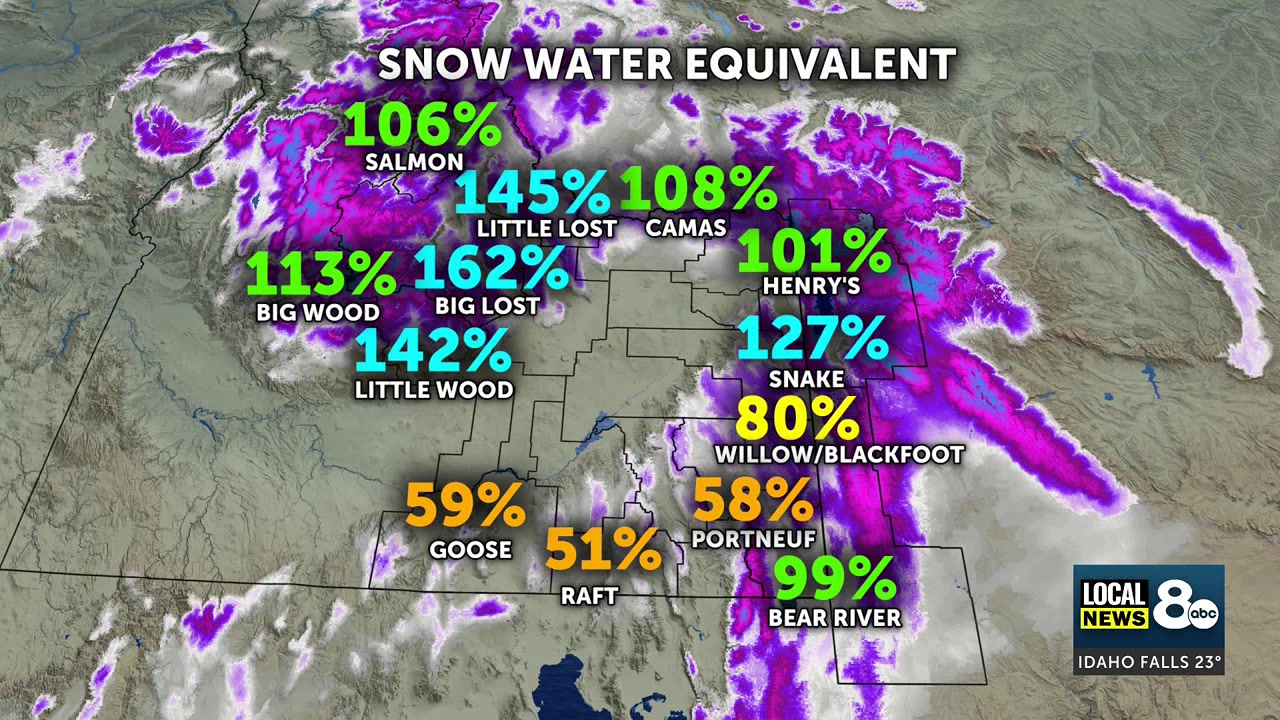
In the Boise basin, precipitation is about average, In the Upper Snake the snow pack is above average, but the situation is most troubling along Idaho’s southern border basins — including areas south of Twin Falls, Goose Creek and Salmon Falls Creek — where warm temperatures and a forecast for a warm January point to a “really rough year” unless weather patterns change dramatically.
If warm temperatures continue and spring arrives early, runoff could come sooner and weaker than usual, leaving farmers with water shortages. How severe those shortages become will depend on storms and temperatures over the next several weeks.
Farmers there are expected to rely heavily on whatever water is already in reservoirs, plus minimal runoff if conditions do not improve.
In the Upper Snake region, which includes irrigators from the Henry’s Fork down to Milner Dam, the outlook is “dicey.” Reservoir storage is roughly 500,000 acre-feet below normal, and an early warm spring could trigger an early and weaker runoff than current snowpack indices suggest.
“We’ll probably see some water shortages,” Hoekema said “How serious those are depends on what happens from here on out.”
State and federal water managers plan to dig deeper into the data at a water supply meeting scheduled for Jan. 15. Analysts will compare SNOTEL measurements with modeling tools that estimate snowpack across entire basins at fine elevation intervals.
Their goal is to determine how much area lies below the current snow line and how much snow might be missing from the official record before making firmer projections about irrigation supplies for the coming growing season.