Missouri sees sharp rise in flu cases, ER visits up nearly 6%

Mitchell Kaminski
COLUMBIA, Mo. (KMIZ)
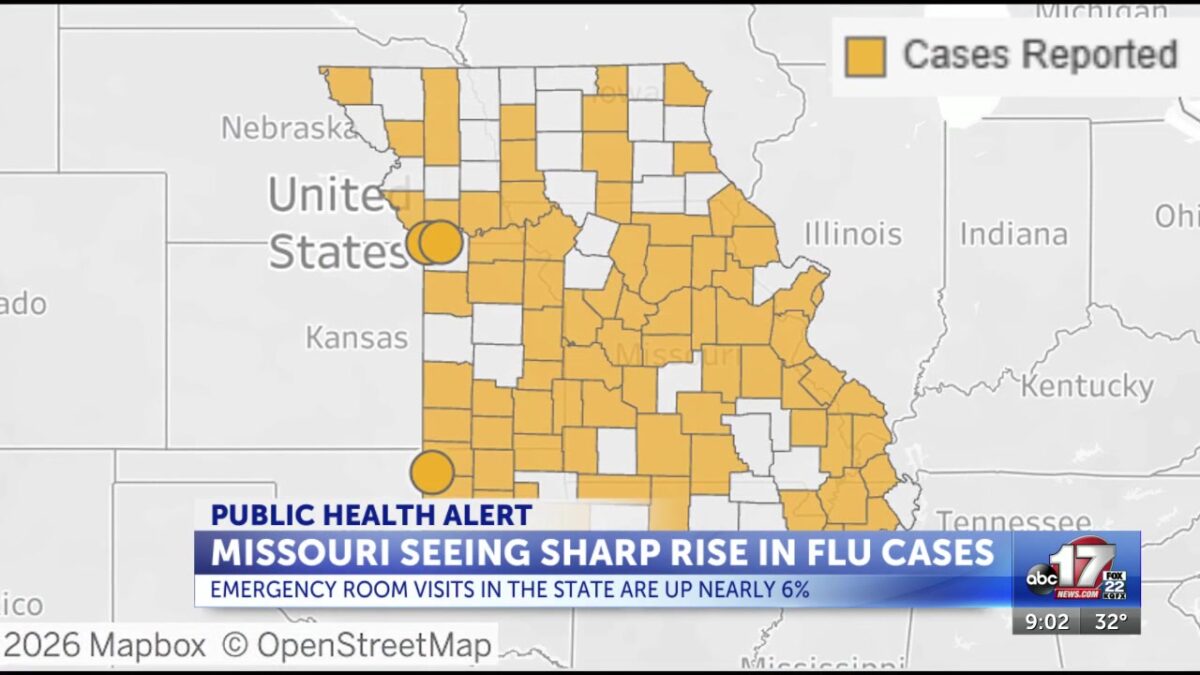
Flu cases are rising sharply across Missouri as the state heads into the heart of the winter illness season, with emergency room visits rising nearly 6% according to the latest report from the Missouri Department of Health and Senior Services.
From Dec. 14–20, Missouri recorded 146 new influenza-related hospital admissions. Emergency room visits for flu-like illness rose 5.8%, while the season total of reported flu cases climbed to 9,255.
Health officials also reported 4,589 influenza-related health care visits statewide during the week, up from 3,977 during the same period last year. Influenza A continues to dominate, with 3,880 cases reported, compared with 704 cases of Influenza B.
Mid-Missouri has also seen a steady increase. The region reported 397 Influenza A cases, a rate of 58.21 per 100,000 people, and 46 Influenza B cases, a rate of 6.74 per 100,000.
Boone Health spokesman Christian Basi told ABC 17 News the health system has seen an increase in flu cases at both its clinics and hospitals.
Total flu cases for the season in Central Missouri now stand at 884, including 636 Influenza A cases and 248 Influenza B cases. Nathan Koffarnus, an epidemiologist with the Missouri Department of Health and Senior Services, said flu reporting typically lags by about a week because of delays in test results.
“The week just before Christmas, we saw cases double in the state. We went from about 4500 cases to over 9000 cases in just one week’s time,” Koffarnus told ABC 17 News.
Koffarnus said the surge mirrors national trends, particularly in states that tend to see flu spikes earlier in the season.
“That really matches what’s been seen elsewhere in the country as well,” he said. “We’re a little behind some of the say like the coastal areas, but other states that are a few weeks maybe ahead of us with getting hit hard by increased cases, they’re continuing to see those big increases as well.”
The rise comes as larger U.S. cities are often hit first, a trend Koffarnus attributes in part to travel patterns.
“There’s a lot more international travel, domestic travel and some of those, more populous states on the coast. So they do tend to get things a little bit sooner than us. And then it kind of spreads across the country,” Koffarnus said.
While flu activity is currently tracking closely to last season, Koffarnus cautioned that the situation could still worsen.
“It’s tracking really close to last year’s flu season. But it’s important to remember that every flu season is different,” Koffarnus said. “But that doesn’t mean it’ll peak at the same time and we could see way more cases.”
Health officials continue to urge people who become sick to stay home and avoid contact with others. Those at higher risk — including older adults and people with underlying health conditions — are encouraged to seek medical care quickly, as antiviral medications are most effective when started within the first two days of symptoms.
Koffarnus emphasized basic prevention steps, including good hygiene.
“Frequent hand-washing is a big one,” he said. “(You) want to be wary of surfaces, cleaning as much as possible, because you can pick up the virus from the surfaces. Somebody sneezes into their hand, touches a doorknob, you come through, touch the doorknob. So you want to try to not touch your face, especially if your hands aren’t recently cleaned.”
He added staying home when sick remains critical to slowing the spread.
“For those who may be ill, like I said, staying home is the number one thing. Not mixing, not going into work or school. When you’re ill, it’s days three through five that are the when of illness with flu where people are the most contagious to others.”
Declining vaccination rates may also be contributing to the increase in cases.
“One of the reasons potentially why we’re seeing a bigger increase in flu right now is just that we’ve seen vaccination rates fall pretty much every year with flu. And so I think nationally we’re in the low 40% range for people getting the flu vaccine.”
Although the season is already underway, Koffarnus said it is not too late to get vaccinated.
“It’s a little later than we typically would like to see people get vaccinated because it takes a couple of weeks after the flu vaccine for immunity to build up,” Koffarnus said. “We’re still going to have probably a couple of pretty bad months of flu. And it’s typical that January and February are heavy flu months. So getting that vaccine right now could give people a lot of protection for when the flu season could get much worse later on.”