InvestigateWest
Many immigrants arrested at an Idaho racetrack are being detained in Nevada and other states, making it harder for attorneys and their families to find them
By Rachel Spacek / InvestigateWest
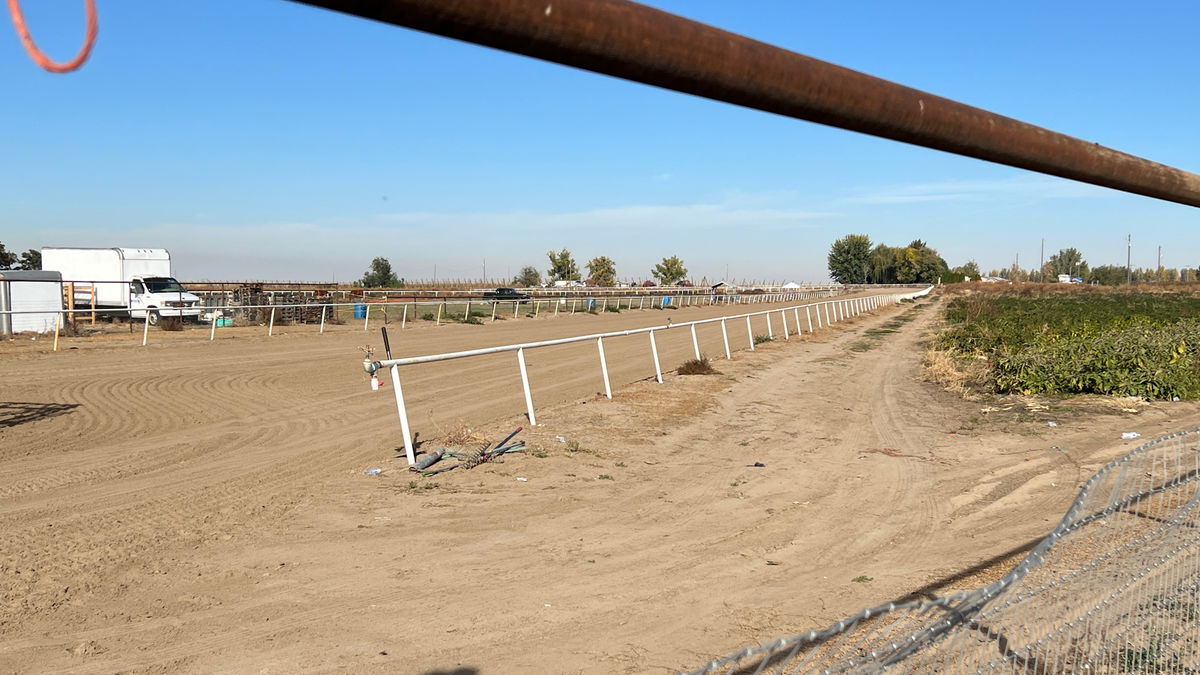
WILDER, Idaho (InvestigateWest) — On a Sunday afternoon in October, a man went to the horse racetrack in Wilder, a small Idaho farming town, hoping to unwind after a long week at his construction job. But the La Catedral Arena — a popular spot for Latino families to spend time together and watch races — quickly devolved into chaos as federal agents stormed the event.
The man, who is undocumented, hid as Immigration and Customs Enforcement agents sprayed rubber bullets at the crowd, said Rachel Vasquez, one of his relatives. Eventually, he was caught and placed in a large white van.
The man’s family was unsure where he was being held or how to contact him, and couldn’t find him on the ICE website for locating detained people. After a full day of worrying and no word from him, Vasquez tracked the location on his phone to the Boise ICE office, where she went herself to get answers. But she and other families were shut out of the office. Vasquez spoke to InvestigateWest on the condition that her relative would not be named, citing concerns about impacting his immigration case.
The family eventually learned he was moved to a detention facility in Las Vegas, more than a nine-hour drive away. His phone calls home have been brief because he has to share time with dozens of other detainees, Vasquez said. She says ICE agents have also threatened her relative with long-term detention and repeatedly pressured him to sign a voluntary departure agreement.
Immigration attorneys say undocumented people like Vasquez’s relative — who has no criminal record and has been living in the U.S. for more than 30 years — previously would not have been a target for enforcement, much less detained. But now, with her relative hundreds of miles away, Vasquez says the government is making it even harder for him to fight his detention.
His story highlights how federal authorities have erected new barriers for immigrants to contest their detention, by eliminating opportunities for bond hearings, restricting phone calls and, with the help of Idaho State Police, sending people to states like Nevada, Wyoming and Utah for detention, far from home and at times out of reach of their lawyers.
“He keeps saying, ‘I can’t do this, I can’t be trapped in here and not know and not have any answers,’” Vasquez said.
While the FBI billed the Wilder, Idaho, raid as a crackdown of a large-scale illegal gambling ring, only four people were arrested on such charges, while more than 100 were detained by ICE, according to the agency. Witnesses and one local police agency have said agents also zip-tied some children and detained U.S. citizens.
It’s a rare instance of mass immigration enforcement in a state that has previously seen few large-scale raids, even as the Trump administration has ramped up enforcement efforts in cities like Chicago and Los Angeles, according to local immigration attorneys. Idaho has also stepped up to aid federal authorities by transporting people convicted of state crimes to ICE facilities, an effort Gov. Brad Little said is aimed at “dangerous” criminals. But an InvestigateWest review of the 40 people transported to immigration detention facilities by Idaho State Police between August and October shows six people were charged but not yet convicted of any crimes, and at least two of those men had charges dismissed.
 Idaho Gov. Brad Little listens during the Western Governors’ Association meeting Thursday, Nov. 20, 2025, in Scottsdale, Ariz. (AP Photo/Rebecca Noble)
Idaho State Police Director Bill Gardiner said in an interview with InvestigateWest that the agency did not verify whether people identified by immigration authorities actually had criminal convictions before they transported them to ICE custody, but it is now conducting those checks since local news outlets raised the issue in October.
Attorneys say the transfers make it even harder for them to reach their clients and for their families to track them down. And as ICE has taken the stance that undocumented immigrants present in the country for years can be detained without the opportunity for an immigration court hearing where they can make the case for their release, many immigrants are now turning to federal courts for relief.
Nikki Ramirez-Smith, who represents 15 people who were recently released after more than a month at an Idaho jail, says the procedures that once protected immigrants from unjust or unnecessary detention are “being eliminated piece by piece.”
“You’re not allowed to just go, throw out a net, grab all the immigrants you can and then just decide to sort it all out later,” Ramirez-Smith said.
‘This was a pivot point’
Though similar raids are being conducted across the country, this type of raid in Wilder — a town 40 miles west of Boise with fewer than 1,700 residents — has been rare in Idaho until now.
“I think this was a pivot point and a wake-up call for us,” said Ramirez-Smith, who arrived at the racetrack as people were being detained on Oct. 19.
The Department of Homeland Security has said immigration agents “helped dismantle an illegal horse racing, animal fighting and gambling enterprise” at La Catedral and “lawfully arrested more than 100 illegal aliens.”
Ramirez-Smith said most of her clients who were detained were not questioned about crimes or if they were gambling. Instead they were zip-tied and only asked about their immigration status, she said. She also said she was denied access to detainees, even when she said she wanted to represent them as their attorney. Ramirez-Smith and other witnesses said they saw many families searching for children who had been detained or separated from them during the raid.
Under previous administrations, large raids where ICE detained people without suspicion of criminal activity were nearly unheard of, said Jennifer Ibañez Whitlock, senior policy counsel at the National Immigration Law Center. Typically, ICE had discretion over who it would arrest and reserved that for people who had committed crimes. Since many of the people detained in the multiagency raid had not committed crimes, they would have also been eligible for release on bond as they waited to appear before an immigration judge.
In the past, Ramirez-Smith said she was also able to get an immigration judge on the phone within a day or two to hold a bond hearing, and ICE agents notified attorneys where people were being held.
Two long-standing provisions of immigration law have dictated how ICE detentions worked for decades, according to Coeur d’Alene immigration attorney Alycia Moss, who represents a man detained in the Wilder raid. The first provision says that ICE must detain undocumented people who are apprehended at or near the U.S. border, with few exceptions. The second says that ICE can but is not required to detain people who are already in the country and have been for long periods of time. And in those immigration cases, if someone is detained, they can challenge their detention in immigration court. If a person isn’t a danger to the public or a flight risk, a judge would typically order their release while their immigration case played out.
But since July 8, when acting ICE Director Todd Lyons issued a guidance memo reinterpreting these provisions, the government has taken the stance that anyone who is present in the country illegally is subject to mandatory detention and ineligible for bond, even if they have been in the country for decades. Now many immigrants are forced to file habeas petitions in federal court as a last resort to get out of detention.
Most federal judges who have taken up the issue have sided with the detained immigrants, saying keeping them in jail without a bond hearing scheduled violated their due process rights and decades of immigration policy precedent.
District Judge B. Lynn Winmill echoed those findings in Nov. 19 rulings in which he ordered the release of 16 immigrants who filed habeas petitions urging the court to either keep them in Idaho or release them from detention. He found nearly all those individuals did not have any criminal record and said the federal government’s “only apparent interest” in their detention is “to fulfill an arrest quota of 3,000 immigration arrests per day set by the current administration.”
“This policy shift … has trapped thousands in detention without bond hearings, including long-term residents with no criminal records,” Winmill wrote in one of those rulings.
 FILE – The James A. McClure Federal Building & United States Courthouse, which houses the U.S. District Court, in seen in Boise, Idaho, on Jan. 19, 2007. (AP Photo/Troy Maben, File)
Ramirez-Smith is glad her clients were released but said they were still detained for more than a month after the raid despite not posing a public safety risk. Now that they’re released, she said they’ll hopefully be able to go through the normal legal process.
“They’ll have future hearings in immigration court, but they’ll do it as they should, not sitting in jail for a year,” Ramirez-Smith said. “They’ll be with their families, and it will go the way due process should work.”
Rachel Vasquez also celebrated the releases, but she couldn’t help wondering when her own family would be reunited. Her family member falls into the group of immigrants who would typically be released from detention while waiting for his immigration case to be resolved.
He has lived in the U.S. for more than 30 years, working as an Idaho farmworker for two of those decades before eventually getting a job in construction. InvestigateWest also found no criminal charges against him in Idaho.
“He may have been born in Mexico, but he’s made the United States his home for the last three decades and not just for him, but for his children and his grandchildren,” Vasquez said, adding that he often attends his grandchildren’s sports games. “He’s been a positive member of society, and he’s contributed to his community. … This is his home.”
Idaho moved immigrants without convictions
Idaho State Police has acknowledged that it failed to verify whether people in state custody identified by immigration authorities actually had criminal convictions.
According to records obtained by InvestigateWest, between Aug. 4 and Oct. 2, Idaho State Police transported 40 people between county jails, state prisons and ICE offices in Boise and Twin Falls. From those offices, Gardiner said a bus takes people to an ICE detention center in Las Vegas.
As part of the partnership, ICE agents send requests to Idaho State Police with the names, mugshots, and a brief summary of the immigration and criminal history of the people they would like transferred to ICE custody, according to emails obtained by InvestigateWest. In most cases, state police appeared to transport individuals after asking just a few questions about them and a sentence description of their crimes.
In one instance on Aug. 28, an ICE agent asked state police to transport someone whose only charge was “illegal entry,” which is a civil immigration charge. In an email response to the request, state police Maj. Shawn Staley said, “Since illegal entry is only a civil penalty, we cannot transport for that alone.”
But a review of Idaho court records shows at least six of the individuals who were taken to ICE facilities by state police had not been convicted of any crimes. The six men were all charged with misdemeanor DUI and had scheduled hearings before a judge in the following weeks after they were removed to ICE detention, according to court documents and state police transportation records. Two other men were transported after their state charges were dismissed.
In an interview with InvestigateWest, Gardiner said that officers had not checked that they were only transporting people who had been found guilty of state charges and found out about the issue after it was first reported by the Idaho Capital Sun. In those instances, Gardiner said his officers were attempting to “save ICE a trip” and decided to transport the men along with other detainees they were already planning to pick up, but they failed to check on their criminal history.
Gardiner said he later conducted an “audit” of transports and concluded they occurred during a “leadership transition” when ICE had not yet filled a position to coordinate transports with Idaho State Police.
“I’ve had conversations with the new person down there at ICE and reiterated what we’re doing,” Gardiner said. “So now there is verification, not only on the ICE side of things, but also with our own staff.”
Whitlock, from the National Immigration Law Center, said Idaho State Police is helping ICE violate the due process rights of people who haven’t been found guilty of crimes.
“The fact that ICE can just say, ‘Wait a second, just keep holding that person just because they aren’t a citizen,’ means they could eventually say that about anyone: ‘If we want to arrest them, you have to hold them for us,’” Whitlock said.
The government shouldn’t be able to detain people without a reason, Whitlock said, “That’s what due process is all about.”
Gardiner could not say whether or not people transferred to ICE custody are notified of where they are being taken or afforded the opportunity to tell their families and lawyers. He directed that question to the Boise ICE office, which did not respond to requests for comment.
Gov. Little recently said in a telephone town hall that the state is transporting people convicted of separate crimes “after they go through their due process,” according to the Idaho Capitol Sun.
When asked about the six people who were transported despite having no state charges, Little’s office wrote in a statement: “All of the illegal immigrants the Idaho State Police has transported were in jail or prison when they were picked up, and ISP is working closely with local ICE officials to ensure illegal immigrants who have completed their sentences are transported.”
“With any new program in state government, we expect adjustments will continue to be necessary as we execute Operation No Return,” Little said in the statement.
Due process obstacles
It’s not clear how many people detained at the Wilder raid remain in detention, but attorneys and advocates fear moving people away from their homes is an attempt to advance their deportation before they can fight it in court.
In the habeas petitions filed in Idaho, Ramirez-Smith and Moss argued that if they had to be detained, their clients should remain in Idaho, noting that it’s unclear how long ICE planned to hold them.
Many Idaho attorneys may not be admitted to practice in federal court in other states, Moss said, and they may be unable to travel to court hearings out of state or join remotely.
Moss also worries ICE is trying to move people closer to the southern border to facilitate their deportation.
“At some point it becomes really easy for them just to get them out of the country,” she said. “They need their day in court, so I am trying to keep them closer to where everything has happened, where I am and where their families are.”
Transferring immigrants to facilities away from their homes has become a common practice for ICE across the country, said Aaron Korthuis, an immigration attorney with the Northwest Immigrant Rights Project, a nonprofit legal aid organization in Washington.
“These transfers appear to violate policy that has long been in place to help ensure clients do not get separated from their attorneys, and ICE is regularly transferring people away from their counsel to underserved locations like Texas, Louisiana, etc.,” he wrote in an email to InvestigateWest.
 A detainee waits in a holding area during a media tour at the U.S. Immigration and Customs Enforcement (ICE) detention facility Tuesday, Sept. 10, 2019, in Tacoma, Wash. (AP Photo/Ted S. Warren)
While Vasquez says her family was able to find an attorney in Las Vegas to help petition for his release, with no clear end in sight for his detention, her relative has been tempted to leave in order to avoid lengthy detention.
“They’re telling him to, ‘Sign the papers or you’re not going to be able to talk to your family,’” Vasquez said. “They tell them, ‘You guys don’t have rights, you don’t have access to attorneys, just sign the papers.’ A lot of the guys, including his cousin, signed the papers to go back voluntarily.”
In court declarations, Ramirez-Smith said she represents at least two detained immigrants who had alleged problems seeking legal representation.
“I represent at least one individual who, despite my notice of appearance to the Department of Homeland Security, was repeatedly refused access to a telephone, threatened with 20 years of incarceration and had meals violently taken from him to pressure him to abandon his claim that he fears persecution if removed and to sign for his voluntary removal from the U.S.,” she wrote in asking for her clients to be released.
ICE’s 2025 detention standards state that detainees must have “reasonable and equitable access to telephones during established facility waking hours.”
Ramirez-Smith said she also filed notices in an Idaho federal court that said she was representing two other individuals detained at the racetrack, who were soon after deported to Mexico. She said at least one of the men later said he was coerced and threatened into signing a voluntary departure order by agents.
“I never got the opportunity to talk to them,” Ramirez-Smith said. “We confirmed that they were on their way to Vegas, and the next thing I know, they’re in Mexico.”
Attorneys across the country have cited similar barriers. A lawsuit filed by two Oregon immigrant rights advocacy groups in October alleged their clients have been denied phone calls and access to attorneys before being “rapidly” moved out of state, where it is harder for lawyers to find and reach them.
“In some instances Defendants have purposely transferred detained people outside the state of Oregon as quickly as possible in order to thwart attorneys’ efforts to offer detained people legal representation and to undermine this court’s jurisdiction,” according to the lawsuit.
ICE officials did not respond to multiple questions and requests for comment by InvestigateWest.
In a court filing in the Oregon lawsuit, the federal government argued that current Department of Homeland Security policies are “more than sufficient to protect detainees’ legitimate rights to access counsel” and that the U.S. Constitution does not “entitle detainees to unrestricted attorney access in the time, place, and manner of their choosing.”
DHS spokesperson Tricia McLaughlin also told CNN on Nov. 12 that district judge rulings releasing undocumented people from detention are “putting the lives of Americans directly at risk.”
“At every turn, activist judges, sanctuary politicians, and violent rioters have actively tried to prevent our law enforcement officers from arresting and removing the worst of the worst,” McLaughlin said in her statement.
‘We’re going to fight for you’
The raid in Wilder shocked and traumatized the Latino community and left many families with more and more questions about where they can go that is safe from future raids and if they can trust the local law enforcement agencies who were involved.
Wilder is a small town centered on agriculture and home to hundreds of Latino and immigrant farmworkers and their families. The Wilder School District has one of the highest percentages of Latino students in Idaho, according to state data.
 Demonstrators rally in front of the Canyon County, Idaho courthouse on October 20, 2025 in support of people detained by federal immigration authorities at the La Catedral race track the day before. While the FBI billed the Wilder, Idaho, raid as a crackdown of a large-scale illegal gambling ring, only four people were arrested on such charges, while more than 100 were detained by ICE, according to the agency. (Rachel Spacek/InvestigateWest)
“Not only has it instilled fear, but it’s led to our community not trusting authority, and that’s very scary to think about because you want to be able to trust law enforcement and to trust those in your community, ” Vasquez said. “People are scared to leave their houses. They are scared to reach out for any kind of help or assistance in fear of retaliation by ICE or local authorities.”
The Vasquez family is hopeful their family will be whole in Idaho again. But it has been hard to keep that hope alive, Vasquez said, especially for their family member detained nearly 700 miles away.
But they are trying to remind him of his family and community support. The family is raising funds to help cover their loss of income from his detention and also for the costs of a lawyer to petition for his release.
“We told him, ‘You’ve been here for 30 years, your family’s here, your children are here, your grandchildren are here,’” Vasquez said. “This is the only life you really know. Don’t sign the papers. Don’t sign the papers, and we’re going to fight for you.”
InvestigateWest (investigatewest.org) is an independent news nonprofit dedicated to investigative journalism in the Pacific Northwest. A Report for America corps member, reporter Rachel Spacek can be reached at rachel@investigatewest.org.
Click here to follow the original article.