Bend’s NE Olney Avenue closure extended through January 2026

Triton Notary

BEND, Ore. (KTVZ)– One of Bend’s key east-west routes will stay closed longer than expected as construction continues near the railroad crossing on Northeast Olney Avenue.

The stretch of Olney Avenue between NW Wall Street and NE First Street is now anticipated to remain closed through January 2026, city officials announced this week.

The extended closure comes as BNSF Railway crews complete track and signal improvements at the at-grade crossing, work that’s expected to last through December. Once the railway finishes its upgrades, the city’s project contractor will rebuild the roadway — including new subgrade, concrete, and asphalt — aiming to reopen Olney in late January, weather permitting.

Because final paving, striping, and landscaping require warmer temperatures, those finishing touches are planned for spring 2026. At that point, drivers should expect another full closure lasting up to two weeks to complete the final work.

In the meantime, the city is coordinating with BNSF to allow a temporary reopening of Olney Avenue from late January through April using temporary pavement.

There’s some good news for drivers, though: Olney between NE First Street and NE Second Street is expected to reopen the week of December 15.

Click here to follow the original article.

Positive mold findings confirmed in two CVUSD classrooms, District says full remediation underway

Cynthia White

THERMAL, Calif. (KESQ) – Coachella Valley Unified School District officials say a full remediation is being performed after testing confirmed positive mold findings in two classrooms at John Kelley Elementary School in Thermal.

News Channel 3 asked the District about reports of the mold at John Kelley after a viewer reached out.

The District responded that it “remains steadfast in its commitment to the health and safety of all students, staff, and families,” and that once the mold was reported, students and staff from the two classrooms were immediately relocated.

Environmental testing firm Safeguard EnviroGroup conducted testing of the affected area and created a report of findings which served as a guide for the next steps. The District hired SERVPRO to carry out the remediation in the affected area following strict safety standards.

 CVUSD says a final report will be made public once the cleanup is complete, and another round of testing will verify if the area is safe before any students and staff return.

The District calls this a top priority and says, “We are acting with urgency, responsibility, and transparency to address this issue and ensure a safe learning environment. The CVUSD school community can be assured that certified experts are overseeing every step and that we will continue to communicate openly throughout the process.

Click here to follow the original article.

Opawumi named CIF-SS D7 Player of the Year headlines several local volleyball honors

Mike Klan

SANTA BARBARA, Calif. (KEYT) – To the victor goes the spoits.

CIF-Southern Section Division 7 girls volleyball champion Cate High School swept the major individual honors.

Senior Oyin Opawumi was named CIF-SS D7 Player of the Year while the Rams Jordon Dyer is awarded Coach of the Year.

Opawumi was joined by fellow Cate seniors Fallon Erickson and Evangeline Little as All-CIF D7.

Here are other local players to receive All-CIF recognition:

Division 2: San Marcos senior Samantha Fallon

Division 4: Ventura senior Gigi Scaglia, Ventura junior Mia Howard

Division 5: Santa Barbara junior Blake Saunders, Santa Barbara junior Paylin Marcillac

Division 8: Foothill Technology senior Emily Turner, Foothill Technology sophomore Fiona Holt

Division 9: Nordhoff sophomore Wren Zimmerman, Nordhoff freshman Audrey Churpek

Division 10: San Luis Obispo Classical senior Madi Blasingame, San Luis Obispo Classical senior Sibylia Ridley, Thacher senior Cata Brown, Thacher Ori Ouermi

Click here to follow the original article.

City of Chubbuck Hosts Annual City Hall-I-Days

Hadley Bodell

CHUBBUCK, Idaho (KIFI) – The City of Chubbuck hosted their annual City Hall-I-Days Christmas festival at the Chubbuck City Hall earlier this evening, December 11th.

Mayor of Chubbuck Kevin England was excited to host the community for a night filled with holiday cheer. The event was supported by ICCU, The Human Bean, Lamb Weston and more. Outside the City Hall building, guests could grab hot chocolate and french fries.

Families and children enjoyed taking photos with Santa inside. Buddy the Elf was also there to bring the holiday cheer. Guests could make their own Christmas ornaments and take home coloring pages provided by the city.

The event also included a fundraiser for Toys for Tots. The Public Works Department and Parks Department work to make the event happen with sponsors and ensure the City Hall building is decorated for Christmas. It began years ago at Cotant Park in Pocatello, but has since moved to the beautiful City Hall building.

“We started many years ago with Christmas in the Park, but then we got this beautiful building and we thought we’d better use it as such,” said Mayor England. “We’re grateful that people come out and have a good time.”

Mayor England said events like these are important to bring the community of Chubbuck together and recognize it outside of the business world. Without the concious effort to put on events like the City Hall-I-Days, community culture could fall to the wayside.

“It’s important for us to celebrate and to just enjoy one another. And that’s what these events like Movies in the Park and Chubbuck Days and this event, that’s exactly what they’re for, is just to come together and have a good time with one another,” said England. “So we’re really dedicated to those experiences, just to give the community some fun things to do together.”

Click here to follow the original article.

First Lutheran Church continues Christmas Adventures tradition

News-Press NOW

By: Darren Doyle

ST. JOSEPH, Mo. (KQTV) — The First Lutheran Church in St. Joseph is continuing its unique, annual tradition, bringing Christmas magic to families.

This year, families who pay $15 get to experience “Trip to the North Pole,” featuring Mrs. Claus’s kitchen creation of a gingerbread town after Tinsel the elf opened a special magic gift.

Money for the trip will benefit the Open Door Food Kitchen in St. Joseph. 

The event serves as the ultimate experience to make memories during the holidays, according to Christmas Adventure Co-Director Tami Davis.

“People get so wrapped up with the monetary side of buying gifts and things like that. And to me, it’s making memories with your family,” Davis said. “This is a perfect opportunity for them to come take their kids and make a memory that’ll last way longer than that.”

Trips can be taken between 2 and 6 p.m. The last four dates for this experience are Dec. 13, Dec. 14, Dec. 20 and Dec. 21.

Interested attendees can make reservations online and will have to pay in person. Families are still welcome to walk into the church during Christmas Adventure hours. 

Click here to follow the original article.

Cargo and business leaders in Juárez say another farmers’ strike could further disrupt border trade

Heriberto Perez Lara

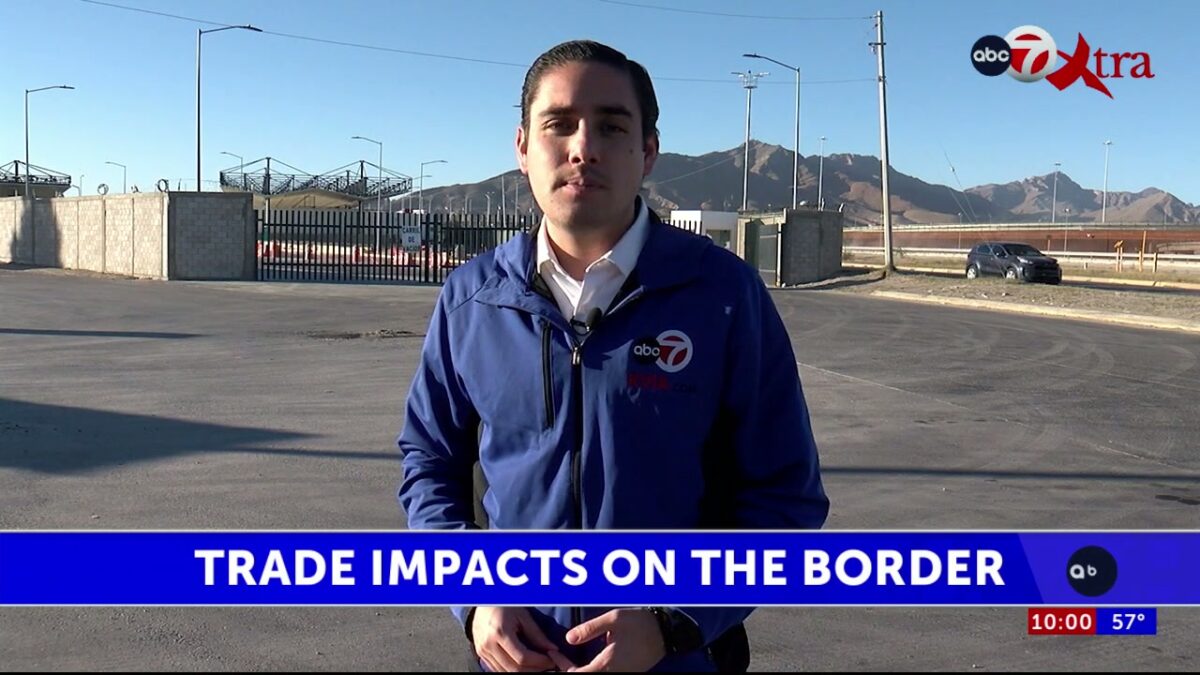
CIUDAD JUÁREZ, Chihuahua (KVIA) — Mexican farmers and agricultural workers south of the border protested across the country and in Chihuahua against the proposed new National Water Law, which will ultimately take water away from the courtside and reassign it for discretionary use. They argued that it threatens their livelihoods and the work they do every day.

The vice president of the Mexican Chamber of Cargo Transportation (CANACAR) in Northern Mexico, Manuel Sotelo Suárez, told ABC-7 that during the last two blockades, which happened within two weeks, border trade had $2 billion dollars worth of shipments impacted. He added that it is almost impossible to know exactly how much was affected.

According to Sotelo, about 3,500 Mexican exports cross into the U.S. each day, and roughly 3,500 imports cross into Juárez daily, each averaging $65,000. During those two protests, nearly 40,000 exports didn’t make it into the U.S. in the El Paso-Juárez region.

The Santa Teresa Port of Entry extended its hours, closing at 10 p.m. instead of 8 p.m., and also operated on Saturdays to clear the cargo that got stuck during the protests.

“The difference between the first blockade and the second is that in this second blockade, they didn’t block the highways, so it allowed us to go to other locations,” Sotelo said. “In my case, at the company I represent, we had to handle import and export shipments through Nogales, Sonora, and Nogales, Arizona; we’re talking about 750 kilometers (around 466 miles) from here to Nogales, and another 750 kilometers from Nogales, Arizona, to El Paso, Texas.”

“So, something that should have cost, I don’t know, $150 or $200 to do through Juárez, I think cost more than 100,000 Mexican pesos,” Sotelo added. “I don’t know how much the American side charged, but it was more than 100,000 pesos to do something we normally do here in two or three hours at a much lower cost.”

This disruption not only affected industries and maquiladoras but also impacted the salaries of dozens or even hundreds of truck drivers who couldn’t deliver their cargo on time or cross into the U.S. Other industries also faced fines from their clients in the U.S. for late deliveries.

ABC-7 reported last week that Mexico’s Chamber of Deputies passed the proposed Water Law, which is set to ban all private transfers of water concessions nationwide. The Mexican Senate approved it yesterday.

“And today, well, today we realize that the Senate didn’t pass what the farmers and agricultural workers wanted, and that’s it,” Sotelo said. “We’ve learned through the press that they’re (farmers) already threatening to block the customs offices and highways again next Tuesday, December 16th.”

“Well, it’s catastrophic. I mean, having two blockades in 15 days and a third one a week later—this is catastrophic; we all lose,” Sotelo added. “For example, during the first blockade, Ciudad Juárez couldn’t receive or leave shipments from the north, and I’m not just talking about industry, but all the food supplies and consumables we need.”

Sotelo also told ABC-7 that they heard some gas stations didn’t have gasoline, partly because the Juárez region couldn’t receive anything from the south or send anything south.

“So, we were very close to shortages—not just of gasoline but of other essentials that we Juárez residents depend on,” Sotelo said.

For local businesses, industry, trade, and cargo transport leaders, the Mexican federal government needs to resolve this issue by reaching an agreement with farmers and agricultural workers to avoid further economic impacts along the border. Sotelo noted that during these two blockades, the Juárez-El Paso border was the only affected region.

“On one hand, the Mexican government allows these blockades and disruptions, but on the other hand, it doesn’t solve anything or reach agreements with the protesters,” Sotelo said. “We don’t stop to consider whether they are right or wrong; we just know that something is affecting the economy—not just in Ciudad Juárez but throughout the region. If this happens again, it will impact us severely.”

If these trade disruptions and protests continue, Sotelo believes the industry may consider crossing cargo through other border regions or even outside Mexico and the U.S.

“If the farmers protest again, the industries will ask for a plan B,” Sotelo said. “We don’t know if plan B involves finding other borders because we don’t know if they’ll close roads too. If they shut down customs, it’s impossible. The only option then is air freight, which is very expensive.”

During the previous two protests, several freight and cargo businesses opted to cross their goods and merchandise through the Juárez International Airport to other destinations in the U.S., but the costs and capabilities were very disproportionate.

“They (the industries) don’t have as many planes as we do with the ground transportation we have here, so it becomes quite difficult; when there’s a situation like this, nobody wins, everyone loses.”

“We have to wait and ask the government to act to resolve this situation in the best way possible and in a way that doesn’t affect just one state and one border crossing,” Sotelo added.

Click here to follow the original article.

White Party teases return to Palm Springs in 2026

Jesus Reyes

PALM SPRINGS, Calif. (KESQ) – White Party is teasing a return to Palm Springs in 2026.

The White Party website has been updated with various famous logos, all rebranded as White Party Palm Springs. The bottom of the page reads “Coming In 2026.” The same message is visible on the event’s social media pages.

Little facts are known about the return, we have attempted to contact the White Party directly, and city officials tell us they have not been made aware of the event’s return.

The White Party was one of the largest LGBTQ+ dance music festivals in the country. It has taken place in downtown Palm Springs since 1989. The 2025 edition of the event was canceled, and at the time, its future was uncertain.

Statement from White Party on 2025 Cancelation (1/14/25)

“Thank you for your energy, support, love and commitment to the longest running gay destination event in the country. White Party Palm Springs started in 1989 as a safe space to gather, meet new life long friends, dance and celebrate our uniqueness, diversity and beautiful community. We feel that Jeffrey Sanker’s original idea for starting White Party Palm Springs has been accomplished. Today, there are multiple safe spaces across the globe and a younger community that no longer hides in the shadows with the need for events like White Party Palm Springs to feel safe. We have made the hard decision to take 2025 off and not produce White Party Palm Springs. The legacy of White Party Palm Springs will continue to grow and evolve as we look forward to 2026 and beyond.”

– Jack Ketsoyan, White Party

White Party founder Jeffrey Sanker died in 2021 after a battle with liver cancer. He was honored with a star on the Palm Springs Walk of Stars in 2023.

Stay with News Channel 3 for any new developments.

Click here to follow the original article.

Fire involving multiple greenhouses contained in Mecca

Jesus Reyes

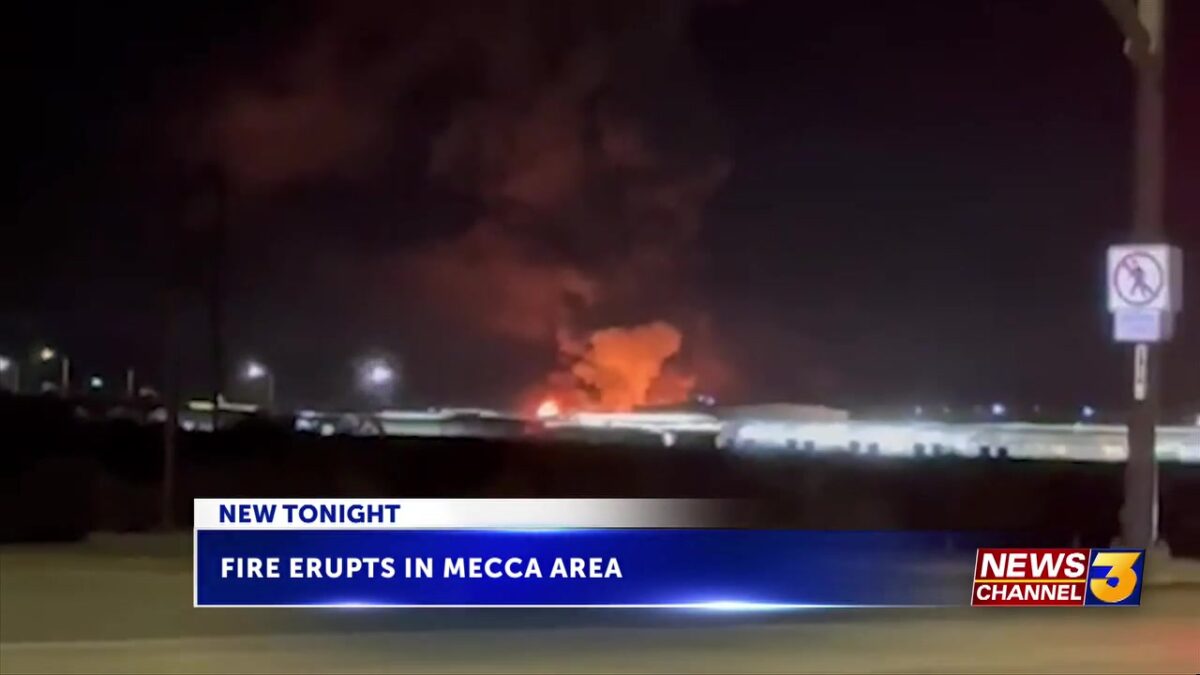
MECCA, Calif. (KESQ) – Firefighters contained a fire that involved multiple greenhouses in Mecca, according to CAL FIRE.

The fire was first reported just before 6 p.m. on Lincoln Street and Avenue 64.

Viewers shared dramatic images from a distance. As the flames broke out on reservation land, News Channel 3 crews were unable to get close to the fire area. 

The fire was contained by 6:45 p.m. Firefighters will remain on scene for four to six hours performing mop-up.

Authorities said there were no injuries or evacuations reported. An investigation is underway to determine the cause of the fire.

Stay with News Channel 3 for any updates.

Click here to follow the original article.

Problem Solvers: Trump administration pushes to remove gray wolves from Endangered Species Act protections

Harley Coldiron

Move brought outrage from conservation groups, while drawing praise from ranchers and Republicans

VALLEY FALLS, Ore. (KTVZ) — The Trump administration is moving to permanently delist the gray wolf from the Endangered Species Act, a decision spotlighting the struggles of a Southern Oregon ranch family at the heart of the nationwide debate.

A Wolf at the Fence Line

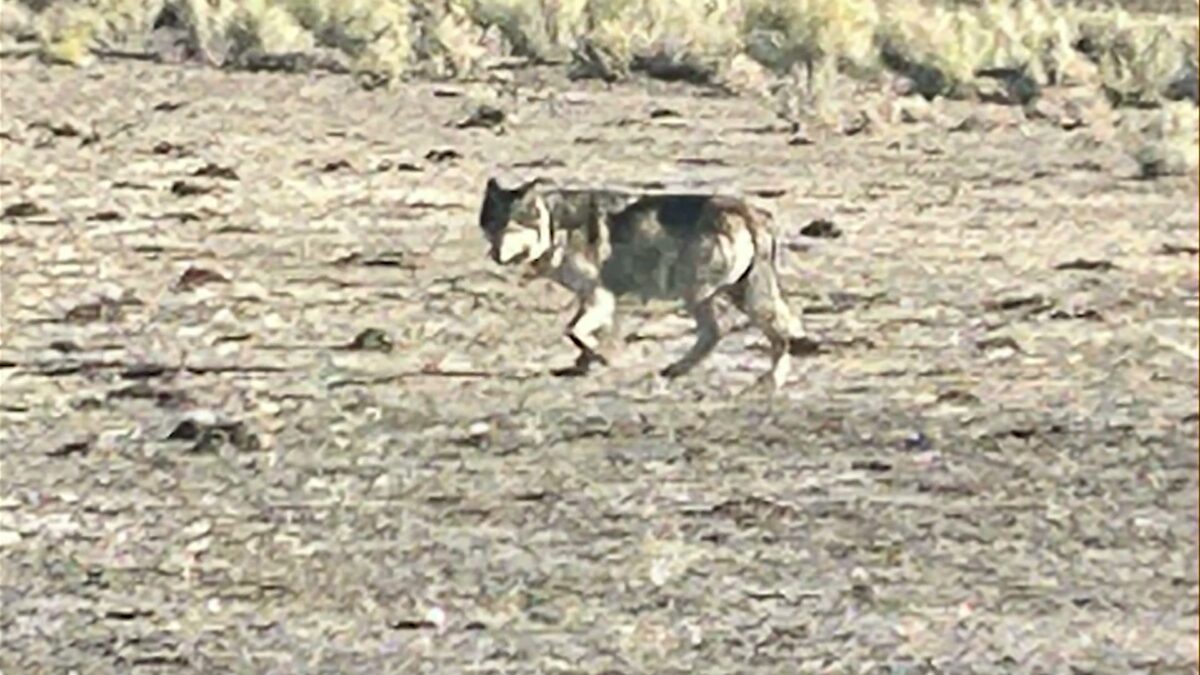
On the Flynn family farm in Southern Oregon, video shows Wolf 158 standing over one of rancher Tom Flynn’s calves, moments after killing it. Just a few feet away, the calf’s mother stands over her dead young, watching in visible distress.

Oregon Wolf 158 (left) feet away after killing a mother cow’s calf (right)

Wolf 158 after Tom Flynn confronts it after killing calf

Flynn recalls the encounter bluntly: “He just killed one. He has no fear of me. There are more babies out there, just within a couple of hundred yards of him.”

For weeks, the gray wolf stalked the Flynn family’s livestock, leaving them in constant fear.

Fish and Wildlife officers camped out on the property, using every non-lethal method allowed by law to capture and relocate the wolf, but he says nothing worked. At one point he noted, “Well, that’s nice—he’s heading right for the feed ground where there’s a bunch of baby calves, and it’s just half a mile behind the house.”

Eventually, more than a dozen of the Flynns’ calves were killed before authorities euthanized the animal. “After a three-week period,” Flynn said, “it finally came back to what I could have done in the first five minutes of encountering that wolf.”

Ranchers Back the Delisting Push

Rep. Cliff Bentz, a Republican who serves Oregon’s 2nd Congressional District, backs the change. “I think the Trump administration is exactly right,” he said.

Bentz argues that, for rural ranchers, wolves are not an abstract conservation question but a direct threat to their livelihood.

Bentz says ranchers lose more than calves to wolves—chronic stress from stalking leads to fewer pregnancies in herds. Some conservation groups, however, question those claims.

Bents also emphasized that ranchers are not compensated for lower pregnancy rates from their cattle, “We want to have these apex predators running around wreaking havoc, then those who want it that way have to pay for it, period,” Bentz emphasized in an interview with the Problem Solvers.

Farmers and ranchers, meanwhile, remain frustrated by repeated livestock losses, despite increased state investment in non-lethal deterrents and compensation. Though ranchers can be compensated for calves confirmed killed by wolves, the process can take time and does not cover livestock deaths that wildlife officials can’t directly verify.

“A wolf is a killing machine. It is truly in the business of killing,” Bentz said. “On the one hand, we’re busy trying to make sure we have food and driving down food prices. On the other hand, we’re busy encouraging wolves. Wow, what a crazy thing.”

He added that many ranchers in places like Eastern Oregon are already operating on thin margins. “What we ought to be doing is just trying to figure out how to make sure that those folks who, for the last hundred years, have eked out a living in these marginal spaces, like Eastern Oregon, for example, don’t have to bear another burden, such as wolves killing their livestock.”

Conservation Groups Fight Back

The decision is not sitting well with conservationist groups like the Center for Biological Diversity. Collette Adkins, carnivore conservation director and senior attorney for the organization, said, “Wolves made progress towards recovery across the country because of the protections of the Endangered Species Act.”

She added, “When wolves are federally protected, what we see is that the states work more closely with livestock operators, giving them more resources and tools.”

The Oregon Department of Fish and Wildlife currently encourages non-lethal deterrents, such as removing livestock carcasses, increasing human presence, using fladry or temporary fencing, and installing alarms or light-based scare devices.

In 2024, Oregon’s Department of Agriculture awarded $790,000 in grants for preventive measures and confirmed losses, up sharply from $478,000 the previous year, with all requests for compensation fully granted.

Adkins worries that removing federal protections could send wolf numbers crashing again: “When wolves lose federal protections, they’ll just turn back to the Band-Aid shortcut of just killing the wolves.”

A Democratic Response from Congress

Congresswoman Janelle Bynum declined an on-camera interview but issued a written statement responding to the debate. “Supporting farmers who feed our communities and protecting our vulnerable wildlife shouldn’t be mutually exclusive,” the 5th District Democrat said. “I’ll continue working in Congress toward conservation efforts that prioritize the livelihood of our farming families without compromising on protections for our endangered species and our environment.”

The Problem Solvers made several follow-up attempts to clarify her position and dig deeper into the issue, but never received a response.

Rep. Bentz criticized her stance and urged her to spend more time with ranchers on the ground: “She needs to get out there and actually listen, because those people who run a McDonald’s—and she does, she owns a bunch of them—should understand exactly where beef comes from. She serves it every day in her restaurants. And for her not to be aware of this additional cost being imposed upon the food chain that she relies upon is just amazing to me.”

What Delisting Would and Wouldn’t Change in Oregon

If the federal delisting goes through, it would not mean open season on wolves in Oregon. The state would still maintain strict protections for the species, and any lethal control would remain tightly regulated.

However, delisting would give farmers and ranchers somewhat more flexibility to kill a wolf that is actively threatening their livestock. Even then, officials stress that delisting would not mean widespread sport hunting of wolves across the state.

Oregon’s Wolf Population Rises, But so do Depredations

After years of stagnation, Oregon’s wolves have rebounded, fueled by westward expansion and successful breeding in both eastern and western management zones.

Wolf advocates hailed the population growth as a relief but tempered optimism with sharp concerns about illegal and legal killings.

“I’m relieved to finally see a noteworthy increase in Oregon’s overall wolf population, but we’re not in the clear by any means,” said Amaroq Weiss, a senior wolf advocate at the Center for Biological Diversity. “Far too many wolves are being killed illegally, and while state officials are concerned about wolf poaching, they continue to authorize high levels of legal wolf killing over livestock conflicts.”

Statewide, wolf depredations have averaged around 70 investigated incidents per year since 2021. However, 2025 is expected to exceed this average, with final counts to be released next spring.

ODFW authorized targeted removals of 11 wolves in the East Management Zone due to chronic depredation. Eastern Oregon is one of the few places in the country where wolves are not federally protected.

Ranchers lawfully shot another three wolves caught in the act of attacking livestock. The total of 14 wolves killed for livestock conflicts in 2024 nearly matches the 16 killed in 2023. Seven additional wolf deaths are currently under investigation, some tied to suspected poaching or poisoning in eastern and western zones.

State vs. County Control

While the Flynns and Rep. Bentz spoke highly of Oregon Fish and Wildlife, they expressed support for shifting control of wolf protections to the county level. The Flynns emphasized that each Oregon county is distinct, with its own needs and political leanings. They also don’t feel Salem and the State of Oregon represent rural interests and ways of life.

Bentz agreed, saying, “My counties are huge. Harney County is 10,000 square miles, and Malheur County is almost 10,000 square miles also. These are huge, huge, huge areas. So of course, the counties should have a lot to say about all the activities that go on within them — particularly when it comes to wolves.”

Looking Forward

For the Flynn family, the scars of losing more than a dozen calves to Wolf 158 are still fresh. For conservationists, the worry is that rolling back federal protections could erase decades of progress in bringing wolves back from the brink.

For now, a Southern Oregon ranch stands as a vivid example at the center of a countrywide debate over how to balance protecting predators with protecting the people who live and work alongside them.

Click here to follow the original article.

No snow, less dough: When fewer visitors come, Bend businesses say locals make a big difference

Tyson Beauchemin

BEND, Ore. (KTVZ) — For businesses, no snow means less dough in a town dependent on tourism and outdoor recreation.

A late start to the ski season has economic impacts. Hotels and restaurants could feel an impact this year.

KTVZ News spoke with a chef at the Hawkeye & Huckleberry Lounge in Bend, who says it’s already noticed a pinch.

“It’s absolutely true – we saw it already with Thanksgiving,” Carolos Anthony said. “Last year, we already had thea mountain open. We saw probably a 10% downshift in covers, in reservations,. And you feel that, especially small businesses, they’ll feel it.

“But again, I think our locals are so strong here, they’re really supporting our local businesses. So here’s talking to you locals! Make sure you’re going to those restaurants, shops, bars, Make sure you’re supporting because we don’t have our tourists right now.”

Wednesday night, the restaurant hosted a Mt. Bachelor pass-holder party.

While there’s no snow on the mountain, plenty of partygoers hope they’ll be skiing soon.

Click here to follow the original article.