Table-to-table lunch, your direct line to local legislators

Ariel Jensen

POCATELLO, Idaho (KIFI) — Idahoans in Pocatello have the opportunity to meet and discuss current issues with their local representative during a special Table-to-Table Legislative luncheon today, Dec. 16.

Tickets are currently on sale for $33 for individuals and $55 for a pair. During the event, legislators will move around the room “table to table,” with a set amount of time allocated at each table for brief discussions with attendees. When the timer goes off, they will move on to the next table.

The event is designed to ensure every attendee has dedicated time to voice concerns and ask questions.

The luncheon will take place at the Purpose Center / Purpose Tea at 224 N. Main St, Pocatello, ID 8320,4, United States.

Click here to follow the original article.

‘Sorely missed’: Buchanan County Sheriff’s Office mourns loss of veteran deputy

Cameron Montemayor

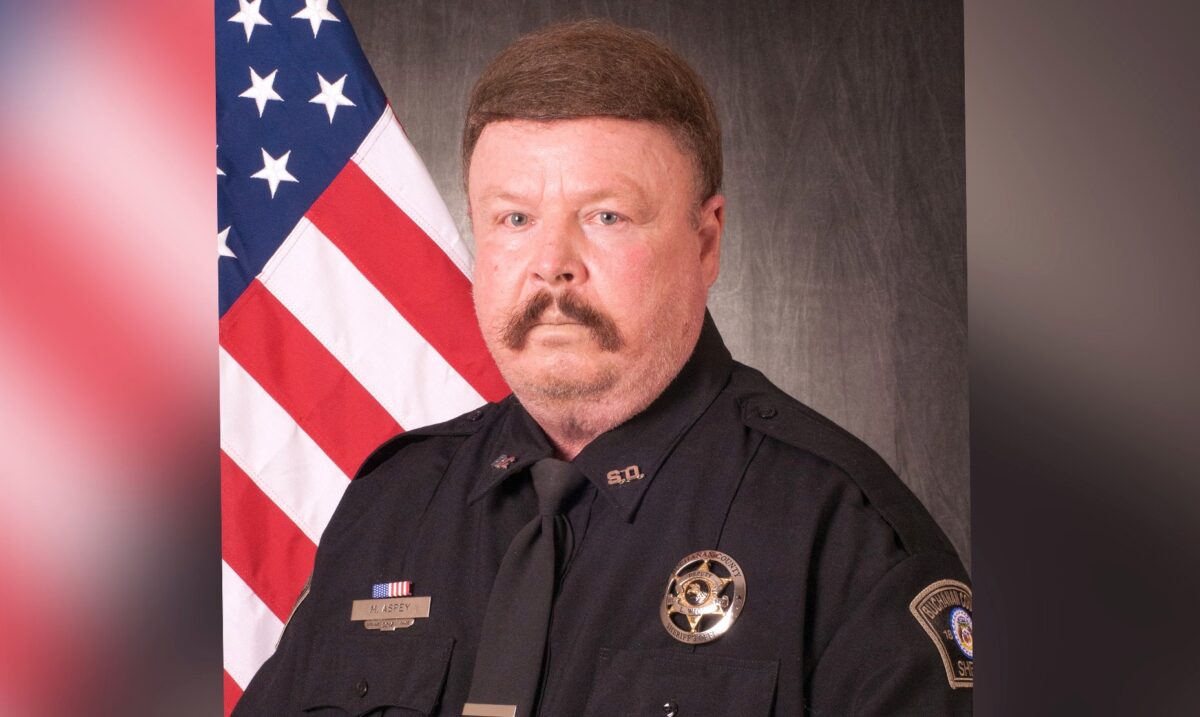
ST. JOSEPH, Mo. (News-Press NOW) — The Buchanan County Sheriff’s Office is mourning the loss of a long-serving deputy who devoted more than four decades to law enforcement and protecting the public.

The department announced late Monday that Deputy Mike Aspey has died as a result of a medical event. He was 68.

“Mike was outstanding. He was always there to help everybody with a smile on his face. An excellent deputy,” Buchanan County Sheriff Bill Puett told the St. Joseph News-Press. “Mike was a good man and a man of faith. He was very well thought of and he’ll be sorely missed.” 

A 45-year veteran of law enforcement, Aspey worked for the last 10 years as a court deputy for the Sheriff’s Office’s Court Security Division, supervising the courtrooms of the retired Judge Pat Robb and Judge Terry White at the Buchanan County Courthouse.

“He helped maintain safety and security in the criminal courts and did an excellent job at it,” Puett said. “He had been contributing to the mission of the Sheriff’s Office for a long time. I can’t say enough good things about him.”

Prior to that, Aspey spent 15 years as the director of police and security for the Truman Library and Museum in Kansas City and 14 years with the St. Joseph Police Department.

Funeral arrangements are pending at this time.

Click here to follow the original article.

Missouri Department of Conservation puts pause on post-hunting season deer cull

Marie Moyer

COLUMBIA, Mo. (KMIZ)

EDITOR’S NOTE: AI was used for background in researching this story.

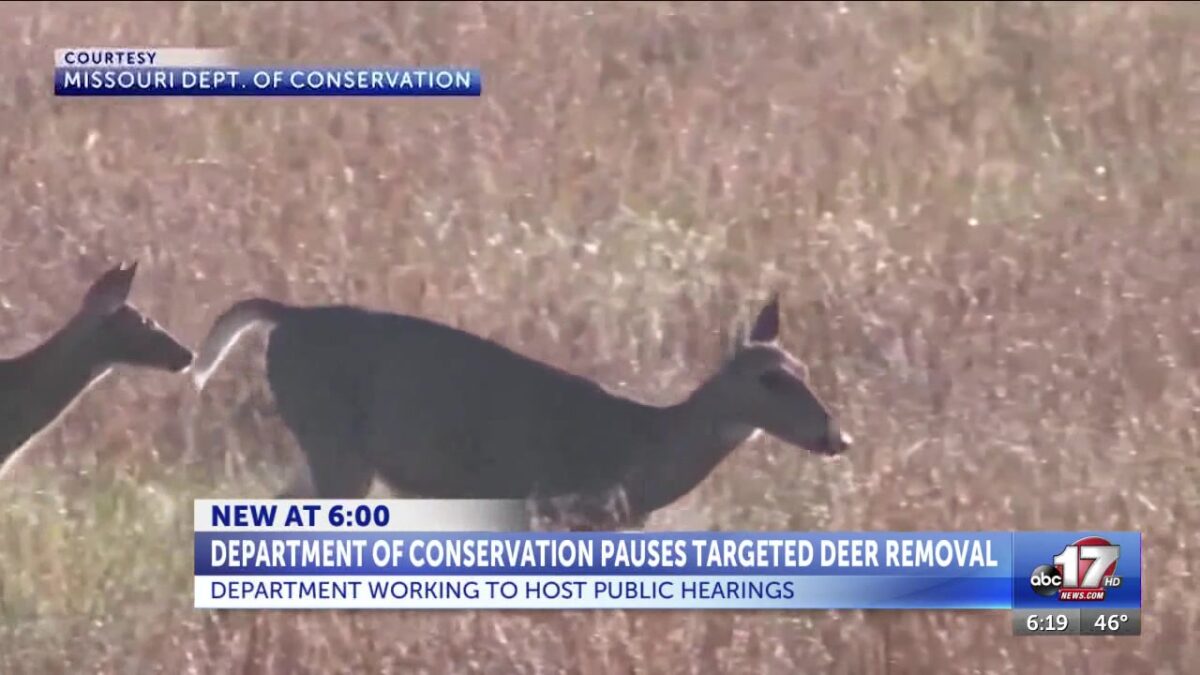
The Missouri Department of Conservation is pausing its chronic Wasting Disease management efforts to find a more sustainable option.

The disease was detected in the state in 2010, and is reportedly on the rise but relatively low, with around 1% of samples last year testing positive for CWD. However, MDC experts add that a 5% positive test rate tends to be at risk for outbreaks.

“As with many diseases, early detection and aggressive management have the greatest impact on the future distribution of the disease. So we embarked on an aggressive strategy to minimize the likelihood of spreading the disease within Missouri,” MDC Director Jason Sumners wrote in an open letter Monday.

The Missouri Department of Conservation implemented a series of strategies aimed at controlling the spread of CWD. Among these is a mandatory sampling procedure conducted annually during deer season, during which hunters can have their deer tested at no cost. The department has also implemented regulations for feed use and carcass disposal to prevent the spread.

The department typically uses the findings from the November sampling in conjunction with an annual targeted deer removal program that runs from January to mid-March.

This program is intended to help control the population of infected deer in areas where CWD is prevalent. The department gets approval from local landowners to hunt on their land, and all non-CWD-affected meat harvested from the hunts is either returned to the landowners or donated.

According to MDC Deer Program Leader Jason Isabelle, following a mandatory sampling event in November, the department received around 22,000 samples with 32 positive cases of CWD.

Last year, the department reported having hunted 4,700 deer alone through targeted deer removal with local partners and hunters across the state removing around 275,000 deer.

The post-season program is being put on hold for this upcoming year.

“We remain committed to keeping our deer herd healthy and working collaboratively with the hunters and landowners that are critical to our conservation mission,” Sumners wrote. “We cannot be successful in this work, and at the scale needed, without hunters’ and landowners’ support and participation. At this time, MDC will be pausing our post-season targeted removal efforts to work with hunters and landowners to adapt and identify a more sustainable path forward.”

Deer culling has been a criticized strategy in the past, with opponents arguing that the action causes ecological impacts and affects local hunters.

Anthony Weeks from Vandalia sees benefits from targeted deer removal but adds that it can be dangerous if misused.

“A local area to me, they did it and they realized, ‘hey, there really is no CWD in this area,’ and so now they decreased a little of the population,” Weeks said. “Normally, I harvest between 3 to 4 deer, one buck and a couple of does, this year I only have one buck and one doe and that was it.”

Weeks adds that he is excited about the idea of public hearings with the department. “That they are listening to both the hunters and landowners and the community,” Weeks said. “Not everything is going to be able to get put into place or be a new law for next year, but it is a good starting point.”

Allen Morris from Jackson argues that targeted deer removal does more harm than good.

“You just killed a whole population and they can’t tell you that those deer will die of CWD because there’s 100 different ways that deer will die before ever getting CWD,” Morris said. “A deer is going to die of getting hit by a car, chronic blood loss from a bullet or an arrow, predators, weather, there’s so many different things that nobody comes into account.”

Morris adds that trust in the department for some hunters needs to be built back up following previously unsuccessful public hearings.

“They’ve hosted forums for the last 12 years, I’ve been to three of them in Perry County, and they won’t they won’t let the people talk,” Morris said. “They have their little meetings, a little sit down around the table, and they don’t want people to have a public output on this, because when you start asking questions, they get uncomfortable.”

Morris adds that the department must be more forward with finances and details on the operations of targeted deer removal to rebuild trust.

“It would be complete transparency, and instead of me having to file so many open records request, all that should be on their website for anyone,” Morris said.

“Regardless of where you stand on the issue of CWD, most share the same goal — a healthy sustainable population of deer in Missouri that can be appreciated and utilized by future generations,” Sumners said.

Click here to follow the original article.

Guide Dogs of the Desert urgently needs volunteer puppy raisers

Daniella Lake

PALM SPRINGS, Calif. (KESQ) – Guide Dogs of the Desert is looking for volunteer puppy raisers almost 20 new puppies. The organization says that puppy raisers are an integral part in carrying out their mission to improve independence for those who are visually impaired.

Lisa Coleman, a former puppy raiser and current volunteer with the organization, says that she discovered she had an eye disease shortly after her partner started working for Guide Dogs of the Desert.

“Once I was diagnosed legally blind, I was all in. I was all in for every individual out there that visually impaired or blind. I knew that feeling,” she says.

Puppy raisers keep puppies for up to a year. “They’re housebreaking, they’re teaching basic obedience. We have a lot of events for them to go to, whether it’s a structured event or community event at a coffee shop,” says Angel Coleman, the medical director of Guide Dogs of the Desert.

After that, puppies return to Guide Dogs of the Desert to receive formal guide dog training.

“When I watch handlers cross the stage and gain that confidence and freedom that a guide dog brings, I have hope,” says Lisa Coleman.

If you’re interested in volunteering, here’s a link to their website.

Click here to follow the original article.

Idaho Falls announces UTV Holiday Light Parade route and traffic detours

News Release

The following is a news release from the City of Idaho Falls:

IDAHO FALLS, Idaho (KIFI) — Traffic will be temporarily detoured Friday, Dec. 19, beginning around 6:30 p.m. through approximately 9:30 p.m., as the City of Idaho Falls welcomes the public to the UTV Holiday Light Parade and the Stones Kia Firework Show.

The parade kicks off at 7 p.m. starting at Freeman Park and will follow a new scenic route designed to help reduce traffic impacts. This year, the route will travel along the east side of the Idaho Falls Riverwalk to the Pancheri Bridge before returning along the west side of the Riverwalk to Freeman Park. Leaving Pancheri Drive open this year is expected to ease overall traffic congestion. Residents can view the map that shows the updated route and suggested viewing areas here.

To ensure the safety of participants and spectators, several intersections and roadways will be temporarily impacted as the parade progresses. Closure times will vary, and traffic impacts are expected to occur between approximately 6:30 p.m. and 9:30 p.m. as the route is prepared, the parade moves through the area, and roads are reopened.

The following locations will be impacted:

Broadway Street westbound closed at Memorial Drive

Broadway Street eastbound closed at River Parkway

U.S. 20 eastbound lane adjustments over John’s Hole Bridge

U.S. 20 eastbound off ramp and westbound on ramp at Fremont Avenue/Riverside Drive closed during the event

A small number of homes near Freeman Park may experience limited access while the parade passes. Residents will still be able to access their homes but are asked to wait for breaks in the parade for entry or exit. Letters have been sent to residents that may be affected by the parade.

Pancheri Drive will remain open to vehicle traffic during the parade. However, UTVs will travel along the sidewalk adjacent to Pancheri Drive as part of the route. Drivers traveling near the parade route should expect increased traffic and pedestrian activity and are asked to slow down, remain alert, follow posted signage, and avoid the area if they are not attending the parade or visiting a local business.

The city appreciates the public’s cooperation and patience during the event and looks forward to welcoming the community to the UTV Holiday Light Parade and the Stones Kia Firework Show.

Click here to follow the original article.

Mizzou Tigers take questions amid preparation for Gator Bowl

Matthew Sanders

COLUMBIA, Mo. (KMIZ)

The Missouri Tigers are getting ready for postseason play in less than two weeks.

The Tigers will travel to Jacksonville, Florida, for the TaxSlayer Gator Bowl against Virginia on Dec. 27. They took questions about the preparation at noon Tuesday. Watch it in the media player.

Click here to follow the original article.
Food insecurity is at a 10-year high in Mid Missouri; government shutdown and upcoming holidays adding to the strain

Olivia Hayes

COLUMBIA, Mo. (KMIZ)

Food insecurity is at a 10-year high in Mid Missouri, and the Food Bank for Central and Northeast Missouri says demand has increased since the government shutdown in October and November.

The demand became noticeable in October when concerns grew around SNAP benefits during the country’s longest government shutdown. The Food Bank said since SNAP funding returned in November, there has been an improvement, but the need is still high. While people are still recovering from the impact, so is the food bank.

“Loads of food were canceled or not complete,” said the Food Bank’s President and CEO Lindsay Lopez. “In addition to that, we saw food donations really decrease and we saw our costs continue to rise.”

The market served 3,196 people last week — 68 of them new. One-in-seven people in Missouri, including 1-in-5 children, are food insecure. The Food Bank serves 100,000 people across central and northeast Missouri each month. The Food Bank has increased spending on general food purchases by more than 157% compared to 2024.

Katie Geisler, spokeswoman for the Food Bank, said the holiday season can also bring food insecurity to the forefront because food is so central to celebrations.

“By making a contribution and participating in a food and fund drive, like the one for one holiday food and fund drive, or giving of their time as a volunteer, all of those things make such a huge difference,” Lopez said.

The Food Bank is set to host its 19th annual One for One Holiday Food & Fund Drive on Wednesday. Items gathered will provide food to families in need during the holiday season and beyond.

The most needed items at the One for One Holiday Drive are canned meat/protein, canned fruits and vegetables, canned soups/chilis/stews, boxed meal kits, cereal, peanut butter and pasta, according to The Food Bank’s website.

The Food Bank also welcomes monetary donations. One dollar helps The Food Bank provide three meals, according to Geisler. That means a $25 donation will provide at least 75 meals.

Food and funds can be donated at two locations from 6 a.m.-6 p.m. Wednesday — the Columbia Mall and Buchheits in Jefferson City.

Click here to follow the original article.

Banks say business fraud is surging to record high in Mid-Missouri

Haley Swaino

COLUMBIA, Mo. (KMIZ)

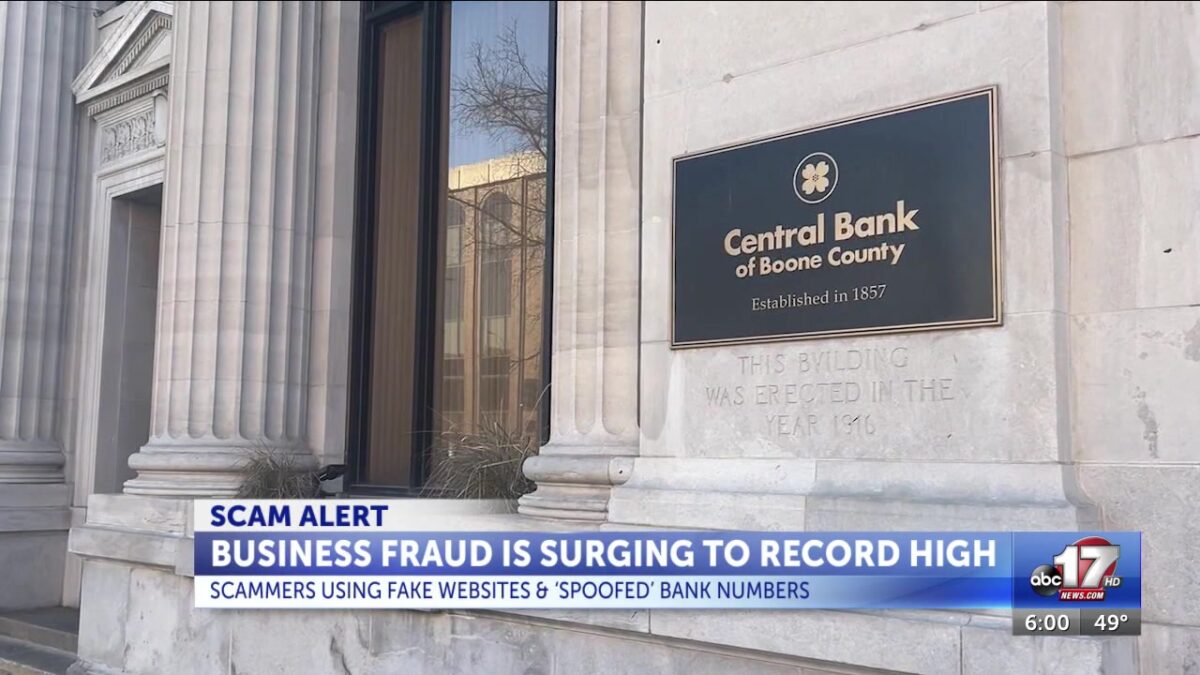
Central Bank of Boone County, Central Bank of Audrain County and Central Bank of Moberly are sounding the alarm that business fraud incidents reach an all-time high this holiday season.

According to the banks, scammers are targeting businesses using publicly available information, including pandemic-era loan lists from the U.S. Paycheck Protection Program, to make fraudulent calls.

“We’ve seen a much higher incident rate of spoofing fraud with our customers,” Bob Hull, senior vice president of business banking at Central Bank of Boone County, said. “And primarily what that involves is fraudsters reaching out to our customers and pretending to be the bank.”

Hull said at least several dozen of the bank’s customers have been contacting them eeach week about getting these types of calls.

They’ve also been receiving links to fake websites that mimic legitimate bank sites, tricking victims into entering sensitive financial details.

And what Hull said is possibly most alarming is how legitimate these scams appear, compared to what the banks have seen in the past.

And with all the credentials they appear to present, Hull said it’s becoming easier to be tricked.

“Phone number from the bank, the caller ID information from the bank, often the individual will give a name that is an actual bank employee,” Hull said.

“Phone number from the bank, the caller ID information from the bank, often give the individual will state that they’re they’re, give a name that is an actual bank employee.”

Hull said scammers are taking advantage of the season.

“To basically catch them at a busy time of year as we are in the holidays, and then try to scare them into seeing that there’s been some type of compromise on their account,” Hull said.

Fraud activity typically spikes during the holidays when business owners and consumers are distracted, the banks say. A single mistake can lead to devastating financial losses.

Angie Gentry, executive vice president of consumer banking, emphasized caution.

“Never, ever give out personal information on the phone or in an email without checking with your bank first, preferably, with someone you know at the bank,” Gentry said in the release. “Your bank knows your information. There’s no need for us to ask for it.”

Banks urge businesses and consumers to remain skeptical of any unsolicited requests for private information.

If someone suspects they’ve been targeted, they should contact their bank immediately. Lost funds should be reported to law enforcement.

Hull said the Central Bank of Boone County has been in contact with police about fraud surging and continues to report scams.

Click here to follow the original article.
Special Report: Tainted Water – California’s new Chromium rule and its impact on the Coachella Valley

Garrett Hottle

COACHELLA, Calif. (KESQ) Water agencies across the Coachella Valley are facing a costly mandate as California enforces the nation’s first drinking water limit on hexavalent chromium, also known as chromium-6, a chemical linked to cancer that occurs naturally in the region’s groundwater.

Cr6-Tier2-Notice-CoveComm_2025_8-5x11_FINAL-11-06-2025_k5wsrksr6gn (2)Download

The new state standard, which takes effect Oct. 1, 2024, limits chromium-6 to 10 parts per billion. That’s far stricter than the federal government, which only regulates total chromium at 100 ppb. 

California’s ultimate health goal is even lower: 0.02 ppb.

In response, Coachella Valley Water District sent out state-required notices in November warning customers in its Cove Community (ID-8) system that recent water samples showed levels between 11 and 12 ppb, exceeding the new limit

Officials stress the water remains safe to drink under current rules.

“This isn’t an emergency,” CVWD communications manager Lorraine Garcia said. “It’s still the same water. It’s not that we suddenly had a contamination from something. This is a naturally occurring thing here”

Garcia said CVWD has submitted a compliance plan to the state but cannot begin construction until it’s approved. Proposed solutions include taking wells offline, drilling replacements, and building treatment facilities. The estimated cost: $350 million.

“This particular regulation that California has adopted will double customers’ rates,” Garcia said

CVWD serves a wide area, including Cathedral City, Rancho Mirage, Palm Desert, Indian Wells, La Quinta, and parts of Indio and Thousand Palms. Chromium-6 is present throughout the valley, due to local geology.

“There is actually naturally occurring chromium all over our state in the rocks,” said UC Riverside environmental scientist Samantha Ying. “When we drink it at that level, like ten parts per billion or a little higher, and we drink it every day, it could become a problem including causing different types of cancers”

Ying noted that while the risk isn’t immediate, long-term exposure matters. “We don’t need any chromium-6 in our bodies,” she said. “Lower is always better.”

In the city of Coachella, which operates its own water system, leaders have requested up to $84 million in state funding to build a treatment plant. 

Inside city council chambers last week, city leaders were told the same bottom line

A new treatment facility may be needed. They’ve apply for funding and rates could double for customers.

City documents show the city requested up to $84 million in state funding, with estimates putting the project closer to 50 million. Some funding may come as grants, The rest would be loans repaid by ratepayers.

“We’re hoping to get grants. But what we can’t get in grants we’re going to have to borrow.”said interim city manager Bill Pattison during last week’s meeting.

Residents are already uneasy about the price tag.

“They’ve been giving it to us for years and years and years, and I don’t think it’s done anything to make anything any better,” said Frank Van Patten, a La Quinta Cove homeowner. “It shouldn’t cost billions of dollars”

The controversy over chromium-6 gained national attention after the movie “Erin Brockovich” spotlighted toxic industrial pollution in Hinkley, California. But that case involved a utility’s chemical leak. Here in the valley, the chromium is natural, it leaches from local rock formations into groundwater

Still, not everyone agrees on how far the state should go or who should foot the bill.

Assemblymember Jeff Gonzalez, represents the Coachella Valley andsits on the Colorado River Forum as supports the regulation. “When it comes to public health and safety, 100%,” Gonzalez said. 

Meanwhile, more than 120 water agencies and agricultural groups across the state have filed a lawsuit challenging the mandate, calling it an unfunded and unreasonable burden on local water systems.

That lawsuit is currently pending. Until it’s resolved, agencies must move forward with compliance and residents may soon see those costs reflected in their water bills.

Click here to follow the original article.

Future USS Idaho officially delivered to U.S. Navy

News Team

BOISE, Idaho (KIFI) — The U.S. Navy has a powerful new addition. Its newest fast-attack submarine, the future USS Idaho, is officially in Navy hands.

The sub was delivered yesterday, Dec. 15, by General Dynamics Electric Boat. It’s the second Virginia-class submarine delivered this year and marks the official handoff from the shipbuilder to the U.S. Navy.

The submarine and its crew will now undergo testing and sea trials before entering active service this spring.

Navy leaders say USS Idaho reflects the hard work of shipbuilders, partners, and sailors coming together to deliver one of the most advanced submarines in the world.

Built by Electric Boat and Newport News Shipbuilding, Idaho is the 26th Virginia-class sub.

When it joins the fleet, it will operate quietly, gather intelligence, and carry out missions worldwide. This is the fifth Navy ship named for the state of Idaho, continuing a legacy that spans more than 150 years.

Click here to follow the original article.