University of Utah team discovers rare computer relic

By Shelby Lofton
Click here for updates on this story
SALT LAKE CITY (KSL, KSL TV) — A research team at the University of Utah uncovered a rare piece of computing history.
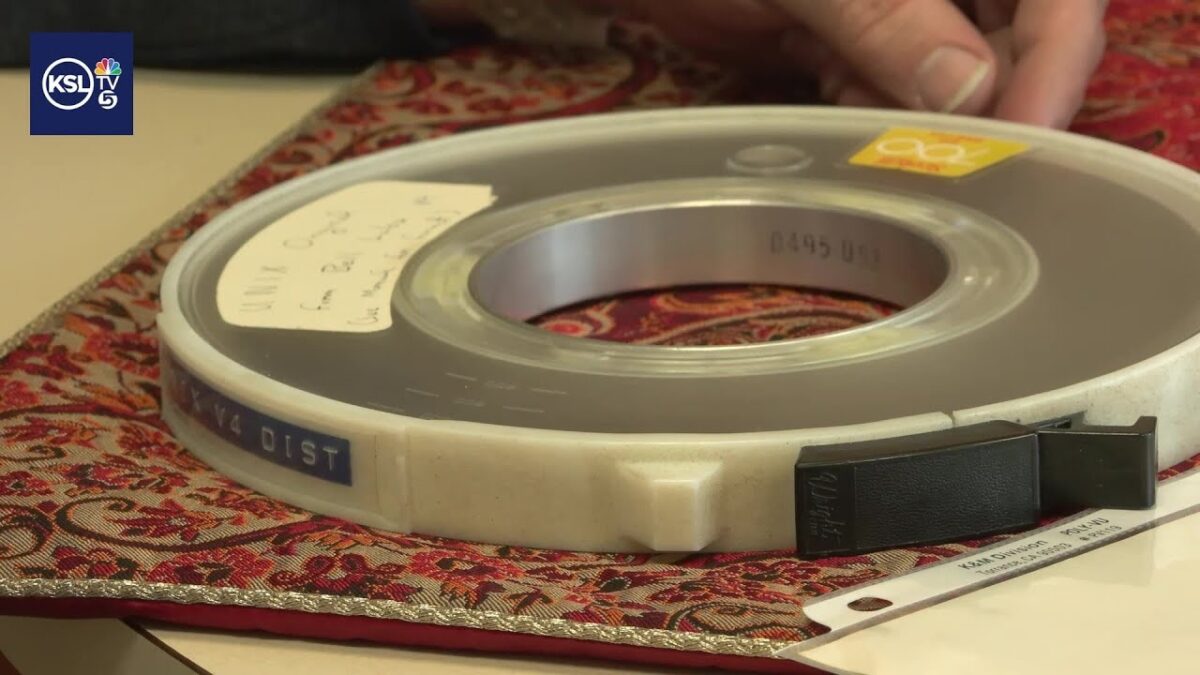
Aleks Maricq, research associate in the Flux Research Group, discovered a version of the original UNIX operating system from 1973 that was thought to be lost. He found it while cleaning a storage room.
“I think UNIX before was only sent out to 20 people total, outside of Bell Laboratories, so it was rather scarce,” Maricq said. “The fact we found a version at all is pretty astonishing.”
Rob Ricci, a professor in the Kalhert School of Computing, said this particular tape was influential. It paved the way for operating systems like Linux and macOS.
“Someone at the University of Utah — we believe it was Martin Newell, who’s also famous for being the guy who invented the Utah teapot that’s used for graphics — we believe that he expressed an interest in this, asked Ken for a copy, and was sent here,” Ricci said.
He said the UNIX v4 is a template for the way we use computers today.
The team hasn’t been able to actually see what’s on this tape because they don’t have the technology to do that.
“We don’t actually know if the contents of the tape are readable,” Maricq said. “We don’t know if it’s been overwritten. Recovery of this is going to be quite an ordeal.”
They’re taking it on a road trip to California to have it read at the Computer History Museum.
“We’re driving it instead of flying it because we don’t know exactly what the scatter radiation and all of the checks that they do… We don’t exactly know what that would do to this tape,” said research associate Jon Duerig.
If successful, the tape could offer a rare glimpse into the intentions of the original Unix developers.
“What I’m hoping for is to get a glimpse at what the humans did,” Duerig said. “I think the source code, especially source code with comments, which are… comments, the computer ignores all the comments, but the humans — us — we want to read them. You know, that’s like footnotes in the design.”
Researchers and hobbyists worldwide are eager to see what it contains.
“It’s really valuable to be able to look back at where we came from and how things have ended up the way that they are, as a way of also thinking about the moment that we’re in and how we want to evolve our computing for the future,” Ricci said.
Once the tape is read, Maricq said he’d like to display it in the new engineering building.
This story was provided to CNN Wire by an affiliate and does not contain original CNN reporting.
Please note: This content carries a strict local market embargo. If you share the same market as the contributor of this article, you may not use it on any platform.