Missouri State Highway Patrol uses stopwatch to enforce work zone speed limits from the air

Gabrielle Teiner
COLUMBIA, Mo. (KMIZ)
If you’re speeding, especially in a work zone, you may be on the lookout for troopers on the side of the roads to avoid getting a ticket.
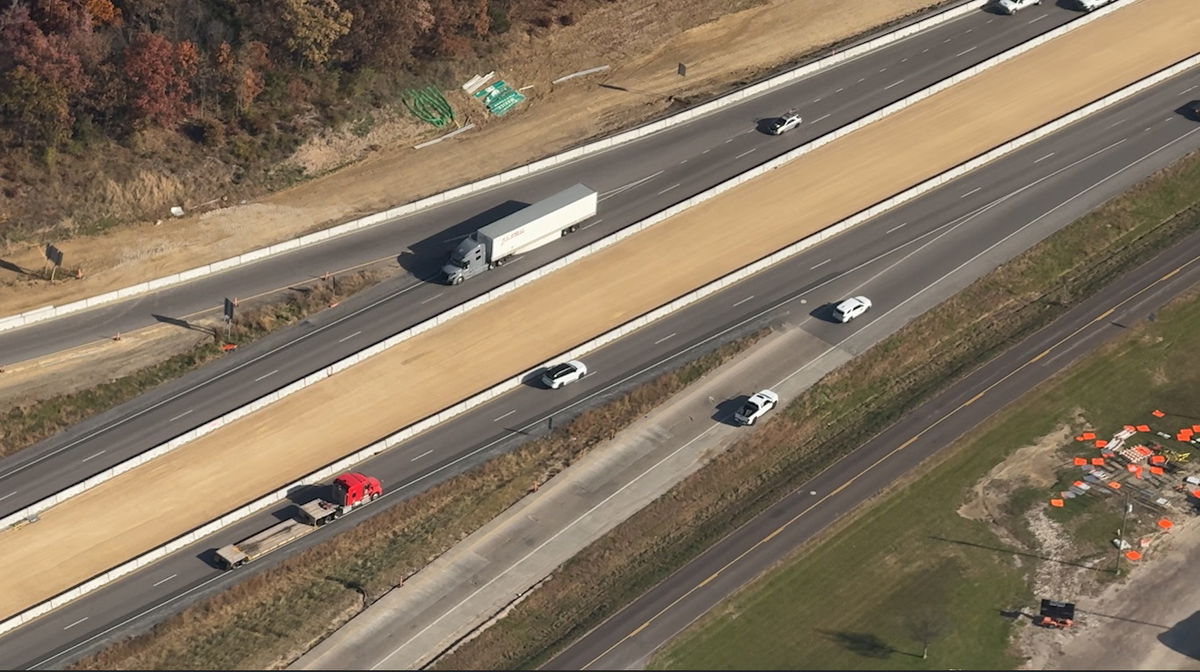
But it’s much harder to spot a trooper when they are ticketing you from 2,000 feet in the air.
The Missouri State Highway Patrol’s Aircraft Division has been using planes for speed enforcement since the late 1950s. So far this year, the patrol has conducted at least 40 speed enforcement flights in Mid-Missouri. The counties include Boone, Callaway, Cole, Cooper, Phelps, Pulaski and Saline, where MSHP planes fly over road construction zones.
“These guys that are out here doing 80, 90 miles per hour plus, and they will continue going that speed, do not know that they’ve already been caught,” said Cpl. Geoffrey Beaulieu with Troop F. “It really just lets us hammer down on those big speeders that really need to be slowing down.”
To properly conduct a speed enforcement flight, troopers and Missouri Department of Transportation workers have to go to the site and paint white blocks on the road beforehand. Those blocks are placed 1/8 of a mile apart using a certified tape measure.
The process isn’t as complicated as it may seem, as troopers in the air use only their eyes, a radio and a stopwatch to catch speeders.
The stopwatch also gets set to 1/8 of a mile, and will calculate a vehicle’s speed by using the formula of time over distance.
“We start the stopwatch before they get to that block, and when they get to the second block, we stop the watch. The stopwatch gives us the speed,” said Master Sgt. Dustin Metzner, a trooper and pilot for the Highway Patrol’s Aircraft Division.
Metzner says it’s crucial that troopers start and stop the watch at the right time, or else they could get a bad speed reading.
“It’s really important for us to make sure that we’re not cheating the violator out of distance,” said Metzner. “Because if we measure their distance less than 1/8 of a mile on the watch, it’s going to erroneously give us a faster speed than what they’re actually going.”
The pilot and ground troopers are on the same radio channel to communicate back and forth. The plane follows the speeding car, giving detailed descriptions as they go, until the trooper catches up with the violator. The trooper on the ground gives the driver a ticket or citation, and the process repeats.
“If we’re not 100% certain that we started the watch after the blocks, then we’re not going to stop them and put them on the shoulder,” said Metzner.
According to flight reports from the Highway Patrol, the average speed enforcement flight led to around seven speeding tickets and two warnings for speed per flight. Most of those ticketed or warned were going 11-20 mph over the speed limit in a construction zone, which is typically 55 mph.
Watch ABC 17 News at 10 on Wednesday to find out how many resources go into running these flights, and what to do if you’re ticketed.