Meet the newest member of the force: Milwaukee police surprise young boy fighting cancer

By Sam Schmitz

Click here for updates on this story

    MILWAUKEE (WISN) — There’s a new member of the Milwaukee Police Department, and he’s only 6 years old.

Leo Perez, a 6-year-old from Milwaukee, is currently fighting a rare cancer, Rhabdomyosarcoma, or RMS.

RMS is most common in children and teenagers. It typically begins in muscles used for movement. It can grow quickly and often requires extensive treatment, including chemotherapy, radiation, and sometimes surgery. Only a few hundred cases are diagnosed each year in the U.S., making awareness and research very important.

Leo doesn’t let any of that stop his passion for public safety. He adores Milwaukee police officers, the K-9 unit, the TEU BearCat, and of course, “Paw Patrol.”

It was an unforgettable day on Nov. 20, thanks to the Milwaukee Police Department and Milwaukee Police Association. Leo was given a large donation of toys, gear, and gifts with the theme of public safety at the MPA headquarters. He was even given his own badge.

“Seeing someone who is a bright light to them [regarding his] desires to be part of this family and seeing that this really lights up his day, what can you say more?” said Milwaukee police Chief Jeffrey Norman.

In addition to Leo’s family being there, the Milwaukee Police Department’s K-9 Unit, the Tactical Enforcement Unit’s BearCat armored rescue vehicle were also there for Leo.

“Overall, it’s so amazing that he gets this attention cause he deserves it,” said Leo’s mother, Arely Perez. “He deserves it a lot.”

“Leo’s courage and joyful spirit have inspired people across Milwaukee,” The Milwaukee Police Association wrote in a release. “The MPA wanted to bring him a day filled with excitement, kindness, and the public safety heroes he admires. This event celebrates the strong connection between Milwaukee’s officers and the young people they serve — especially those facing the toughest battles.”

Leo’s artwork was also featured on a recent ornament for the MACC Fund, which fights childhood cancer.

This story was provided to CNN Wire by an affiliate partner and does not contain original CNN reporting.

Please note: This content carries a strict local market embargo. If you share the same market as the contributor of this article, you may not use it on any platform.


Chiefs lineman Trey Smith helps hand out 400 Thanksgiving meals in KCK

By Alan Shope

Click here for updates on this story

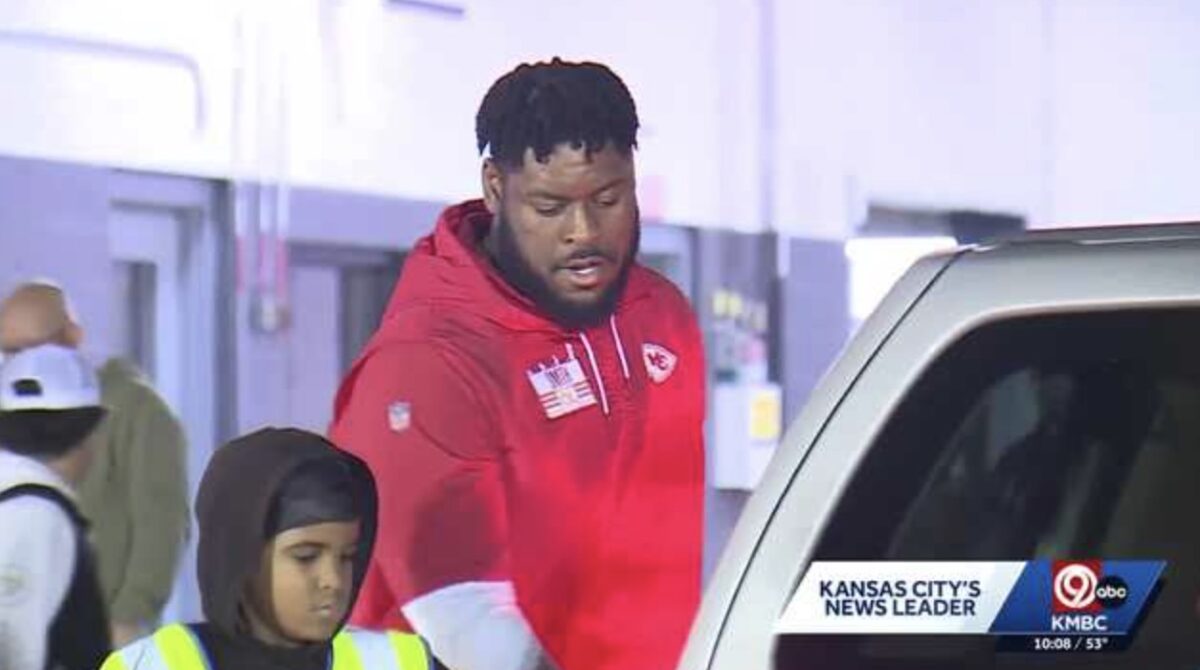
    KANSAS CITY, Kansas (KMBC) — Several Kansas City families will have an easier Thanksgiving this year thanks to Chiefs offensive lineman Trey Smith, who teamed up with Giving Hope KC on Thursday night to hand out hundreds of free holiday meals.

For the third straight year, Smith greeted families, loaded bags with food and wished residents a happy holiday as they drove through for assistance.

“Anytime I can give back to KC, you know this community has given so much to me. I want to do it,” Smith said.

KC Wolf, Chiefs cheerleaders and volunteers joined in, helping distribute turkeys and everything needed for a full Thanksgiving spread.

“It’s awesome to help people out. It’s touching because you don’t know what people are going through, and bringing yourself down to help other people in their time of need is important,” Smith said.

This story was provided to CNN Wire by an affiliate partner and does not contain original CNN reporting.

Please note: This content carries a strict local market embargo. If you share the same market as the contributor of this article, you may not use it on any platform.
New Orleans DEA division cracks down on Mexican Cartels operating across the city

By Anum Siddiqui

Click here for updates on this story

    NEW ORLEANS (WDSU) — The New Orleans Drug Enforcement Administration reports two Mexican cartels are responsible for flooding the New Orleans area with deadly drugs.

Special Agent in Charge Steven Hofer says the Sinaloa and Jalisco New Generation cartels are pushing all drugs, but their focus is cracking down on meth, fentanyl and cocaine.

“We are up against two powerful, ruthless organizations,” Hofer said.

Since January 2025, the New Orleans DEA office has seized the following:

nearly $10 million in assets, which includes vehicles, homes and more about 140 kilograms of cocaine, about 20 kilos of fentanyl, and about 400 kilograms of marijuana The agency is on track to outpace all of last year’s seizures.

This year, nearly 400 people in New Orleans have been arrested. Hofer says operatives in New Orleans are from all different backgrounds, including Louisiana natives.

“Anyone who is willing to sell their drugs for them, smuggle drugs, do finance, be an enforcer for them, they are going to take that person on,” Hofer said.

The cartels have expanded operations in over 40 countries and in almost all 50 U.S. states. Hofer says New Orleans geography attracts cartel business.

“New Orleans works out well for the cartels because of the interstate system, with Houston not being far away from Atlanta and even Florida, and, of course, the waterways,” he said.

Recently, the Trump administration designated the cartels as foreign terrorist organizations. Assistant Special Agent in Charge Michael Arnett says the decision from the federal government gives the DEA additional resources to investigate cartels.

“These drugs are so potent these days. I mean, we were up to eight out of 10 pills that we were seizing at the DEA lab that could cause an overdose, it fluctuates,” Arnett said.

WDSU was given exclusive access to a DEA operation in the metro area. The video can be found above. In addition, WDSU Reporter Anum Siddiqui interviewed one of several undercover agents working in New Orleans. Part two of WDSU’s ‘Cartel Crackdown’ series will air Friday night at 6 p.m. on WDSU News.

This story was provided to CNN Wire by an affiliate partner and does not contain original CNN reporting.

Please note: This content carries a strict local market embargo. If you share the same market as the contributor of this article, you may not use it on any platform.
After 34 years behind bars, a domestic violence survivor walked free. Why is she still the only one?

By Kilee Thomas

Click here for updates on this story

    OKLAHOMA (KOCO) — With a new Oklahoma law came a second chance for survivors of domestic violence, but only one success story has come from it.

The Oklahoma Survivors Act was designed to reduce the sentences of domestic abuse survivors who committed a crime against their abuser. Lisa Wright, who was in prison for 34 years at the Mabel Bassett Correctional Center for her role in her husband’s death, has been the only person released under the new law.

Other survivors are still being denied early release.

Lisa’s story

A lot has changed since 1990. Cellphones, the internet and even the dome at the Oklahoma state Capitol are all new for Wright.

Wright now walks free for the first time in decades. She was sentenced to prison for killing her husband, Mike Moss.

“Sitting on a life without the possibility of parole sentence, no one ever anticipated that I’d be out, much less be the only woman out on the Oklahoma Survivors Act,” Wright said.

On Jan. 8, 2025, a Seminole County judge granted her relief. She became the first ever case to win under the Oklahoma Survivors Act.

“Oh, gosh. When the judge said, ‘Time served. Free to go.’ Like, I get emotional about that because I wasn’t quite sure it was going to happen. I remember sitting in the courtroom holding Colleen’s hand, my attorney, and as the judge is declaring the verdict, and I jump up and hug her, and the next person I see is my daughter. It was a long time coming. She was five when I went in,” Wright said.

For years, court records show Wright was sexually, physically, psychologically and financially abused. The details are too graphic for distribution.

“Once I got pregnant, things just escalated, and my daughter and I were both abused,” Wright said.

Her 5-year-old daughter was also being molested. Wright initially kept it a secret because she was afraid of her husband, but she ended up reporting the abuse to the Oklahoma Department of Human Services and the district attorney.

Nothing was done.

Eventually, she told her brother, Richard, about what was happening.

On Jan. 17, 1990, court records say that Richard shot Moss and staged it as a robbery. Richard pleaded guilty, and he received a sentence of life without the possibility of parole.

Wright received the same sentence despite not being the person who fired the gun.

“I don’t think anyone wanted to hear what happened. They just wanted conviction,” Wright said. “There were a lot of people that were hurt because I didn’t handle things the right way, and I knew that I had to figure out how to live inside prison, so I didn’t really believe–I always prayed for–there was always a slim sliver of hope, but for the most part I knew that was probably my fate.”

Three decades later, in 2024, that sliver of hope emerged from the Oklahoma state Capitol.

The Oklahoma Survivors Act grants victims of domestic abuse who committed a crime against their abuser a shot at a sentence reduction if that abuse played a significant contributing factor in the crime.

“What was different from the initial trial to this one?” KOCO’s Kilee Thomas asked Wright.

“I was heard. Someone wanted to hear what happened, and someone believed us,” Wright said. “We kept trying to tell what happened back in 1990, and no one wanted to hear, not even my attorney. I was silenced back then, and I don’t want to be silenced anymore.”

What is the law?

State Rep. Danny Williams co-authored the Oklahoma Survivors Act.

“It’s hard to change, but when people change, there should be a reward for that,” Williams said.

When the Oklahoma Survivors Act came across the lawmaker’s desk, he thought of Wright.

“I actually taught her Sunday school class back in the day, so I knew the family, and I knew her circumstances,” Williams said. “She made one mistake that changed the trajectory of her life, so how much do you need to pay for one mistake?”

After 34 years, her abuse was heard, and her freedom was granted.

Wright thought she would be a beacon of change for other survivors, but that hasn’t happened.

“You’re the only person in Oklahoma who has been granted relief under the Oklahoma Survivors Act. Why do you think that is?” Kilee asked Wright.

“It so saddens my heart that the other ladies are not out. I thought that this would open the floodgates and I would be first to pave the way and that everyone else would come right behind me,” Wright said.

Two recent denials have sparked questions about the initial intent and language of the bill.

“It’s heartbreaking, and that’s not the intent of the law,” Wright said.

Colleen McCarty, executive director of Oklahoma Appleseed Center for Law and Justice, said the Oklahoma Survivor Act is being misunderstood in the courtroom.

“This isn’t a stand your ground. It’s not a self-defense. It’s not a battered women’s syndrome defense,” McCarty said. “It is something that has been sort of confused with some of those other defenses to say, ‘Well, they need to be in fear of their life, or they needed to have been not able to escape, or they needed to have been actively being abused when they created the crime,’ and that is not the case.”

Williams said there shouldn’t be a gray area when it comes to the law.

“When a judge is making an evaluation, it has to be based on the law, not on opinions, not on emotions. It needs to be based on fact,” Williams said. “Are the circumstances large enough to contribute to a modified sentence? That’s the question.”

To date, Wright is the sole survivor who has won her case under the Oklahoma Survivors Act.

“We’re not trying to prove guilt or innocence. We’ve already been proven guilty, and the Oklahoma Survivors Act, it doesn’t take away that guilt. It doesn’t take away that felony conviction. All it does is say, ‘You were a victim of domestic violence, and that’s why you committed your crime, and you deserve a little relief,'” Williams said.

Lisa’s fight continues

Despite that, Wright has sat in every hearing so far, offering support to other women who have that same sliver of hope she once did.

“Do you still have hope that this Oklahoma Survivors Act will work?” Kilee asked.

“Yeah, I have faith to believe that it will,” Wright said.

It has been almost a year since Wright was released from prison. KOCO spoke to her the day the judge granted her freedom.

“Don’t give up. Trust God that there is a way. People believe them. They’re fighting for them on the other side. We are fighting for them on the other side and just don’t give up,” Wright said after she was released.

Wright now has a passport, and she took her first flight to be reconnected with her daughter.

But Wright said her biggest dream is to walk back into prison and bring hope to other survivors of domestic abuse, telling them that there is a second chance at life.

“For me, these women have been silenced. They were silenced going through the abuse. They were silenced probably through the court system. I know I was, and they deserve their voice to be heard. They deserve an opportunity to have their voices heard and believed,” Wright said.

This story was provided to CNN Wire by an affiliate partner and does not contain original CNN reporting.

Please note: This content carries a strict local market embargo. If you share the same market as the contributor of this article, you may not use it on any platform.

Omaha police lean into new technology to assist 911 calls

By Madison Perales

Click here for updates on this story

    OMAHA, Nebraska (KETV) — The Omaha Police Department is leaning into modern technology with a little over $2 million in grant money.

OPD announced its ‘Drones as First Responders’ program Thursday, with the Omaha police chief saying no taxpayer dollars went into making this happen.

The police agency has two new drone docks on their rooftop which have already been in use since Monday.

It’s designed to respond to 9-1-1 calls and arrive in just two minutes.

“We are constantly looking for new ways to improve,” Omaha Police Chief Todd Schmaderer said.

He said this new initiative is meant to enhance safety for both the public and for OPD law enforcement.

“If you need help, you could see a drone in two minutes, coordinating, speaking with the officers responding to help,” Schmaderer said.

That includes better resource allocation, and situational awareness for officers on the ground.

“It’s critically important that we always keep safety in mind,” Omaha Mayor John Ewing Jr. said. “And that we always keep response times in mind and make sure that we are there when people need us in their most critical moments of their lives.”

Schmaderer said it’s the first drone first responder program of its kind in Nebraska.

“The first beyond visual line of sight waiver in the state of Nebraska,” Schmaderer said. “Which is critical for allowing drones to fly and launch autonomously without a pilot physically present on the scene.”

Omaha Police Chief Pilot Frank Peck said the drones can even fly through buildings, if necessary, but it has safety features.

“The Omaha Police Department drones have a parachute on it,” Peck said. “That’s to mitigate any issues that maybe we have should something happen.”

OPD is partnered with Axon, which also provides body-worn cameras, and in-car video recorders to connect seamlessly with the drones.

Officials said in severe weather like blizzards or fog, the drones will not operate. But the docks are weather resistant to combat Omaha’s intense climate.

This story was provided to CNN Wire by an affiliate partner and does not contain original CNN reporting.

Please note: This content carries a strict local market embargo. If you share the same market as the contributor of this article, you may not use it on any platform.

Cat trapped in wall for three weeks survives without food or water

By Pete Cuddihy

Click here for updates on this story

    OMAHA, Nebraska (KETV) — It’s a pet owner’s worst nightmare — one second, they’re with you, the next second, they’re gone.

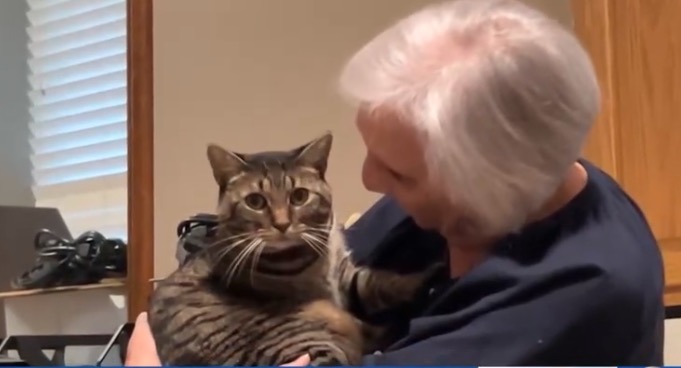
An Omaha woman, Jan Robinson, experienced it firsthand when her cat Ellie went missing. Robinson was getting her bathroom remodeled. The day the contractors finished laying tile in the bathroom, her cat Ellie went missing.

She assumed Ellie ran away — until one day, three weeks later, she started hearing meows. It’s an instance where curiosity did not kill the cat.

“I couldn’t believe that she was alive after three weeks,” said Jan Robinson.

Jan Robinson’s cat, Ellie, went missing the same day contractors finished putting tile down in her bathroom.

“You could not have convinced me that she went into that bathroom. There was no way I believed that. I really thought she had run away,” said Robinson.

Robinson posted to Facebook, hoping someone would find her.

“Two weeks go by, and I’m thinking, oh man, I’m losing hope. Until last Friday night, which was three weeks after we closed up the walls and the floor, and I heard her crying,” said Robinson.

Ellie the cat was trapped in the wall, and her owner was worried time was running out.

“Everything’s tiled. It’s, you know, it’s pretty much finished back there. And how am I going to get to her?” said Robinson.

Garrett Conn with American Rooter Plumbing was called to Robinson’s house, tasked with something that wasn’t in his job description.

“Not necessarily on the bingo card for that day by any means,” said plumber Garrett Conn.

But he decided to become a hero, cutting a hole in Robinson’s wall and using a sewer inspection camera to look for Ellie.

“As soon as I started the camera, that’s when we saw the two glowing eyes. And I knew right then and there that Ellie was alive,” said Conn.

“How do you feel to be reunited with her? It’s so good, so good,” said Robinson.

It’s a story that may prove cats really do have nine lives.

“A cat cannot live three weeks without food and water. I mean, I Googled it, you know, and they said maybe four or five days,” said Robinson.

This story was provided to CNN Wire by an affiliate partner and does not contain original CNN reporting.

Please note: This content carries a strict local market embargo. If you share the same market as the contributor of this article, you may not use it on any platform.

Camp Fire Central Oregon honored with National Safety Award

Silas Moreau

(Update: Video Added)

BEND, Ore. (KTVZ) — Camp Fire Central Oregon has received the prestigious Culture of Safety Award from Camp Fire’s national headquarters, recognizing the organization’s commitment to creating safe environments for youth.

The award was presented at the 2025 Camp Fire National Leadership Conference. Camp Fire Central Oregon was one of just six affiliates selected for the honor out of 44 candidates across 24 states.

The recognition celebrates the organization’s efforts to promote both physical and emotional safety through its wide range of youth programs, including after-school activities, summer camps, leadership initiatives, and volunteer opportunities.

The affiliate also invests heavily in staff training, with 61 team members completing specialized courses in abuse risk management and youth protection this year.

This marks Camp Fire Central Oregon’s second national recognition in three years, following the Leadership & Values Award in 2023. The repeated honors highlight the organization’s ongoing excellence in youth development and safety leadership.

For more information about Camp Fire Central Oregon programs and initiatives, visit campfireco.org.

Click here to follow the original article.

100-year-old veteran to be honored at Plymouth parade

By Jennifer Eagan

Click here for updates on this story

    KINGSTON, Massachusetts (WCVB) — Surrounded by his family and memories stretching back a century, John Tura said he feels grateful.

“I’m blessed,” the Kingston resident said as he looked back on his 100 years — a life defined by service, family, and hard work.

Tura and his wife have been married 71 years, raising four children in the Cape-style home where he has lived for decades.

“It was busy… very busy,” he recalled with a laugh. Staying busy, he said, is part of the reason he’s reached such a milestone.

On Saturday, Tura will be honored as Citizen of the Year during America’s Hometown Thanksgiving Celebration in Plymouth. Tura was chosen, in part, for his military service.

A veteran of both World War II and the Korean War, he enlisted in the Navy in 1943 at just 18 years old and was deployed to the Pacific.

Looking at an old photograph, Tura paused.

“That’s me. I was 18, 19 years old. Oh my God,” he said.

During the war, his crew was tasked with meeting damaged ships at sea, making temporary repairs, and getting them safely back to the shipyard.

“A ship was banged up during the war and needed repairs,” he remembered. “Our job was to go out and meet that ship, make temporary repairs, and get them back.”

At his daughter’s home in Plymouth, Tura sifted through the artifacts of his service — a Navy bracelet, identification cards, and his dog tags.

During the visit, officials from the Massachusetts Department of Veterans Services stopped by to present Tura with a centennial coin, honoring him for his decades of patriotism.

“You’re part of the greatest generation,” one official told him. “Your legacy of patriotism is truly one of a kind.”

In Saturday’s parade, Tura will ride with his wife, children, and great-grandson — a moment his family says will be deeply meaningful.

“I’m so lucky to have the family that I have,” Tura said.

This story was provided to CNN Wire by an affiliate partner and does not contain original CNN reporting.

Please note: This content carries a strict local market embargo. If you share the same market as the contributor of this article, you may not use it on any platform.

‘It’s almost like I was hypnotized’: Bitcoin ATM scams trick victims into losing thousands

By Alexi Cohan & Mike Beaudet

Click here for updates on this story

    CHELMSFORD, Massachusetts (WCVB) — When 85-year-old Chelmsford resident Janice Peltz got a phone call from her bank about a fraud issue, she believed them and followed every instruction they gave.

“That was what suckered me in,” Peltz said.

But it was not TD Bank on the end of the line; it was a scammer.

The scammer, who kept Peltz on the phone for hours, directed her to the bank, where she took out $18,000 in cash.

“He said, ‘I don’t want you to tell anybody. We don’t know who was doing this, and we don’t know if it’s somebody in the bank or it could be even somebody you know,'” Peltz said.

She then drove to Village Variety in Lowell, where she deposited the cash into a Bitcoin Depot ATM. She did it one bill at a time and said it took around three hours to complete.

“Being of an elder age, I didn’t know what a Bitcoin was,” Peltz said. “It’s almost like I was hypnotized.”

Once in the machine, the money was gone, and Peltz was out $18,000, a sum she still has not recovered, though she is working with police in hopes of getting it back.

“It’s more than devastating. For a long time, I couldn’t stop blaming myself,” Peltz said.

Peltz is one of many people tricked by a Bitcoin ATM scam.

Hundreds of the machines are scattered across the state in convenience stores, gas stations and grocery stores. The machines convert cash to crypto, and charge fees of up to 35% to do it.

Once the money goes in, it’s difficult to get back, according to Jim Carney, an investigator in the Essex County district attorney’s office.

“It’s almost instantaneous, the speed of light that money, that cryptocurrency can transmit to these bad guys’ wallet,” Carney said.

Massachusetts residents have lost at least $77 million to Bitcoin ATM scams just this year, according to Carney. He said the scammers are primarily operating through call centers in other countries, and it’s showing no signs of slowing down.

Massachusetts lawmakers are trying to prevent Bitcoin ATM scams with a bill that would implement daily transaction limits, refunds for fraud victims and fee caps, among other measures.

AARP is sponsoring the bill. Jennifer Benson, the organization’s Massachusetts director, said she has seen a “huge increase” in the number of people getting scammed through Bitcoin ATMs in the past year.

“It is the Wild West. It’s hard to track down the money. It’s hard to get the money back. And it’s using a device that many people feel familiar with because they use ATMs all the time,” Benson said.

At least two Massachusetts cities, Waltham and Gloucester, have banned Bitcoin ATMs completely.

The bill underwent a public hearing last month, during which representatives of CoinFlip and Bitcoin Depot testified. The companies operate most of the Bitcoin ATMs across the state.

“We have serious concerns with certain provisions that represent an effective ban on a new industry due to the overly aggressive nature of the limits on daily transactions and unreasonably low fee cap provisions,” Ethan McClelland, director of government relations for Bitcoin Depot, said during the hearing.

When asked for an interview, the company sent a statement, saying in part, “Hundreds of people in Massachusetts use Bitcoin Depot kiosks legitimately every month, from sending money to family to safely buying small amounts of Bitcoin for the first time. Many prefer in-person, cash-based transactions because they’re simple, accessible, and provide immediate access.

A CoinFlip spokesperson said in a statement, “We hold ourselves to the highest standards of consumer protection, compliance, and transparency. CoinFlip never wants to profit when honest people are duped by bad actors, which is why we refund transaction fees to victims in instances of fraud.”

TD Bank said in a statement, “While we cannot comment on specific preventative measures for security reasons, TD provides clients with a range of helpful resources, including materials posted online and in our stores, to equip them with the knowledge and know-how to detect and avoid scams which are becoming increasingly sophisticated across the global financial industry.”

The bill currently sits with the Joint Committee on Financial Services.

This story was provided to CNN Wire by an affiliate partner and does not contain original CNN reporting.

Please note: This content carries a strict local market embargo. If you share the same market as the contributor of this article, you may not use it on any platform.

Pennsylvania’s self-styled predator hunters face criticism and praise

By Meredith Jorgensen

Click here for updates on this story

    PENNSYLVANIA (WTAE) — A network of self-styled “predator hunters” in Pennsylvania claims to have helped catch hundreds of alleged child predators, but the state’s attorney general warns that these vigilante stings can be dangerous.

Brian Knepp, who runs 814PredHunters, a team of 15 people known as decoys, posing online as kids based out of western Pennsylvania, started the group three years ago after a man Knepp thought was a friend raped a child.

“I want every adult online to be completely afraid of even talking to a child,” Knepp said. He added, “I was fooled, and I’m pretty hard to fool, I felt anyways. But I wanted to do everything that I could possibly do to have this not happen again.”

Knepp’s team members say they have helped catch nearly 300 people they say are accused child predators. “It is that bad of a problem,” Knepp said.

Pennsylvania’s Attorney General Dave Sunday advises against such actions, urging caution with what he calls vigilante-type predator hunters.

“We don’t advocate for this,” Sunday said, noting the potential dangers and lack of training for those involved. “Because there’s a lot of situations that someone could find themselves in that could be very dangerous, and they may not be trained or prepared for that,” Sunday said.

Despite this, groups like Knepp’s are emerging across the state. Justin Perry, who operates in Leola, Lancaster County, poses as a 15-year-old girl online and claims his efforts have led to significant arrests.

“I never thought in a million years that I would go and get one of those guys and the police would use what I do and put these guys behind bars, and not just for a couple of days, the last guy got 10 years,” Perry said. Perry describes the conversations he encounters online as inappropriate. “It’s just not the way you would talk to a lady or woman at all, let alone a child. A lot of it is pretty gross and vulgar,” Perry said.

Perry admits he had a rocky start, finding that the Lancaster Bureau of Police didn’t want to work with him, and police departments don’t endorse his actions. The Lancaster County District Attorney issued a statement discouraging vigilante actions due to the risks involved.

“We strongly discourage vigilante actions as they pose serious risks to themselves and others,” the statement read. Perry said, “I would say for the most part, they can’t say it, like you are doing a good job, because then they would be like justifying it.”

Sunday emphasized the existing system in place for handling such cases, expressing pride in the work done by his office, local police, and the Pennsylvania State Police. “These cases are horrific, they’re disgusting, they’re tragic,” Sunday said. “I’m very proud of the work that our office does in this area. I’m proud of the work that the local police do, I’m proud of the PA State Police, like this is an area where we all work together literally every day,” Sunday said.

Knepp and his team at 814 say they have developed successful working arrangements with multiple law enforcement departments in as many as five different counties, including departments like Brookville Police.

“They trust us really well. And as I trust them, you know, I have zero problems giving them every little bit of evidence that I have,” Knepp said.

Perry noted the importance of thorough evidence collection. “Charging somebody, everything has to be like, everything has to be in line, all your ducks have to be in a row. After multiple guys, it’s like here are all the text messages,” Perry said.

814PredHunters claim they never initiate conversations online and try to give the person they’re chatting with an out, encouraging them to walk away. “Give them an opportunity,” Knepp said. However, many suspected predators still make plans to meet who they think are children, at which point the group turns over their evidence.

Sunday advises that if someone believes a child is being exploited, they should call 911.

“They need to immediately get the police involved so that the trained professionals can handle that situation and make sure they intervene as quickly as possible,” Sunday said.

Perry claims his system works, stating he says has caught more than 40 suspected alleged predators in multiple states. “I don’t know about making a difference, but I know it’s getting one more perv-, person off the street. I almost said pervert,” Perry said.

This story was provided to CNN Wire by an affiliate partner and does not contain original CNN reporting.

Please note: This content carries a strict local market embargo. If you share the same market as the contributor of this article, you may not use it on any platform.