AFL-CIO Adopt-A-Family applications to open for ‘adopters’

Leah Rainwater

ST. JOSEPH, Mo. (KQTV) — AFL-CIO Community Serves announced when the community can begin adopting families for its annual Adopt-A-Family program.

The Adopt-A-Family program has been serving St. Joseph for over 40 years, where donors have provided gifts for over 96,000 local individuals.

Adopters will be able to sign up on Friday, Nov. 14. Anyone interested in adopting can stop by the agency’s office at 1203 N. 6th St., call 816-364-1131, fax 866-591-8565 or email adopt@helpmenow.org.

Since 1983, the program has been helping single parents to put gifts under the tree for their children, making it possible for ill parents to concentrate on regaining their health instead of worrying about gifts, allowing the unemployed to look for work without fretting about affordability during the holidays and providing basic staples for seniors and disabled adults living with a tight budget.

In a news release, AFL-CIO Executive Director Nichi Seckinger describes what the program means to local families.

“When they are given gifts, it says to them, ‘You matter, someone noticed and someone cares.’ We know this because they tell our staff year after year. They hug us because they can’t hug the adopter,” said Seckinger. “They cry because they are overwhelmed by the generosity they have received.”

Seckinger even said, families who are adopted over the holidays even give back to the program when circumstances change.

For adopters who haven’t adopted before, the AFL-CIO said the estimated cost to adopt one child under the age of 10 is $50. A child 11 and older normally averages $75 to $100. Adopters are asked to provide at least one new toy per child.

Any additional items for the children and any gifts for the parents are at the adopter’s discretion. The program includes several single adults as well, who live in residential care facilities and are unable to afford basic necessities and may have no other form of financial support.

The AFL-CIO said senior adoptions average $75 to $100.

The agency is also accepting donations of toys and personal gifts for all ages for the gift room.

Monetary donations can be made through the website at helpmenow.org, by phone using a credit or debit card, or in person at the agency.

All monetary donations will be used to purchase items for families who are not chosen by an adopter.

During the program, the AFL-CIO will be open from 8 a.m. to 5 p.m. throughout November. Hours will adjust in December, with the agency being open 8 a.m. to 6 p.m. weekdays and 9 a.m. to 1 p.m. on Saturday.

Click here to follow the original article.

Pickpocket victim warns crimes could be on the rise this holiday season

Athena Jreij

PALM DESERT, Calif. (KESQ) — A Rancho Mirage woman is speaking out after she says her wallet was stolen in a Trader Joe’s this week, and now she wants to warn others shopping this season.

Sue Harvey’s wallet was stolen Wednesday before the suspect tried to spend thousands at nearby stores.

Harvey filed a police report, but is still dealing with the fallout of the theft, cancelling and replacing cards.

It comes during a busy holiday season, where it’s not uncommon for fraudsters to steal phones and wallets in stores.

Tonight, News Channel 3 is speaking with Harvey on what others should know to protect themselves this season.

Click here to follow the original article.

Hy-Vee extends low-cost meals to help local families

Leah Rainwater

WEST DES MOINES, Iowa (KQTV) — After previously announcing it would provide meal assistance to local communities, Hy-Vee is extending its low-cost meals to families.

The grocery store is providing $3 meals for families until Friday, Nov. 14, at all stores with hot food service, including a breakfast buffet from 7 to 10 a.m. on Saturday, Nov. 8, and Sunday, Nov. 9.

The meals will continue to be free for children ages 12 and under. For customers over the age of 13, meals will be available for $3 with options for dine-in or takeout.

Hy-Vee also provided its full menu:

Friday, Nov. 7: Sesame or orange chicken rice bowl (4-7 p.m.)

Saturday, Nov. 8 and Sunday, Nov. 9: Breakfast buffet featuring scrambled eggs, bacon, sausage links, a piece of fruit and donut holes (7-10 a.m.)

Monday, Nov. 10: Chicken alfredo with penne and garlic toast (4-7 p.m.)

Tuesday, Nov. 11: Chicken or pork and vegetables with steamed rice, appetizer and fortune cookie (4-7 p.m.)

*In locations without HyChi, the meal will be two chicken tenders, mashed potatoes and corn

Wednesday, Nov. 12: Breakfast for Dinner featuring scrambled eggs with cheese, sausage links, fresh fruit and a cinnamon roll (4-7 p.m.)

Thursday, Nov. 13: Chicken hind quarter (drumstick and thigh), potato salad and chocolate chip cookie (4-7 p.m.)

Friday, Nov. 14: Sloppy Joe sandwich with seasoned green beans (4-7 p.m.)

Hy-Vee also launched a register round-up campaign, allowing customers to support local food pantries in their communities by rounding up their purchases at checkout.

Customers can also purchase $5 and $10 food bank donation bundles, which will be donated to a designated pantry in each store’s community.

The efforts are in addition to Hy-Vee’s $100,000 corporate donation made to Feeding America last week. The store is also making additional food donations to local food pantries.

Click here to follow the original article.

Pocatello Regional Airport cancels upcoming flight on Sunday, November 9th due to FAA cuts

Danielle Mullenix

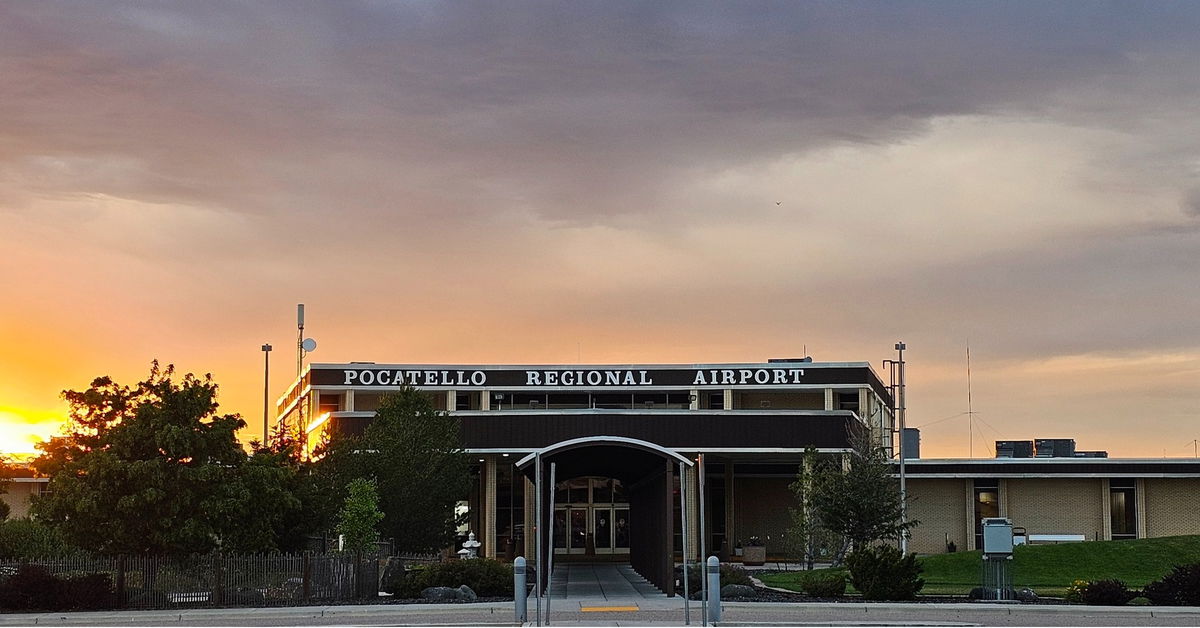
Pocatello, Idaho (KIFI) — The Federal Aviation Administration’s plan to slash airline capacity is already affecting flights in Southeast Idaho.

As of this morning, Delta Airlines has informed Pocatello Regional Airport that Delta Flight 3702 has been canceled. This cancellation is a result of the FAA’s recent decision to reduce air capacity by 10% due to the ongoing government shutdown.

According to Delta’s website, all cancellations through Sunday have been programmed, but decisions about flights on Monday and beyond have not yet been made. The federal administration’s plan to cut airline capacity may continue to impact local airports and affect travelers’ flight plans in the days ahead.

Because of the ongoing government shutdown, flight capacity will be reduced by 10% at 40 major airports nationwide, with 4% of these flight reductions starting today, affecting flights from 6 AM to 10 PM.

This is the FAA’s temporary response to the risks related to air traffic control staffing shortages. TSA workers have now entered their fourth week of work without pay.

With just three weeks remaining until Thanksgiving, airlines are working quickly to offer refunds and alternatives to millions of passengers. American Airlines and United Airlines are allowing their customers to cancel or reschedule flights if they prefer not to travel during this unprecedented time.

Travelers are encouraged to monitor their upcoming travel plans to avoid stress caused by changing flight schedules.

It’s advisable to check flight status before heading to the airport. Turn on flight alerts on your phone to receive notifications about updates regarding your flight. Be sure to read and understand the airline’s refund policy.

Additionally, the Department of Transportation Dashboard provides resources to keep you informed about TSA communications at your airport.

Click here to follow the original article.

34-year-old woman killed in crash that closed highway near Columbia

Lucas Geisler

COLUMBIA, Mo. (KMIZ)

One person was killed in a rollover crash Friday morning that closed a highway northeast of Columbia.

Boone County fire crews responded to a call about a truck that rolled over on Route HH, according to assistant chief Gale Blomenkamp. Blomenkamp said at the scene that one person in the truck was killed, and a minor was taken to University Hospital with minor injuries.

A crash report from the Missouri State Highway Patrol says the victim was a 34-year-old woman from Columbia.

A 14-year-old girl from Columbia was a passenger in the 1997 Ford Expedition and suffered moderate injuries, the report says. The girl was brought to University Hospital by ambulance. Neither person in the vehicle was wearing a seatbelt.

A notice from Boone County Joint Communications said a crash happened on Route HH near Svena Drive. An update said Route HH was closed. Blomenkamp said the crash happened near the Boone County Fire Protection District’s Station 16.

Blomenkamp told ABC 17 News that dispatch notes said a vehicle had rolled over with one person underneath.

The MSHP report says the Ford was heading westbound went it went off the right side of the road and overturned. The Ford was totaled.

MSHP reports do not name those involved in crashes.

This is a developing story. Check back for updates.

Click here to follow the original article.

Major Blackfoot road closure starts Monday: West Bridge Street shut down for sewer upgrade

Seth Ratliff

BLACKFOOT, Idaho (KIFI) — Drivers in Blackfoot — listen up! A major road closure is coming next week.

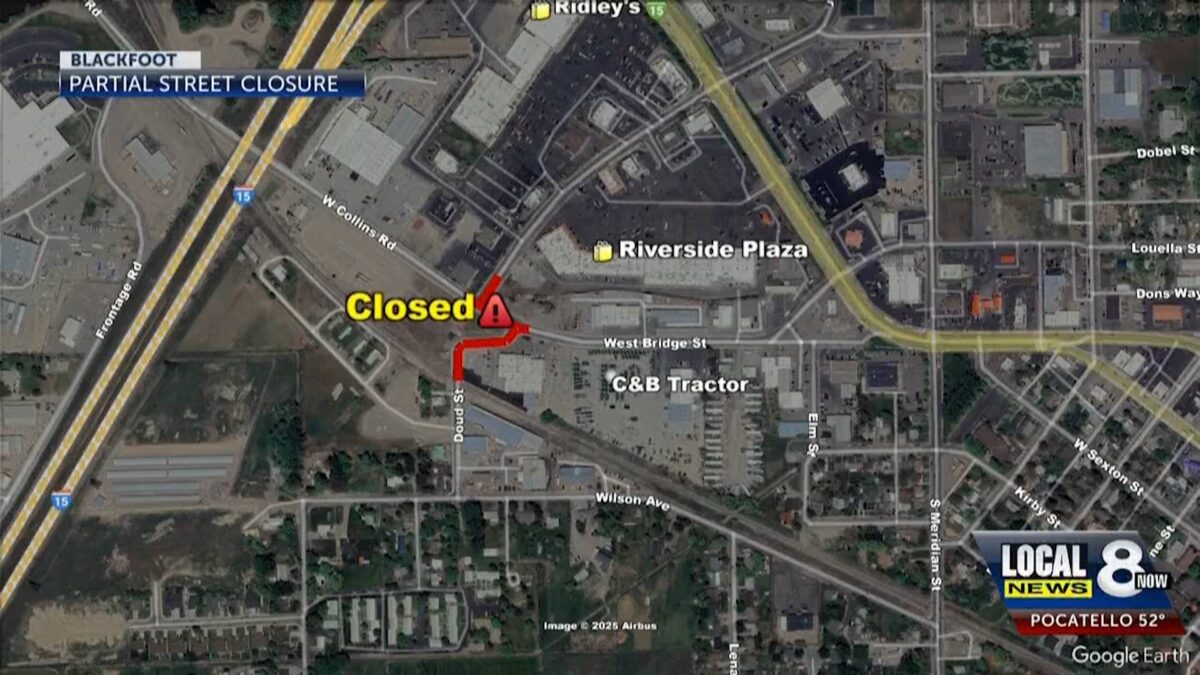
Starting Monday, November 10th, a section of West Bridge Street will be shut down to allow crews to upgrade a sewer lift station connecting to the city’s wastewater treatment plant. The closure is expected to last through Thursday, affecting traffic from Parkway Drive, Doud Street, and the frontage road, plus drivers coming into town off Highway 39.

Courtesy: City of Blackfoot via Facebook

Local businesses will still have access, but drivers are being told to expect detours, delays, and slowdowns while that work gets done.

Click here to follow the original article.

Trump admin asks appeals court to pause judge’s requirement that it make full November SNAP payments

CNN Newsource

By Devan Cole, Tami Luhby, CNN

(CNN) — The Trump administration is asking a federal appeals court to pause a judge’s order that requires the government to fully cover food stamp benefits for tens of millions of Americans in November.

The emergency request made Friday morning to the First Circuit Court of Appeals comes a day after a federal judge in Rhode Island said the US Department of Agriculture must find additional money to make the payments, rejecting the administration’s decision to only partially fund the food benefits program this month.

The Justice Department, which represents the USDA in court, told the Boston-based appeals court that US District Judge John McConnell had overstepped his authority when he issued his order Thursday afternoon.

McConnell’s decision, DOJ attorneys wrote in court papers, “has thrust the Judiciary into the ongoing shutdown negotiations and may well have the effect of extending the lapse in appropriations, exacerbating the problem that the court was misguidedly trying to mitigate.”

“This unprecedented injunction makes a mockery of the separation of powers. Courts hold neither the power to appropriate nor the power to spend,” they wrote. “There is no lawful basis for an order that directs USDA to somehow find $4 billion in the metaphorical couch cushions.”

Earlier this week, the USDA provided enough funding to states, which administer the Supplemental Nutrition Assistance Program, or SNAP, to cover partial benefits for November, after McConnell ordered the agency to do so last week. That order was also appealed to the First Circuit.

McConnell said on Thursday that the administration must provide the additional funding by the end of Friday. The administration is asking the appeals court to intervene by 4pm ET Friday.

States have been processing the partial food stamp payments on varying timelines, with several saying beneficiaries may start getting their assistance next week and others saying it could take much longer. Illinois said it will begin distributing the funds on Friday to those who were scheduled to get their benefits earlier in the month, while others will receive theirs on time.

Nearly 42 million Americans receive food stamps, with payments distributed on a staggered schedule throughout the month.

The-CNN-Wire
™ & © 2025 Cable News Network, Inc., a Warner Bros. Discovery Company. All rights reserved.

Click here to follow the original article.

Oregon taxpayers to receive kicker credit on 2025 Oregon tax returns

Kelsey Merison

SALEM, Ore. (KTVZ) — Oregonians can plan to receive a kicker credit on their tax returns next year for 2025.

According to the Oregon Department of Revenue, a more than $1.41 billion revenue surplus in the 2023-2025 biennium will trigger a kicker credit for the 2025 tax year.

The credit will either increase your tax refund or decrease the amount of state taxes you owe.

Read the full press release from the Oregon Department of Revenue below:

“The Oregon Office of Economic Analysis (OEA) has confirmed a more than $1.41 billion revenue surplus in the 2023-2025 biennium, triggering a tax surplus credit, or “kicker,” for the 2025 tax year.

The surplus will be returned to taxpayers through a credit on their 2025 state personal income tax returns filed in 2026. It is not sent to taxpayers in a check. The kicker credit will either increase a taxpayer’s Oregon state income tax refund or decrease the amount of state taxes they owe.

Only taxpayers who filed a tax year 2024 return and also file a tax year 2025 return can receive a kicker. The credit is a percentage of Oregon personal income tax liability for the 2024 tax year. Taxpayers who have not yet filed a 2024 tax return, should file now. That will allow them to claim their kicker credit when they file their 2025 tax return next year.

To calculate the amount of their credit, taxpayers can multiply their 2024 personal income tax liability before any credits—line 24 on the 2024 Form OR-40 filed earlier this year—by 9.863 percent. This percentage is determined and certified by OEA. Taxpayers who claimed a credit for tax paid to another state would need to subtract the credit amount from their liability before calculating the credit.

Personal income taxpayers can also determine the amount of their kicker using a “What’s My Kicker? calculator available on Revenue Online. To use the calculator, taxpayers will need to enter their name, Social Security Number, and filing status for 2024 and 2025.

Taxpayers who don’t have a filing obligation for 2025, still must file a 2025 tax return to claim their credit.

The 2025 Oregon personal income tax return instructions will include detailed information on how to claim the credit. Full-year Oregon residents will use Form OR-40. Part-year residents will use Form OR-40-P. Non-residents will use Form OR-40-N. Composite and fiduciary-income tax return filers are also eligible.

Taxpayers should keep in mind that the state may use all or part of their kicker to pay any state debt they owe. These debts can include taxes due for other years, child support, court fines, or school loans.

Taxpayers can donate their kicker to the Oregon State School Fund for K-12 public education, but they must donate the entire amount. The donation is permanent and cannot be taken back.

Taxpayers also have the option of donating part or all their refund to any or all the 29 charities approved by the Charitable Checkoff Commission. Taxpayers use Form OR-DONATE to designate their donation to charity.

For more information, go to the Oregon surplus “kicker” credit page of the Department of Revenue website.

Taxpayers that haven’t filed their 2024 Oregon tax return can still file electronically using tax preparation software or Direct File Oregon. Free tax preparation services are available for both federal and Oregon tax returns. Some companies offer free software use and e-filing for eligible taxpayers. Links to the software and free offers can be found on the Department of Revenue website. Information about free tax preparation services is also available on the website.

The Department of Revenue plans to announce the date taxpayers can start filing 2025 Oregon tax returns in January. The department will continue to offer Direct File Oregon as an option for taxpayers to electronically file their 2025 returns for free. The fastest way for taxpayers to claim and receive their kicker will be to file electronically and use direct deposit to receive their refund.

Visit www.oregon.gov/dor to get tax forms, check the status of your refund, or make tax payments; call 800-356-4222 toll-free from an Oregon prefix (English or Spanish); 503-378-4988 in Salem and outside Oregon; or email questions.dor@oregon.gov.

Fact Sheet: Oregon Revenue Surplus “Kicker” Credit 

How did Oregon get the kicker?

The 1979 Oregon Legislative Assembly passed the “Two percent kicker” law as a way to control state spending. The law requires the state to compare the revenue forecast for each two-year biennium to the amount actually received and return any surplus to taxpayers.

Voters approved a ballot measure adding the kicker to the Oregon Constitution in 2000 and provided taxpayers with the option to donate their kicker to the State School Fund to help fund K-12 schools in Oregon.

When do we have a kicker?

After the biennium ends, if actual revenue collected exceeds the forecast amount by more than 2 percent, the revenue surplus is refunded to taxpayers as a tax credit claimed on their personal income tax returns in the even-numbered year of the next biennium.

On November 1, 2025 the Oregon Office of Economic Analysis (OEA) certified that revenue collected for 2023-2025 biennium (July 1, 2023 through June 30, 2025) had exceeded the OEA forecast by $1.41 billion, the fourth largest surplus revenue amount in state history.

OEA further certified that Oregon taxpayers can receive a kicker credit on their tax year 2025 returns filed in 2026 equal to 9.863 percent of their Oregon personal income tax liability for tax year 2024.

The kicker is returned to taxpayers as a tax credit.

The kicker is returned to taxpayers as a refundable tax credit, either reducing the amount of tax they owe or increasing their refund.

While there was a time when the kicker was returned to taxpayers in the form of a check, the 2011 Legislature changed the method of payment back to a tax credit claimed on returns filed in the even-numbered year of the biennium.

How much will my kicker be?

Taxpayers can use the Department of Revenue’s “What’s My Kicker?” calculator to determine the amount of their kicker.

Taxpayers can claim a kicker credit equal to 9.863 percent of their Oregon personal income tax liability for tax year 2024. A taxpayer with a $5,000 Oregon personal income tax liability for tax year 2024 would be able to claim a kicker credit on their tax year 2025 return of $493 ($5,000 x 0.09863). Only Oregon personal income tax liability for tax year 2024 will count toward the kicker. Taxes paid in previous years and federal income taxes are not part of the kicker calculation.

Where can I find more information about the kicker?

You can find more information about the kicker and a link to the “What’s My Kicker?” calculator on the Oregon Department of Revenue website, including a list of frequently asked questions, and historic data listing the years of past kickers and their amounts.”

Click here to follow the original article.

Jack Johnson returns to Bend September 2026

Kelsey Merison

BEND, Ore. (KTVZ) — Hayden Homes Amphitheater announced Jack Johnson will return to Bend September 27th, 2026 for the ‘Surfilmusic Tour’ with special guest G. Love.

Online-only venue presale will begin Thursday, November 13th at 10 a.m. and general sales will begin Friday, November 14th at 10 a.m. online or in-person at the Old Mill District Ticket Mill.

Johnson last came to Bend in 2022 and before that in 2017.

Below is from Hayden Homes Amphitheater’s website on the announcement:

“The sitting, waiting and wishing is over as the one and only Jack Johnson returns Sunday, Sept. 27! This is your cue to turn a late summer evening into easy going surf-bliss.  Prepare to feel the tide in his rhythms, the hush between notes, and smiles that form long before they’re visible.

Jack Johnson has released seven studio albums and two live albums that have sold over 25 million copies worldwide. His Brushfire Records label and touring crew continue to be leaders in the greening of the music industry and his All At Once social action network connects fans with local non-profits at each tour stop. Jack, with his wife Kim, founded the Kokua Hawaii Foundation to support environmental education in Hawaii’s schools and communities, as well as the Johnson Ohana Foundation to support environmental, art and music education worldwide.

The latest album from Jack Johnson, “Meet The Moonlight” (produced by Blake Mills) opens on a question about the strange complexities of human nature, and never lets up on its heartfelt push for deeper understanding. Over the course of ten captivating and endlessly unpredictable tracks, the multi-platinum-selling singer/songwriter examines a whole spectrum of existential concerns, like the impermanence of life and fragility of human connection, and the struggle for community and presence in an ever-fragmenting world. He infuses each inquiry with the profound warmth and poetic grace that have always permeated his music. “Meet The Moonlight” ultimately affirms Johnson as an essential voice in elevating our perspective and subtly guiding us toward a more expansive state of mind.”

Click here to follow the original article.

Sunday marks 10 years since former UM System President Tim Wolfe resigned

Nia Hinson

COLUMBIA, Mo. (KMIZ)

In October and November 2015, the University of Missouri’s campus saw protests, hunger strikes, and ultimately, a change in leadership.

Students on campus were protesting racial inequalities and what many felt like was a lack of accountability from those in charge — specifically, former University of Missouri System President Tim Wolfe. Many Black students on campus said that they had been called racial slurs, were harassed on campus and faced discrimination.

All of which they claim Wolfe brushed off, leading to national attention.

In August 2015, the university announced it would no longer pay for graduate students’ health insurance. The decision was ultimately reversed, but led to rallies on campus. Former Missouri Student Association President Payton Head also posted on social media a month later that he had experienced racial discrimination.

The following month, MU Chancellor R. Bowen Loftin ordered diversity and inclusion training for all students and staff in 2016.

Concerned Student 1950 wasn’t satisfied.

The group — made up of student activists on campus — protested and boycotted, hoping the university would work to become a more inclusive place. The group staged a protest during the university’s homecoming parade on Oct. 10.

Protesters stood outside of Wolfe’s vehicle. After Wolfe did not respond to the group’s concerns or to claims that graduate student Jonathan Butler was bumped by a car, they took a more formal way of getting their point across. They released a list of demands 10 days later.

The list laid out several changes students wanted to see at the university. This included Wolfe’s resignation, along with a handwritten apology, the creation of a racial awareness and inclusion curriculum throughout campus, and the university’s percentage of black faculty and staff increasing to 10% by the 2017-2018 academic year.

Wolfe later met with the group, but didn’t agree to any of their demands.

Concerned Student 1950 list of demandsDownload

Butler took things a step further. On Nov. 2, he began a hunger strike on campus, claiming he wouldn’t eat until Wolfe was removed from his position. It was a move that would quickly grow, with students of Concerned Student 1950 buying a tent and staking out near Carnahan Quadrangle. Tents would later fill the grass on the quad, and hundreds of students would stop by to show support.

Wolfe issued a statement addressing race issues on campus as Butler’s strike continued.

Five days later, on Nov. 7, minority athletes from the Missouri Tigers football team showed their support, jump-starting the national attention. The players vowed to stop participating in any football-related activities until Wolfe resigned or was removed, claiming he was negligent toward marginalized student experiences.

We’re black. Black is powerful. Our struggle may look different, but we are all #ConcernedStudent1950 pic.twitter.com/obCjSWCFVY

— HeMadeAKing (@1Sherrils_2MIZZ) November 8, 2015

Mizzou Athletics later released a statement saying it supported its athletes’ right to try and tackle issues on campus. Missouri football coach Gary Pinkel also came out in support.

On Nov. 9, 2015, Wolfe resigned, and Loftin said he would also step down. That would put to an end what had become Butler’s week-long hunger strike.

In an email obtained by ABC 17 News months after his resignation, Wolfe listed several reasons for his decision to step away, including political pressure, the football team’s role and campus safety as key contributors. Wolfe wrote that his decision was largely motivated by a “significant pending event,” claiming law enforcement was made aware of a Ferguson, Missouri, protester on campus, and that there was a threat that more would come on Nov. 10.

In a news conference, Wolfe said at the time that his resignation was motivated by love and asked people to use it as a time to heal.

The protests also led to clashes with media, with MU communications professor Melissa Click being suspended after being caught on video trying to keep journalists away from protesters. Click later said she regretted her actions.

Missouri football players later resumed team activities and the University of Missouri Board of Curators announced Mike Middleton as the interim president for the UM System. The board also turned over MU chancellor responsibilities from Loftin to interim Chancellor Hank Foley. 

ABC 17 News takes a closer look at what current students on MU’s campus think about the progress made within the last 10 years in a special report on Sunday at 10 on KMIZ.

Click here to follow the original article.