Vietnam veteran regains hearing after decades thanks to cochlear implant

By Marlee Ginter
Click here for updates on this story
SACRAMENTO, California (KOVR) — Ray Cathey is on a journey from silence to new sounds. Cathey’s hearing took a pounding when he was an air rescue paramedic during the Vietnam War.
“When you’re in helicopters all the time and you’ve got two great big jet engines over your head about two feet, all you’re wearing is a helmet,” Cathey said.
Decades later, Cathey’s hearing had deteriorated so much, he couldn’t hear anything out of his left ear.
“You don’t know what people are saying to you, and people look at you and are like, ‘I just said something to you. Why didn’t you answer me?’ ” he recalled. “I was not going to be able to hear. I was going to be deaf. This left ear was virtually worthless.”
So when Cathey heard about cochlear implants, he looked into them. Unlike hearing aids, which simply amplify sound, cochlear implants convert sound into an electrical signal, stimulating the hearing nerve and sending sound information straight to the brain while bypassing damaged areas of the inner ear.
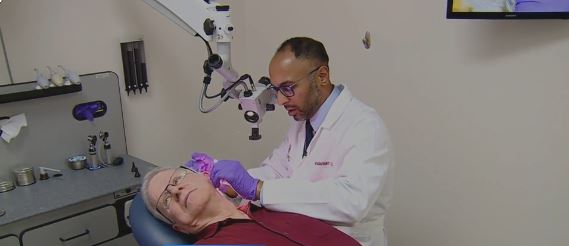
“Cochlear implants are probably the most rewarding surgery I do, and patients are often surprised with how small the external device actually is,” said Dr. Varun Varadarajan.
Dr. V brings sound back into people’s lives, and yet one of the biggest challenges is simply spreading the word that cochlear implants exist.
“It lets them reconnect with the world and reconnect with their loved ones, and it’s a very underrecognized technology that we’re trying to raise awareness of,” Dr. V said.
Cochlear implants have been around for a while. In fact, the FDA first approved them in the mid-1980s. But many still don’t even know about them.
The National Institutes of Health says a 2021 survey of more than 15,000 patients revealed only 10% knew about cochlear implants and more than 30% had never even heard of them.
“What’s exciting about cochlear implant technology is that the indications are expanding. Back in the day, we would only be able to implant patients completely deaf. Now we can implant people with greater degrees of residual hearing. You don’t have to be completely deaf,” Dr. V said.
It’s estimated that 1.2 million adults would benefit from cochlear implants, and yet, less than 10% who qualify for them actually have them.
Many simply don’t realize they are candidates. A common myth is that they’re only for those who are profoundly deaf, when in fact, the FDA expanded access in 2019. Now, people with hearing loss in just one ear qualify for them, including children.
“Went in, got me prepped and ready to go. Took me into surgery, I remember lying down on the table, and that’s the last thing I remember until waking up in recovery,” Cathey recalled.
For Cathey, the smallest sounds now signal the biggest second chance — a reminder for many that silence doesn’t have to be permanent.
“I hear things that I haven’t heard in years. Things like the rain on the roof, like today,” Cathey said.
Dr. V recently implanted the world’s first smart cochlear implant in a Sacramento-area patient. He says the possibilities are endless as he looks forward to a day when cochlear implants are entirely internal without any external device.
This story was provided to CNN Wire by an affiliate and does not contain original CNN reporting.
Please note: This content carries a strict local market embargo. If you share the same market as the contributor of this article, you may not use it on any platform.