Avoiding pedestrian collisions with bicycles, scooters on sidewalks in Colorado Springs

Scott Harrison

COLORADO Springs, Colo. (KRDO) — A viewer recently recalled her close call with a bicycle on Tejon Street, one of the few streets in town where bike riding is illegal.

Annie-Marie Young said that it had never happened to her before.

“I got out of my car, just like normal, and I popped up on the curve here,” she explained, re-tracing her steps. “And it startled me so much. As I got onto the sidewalk, I saw a bicyclist coming at me, fast! There was no way I could move quickly enough to get out of his way.”

But she said that somehow, she narrowly avoided the collision.

“The rider kept going and didn’t acknowledge me or say anything,” she said. “Is it safe for people to ride bicycles on sidewalks with all of the people walking there?”

According to city officials, bike riding is legal on streets, with a few exceptions: downtown, on Tejon Street and Vermijo Avenue, which are considered to have heavy pedestrian traffic; and the same applies in Old Colorado City, on Colorado Avenue between 23rd and 28th streets.

Young’s near-collision happened on the newly-widened block of Tejon, between Colorado and Pikes Peak avenues.

However, enforcing bicycle riding on sidewalks can be difficult because police don’t always catch violators in action.

City officials depend on the honesty policy — that pedestrians and cyclists will be alert and travel safely, and that cyclists will obey the law.

At some intersections on sidewalks where biking is illegal, the city has painted signs on the sidewalk asking people to walk their bikes or their scooters across.

Jason Benjamin owns the Kava Works bar on Pikes Peak Avenue and said that he worries more about people colliding with scooters than with bicycles.

“I see that happen every night,” he said. “People riding extremely recklessly on these electric scooters. I have seen collisions with other scooters, not necessarily with a pedestrian, yet. But, that could change.”

City officials said that scooters and even skateboards are also legal on sidewalks except in the above-mentioned areas.

“I don’t have an issue with any of these riders if people are going slow, riding safely, and not weaving in and out of pedestrian traffic,” Benjamin said. “If they want to go fast, they should use the bike lanes.”

However, there is a limited number of bike lanes downtown.

Young may have the best solution.

“I’m going to look both ways before I step onto a sidewalk,” she said. “Just as I look both ways before crossing a street.”

During coverage of this story on Monday morning, two more viewers shared their thoughts on the subject.

Among them was Larry Scubarth, 74, of Colorado Springs, who said that he is a disabled veteran.

“I cannot drive a vehicle because of my vision,” he wrote in an email. “I live downtown and walk or take the bus. “Every day, there are near misses between me and scooters or bicycle riders on the sidewalk. And people leave the scooters wherever they arrive, lying on the sidewalk, barring myself and neighbors, most of us with physical or vision disabilities. It’s finally refreshing to hear that SOMEONE is addressing the problem.”

Click here to follow the original article.

Former police officers create organization for first responders who encounter the unexplained

By Nate Eaton, EastIdahoNews.com

Click here for updates on this story

    PHOENIX (eastidahonews.com) — Two longtime Arizona law enforcement officers have launched a unique organization aimed at helping police officers, firefighters, EMTs and other first responders process encounters with things they can’t explain — from strange lights in the sky to unexplained voices on 911 calls.

The group, called UAP PD — short for Unidentified Anomalous Phenomenon Police Department — was co-founded by Mary Anne Robb and David Rich, both retired from the Gilbert Police Department after decades of service.

Robb and Rich said the idea came after realizing that while military pilots and civilians are increasingly coming forward about mysterious sightings, first responders largely stay silent — often out of fear of ridicule or professional consequences.

“Why aren’t law enforcement and first responders talking?” Robb told EastIdahoNews.com. “They see things on duty they can’t explain — lights in the sky, strange sounds, even figures — but they won’t say anything because of the stigma. They’re supposed to know what they’re looking at, and when they don’t, it’s terrifying.”

Rich knows that silence firsthand when, as a school resource officer in 2017, he was asked to respond to a chilling 911 call. It came from a phone at a local high school and, according to Rich, contained a whispered voice saying, “I scare.”

When Rich pulled surveillance footage from the school, he said no one was anywhere near the phone when the call was made.

“I checked everything — the phone company, the lines, the recordings. There was no logical explanation,” Rich said. “I was a total skeptic until that moment.”

When he brought the case to a supervisor, Rich said he was told to “drop it” and not file a report. Later, he learned other officers who responded were also warned not to speak about what they’d experienced.

“Police work is all about credibility,” Rich said. “If an officer says he saw Bigfoot or a ghost, that becomes a joke — and it can destroy his reputation on the stand. That’s why so many never talk.”

Robb, who spent 34 years with Gilbert Police, said she and Rich founded UAP PD to give those officers and first responders anywhere in the world a place to share their experiences safely.

“We have over 800,000 officers in the U.S.,” Robb said. “They’re out there every day, all night, under open skies. You can’t tell me they aren’t seeing things. They just need someone they can trust.”

Since launching two years ago, UAP PD has collected more than 80 firsthand accounts — from across the U.S. and as far away as Australia. Some involve UFOs or “unidentified aerial phenomena.” Others describe ghostly encounters or strange creatures.

Robb often travels to meet first responders face to face. She recently went to Utah after a police officer there confided he’d seen what he believed to be a Bigfoot.

“He thanked me for coming because he’d kept it inside for years,” she said. “He was afraid to tell anyone — afraid it would ruin his career.”

The organization also offers connections to counselors, clergy and peer support for those shaken by such experiences.

“These things create trauma,” Rich said. “First responders are trained to control chaos. But when something happens that doesn’t fit what they know is real, it can shake them deeply.”

Robb and Rich speak at conventions, symposiums and law enforcement conferences, urging others to share their stories. Their mission, they said, isn’t to convince skeptics — just to create a judgment-free space.

“We don’t need people to believe in ghosts or UFOs,” Rich said. “We just ask them to admit there are things in the world we don’t yet understand — and to give first responders the grace to talk about it.”

Robb added, “It’s about helping the men and women who protect us every day deal with experiences that don’t fit inside a police report.”

Please note: This content carries a strict local market embargo. If you share the same market as the contributor of this article, you may not use it on any platform.

‘Justice cannot undo tragedy’: Bionca Ellis sentenced to life in prison for fatal stabbing of 3-year-old boy

By Maya Morita, Courtney Shaw

Click here for updates on this story

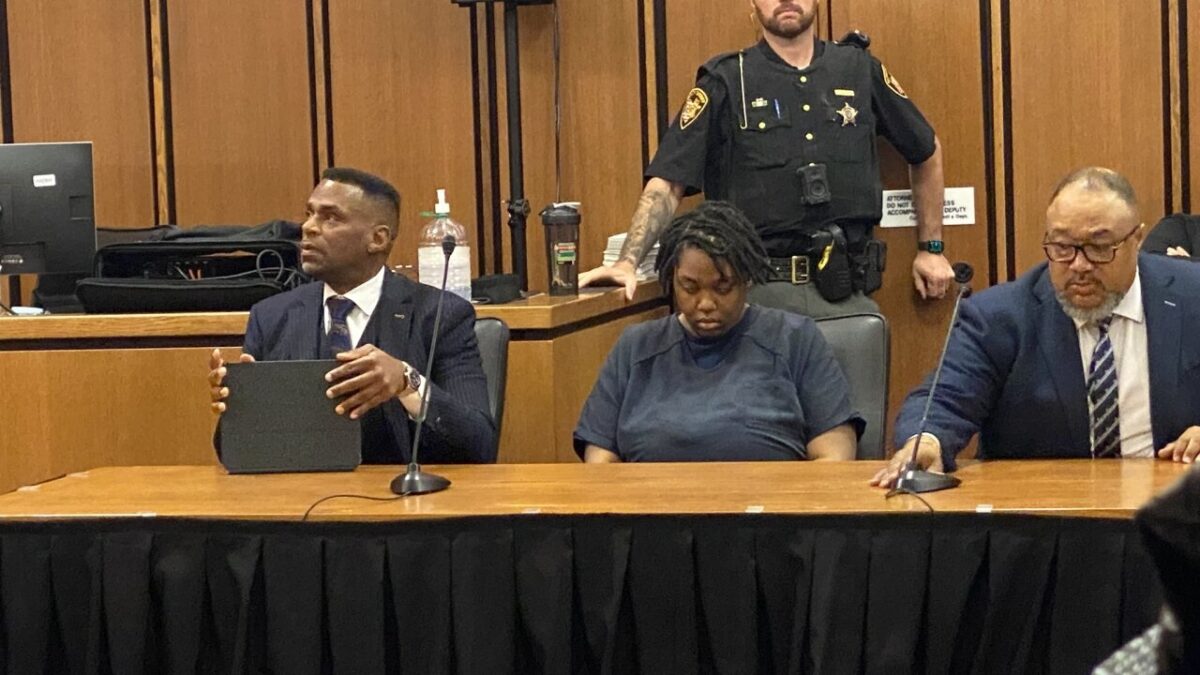
    CLEVELAND (WEWS) — Bionca Ellis, the 32-year-old woman who fatally stabbed 3-year-old Julian Wood last year in a North Olmsted grocery store parking lot, was sentenced on Monday morning to life in prison without parole.

On an emotional morning in which family members and the community remembered and mourned the boy who lost his life, Judge John J. Russo issued the sentence the boy’s parents requested. “Justice cannot undo tragedy,” Russo said. “Mental illness does not excuse what you did.”

Jared Wood, Julian Wood’s father, said his family is missing out on the time they should get to spend with him.

“All of our hearts will forever be missing a piece,” Jared Wood said.

Margot Wood, who was also injured in the stabbing, said she watched her son take his first breaths and had to hold him in her arms, covered in blood, taking his last breaths.

“That woman murdering my son replays in my head every single day,” she said. “I can still see the terror in his eyes and it haunts me every day.”

“Just because you have a mental illness, doesn’t justify for you murdering my son,” she said.

North Olmsted Police Detective Sean Ventrice said the death of a child will forever impact all of the officers.

“In policing, we learn to build emotional armor, but this case pierced through it completely,” Ventrice said.

Ellis’ attorney, Mack Fernando, said Ellis was unstable from January 2024 until June 2024 because she was not taking her medicine and asked the judge to weigh her mental health during the sentencing.

The defense requested a sentence of 20 years.

What happened

On June 3, 2024, Ellis stole two knives from the Volunteers of America thrift store and then walked next door to the North Olmsted Giant Eagle, where she spotted a 38-year-old woman pushing a child in a cart.

Ellis followed Margot and Julian into the parking lot and then stabbed the child while he was in a grocery cart. When Margot tried to pull Julian out of the cart during the attack, Ellis stabbed her as well.

Margot and Julian were taken to a nearby hospital for treatment, but unfortunately, Julian succumbed to his injuries.

Ellis’s trial

Ellis’s trial date was repeatedly delayed as she was standoffish in court and ordered to have several mental health assessments to determine if she was competent to stand trial.

The trial began on Oct. 6, with both the defense and the prosecution presenting their opening arguments. And while neither side disputed the facts of what happened, Ellis’s mental health was at the center of the case.

The days that followed were marked by eyewitnesses taking the stand to recount the events of June 3, 2024. Margot also testified, stating that she had had no connection or previous encounters with Ellis before the attack, which she said was sudden and came out of nowhere.

Ellis’s defense attorneys entered a plea of not guilty by reason of insanity. They previously said their client’s behavior, medical history and interactions during and after the incident showed she was insane during the attack.

On Oct. 15, after a week of testimony, Ellis was found guilty on all charges of aggravated murder, murder, felonious assault, attempted murder, tampering with evidence and aggravated theft.

Julian’s parents, Margot and Jared Wood, made a statement to the media after the verdict was announced.

“We just want to thank everyone for the love and support for our son,” Margot Wood said after the verdict was announced. “Everybody that’s visited him, commented, sent love, we appreciate you guys so much. This was for him today.”

Following Julian’s heartbreaking death, the community came together in support of the Wood family, as the streets of North Olmsted became flooded with the color green and dinosaurs during his funeral procession.

And almost a year after the stabbing, the community still rallied behind the family, with almost 1,000 runners showing up for the first-ever Juju Dino Dash — a 5K race honoring Julian’s life this past April.

“He was obsessed with dinosaurs. Anything that had to do with dinosaurs — shows, dressing up as them, playing with them,” Margot said in April. “So we wanted to dedicate this race to him and what he loved.”

A GoFundMe was also started shortly after Julian was killed, raising more than $270,000, well surpassing the $10,000 goal.

Please note: This content carries a strict local market embargo. If you share the same market as the contributor of this article, you may not use it on any platform.

Man expands stadium tours for ALS families while honoring his late mother

By Rachel Henderson

Click here for updates on this story

    KANSAS CITY (KSHB) — A Kansas City man’s mission to honor his late mother has grown into a nationwide organization, bringing joy to families battling ALS through professional stadium tours.

Amecco Watkins founded The Rose Watkins ALS Tour of Dreams after his mother passed away from ALS in 2023.

The organization provides tours of professional stadiums for ALS patients, their families and caregivers.

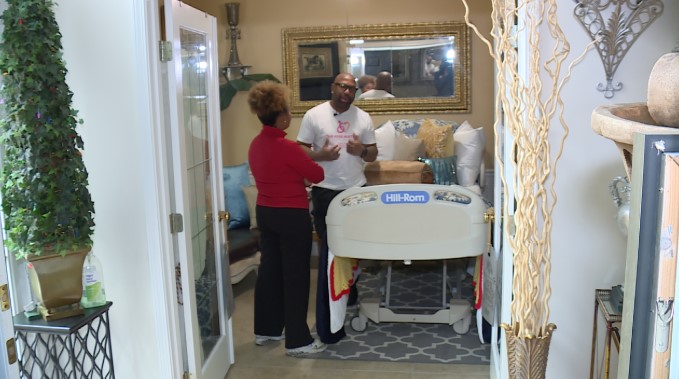
“I can definitely feel her presence in here,” Watkins said while standing in his mother’s former room.

Amecco took care of Rose for 10 years.

What started as a single tour at GEHA Field at Arrowhead Stadium in August has expanded to multiple cities.

In October, Watkins took his mission to Texas, where he gave a tour of AT&T Stadium in Arlington.

“Some couldn’t afford to go to a game, some have never really been in the stadium. So to do a VIP tour, it was really exciting for them,” Watkins said.

The tours have attracted support from local businesses.

Cameryn Shady, general manager of an Arlington Papa John’s, provided pizzas for one of the stadium tours.

“I’ve always wanted to be able to give back to my community, and being the general manager of this store allowed me to do that. While I wasn’t able to give monetary wise, I was about to give what I could, which was pizza,” Shady said. “Just because I don’t have anyone in my life affected by ALS does not mean that Amecco’s cause is not worth my attention and respect. This Papa John’s location sends so many orders to the stadium for tours, teams, and employees; it felt good to send one to support the Tour of Dreams.”

Sunny Brous and her family joined Watkins for the Dallas tour.

Brous was diagnosed with ALS in 2015 and has defied the typical prognosis for the disease.

“I’m celebrating 11 years soon. I’m really excited,” Brous said during a video call.

ALS typically worsens over time and affects muscle movement.

On average, the disease leads to death within two to five years of diagnosis, making Brous’ longevity remarkable.

“A common theme is: you have ALS, go home and get your affairs in order. And how isolating the diagnosis was and the progression was,” Brous said.

But Brous has maintained a positive outlook throughout her journey.

“I think it’s been fun. Would I wish this on anyone? Absolutely not,” she said. “I always say, ‘If we’re going to do it, we’re going to do it together.'”

The stadium tour provided Brous a unique experience that combined her love of football with meeting other ALS families.

“Getting this opportunity to meet families that I haven’t met before at the greatest stadium in the world really combined two of my absolute passions. We had a blast,” Brous said.

Watkins disagrees about who has the “greatest stadium,” but he can back Brous’ passion behind the overall experience.

“It was unreal. It’s like she’s right here with me,” Watkins said.

Watkins said caring for his mother meant rarely leaving home except for doctor appointments, which provided brief relief.

Now, he travels frequently, but it’s all in Rose’s honor.

His mission extends beyond the patients to include their support systems, too.

“I had to make sure that the caregivers and the family got out of the house as well. They’re there 24/7 caring for their loved one,” Watkins said.

The organization has ambitious plans for expansion, with Watkins eyeing tours at stadiums across the country.

“Being a Chiefs fan, it’s just Arrowhead. Everything’s about the Chiefs,” he said. “When I got to Dallas and I got to view their stadium, it was pretty interesting. It was a nice stadium… There’s a long list. It’s gonna be pretty cool. I don’t want it to stop.”

Watkins has his sights set on Levi’s Stadium in California and U.S. Bank Stadium in Minnesota for upcoming tours.

For Brous, the tours represent something different from traditional ALS fundraising activities.

“You do the walks, you do the different things, but this is a different angle; it’s a different opportunity,” she said.

She’s inspired by how Watkins has transformed his grief into something meaningful for the ALS community.

“Taking this really awful thing called ALS and then making it into something so much bigger is just amazing, it’s inspiring,” Brous said. “To take that passion and turn it into a legacy that translates to other teams, to other organizations and fans like me, it’s huge.”

Though Brous never met Rose Watkins, she feels connected to her legacy.

“I didn’t get to meet Amecco’s mom, but I love that she has a legacy,” Brous said. “I love Rose for that, even though I didn’t get to meet her.”

One of the most touching tours was the one Watkins gave KSHB 41’s Rachel Henderson of his mother’s preserved room, which still has her hospital bed, Bible and stuffed animals.

“It’s kinda hard to come in here,” Watkins said. “I can definitely feel her presence in here. A lot. But it’s always a good feeling. Being around my mom is such a good feeling.”

He finds comfort knowing she accompanies him on every journey.

“We were never ashamed to take our mother anywhere. We loved our mother so much,” Watkins said.

Those interested in supporting The Rose Watkins ALS Tour of Dreams can donate here.

This story was reported on-air by a journalist and has been converted to this platform with the assistance of AI. KSHB’s editorial team verifies all reporting on all platforms for fairness and accuracy.

Please note: This content carries a strict local market embargo. If you share the same market as the contributor of this article, you may not use it on any platform.

Bird Flu detected at commercial egg farm

By Hernan Gutierrez

Click here for updates on this story

    INDIANAPOLIS (WISH) — Animal health officials in Indiana announced that a flock of birds was quarantined after bird flu was detected at a commercial egg farm in LaGrange County.

According to a news release on Saturday, 19,700 birds were impacted by the quarantine.

The Indiana State Board of Animal Health says it is actively monitoring a 12-mile radius within LaGrange, Elkhart and Noble Counties following the detection of the H5N1 influenza virus.

So far month, officials have detected the Highly Pathogenic Avian Influenza in seven commercial flocks, all in northeastern Indiana.

According to the state’s online dashboard, highly pathogenic avian influenza has impacted more than 30 flocks this year. As of noon Monday, the portal had not been updated to reflect the newest case.

Health officials say the bird flu does not pose a risk to food safety.

Poultry owners are urged to be aware of the signs of the bird flu, including sudden death without clinical signs, lack of energy, decreased egg production, soft-shelled or misshapen eggs, among other symptoms.

If these are present, owners are asked to report the illness to the USDA Healthy Birds Hotline: (866) 536-7563.

Please note: This content carries a strict local market embargo. If you share the same market as the contributor of this article, you may not use it on any platform.

Snatched-up slowpokes: Pair of tortoises stolen from Indianapolis Zoo

By Michaela Springer

Click here for updates on this story

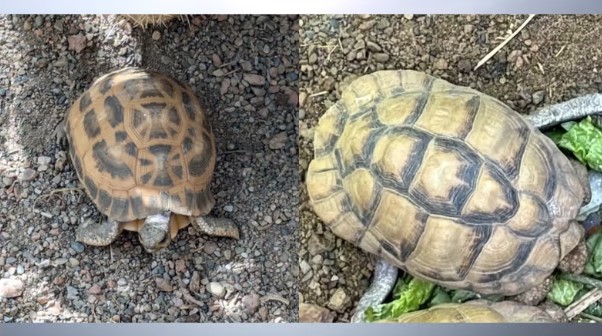
    INDIANAPOLIS (WISH) — Indiana State Police in Indianapolis are seeking the public’s help finding two tortoises that were stolen from the Indianapolis Zoo earlier in October.

These tortoises – an Egyptian tortoise and a Northern Spider tortoise – are housed in the zoo’s Deserts exhibit. Investigators believe the theft happened sometime between 10 a.m. Oct. 11 and 10 a.m. Oct. 12.

Jake Oakman, the zoo’s senior VP of external relations, says the zoo is working closely with ISP to find the tortoises.

“The Indianapolis Zoo had two small tortoises stolen from our facility. We are working closely with law enforcement to investigate the theft. We continue to hope for their safe return and we appreciate the community’s support during this time. The Zoo will provide updates when they are available.”

The stolen reptiles both have microchips and are considered “critically endangered species.” The Egyptian tortoise has a “prominent scar” on its belly, police noted.

Anyone with information on the tortoises was asked to contact ISP Capitol Police at 317-234-2131 or Crime Stoppers.

Please note: This content carries a strict local market embargo. If you share the same market as the contributor of this article, you may not use it on any platform.

Bay Area restaurants, fishermen adjust as commercial Dungeness crabbing season pushed back


KPIX

By Da Lin

Click here for updates on this story

    SAN FRANCISCO (KPIX) — Bay Area seafood lovers hoping to serve fresh Dungeness crab for Thanksgiving or Christmas are out of luck again this year. California officials have postponed the commercial crabbing season once more because of the ongoing risk of whale entanglements off the Northern California coast.

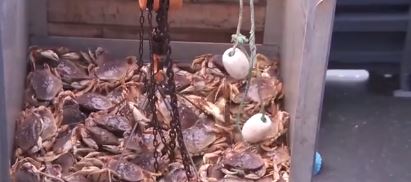
At the docks near San Francisco’s Fisherman’s Wharf, crab pots are sitting idle.

The delay doesn’t come as a surprise, as the season has been pushed back four or five years in a row, but commercial fishermen said that doesn’t soften the economic blow.

San Francisco fisherman David Kemp pointed to his worn work clothes as a sign of how tough things have gotten.

“Look at me, I’ve got holes in my shirt. We’re barely holding onto our businesses,” he said.

It’s been a particularly rough year for Bay Area fishing crews. The state cancelled the commercial salmon season entirely, and now they’re missing out on the busy holiday demand for crab, one of their biggest revenue drivers.

“Who really misses out is the public,” Kemp said. “If they get crab that comes out of San Francisco, it’s been in a freezer for six months or eight months. If they get crab that comes out of Puget Sound, they’re paying $15.99 a pound.”

Most of the crab currently available in local markets and restaurants is coming from Washington state, driving prices up and profits down for local businesses.

“That means we’re probably going to be closed on Thanksgiving because people don’t come down here for turkey,” said Eli Fowler, a manager at Capurro’s Restaurant. “So that hurts us for Thanksgiving and [Christmas].”

He added, “It’s bad for business and it really just hurts Fisherman’s Wharf as a whole.”

Environmental advocates said the delay is necessary to protect endangered marine life.

“Anytime that they entangle more than three endangered humpback whales in a single year, the season will be delayed until the following year,” said Dr. Geoff Shester, Director of Fishery Innovation and senior scientist at Oceana. “There were four whales confirmed entangled in Dungeness crab fishing gear over the last year.”

Shester said a solution is on the horizon. The state is expected to approve new “pop-up” gear for the spring season, a technology that uses GPS and acoustic triggers to raise buoys and ropes only when harvesting pots, eliminating vertical lines in the water that whales and sea turtles can get caught in.

“This new technology has been tested successfully and shown to work in a limited context over the last few years,” Shester said. “We’re hopeful that this spring, that will be an option to allow these fishermen to stay on the water and really prevent further entanglements at the same time.”

But affordability is a major concern.

“I can’t be optimistic,” Kemp said. “Right now, there’s nothing to be optimistic about.”

He worries his boat is too small — and his finances too stretched — to invest in entirely new equipment.

The state said the earliest possible opening for the commercial Dungeness crab season would be in early January. Recreational crabbing, however, will still open Nov. 1 in some areas, including waters off San Francisco.

Please note: This content carries a strict local market embargo. If you share the same market as the contributor of this article, you may not use it on any platform.

Bay Area restaurants, fishermen adjust as commercial Dungeness crabbing season pushed back

By Da Lin

Click here for updates on this story

    SAN FRANCISCO (KPIX) — Bay Area seafood lovers hoping to serve fresh Dungeness crab for Thanksgiving or Christmas are out of luck again this year. California officials have postponed the commercial crabbing season once more because of the ongoing risk of whale entanglements off the Northern California coast.

At the docks near San Francisco’s Fisherman’s Wharf, crab pots are sitting idle.

The delay doesn’t come as a surprise, as the season has been pushed back four or five years in a row, but commercial fishermen said that doesn’t soften the economic blow.

San Francisco fisherman David Kemp pointed to his worn work clothes as a sign of how tough things have gotten.

“Look at me, I’ve got holes in my shirt. We’re barely holding onto our businesses,” he said.

It’s been a particularly rough year for Bay Area fishing crews. The state cancelled the commercial salmon season entirely, and now they’re missing out on the busy holiday demand for crab, one of their biggest revenue drivers.

“Who really misses out is the public,” Kemp said. “If they get crab that comes out of San Francisco, it’s been in a freezer for six months or eight months. If they get crab that comes out of Puget Sound, they’re paying $15.99 a pound.”

Most of the crab currently available in local markets and restaurants is coming from Washington state, driving prices up and profits down for local businesses.

“That means we’re probably going to be closed on Thanksgiving because people don’t come down here for turkey,” said Eli Fowler, a manager at Capurro’s Restaurant. “So that hurts us for Thanksgiving and [Christmas].”

He added, “It’s bad for business and it really just hurts Fisherman’s Wharf as a whole.”

Environmental advocates said the delay is necessary to protect endangered marine life.

“Anytime that they entangle more than three endangered humpback whales in a single year, the season will be delayed until the following year,” said Dr. Geoff Shester, Director of Fishery Innovation and senior scientist at Oceana. “There were four whales confirmed entangled in Dungeness crab fishing gear over the last year.”

Shester said a solution is on the horizon. The state is expected to approve new “pop-up” gear for the spring season, a technology that uses GPS and acoustic triggers to raise buoys and ropes only when harvesting pots, eliminating vertical lines in the water that whales and sea turtles can get caught in.

“This new technology has been tested successfully and shown to work in a limited context over the last few years,” Shester said. “We’re hopeful that this spring, that will be an option to allow these fishermen to stay on the water and really prevent further entanglements at the same time.”

But affordability is a major concern.

“I can’t be optimistic,” Kemp said. “Right now, there’s nothing to be optimistic about.”

He worries his boat is too small — and his finances too stretched — to invest in entirely new equipment.

The state said the earliest possible opening for the commercial Dungeness crab season would be in early January. Recreational crabbing, however, will still open Nov. 1 in some areas, including waters off San Francisco.

Please note: This content carries a strict local market embargo. If you share the same market as the contributor of this article, you may not use it on any platform.

Parent launches innovative T-ball league for children with autism


KOVR

By Charlie Lapastora

Click here for updates on this story

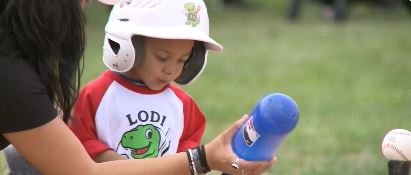
    LODI, California (KOVR) — The Lodi High School baseball field transformed into what felt like spring training in October for a brand-new T-ball league. The Lodi T-Rexes had their first practice on Sunday for kids of all ages who are on the autism spectrum.

“My inspiration is Niko, my son,” Jose “Jojo” Duenas, the founder of the Lodi T-Rexes league, said. “He’s 3 years old, last year we found out that he was autistic. I was kind of looking around, seeing what our options [were] as far as sports. I couldn’t really find anything in the immediate area of Lodi.”

So that’s when, about a month ago, Duenas, a local football coach, and his family stepped up to the plate and started the Lodi T-Rexes. He was expecting about a dozen kids to coach originally. On Sunday, 52 athletes showed up.

“My son, I wanted him to have a good experience,” Duenas said. “And for people like my wife, there’s some parents out there that really struggle. I’m doing this for them. I want to get them the opportunity to celebrate their kids, I’m doing it for the parents and the athletes. That’s all I need. Just the ‘thank yous’ of the smiles on people’s faces, some of the parents sharing their stories, what they go through every day. That’s all the motivation I need besides my son. So, yeah, it’s been beautiful.”

Duenas met with applied behavior analysis therapists and local baseball coaches for insight. He held training for the dozens of volunteers to spread awareness ahead of the practice because he said, “Every kid is so specific.”

One of those volunteers was 9th grader Landon Camarena. His favorite part was helping all the kids, and he said for the families, “they’re getting emotional seeing the kids having fun.”

“They deserve to wear a jersey and they deserve to be a part of the sports,” Camarena said.

Camerena helped at the hydration station. It was one of four stations set up for the T-ball athletes. The others were a home run derby, a throwing and catching area, and batting practice. Duenas said there were high school volunteers, even from rival schools, Tokay High and Lodi High, putting aside their rivalry to unite in helping by volunteering.

Parents, grandparents, and loved ones filled the stands at Lodi High School, which partnered with Duenas to provide the baseball field, to cheer on their athletes.

Jennifer Jurado was with her 5-year-old kindergartner grandson, Julian Camberos, now a Lodi T-Rex T-Ball athlete.

“To be able to meet other people, other families in the community whose children are on the spectrum, is amazing,” Jurado said. “In the autism community, for a lot of years, it hasn’t been diagnosed-it’s really coming in the spotlight now with acceptance and being recognized. It is very important for our children, grandchildren, our loved ones to be represented, and understood, and included.”

For Jhair Carmona and his son, Jhair Jr., it was a great father-son bonding moment for them. Carmona Sr. said his son means everything to him and enjoyed spending more time with him while seeing him have fun.

“Support your kids and do everything that you can to treat them like normal because even though we know this sometimes is [a] struggle, we need to be patient and encourage our kids to be more involved with daily stuff and games like this,” Jhair said.

Duenas said there were around 150-200 people total that showed up for the first practice on Sunday and that even people from Texas reached out to him to inquire about it. He also said there was a family from Merced that came to shadow what he was doing, hoping to bring something like this back to their community.

He said there is another similar program in Lodi, called Spark, offering soccer, but that it was hard overall to find something nearby involving sports to put his son and other kids with autism into and that it shouldn’t be this way. He wants to take this eventually on the road and branch out to other communities to help with this type of league.

An online fundraiser Duenas originally had is fully funded for this season and next.

For any parents who want to sign up their kids to play, it’s completely free and includes a jersey. All you have to do is message Duenas on the Lodi T-Rex’s new Instagram page.

Please note: This content carries a strict local market embargo. If you share the same market as the contributor of this article, you may not use it on any platform.

Parent launches innovative T-ball league for children with autism

By Charlie Lapastora

Click here for updates on this story

    LODI, California (KOVR) — The Lodi High School baseball field transformed into what felt like spring training in October for a brand-new T-ball league. The Lodi T-Rexes had their first practice on Sunday for kids of all ages who are on the autism spectrum.

“My inspiration is Niko, my son,” Jose “Jojo” Duenas, the founder of the Lodi T-Rexes league, said. “He’s 3 years old, last year we found out that he was autistic. I was kind of looking around, seeing what our options [were] as far as sports. I couldn’t really find anything in the immediate area of Lodi.”

So that’s when, about a month ago, Duenas, a local football coach, and his family stepped up to the plate and started the Lodi T-Rexes. He was expecting about a dozen kids to coach originally. On Sunday, 52 athletes showed up.

“My son, I wanted him to have a good experience,” Duenas said. “And for people like my wife, there’s some parents out there that really struggle. I’m doing this for them. I want to get them the opportunity to celebrate their kids, I’m doing it for the parents and the athletes. That’s all I need. Just the ‘thank yous’ of the smiles on people’s faces, some of the parents sharing their stories, what they go through every day. That’s all the motivation I need besides my son. So, yeah, it’s been beautiful.”

Duenas met with applied behavior analysis therapists and local baseball coaches for insight. He held training for the dozens of volunteers to spread awareness ahead of the practice because he said, “Every kid is so specific.”

One of those volunteers was 9th grader Landon Camarena. His favorite part was helping all the kids, and he said for the families, “they’re getting emotional seeing the kids having fun.”

“They deserve to wear a jersey and they deserve to be a part of the sports,” Camarena said.

Camerena helped at the hydration station. It was one of four stations set up for the T-ball athletes. The others were a home run derby, a throwing and catching area, and batting practice. Duenas said there were high school volunteers, even from rival schools, Tokay High and Lodi High, putting aside their rivalry to unite in helping by volunteering.

Parents, grandparents, and loved ones filled the stands at Lodi High School, which partnered with Duenas to provide the baseball field, to cheer on their athletes.

Jennifer Jurado was with her 5-year-old kindergartner grandson, Julian Camberos, now a Lodi T-Rex T-Ball athlete.

“To be able to meet other people, other families in the community whose children are on the spectrum, is amazing,” Jurado said. “In the autism community, for a lot of years, it hasn’t been diagnosed-it’s really coming in the spotlight now with acceptance and being recognized. It is very important for our children, grandchildren, our loved ones to be represented, and understood, and included.”

For Jhair Carmona and his son, Jhair Jr., it was a great father-son bonding moment for them. Carmona Sr. said his son means everything to him and enjoyed spending more time with him while seeing him have fun.

“Support your kids and do everything that you can to treat them like normal because even though we know this sometimes is [a] struggle, we need to be patient and encourage our kids to be more involved with daily stuff and games like this,” Jhair said.

Duenas said there were around 150-200 people total that showed up for the first practice on Sunday and that even people from Texas reached out to him to inquire about it. He also said there was a family from Merced that came to shadow what he was doing, hoping to bring something like this back to their community.

He said there is another similar program in Lodi, called Spark, offering soccer, but that it was hard overall to find something nearby involving sports to put his son and other kids with autism into and that it shouldn’t be this way. He wants to take this eventually on the road and branch out to other communities to help with this type of league.

An online fundraiser Duenas originally had is fully funded for this season and next.

For any parents who want to sign up their kids to play, it’s completely free and includes a jersey. All you have to do is message Duenas on the Lodi T-Rex’s new Instagram page.

Please note: This content carries a strict local market embargo. If you share the same market as the contributor of this article, you may not use it on any platform.