Utah man arrested, accused of threatening to shoot people wearing red at BYU-Utah game

Seth Ratliff

Originally Published: 17 OCT 25 15:26 ET

By Pat Reavy, KSL.com

Click here for updates on this story

    HUNTINGTON, Utah (KSL) — An Emery County man was arrested Wednesday after police say he made threats to shoot people at the upcoming BYU-Utah football game.

Christopher Tai Justice, 28, of Huntington, was booked into the Emery County Jail for investigation of making a threat of violence and obstruction of justice.

Tuesday night, someone on X, formerly Twitter, made several posts under @juiceisloose328 such as “Nah, anyone wearing red on Saturday is getting shot,” “enjoy a bullet to the head,” “Any Ute fan (I) see is dead. Mark my words” and “I’ll never forget the amount of hatred I felt for Utah sitting front row for the 54-10 beat down in 2011.”

The account later posted, “I apologize for the awful tweets. I’m logging off and deactivating now.”

By Wednesday, the account was “locked.” But not before several concerned people contacted police. That prompted an investigation that included local, state and federal authorities.

Wednesday, the Emery County Sheriff’s Office was contacted by the Statewide Information and Analysis Center with the Utah Department of Public Safety after linking Justice to the alleged threat “to shoot Utes fans at the upcoming BYU vs Utah game,” according to a police booking affidavit. “(The state) told me that Tai had switched his account to private and had deleted most of the messages.”

A deputy, along with Justice’s probation officer, went to his home. Justice initially claimed “that he had deleted Twitter almost over a year ago and that he would never say anything like that,” the affidavit states.

However, the probation officer located the X app on his iPad.

Then, after linking the account with his cellphone, the probation officer “went through his phone and found some texts between him and a friend talking about the account in question. In the messages, they discuss deactivating the account. At one point in the conversation, Tai tells his friend, ‘I’ll say I didn’t post them or it’s not my account if it goes this far’ when talking about being confronted by the police,” the affidavit alleges.

When confronted with this information, Justice allegedly admitted to making the social media posts. “He then told us that he lied to us because he was scared of what could happen,” the affidavit says.

Justice, who has a history of driving on a revoked license or while intoxicated, according to court records, was on probation at the time of his arrest Wednesday after being convicted of DUI for the second time in less than 10 years.

Please note: This content carries a strict local market embargo. If you share the same market as the contributor of this article, you may not use it on any platform.

The-CNN-Wire™ & © 2025 Cable News Network, Inc., a Warner Bros. Discovery Company. All rights reserved.

Click here to follow the original article.

Guarded by Predators: Idaho law challenges prosecutors seeking to penalize prison guards for sexual abuse

InvestigateWest

Editor’s note: The article discusses sexual assault. “Guarded by Predators” is a new investigative series obtained through partnership with InvestigateWest, exposing rape and abuse by Idaho’s prison guards and the system that shields them. Find the entire series at investigatewest.org/guarded-by-predators.

Originally Published: OCT. 16, 2025

By Wilson Criscione and Whitney Bryen

BOISE, Idaho — In a small courthouse in southeast Idaho, a woman incarcerated at the nearby prison had just finished testifying that a male guard came into the bathroom on her cellblock and kissed her on at least five different occasions. 

She also told the court that one day, around Easter in 2012, the guard, Kim Rogers, had followed her into a janitor’s closet at Pocatello Women’s Correctional Center, reached under her shirt and grabbed her breasts. A week later, in the same closet, Rogers put his hand down her panties and touched her before she yanked his arm away, she testified. 

That may have been a crime according to Idaho state law, which deems genital contact between prison staff and a prisoner — but not groping or kissing — illegal. Rogers had even confessed to a detective that he touched her “vagina.” But his defense attorney still argued that it was not necessarily an admission to a crime.    

Rogers’ attorney, Justin Oleson, challenged the detective who took the stand next, asking why he didn’t ensure Rogers understood the word “vagina.”

“I assumed that due to his age and experience, and the fact that he was in law enforcement and had training with proper contact with inmates, and what he should and should not do, that that had already been covered during that training,” Detective Tony Busch replied.

For the next five minutes, the woman listened as four men — a prosecutor, defense attorney, judge and police detective — debated what, exactly, Rogers meant by vagina.

“Where did he touch her vagina at?”

“I don’t know. I didn’t ask. Anywhere is a violation of the law, whether it’s the front, back, side, it doesn’t matter.”

“Did you ask him how he knew that he touched her vagina and not just her pubic hair?”

“I don’t recall if I asked him that or not.”

“Do you think he…”

“He understood what I was asking, yes.”

“And you know that because he defined those areas for you?”

“No, he looked at the ground, put his head down and said, ‘I know what I did was wrong. I made a mistake.’”

Oleson, the defense attorney, eventually arrived at his point.

“As I think somebody told me when I was a little kid, boys have outies and girls have innies,” Oleson said. “So, it’s pretty easy to determine whether you’ve touched a male’s genitals. He touched, according to the officer, her vagina, but what does that mean? I believe the state has a burden to prove what the genitals are. They haven’t.”

Judge Paul Laggis, exasperated with the defense’s argument, conceded that Idaho state law does not clearly define a woman’s genitals. Bannock County prosecutor Vic Pearson later offered Rogers a plea deal for a lesser charge of attempted sexual contact and a penalty of eight years’ probation. Rogers accepted it. He served no prison time for the abuse. His probation was dismissed after serving less than five years and the charge was removed from his record. 

The case against Rogers highlights how difficult it can be for prosecutors to hold correction officers accountable for sexual abuse, even when a guard seemingly confesses to the crime. 

Idaho, like many states, limits its definition of sexual assault when the victim is an inmate. Even though federal standards say all inappropriate touching by prison workers and even suggestive comments or voyeurism are illegal, Idaho’s law protects inmates from abuse only when staff touch the victim’s genitals or they’re made to touch the genitals of staff. 

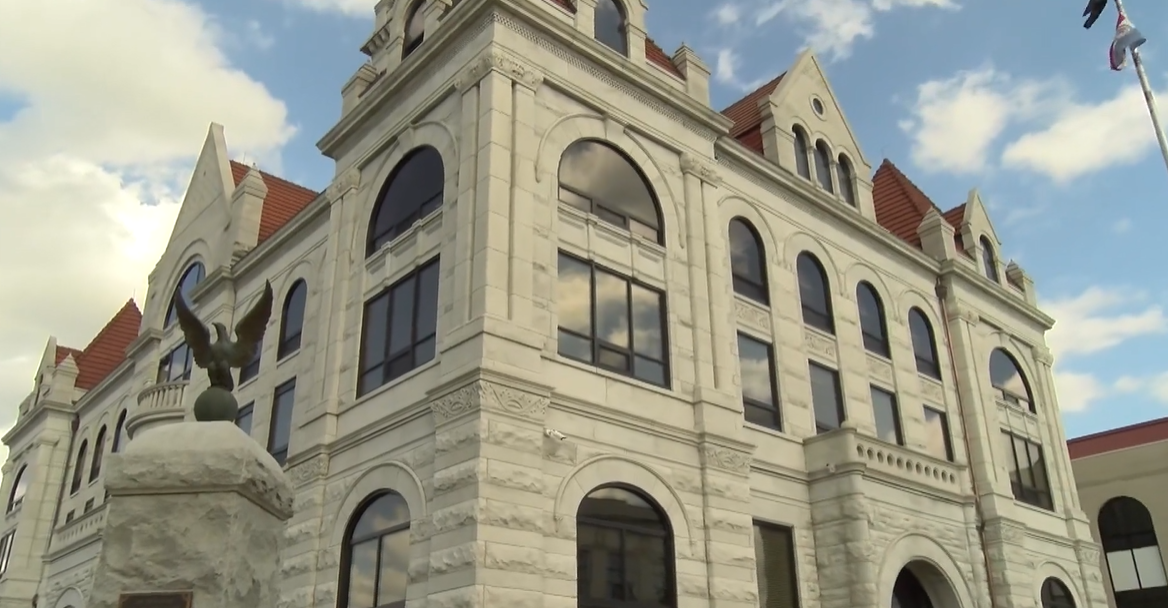
The exterior of the Ada County Courthouse in Boise, Idaho. (Kyle Green/InvestigateWest)

It’s still illegal in Idaho to touch the groin, inner thighs, buttocks, breasts or genital area of any person, including an inmate, without their consent. Guards can be charged with felony or misdemeanor sexual battery for abusing an inmate. But that rarely happens. 

Incarcerated victims often go along or reluctantly agree to sexual requests from guards because they’re afraid of what will happen if they say no. For that reason, inmates cannot consent under federal and state laws written specifically to protect prisoners from abusive workers, requiring only proof that the sexual contact occurred. Idaho’s sexual battery laws, however, don’t recognize the power that prison staff hold over the people in their custody and, therefore, require prosecutors to prove that the victim did not consent. Prosecutors say that is especially challenging when the victim is an inmate, who is often perceived as untrustworthy. 

The result: Idaho guards harass and assault inmates with impunity and little fear of criminal consequences. In the rare cases that they are charged, accused guards are typically offered a plea deal that requires no prison time, while their victims spend years incarcerated for drug offenses, DUIs and parole violations. 

InvestigateWest interviewed dozens of women who described, in detail, sexual harassment and assaults they experienced from prison workers. But few of their abusers were ever charged with any crimes. 

In the last decade, 11 Idaho prison staff at men’s and women’s facilities have been prosecuted for sexually assaulting an inmate. Only two were sentenced to a prison term — but instead of serving their yearslong sentences, they served fewer than 10 months in a treatment program where participants are housed separately from the general prison population. 

Prosecutors and investigators are trained to be skeptical of people in custody, longtime federal prosecutor Fara Gold acknowledged in a 2018 report to federal prosecutors. And inmates who struggle with addiction or have lengthy criminal histories are even less likely to be believed, according to the report, which offered guidance on prosecuting law enforcement sexual misconduct. And that’s likely why their abusers choose them, she said. 

“The challenge in prosecuting any sort of law enforcement misconduct, but certainly law enforcement sexual misconduct, whether it’s police officers or jailers, is that they choose victims who no one is going to believe,” Gold said. “They are targeted, these victims, because the perpetrators bank on the fact that no one’s going to believe them.”

Attorney Joseph Filicetti, shown here outside his office in Boise, Idaho, authored and lobbied for the Idaho state law that criminalizes sexual contact between corrections staff and prisoners. But even Filicetti says the law, which only protects inmates from assaults that involve contact with a person’s genitals or anus, doesn’t do enough to protect people in custody. (Photo courtesy of Joseph Filicetti)

Control and consent

Idaho made it a felony for corrections officers to have sexual contact with inmates in 1993, long before the U.S. Department of Justice developed its standards.

The law, written by a former Ada County deputy prosecutor, carries a maximum sentence of life imprisonment but lacks a mandatory minimum sentence, leaving penalties up to a judge. That allows most offenders to avoid prison time altogether. 

Meanwhile, Idaho incarcerates more women per capita than any other state, driven largely by harsh drug charges, many of which have mandatory minimum sentences. Early this year, state lawmakers imposed a fine of at least $300 for possession of up to 3 ounces of marijuana. Quantities over 1 pound carry minimum sentences of at least one year in prison and a $5,000 fine. And last year, lawmakers sharpened penalties for fentanyl users and distributors by adding mandatory minimum prison sentences.

State legislators later expanded the sexual contact law, applying it to all contract workers and employees of the Idaho Department of Correction and juvenile corrections. But critics say the state’s definition of sexual contact falls short of other states and federal mandates, leaving Idaho inmates even more vulnerable.

Even the attorney who authored and lobbied for the law at the Idaho Legislature, Joseph Filicetti, said it doesn’t do enough to protect people in custody from sexual assault. 

From 1987 to 1996, Filicetti prosecuted sexual abuse and other crimes committed in prisons located in Ada County. But it was difficult to prove the level of control that a Department of Correction worker had over a victim, Filicetti told InvestigateWest. So he wrote the 1993 law that was passed by lawmakers as a bright-line rule.  

“You’re in control of these people, so they’re off-limits,” Filicetti said. 

But the law only covers assaults that involve at least one person’s genitals or anus, leaving prosecutors with the same hurdle for abuse that doesn’t meet that threshold. 

For those situations, “you can file a sexual battery” charge, Filicetti said. But in his nine years as a prosecutor, he never did. When asked if a prison worker had ever been charged with sexual battery in Ada County, a spokesperson for the prosecutor’s office said they do not track that information. 

 In 2015, Idaho officials agreed to comply with the federal Prison Rape Elimination Act, which prohibits staff from engaging in a broad range of sexual misconduct: kissing an inmate; touching their breasts or buttocks even over clothing; coercing or requesting sexual favors; gawking at inmates while they undress; and making derogatory or suggestive comments. But Idaho has failed to update its state law to reflect those guidelines. And federal prosecutors typically don’t enforce the standard unless there is a pattern of abuse, leaving it up to Idaho prosecutors to enforce the much weaker state law, attorney Brenda Smith said. 

Brenda Smith is the director of the Project on Addressing Prison Rape at American University in Washington, D.C., and has studied the federal standards and state laws designed to protect inmates from sexual abuse. She says Idaho’s law is ”very narrow” compared to other states and could leave the state liable. (Provided by American University Washington College of Law)

Smith is the director of the Project on Addressing Prison Rape at American University in Washington, D.C., and has studied the federal standards and state laws designed to protect inmates from sexual abuse. She said Idaho’s law focused on genital contact is “very narrow” and could leave the state liable. 

“The notion that those parts of a person’s body, for no legitimate reason and clearly intended for sexual gratification, are not a part of that statute is problematic and is actually out of line with where many jurisdictions are,” Smith said. “And I would say that Idaho proceeds at its peril.

“Your dignity doesn’t end and your privacy doesn’t end in custody,” she said. 

Andrea Weiskircher has studied the federal standard closely since last summer when she filed a complaint against five prison workers she said abused her while she was incarcerated on a grand theft charge. She knows that the federal guidelines allow zero tolerance for harassment or assault behind bars. And that the Idaho Department of Correction has said it complies with those rules. 

“The guards can manipulate us and use us. That’s what I feel like they’re saying,” Weiskircher said. “That you can put your hands on my breast. You can kiss me. You can scare me. You can keep me in my cell and keep me from being released on parole. You can make me have to pretend to love you so I can get out of prison, so I can have things, so I can have a job. That doesn’t seem fair.

“How come they get to do that to us?” she said.

Nationwide, only 5% of substantiated cases of sexual misconduct by prison staff against inmates in 2019 and 2020 led to a conviction of any kind, according to the most recent U.S. Department of Justice data.  

While most states have adopted laws to prevent guards and other prison staff from taking advantage of inmates under their control, few go as far to protect prisoners as the federal standard, an analysis by InvestigateWest found. 

Two states that closely mimic the federal standards are Arizona and Nevada, which allow prosecutors to charge guards and other correction workers for rape, sexual assault, coercion and harassment. Oregon’s felony custodial sexual misconduct law requires a threshold of physical contact similar to Idaho’s, while a second misdemeanor law expands the opportunity for prosecutors to charge guards who commit less severe sexual misconduct. 

The Idaho Correctional Center south of Boise, Idaho. (AP Photo/Charlie Litchfield)

Washington increased penalties for jail and prison staff who sexually abuse inmates in 2022 after a woman who was sexually harassed by a guard committed suicide in her jail cell. The guard was convicted of sexually assaulting four other women at the Forks city jail. Similar to Oregon, Washington has first-degree and second-degree violations for sexual abuse of people in custody. “Kimberly Bender’s Law,” named for the woman who died, now requires offenders convicted of first-degree custodial assault to register as a sex offender.

Idaho law requires those convicted of sexual contact with a prisoner to register as a sex offender, too, limiting where they can live and work and requiring treatment and more frequent check-ins while on probation or parole. But when striking a plea deal, prosecutors often agree to remove that stipulation. Ricardo Quiroz, who was convicted of raping an inmate after he drove her to a medical procedure, is the only person charged with the crime in the past five years who has had to register as a sex offender.

Lesser charges like sexual battery and burglary have been applied by Idaho prosecutors offering plea deals. 

Former Boise prison guard Roberto Guiller Escobedo pleaded guilty to two misdemeanor counts of unnecessary assault by an officer in 2013 after three male inmates accused the guard of groping them and one claimed that Escobedo performed oral sex on him and he was made to perform oral sex on Escobedo. Escobedo was sentenced to probation.

“What are you condoning in Idaho?” Weiskircher said. “You don’t care if inmates are raped and molested.”

‘Quote, unquote victim’

In Idaho, leniency toward Department of Correction workers accused of sexually abusing an inmate is typical — even when it happens under the director’s nose.  

 Morgan Cruz was an administrative assistant to Department of Correction Director Josh Tewalt early in 2022 when she was assigned to supervise a crew of inmate workers who were cleaning and remodeling the department’s central offices. For nearly two years, Cruz had answered phones, kept calendars and wrote reports for Tewalt and other department administrators. She had never worked with inmates or attended the necessary training to do so, she told InvestigateWest. 

That summer, the department’s chief of staff, Christine Starr, and then-deputy director Bree Derrick, who’s now department director, told Cruz they had received a report that she was too close with one of the male workers and needed to maintain professional boundaries, Cruz said. She told them nothing inappropriate had happened. But that changed a few weeks later, she said.  

Cruz told an investigator that she gave the inmate oral sex at the department’s central office, where the offices of the director and other administrative staff are housed. She later recanted.

Cruz said she knew it was wrong but she couldn’t deny their “storybook love.” And that’s how her attorney presented it in court, as a “consensual adult relationship,” even though under federal and state law, prisoners cannot consent. 

“Because they’re inmates, they’re treated almost like children,” said Erin Tognetti, who prosecuted child and inmate sex assaults while working for Bannock County. “Like, even if they act like it’s completely voluntary, well, nothing’s really voluntary because of the power disparity.”

Cruz was sentenced to four years probation after pleading guilty to burglary — a broadly defined, nonviolent felony that caps prison time at 10 years and does not require sex offender registration. Idaho law defines burglary as anyone who enters a room with intent to commit a felony — in Cruz’s case, sexual contact with a prisoner. At least three other Idaho prison workers accused of sexually assaulting an inmate have accepted offers to plead to the lesser burglary charge, a search of court records revealed.

From 2021 to 2024, Tognetti prosecuted sexual abuse cases at the women’s prison in Pocatello. Only two ever crossed her desk. She filed charges against both men. One guard died by suicide after being charged. 

Tognetti said that while Idaho’s law is clear that inmates cannot consent to sexual activity with prison staff, an inmate’s willingness, or at least the prosecutor’s perception of it, does influence the case. 

When Tognetti charged Alveris Tomassini with sexual contact with a prisoner, the law was on her side. He had touched an inmate’s genitals at Pocatello women’s prison where he had worked as a guard for only a couple of weeks. And evidence wasn’t a problem, either, Tognetti said. There was video of Tomassini’s arm reaching through a slot in the woman’s cell door and of him giving her a thumbs-up as he exited the unit. 

But Tognetti offered him a deal. Tomassini pleaded guilty to aggravated battery and was sentenced to probation. He wasn’t required to serve time in prison or register as a sex offender.  

“He got a good deal,” Tognetti said. 

The woman who Tomassini assaulted told investigators that she initiated the relationship. She said she flirted with guards at the prison. She liked the attention. She had been incarcerated for four years, and she missed being touched. A jury probably wouldn’t be sympathetic to a victim like that, Tognetti said. 

And, frankly, neither was Tognetti. 

“It was very much kind of a game to my — quote, unquote — victim,” Tognetti said. “She kind of saw it as a sport trying to get him to interact with her. She was actively pursuing him. She was flirting. She was flashing him. She was slipping him notes. 

“She was the one starting it so who knows how many guards have crossed the line with her. We have no idea.”

This reporting was supported by the Fund for Investigative Journalism and the Pulitzer Center.

Click here to follow the original article.

Jefferson City man charged with first-degree rape, sodomy

Ryan Shiner

COLUMBIA, Mo. (KMIZ)

A Jefferson City man was charged with sex crimes after authorities claim he sexually assaulted a teenager on Thursday.

Augustus Armstead Jr., born in 1988, was charged with first-degree rape and first-degree sodomy. He was not listed on the Cole County Jail roster on Friday afternoon. A warrant was issued and no bond was set. A hearing has not been scheduled.

The probable cause statement says the victim stayed home from school because they were sick and when the victim’s father arrived back at the residence, he heard noises coming from the victim’s room and saw Armstead with the child.

Armstead allegedly gave the father a fake name and phone number before leaving, and allegedly claimed the 14-year-old victim told him she was 18 years old and had a child, the statement says. The victim allegedly accepted a friend request from Armstead on the social media app Snapchat and told him she was 17 with a child, the statement says the victim told law enforcement.

Armstead allegedly asked the victim to record the intercourse and the victim gave the recording to police, the statement says. Police wrote that Armstead claimed he had no contact with the victim and was in Columbia at the time.

Click here to follow the original article.

Redmond’s Eastside Arterial Project reaches milestone: Third leg of new roundabout opens

KTVZ

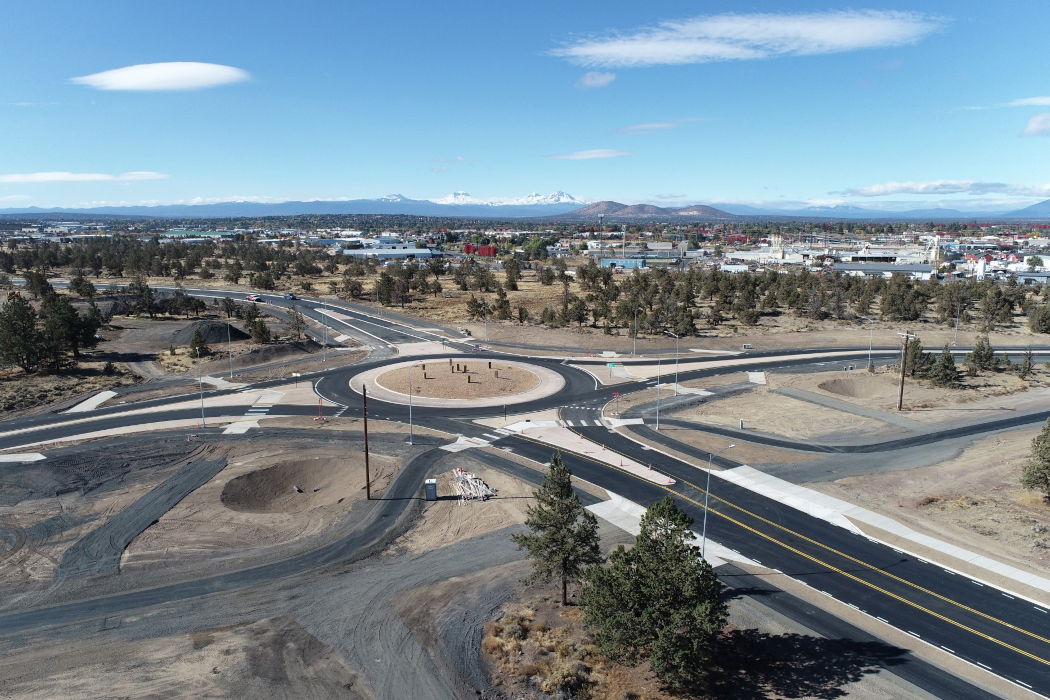
REDMOND, Ore. (KTVZ) — The City of Redmond said Friday it has opened the third leg of the new roundabout at NE 9th Street and OR 126, allowing for traffic flow on NE 9th Street to the north. This follows the opening of the first two legs last month for traffic on OR 126 between Redmond and Prineville.  

The final leg, connecting to the newly constructed road south of the roundabout, will open in 2026 upon completion of the adjacent roundabout near the airport, the city said.

The phased rollout is part of the broader Eastside Arterial Project, aimed at improving connectivity and relieving congestion on Redmond’s eastside. 

For more information about the Eastside Arterial Project, please visit the website at www.redmondoregon.gov/eastsidearterial or contact Principal Engineer Jake Sherman at (541) 504-2019 or by email: jake.sherman@redmondoregon.gov.  

Click here to follow the original article.

Bend FFA chapter earns honors at the 98th National FFA Convention and Expo 

KTVZ

The Bend FFA chapter has been recognized in 2025 National Chapter Award Program from the National FFA Organization. They were given a 2-star ranking – truly a mark of their exceptionalism. Fewer than 10% of chapters nationwide are given a ranking from the National FFA Organization.  

The National Chapter Award Program recognizes outstanding FFA chapters from across the country that actively implement the mission and strategies of the organization. These chapters improve chapter operations using the National Quality FFA Chapter Standards and a Program of Activities that emphasizes growing leaders, building communities and strengthening agriculture. Chapters are rewarded for providing educational experiences for the entire membership.  

Chapters received star ratings during judging this summer and will be recognized at the 98th National FFA Convention & Expo, Oct 29-Nov 1. All star-rated FFA chapters receive honors made possible by corporate sponsors Bayer, Cargill Protein, Case IH, John Deere, Syngenta, and Rabobank.  

Bend FFA member Jael Cruikshank is the Oregon FFA National Officer Candidate to compete for one of six National FFA officer positions.

Thirty-seven out of 1 million FFA members nationwide have been chosen to compete for national office at the 98th National FFA Convention and Expo this October, marking a significant milestone in their leadership journeys and showcasing their commitment to FFA and agriculture. These six officers will lead the National FFA Organization during their year of service and be the ambassadors for the organization.  

The process to become a national officer is arduous, with the candidates taking part in a multi-day, extensive interview process with the National FFA Officer Nominating Committee. The committee is comprised of students and adult advisors who interview and select the six national officers. 

It takes a highly motivated person to become a successful National FFA Officer—an opportunity afforded to few members. Becoming a national officer requires members to learn about their passions and gain a better understanding of what life as a national officer is like. The life of a national officer is nonstop hard work and never-ending commitments, but it is a life-changing experience—one they will cherish forever. 

The American FFA Degree is bestowed upon a select group of FFA members in recognition of their years of academic and professional excellence. This year over 5,200 American Degrees were awarded. Kate Schimmoller & Danika Kuck, members of the Bend FFA chapter will be awarded the American FFA Degree at the 98th National FFA Convention & Expo on November 1, 2025. 

Sponsored by Bayer, Cargill, Case IH, John Deere, Rabobank, and Syngenta, the award recognizes demonstrated ability and outstanding achievements in agricultural business, production, processing, or service programs. 

To be eligible, FFA members must have earned at least $10,000 or earned at least $2,000 and worked at least 2,250 hours outside of class time through a supervised agricultural experience (SAE) program in which they own their own business, hold a professional position as an employee, or conduct research.

Recipients must also complete 50 hours of community service and demonstrate outstanding leadership abilities and civic involvement through the completion of a long list of FFA and community activities. Only .5% percent of FFA members achieve the American FFA Degree. 

After being recognized at the national convention, each recipient of the American FFA Degree receives a gold American FFA Degree key and certificate. 

The National FFA Organization is a school-based national youth leadership development organization of more than 1,042,245 student members as part of 9,407 local FFA chapters in all 50 states, Puerto Rico and the U.S. Virgin Islands. 

# # # 

About National FFA Organization The National FFA Organization is a school-based national youth leadership development organization of more than 1,042,245 student members as part of 9,407 local FFA chapters in all 50 states, Puerto Rico and the U.S. Virgin Islands. The FFA mission is to make a positive difference in the lives of students by developing their potential for premier leadership, personal growth and career success through agricultural education. For more, visit the National FFA Organization online at FFA.org and on Facebook and Twitter.  

Click here to follow the original article.

ABC 17 family shares personal connections to Alzheimer’s disease

Meghan Drakas

COLUMBIA, Mo. (KMIZ)

ABC 17 News Anchor Meghan Drakas is sharing her family’s experience and other members of the ABC 17 family with Alzheimer’s disease and dementia in the leadup to Jefferson City Walk to End Alzheimer’s. The event was originally scheduled for Saturday, but has been canceled due to impending weather. The organization will hold another event in December.

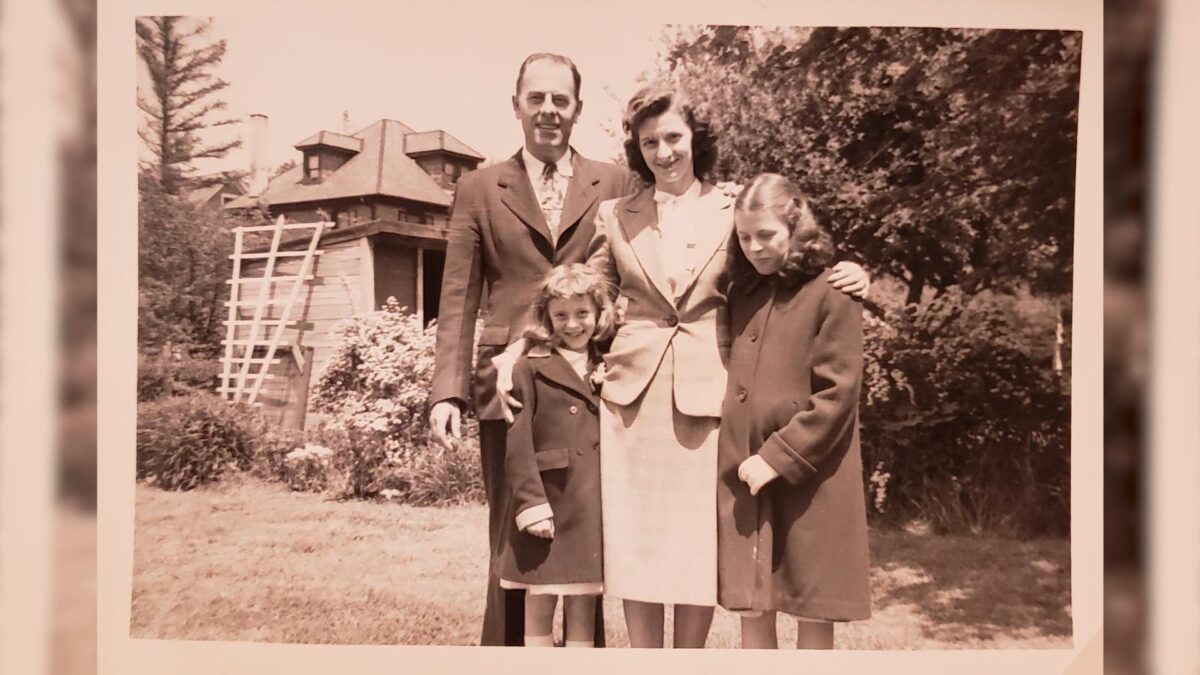
Barbara Early was born in 1938 in the suburbs of Philadelphia. She was a wife, mother, grandmother, homemaker, secretary and life of the party.

Undated photo of Barbara Early [Drakas Family]

“She was one of those people that, she walked into the room and she just kind of lit up the room,” said her daughter, Susan Drakas.

Barbara was one of the millions of Americans to experience Alzheimer’s firsthand. Today, more than 7 million Americans and 122,000 Missourians live with the disease — a number expected to hit nearly 30 million in another 25 years. The costs of long-term dementia care will reach nearly $1 trillion by 2050.

Join ABC 17 News at the Jefferson City Walk to End Alzheimer’s on Saturday at Dwight T. Reed Stadium on Lincoln University’s campus. ABC 17 Stormtrack Chief Meteorologist Jessica Hafner will emcee this year’s walk. Last year, the Jefferson City Walk raised over $65,000. This year, the walk has a goal of $90,000.

As of Thursday, the Jefferson City walk had raised over $64,000, and the Columbia Walk to End Alzheimer’s has raised over $154,000 with a goal of $160,000. Donations will be accepted until the end of the year.

Barbara Early

Susan Drakas described her caring mother as a great cook who always made the holidays special for the family.

“It was a happy home,” Susan said. “She kept a beautiful, happy home. Her family was her priority.”

Robert Early, Susan Early, Barbara Early, Eugene Early, Susan Drakas and Joe Drakas in Montgomery County, Pennsylvania, on Aug. 14, 2016. [The Drakas Family]

Her son, Robert Early recalled his mother’s laugh, which sparked joy to everyone around her.

“It was kind of infectious,” he said. “Where others would pick up on that and enjoy themselves even more, I think.”

He noted that growing up, he was not always on his best behavior and was reminded to remember his manners.

“If she said it once, she probably said it ten million times,” Robert said. “She was a very loving mom and always wanted us to be on our best behavior, but of course, I always used to test the limits.”

Years later, she was diagnosed with Alzheimer’s in 2013, when she was 75 years old. She spent the last nine years of her life battling the disease.

“The last couple years, you know, it’s like she was not really there,” Susan said. “She was there, but she wasn’t there because of this horrible disease; it was a long goodbye.”

On Jan. 14, 2021, she lost her battle to the disease at her home in Souderton, Pennsylvania, surrounded by her loved ones.

Barbara was married to her husband, Eugene Early, for 58 years. They were set up by mutual friends on a blind date and met in 1961. They got engaged on Christmas Eve in 1962 and were married in October 1963.

Eugene and Barbara Early at Robert Early’s wedding in May 1997. [The Drakas Family]

“There’s a lot of memories, like any marriage, you had your ups and downs, but we had more ups than downs,” Eugene Early said.

He touched on the difficulties of seeing his partner in life going through the gradual decline with Alzheimer’s disease.

“It wasn’t pleasant seeing her suffer the way she did,” Eugene said. “It was rough.”

Going through this journey with his wife of nearly six decades, he reinforced an important life lesson.

“You take life one day at a time, and enjoy it while you have it because it goes by so fast,” Eugene said.

Edwin Kammerich

ABC 17 News creative services director Mark Kammerich lost his father, Edwin, to Alzheimer’s in 2016. Mark remembers his father as always being there to help out when he needed advice.

Edwin, Mark and Joan Kammerich [Submitted by Mark Kammerich]

Kammerich said his dad helped others by sharing his time and talent for a variety of repairs, including appliances such as small engines and clocks. In addition, Kammerich said his father volunteered his time for Meals on Wheels, The Steam Engine Association and as a 4-H leader.

Sarah Carpenter

Production assistant Jerry Handley lost his grandmother, Sarah, to dementia in 1979. Handley said he remembers his grandmother as loving and always keeping her hands busy while making quilts. He said he cherishes a quilt made by his grandmother, which he still has today. He added that she loved to care for all of her grandchildren.

Jerry Handley’s grandmother, Sarah Carpenter, pictured with Jerry’s niece, Marsha. [Submitted by Jerry Handley]

Handley said when he was in college, he would sometimes have lunch with his grandmother. He said that during that time, she was showing signs of dementia. He recalled a traumatic story that she would share from roughly five decades prior in West Virginia, where she lived with her family along Rock Creek. Because of flash flooding, her family had to evacuate their home and watch it float downstream.

Yvonne Hayes

ABC 17 reporter Olivia Hayes lost her grandmother in 2020 to dementia. She says her grandmother dealt with dementia for years, but saw the biggest change after her Paw Paw died.

Natalie Hayes, Ethan Hayes, Yvonne Hayes and Olivia Hayes in 2020 [Submitted by Olivia Hayes]

This photo of Olivia, her two siblings and Maw Maw was taken the last time they saw her. Olivia Hayes said on this trip, her grandmother shared the most vivid memories of her young life. She said each day they saw their Maw Maw, she had the biggest smile on her face.

Helen Miller and Patricia ‘Patty’ Kempf

Business analyst/HR coordinator Donna Farmer lost her grandmother, Helen Miller, to Alzheimer’s on Dec. 31, 2004. Farmer says she battled the disease for over seven years. She said her grandmother lost her husband in World Ward II, when Farmer’s mother was 5 years old, and she raised her two daughters by herself.

Undated photo of Helen Miller [Submitted by Donna Farmer]

Farmer lost her mother, Patricia ‘Patty’ Kempf, on April 14, 2025. She says her mother was diagnosed with advanced dementia but was able to live at home with her father until she died. Farmer says her family believes her mother was Patrick Mahomes’ biggest fan, and she enjoyed watching game shows and sports.

Undated photo of Patricia Kempf [Submitted by Donna Farmer]

Farmer says her grandmother and mother were remarkable women who cared for their families. She says both women treated their families with respect and admiration. Farmer said this illness takes a toll on loved ones caring for them, and it takes a lot of patience and understanding.

Joseph Drakas, Susan Drakas and ABC 17 News Anchor Meghan Drakas at the Columbia Walk to End Alzheimer’s on Oct. 4, 2025

Click here to follow the original article.

Increased security ahead of ‘No Kings’ rallies across Coachella Valley

Luis Avila

COACHELLA VALLEY, Calif. (KESQ) — Thousands are expected to gather across the Coachella Valley on Saturday for a series of “No King” rallies, with events planned in Palm Springs, Cathedral City, and Palm Desert.

In response to the expected turnout, local law enforcement agencies have announced increased patrols and visible police presence throughout the day. Police say they are working closely with event organizers to ensure public safety and minimize disruption. In Palm Springs, police will deploy specialized units, including a tactical SWAT team, to respond to any potential issues.

Police also emphasized the importance of maintaining traffic flow and minimizing disruptions to the daily lives of residents and visitors. Officers are urging demonstrators to remain within designated areas.

Organizers have also taken their own measures to ensure the rallies remain peaceful and orderly. Volunteer marshals will be on site to help manage crowds, and safety zones will be established in key areas.

Local officials are advising residents and visitors to plan for possible traffic delays near rally sites and to follow all posted safety instructions during the events.

Here’s where and when protests are planned for Saturday:

Cathedral CityAvenue Lalo Guerrero9:00 – 10:30 a.m.

Palm DesertMonterey Avenue & Highway 11110:00 – 11:00 a.m.

Palm SpringsEast Palm Canyon Drive & South Sunrise Way9:00 – 10:30 a.m.

Sunrise Park (Palm Springs)480 South Sunrise Way4:00 – 6:00 p.m.

The Pass Area (Beaumont/Banning)In front of the Walmart Superstore on 2nd Street10:00 – 11:30 a.m.

Joshua TreePark Boulevard & Highway 6211:00 a.m. – 1:00 p.m.

Stay with News Channel 3 for more.

Click here to follow the original article.

How a Group is Fighting Conflict With Resolution In The Santa Maria Valley

Jarrod Zinn

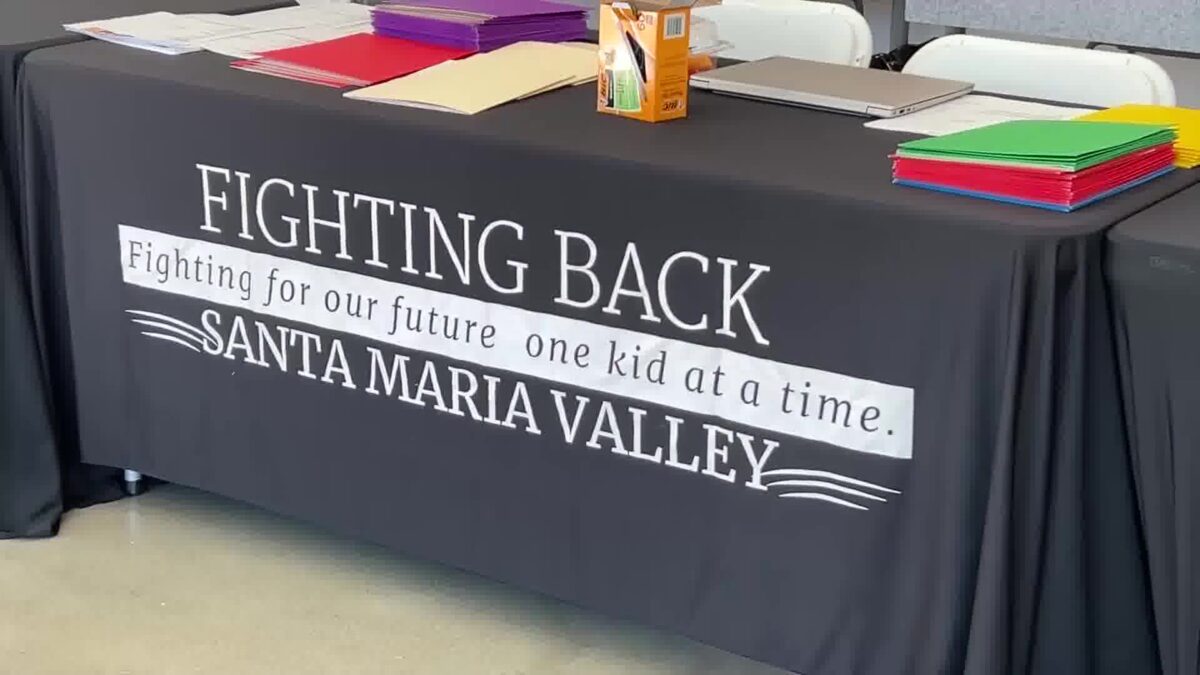
SANTA MARIA, Calif. (KEYT) – A symposium on conflict resolution was held in Santa Maria at Boyd Concert Hall on the campus of Allan Hancock College, courtesy of California’s non-profit public benefit corporation, Fighting Back Santa Maria Valley.

“Today’s event is all about how to teach mediation,” says Edwin Weaver, Fighting Back Santa Maria Valley’s executive director. “Lots of us find ourselves in conflict. And so there’s many ways to resolve that conflict using a facilitative mediator. We do that for free for people who are in small claims court.”

A line-up of expert speakers started with a presentation that only scratched the surface of conflict resolution strategies, and was followed by a panel discussion just before a few break-out sessions.

“We also teach people to help participate in the mediation with young people through our restorative justice programs and our District Attorney’s Neighborhood Restorative Justice panel, where community members can volunteer and be panelists, helping people through a difficult situation where they’ve committed a crime,” says Weaver.

City leaders, students, and local advocates joined the crowd in the Boyd Concert Hall, participating in an interactive program designed to reduce violence, prevent substance abuse, and foster healthy environments for youth and families in the Santa Maria valley.

“This is a community that’s ready for change,” says Braedon Ervin, Freedom 4 Youth’s co-president. “And all these faces are here for it. And they’re going to learn a little bit more about it. I’m learning myself, and so it’s great to build these roots and really grow from there.”

Advocates say the symposium was ideally timed as the holidays approach a divided culture struggling with the balance between being true to oneself and honoring friends and loved ones.

“We’re not all going to agree,” says Weaver. “We probably shouldn’t agree. It wouldn’t make us challenge each other or try new things. But we do need to learn to listen to each other.”

Participants say many factors contribute to the need of youth support in today’s society, including our technological culture, varying worldviews, and divisive political climate.

Fighting Back Santa Maria Valley welcomes volunteers to learn the art of mediation, and you can visit the organization’s website  by clicking here.

The Latest Breaking News, Weather Alerts, Sports and More Anytime On Our Mobile Apps. Keep Up With The Latest Articles by Signing Up for the News Channel 3-12 Newsletter.

Click here to follow the original article.

Pocatello homes light up for annual ‘Golden Pumpkin’ Halloween contest

News Team

POCATELLO, Idaho (KIFI) — The spirit of Halloween is literally lighting up the streets of Pocatello, as the city’s seasonal decorating contest—centered around the coveted Golden Pumpkin award — continues to draw “spook-tacular” submissions from residents eager to showcase their festive creativity.

Three distinct awards are up for grabs this year:

The Creepiest Curb Appeal: Awarded to the display that delivers maximum goosebumps and fright factor.

The Golden Pumpkin: Honoring the best overall Halloween display that captures the season’s magic.

The Spooktacular Spirit Award: Recognizing the home with the most fun and festive atmosphere.

Nominations for the contest will close next week on October 20th, and winners will be announced on October 23rd. To enter your spooky place into the contest, click HERE.

Click here to follow the original article.

“Gaurded by Predators” – Case closed: Inside Idaho State Police’s handling of prison sexual abuse complaints

InvestigateWest

Editor’s note: The article discusses sexual assault. “Guarded by Predators” is a new investigative series obtained through partnership with InvestigateWest, exposing rape and abuse by Idaho’s prison guards and the system that shields them. Find the entire series at investigatewest.org/guarded-by-predators.

Originally Published: OCT. 14, 2025

By Wilson Criscione and Whitney Bryen

BOISE, Idaho — At a medium-security prison in the desert outside Boise, two Idaho State Police detectives begin to interview corrections Sgt. Brian Klingensmith. All three officers dedicated their lives to keeping criminals in line, but now Klingensmith is accused of raping one. 

At 2:02 p.m. on Oct. 29, 2024, one of the detectives begins recording their conversation. 

“So, like we said, the allegation came up from your supposed involvement back in 2011 when you worked at the Boise Work Center,” Detective Brandon Eller begins, referring to a women’s prison where inmates are allowed to work off-site during the day. Charee Nelson, an inmate who was under Klingensmith’s supervision, filed a report against him in summer 2024 alleging decade-old abuse.

Eller briefly sums up Nelson’s account. “She’s basically claiming that there were a total of five occasions that you guys, um, had sex, so to speak.”

“No,” Klingensmith softly says. 

The detectives move on less than a minute into the interview without directly asking Klingensmith if he had sex with Nelson. Nor do they ask if he offered to waive a disciplinary write-up that could have jeopardized her upcoming release date in exchange for oral sex. Or whether he made up assignments to get her alone and request sexual favors. Or if he knew that Nelson was four weeks pregnant when she was released from the women’s prison. 

But the detectives do tell Klingensmith that they are targeting inmates who file complaints of sexual abuse by guards for false reporting. 

“I feel like it’s a personal attack on me and my family,” Klingensmith tells the detectives. “And what happens to somebody who just makes shit up? Nothing?” 

“It’s the culture that you work in,” Detective Chris Pohanka says. “We’re trying to get some things changed on false allegations. I think we’ve had a couple prosecuted for that, or we have a couple maybe coming up for prosecution on those. Problem is, it’s a misdemeanor. That’s the problem.” 

Idaho State Police detective Brandon Eller at the Ada County Courthouse in Boise, Idaho, on Aug. 16, 2017, in a trial on his claim the agency retaliated against him as a whistleblower. Eller worked on the team of detectives that routinely handled reports of sexual abuse by staff at Idaho state prisons. (Kyle Green/Idaho Statesman) 

When prisoners are victimized by guards, they can’t call 911 or report it to police. Dispatchers won’t accept calls from prison. Instead, inmates can tell another Idaho Department of Correction employee — usually co-workers or supervisors of the accused. It’s then up to the guard’s employer to report it to law enforcement. Idaho prison policy and federal law require all potentially criminal allegations of sexual assault or harassment to be reported to and investigated by police. But according to the department’s own annual reports and federal audits of Idaho prisons, that rarely happens. 

When it does, the responsibility falls to the Idaho State Police, which has been investigating these cases statewide since 2023. Previously, local law enforcement, most often the Ada County Sheriff’s Office, investigated crimes reported at prisons in their jurisdiction. InvestigateWest has found that since state police took over, detectives have dismissed evidence, ignored leads and treated survivors as suspects, allowing abusers to escape justice and leaving victims to face the consequences. 

Idaho State Police spokesman Aaron Snell declined interview requests and refused to answer specific questions from InvestigateWest about Nelson’s case and others involving allegations against prison employees. In an email, Snell said all investigations are taken seriously. 

“Our role is to investigate criminal complaints, and we handle them the same way as any other case: by following the evidence, applying Idaho law, and focusing on what can be presented in court,” Snell wrote. “Allegations that arise in correctional settings can be particularly complex and challenging to corroborate, making these cases uniquely difficult.”

Nelson was one of seven women who, in the summer of 2024, accused prison workers of sexually harassing and assaulting them. The alleged abuse spanned decades, took place at women’s facilities across Idaho, and was perpetrated by different prison guards, probation officers, and commissary contractors. 

But one thread connects all of the women’s claims — none were thoroughly investigated by state police, an InvestigateWest review of the case files and detectives’ interviews revealed.

Allegations made by four of the women were never criminally investigated.

The other three women’s claims were merged into one case even though they accused different men on different dates who worked at different prisons. 

One woman’s case was closed as “determined not to have occurred” after a detective misrepresented the facts in her case file, claiming that she told him she never had any sexual contact with prison guards — despite an audio recording of his interview proving otherwise.

Only one of the seven accused men was contacted by police.

None of the men was charged in these cases.   

“They weren’t there for us,” Nelson said, referring to the police.

Charee Nelson at Christmas with her family’s cat in 2016. Nelson is one of seven women who filed complaints of sexual abuse against Idaho prison workers in the summer of 2024. InvestigateWest found that none of their complaints were properly investigated. (Photo courtesy of Nelson’s family)

‘Put everything to rest’

The Department of Correction said in an emailed statement that it had received some of the complaints that the seven women filed in summer 2024, but would not reveal which ones were investigated or the outcomes of those investigations. 

Though federal standards require prisons to send reports of all possible crimes to law enforcement, the department instead only notifies police of accusations against staff if evidence has been uncovered by department investigators, according to Department Director Bree Derrick. Those investigators lack the authority to conduct criminal investigations.

But an Ada County judge pressed for police to investigate accusations by Nelson and two other women following their pleas for help. Judge Andrew Ellis, who ruled on protection orders filed by the three women, promised at an Aug. 5, 2024, hearing to contact county Prosecutor Jan Bennetts’ office and “ask that she look into it and not just sweep it under the rug.”

“Typically, when the prosecutor gets a phone call or an email or has a meeting with a judge, they pay attention,” Ellis said. “I will do that much to make sure that there’s some attention being paid to your case.”

The next day, Idaho State Police opened an investigation into the complaints. 

Detectives combined the three women’s complaints into a single case, even though they were accusing different guards who worked at different prisons in different years — a sign of “sloppy” detective work, said Fara Gold, a longtime state and federal prosecutor who wrote the U.S. Department of Justice 2024 framework for prosecuting sexual assault against women. 

“It just makes no sense,” Gold said. “If three different women accused their husbands of domestic abuse, you wouldn’t combine those investigations. If they’re all accusing different perpetrators, they need to be treated as separate cases, because they do file separately in court.” 

Andrea Weiskircher stands outside the Ada County Courthouse in Boise, Idaho, on July 24, 2025, ahead of a drug court hearing. Weiskircher, now 43, has spent nearly 13 years in prison where she says she was harassed and coerced by guards to perform sexual favors in exchange for prohibited items like a cellphone, sodas or candy. Weiskircher’s decision to file complaints inspired scores of women to step forward with their own allegations of abuse by Idaho prison staff. (Kyle Green/InvestigateWest)

Snell, the state police spokesman, declined to respond directly to questions about the investigation into these women’s allegations, including why they were lumped together. 

One week after they were assigned the cases, detectives stopped seeking evidence of abuse for one of the women who refused an interview with them. Idaho State Police detectives were unavailable to comment for this article, Snell told InvestigateWest. In the emailed statement, he wrote that if a victim “chooses not to cooperate, we cannot proceed.”

The woman who didn’t want to be interviewed by state police, Karyn Simpson, said she had already told a detention officer who took her report about how a prison-work supervisor had groped her on a job site and how a parole officer — who was later charged with extortion in a separate case — offered to help her out in exchange for a video of Simpson and her wife having sex. She didn’t think she could relive that again, she told InvestigateWest. 

“You don’t want to reinterview the victim unnecessarily,” Gold said. “There are many reasons why you don’t reinterview the victim over and over again, not the least of which is that it’s retraumatizing. Just making her rehash it for no other purpose than you weren’t there to listen the first time, there’s nothing valuable in that.”

On the same day Simpson said no to detectives, Andrea Weiskircher made a different decision. She spent more than an hour with the investigators. According to audio of that interview and case files obtained by InvestigateWest, she provided locations, a timeline, witness names and other details about her abuse and the abuse of others. None of the men Weiskircher accused were ever contacted, let alone questioned, by the detectives, records show. Neither were the witnesses she named. Screenshots of a phone log showing calls she received from one of the accused men and sexual Facebook messages from others were emailed to one detective, but were not included or even referenced in the case files. Weiskircher also told detectives about messages sent to her through the prison’s communication system. The case files, which Snell called the “official record of the work performed,” make no mention of efforts to retrieve those messages. 

During the interview with Weiskircher, Detective Pohanka asked her if she had any “inappropriate sexual contact” with correction officers between 2018 and 2021. Weiskircher said “yes” twice, and yet when detectives closed their investigation, they falsely noted that she said “no” when asked if she had any sexual contact with prison employees. An audio recording of the interview confirms Weiskircher’s account — directly contradicting the detective’s written report.  

A subsequent notice declaring that the state police had closed her investigation identified Weiskircher’s accusations as “determined not to have occurred.”

An excerpt from a November 5, 2024 Idaho State Police report written by detective Chris Pohanka on the investigation into separate claims of sexual abuse brought by three former inmates, including Andrea Weiskircher. The investigative report states that Weiskircher answered “no” when asked if she has had sexual contact with Idaho Department of Correction employees, but audio of that interview reviewed by InvestigateWest shows Weiskircher said “yes.” 

One week before detectives Eller and Pohanka assured Sgt. Klingensmith that they were going after women for false reporting, they received copies of Nelson’s medical records from an ER visit 12 days after she was released from prison. Nelson was pregnant, but the baby had no heartbeat, according to the records. 

“The approximate age of the fetus would have put her becoming pregnant when she lived at the Boise Work Center,” Pohanka’s notes state. 

Nelson told InvestigateWest she knew she couldn’t prove paternity more than a decade after her miscarriage, but she was hopeful that the test results would convince detectives to take her allegations seriously. 

Detectives never mentioned Nelson’s pregnancy when they interviewed Klingensmith on Oct. 29, 2024. 

Instead, they questioned Klingensmith about how often prisoners were unsupervised on the way to and from their jobs. 

“Nelson was able to go to outside employment and return to the facility at night,” detectives noted. “She was not constantly watched during her time on and off the campus.” 

An excerpt from a Nov. 5, 2024, Idaho State Police report written by detective Chris Pohanka on the investigation into separate claims of sexual abuse brought by three former inmates, including Charee Nelson, who alleged that a guard overseeing her at a Boise Work Center, Sgt. Brian Klingensmith, had sexually assaulted her. The investigative report noted Nelson’s medical records from an ER visit 12 days after she was released from prison showed she would have become pregnant when she still lived at the work center. 

When Nelson was at the prison, Klingensmith told detectives that he was sometimes the only guard on duty, prompting them to ask about “manipulative” prisoners. It’s a fear instilled upon corrections officers in training — that they could become victims of inmates who use their sexuality to blackmail guards for contraband or other favors, former employees say. 

“What are some of the behaviors you got to experience with some of those inmates, with some of the women, being there by yourself?” Pohanka asked. “I mean, were they flirty, anything like that?” 

“No,” Klingensmith said. 

“Manipulative?” Pohanka pressed. 

“Not to me,” Klingensmith said. 

Nelson wasn’t the first inmate to accuse Klingensmith of sexually abusing people under his charge, he told detectives. During the interview, Klingensmith provided the last name of another inmate who filed a complaint against him. Detectives make no mention of the second allegation in their reports.  

Investigative records show that detectives did request employment history from the Department of Correction for the four men accused by Nelson. 

Officer Bill Lloyd, who Nelson said threatened to move her to a more restrictive unit if she did not have sex with him, was later charged and pleaded guilty to sexual contact with another inmate in 2009, according to court records. In a message on Facebook to InvestigateWest, Lloyd denied Nelson’s allegation and blocked a reporter when asked about his criminal charge. 

Officer James Burkman, Nelson’s work supervisor whom she accused of coercing her into oral sex and intercourse in 2008, was removed from his position later that year for similar allegations from other inmates, but the Department of Correction no longer had those records, detectives noted. He did not respond to emails or a letter from InvestigateWest. 

Another sergeant, who Nelson said forced her to give him oral sex, had no other complaints or allegations noted against him. He retired from the department in 2016.  

In Idaho, rape charges are exempt from the five-year statute of limitations for felonies, though the exemption does not apply to the charge of sexual contact with a prisoner. Klingensmith, 53, retired in December 2024, less than six months after Nelson filed her complaint. Klingensmith did not respond to calls and messages from InvestigateWest. When reached at their home, Klingensmith’s wife declined to speak to a reporter on her husband’s behalf. He is the only man accused by Nelson who was contacted by detectives, according to their notes.

“I don’t think anybody’s really checked into this stuff, because it’s kind of bounced around, and I just feel the duty to actually look into it to see if there are claims,” Detective Eller told Klingensmith. “And if not, put everything to rest.”

One week later, on Nov. 5, 2024, the state police detectives did just that. 

“Based on the investigation of the alleged claims, I have found no evidence to corroborate the allegations outside of the victims’ own statements,” Pohanka wrote, referring to Nelson and the other two women her case was tied to. “No other witnesses were identified beyond the three victims.”

Idaho State Police detective Chris Pohanka, pictured on the right in this handout photo from Jan. 30, 2025, receives a commendation for helping to prevent a highway accident months earlier. Pohanka worked on the team of detectives that routinely handled reports of sexual abuse by staff at Idaho state prisons. (Idaho State Police handout) 

‘Makes me sick’

The Prison Rape Elimination Act — the 2003 federal law that defines sexual misconduct in corrections facilities and how complaints should be handled — requires criminal investigations to “be completed any time criminal activity has been suspected of taking place regarding sexual abuse or harassment allegations.” The Idaho Department of Correction can discipline, demote or fire employees for sexual abuse, but it lacks the authority to arrest or charge perpetrators.

Criminal investigations used to fall to local police depending on the facility’s location. Most Idaho prisons are located near Boise. Ada County sheriff’s deputies handled those cases. The only women’s prison outside of Ada County is four hours east in Pocatello, where Idaho State Police had begun investigating allegations behind bars before taking over Ada County prison cases in July 2023. 

Since then, state police have investigated three sexual abuse cases against staff at Idaho women’s prisons, including Nelson’s case that was combined with two other victims, according to records obtained by InvestigateWest. In another case, an Ada County prosecutor declined to charge a guard accused of sexually assaulting four women at South Idaho Correctional Institution. The prosecutor’s office refused to say why. The third case resulted in charges against a Pocatello guard. 

But the women who report these crimes say they have learned not to expect justice.

Correctional Officer Justin Tillema was fired early this year after multiple complaints accused him of coercing and sexually assaulting an inmate he supervised, according to Department of Correction investigative records obtained by InvestigateWest. His officer certification was revoked for “criminal conduct whether charged or not” and “inappropriate sexual conduct while on duty,” as well as failing to cooperate with or lying to investigators, data from the agency that certifies prison guards reveals. But according to law enforcement records, he was never investigated by state police. InvestigateWest sent messages to Tillema on social media and at his last known address. Tillema could not be reached for comment.  

Since incarcerated victims are unable to report abuse directly to police, federal standards outline the Department of Correction’s obligation to notify law enforcement each time a crime is reported. But federal auditors, who are charged with ensuring prisons are following protocols, found that’s not happening in Idaho. 

Idaho Department of Correction Director Bree Derrick, who was appointed by Gov. Brad Little in March 2025. (Idaho Department of Correction)

Auditors — who are trained by the U.S. Department of Justice, paid by Idaho’s prison system and chosen by the facility they’re inspecting — recorded the discrepancies but passed the prisons as “in compliance” anyway. 

Last year, an auditor identified one sexual abuse complaint against a worker at South Boise Women’s Correctional Center. That allegation was not criminally investigated, according to the audit report, which passed the women’s prison with no violations. 

One sexual harassment and three sexual abuse complaints were identified in 2023 during the most recent audit of South Idaho Correctional Institution, which houses both men and women. One of the sexual abuse allegations was substantiated by the Department of Correction. None were criminally investigated, but the auditor still wrote that the prison was in compliance because the state employs a full-time Prison Rape Elimination Act coordinator, has a written zero-tolerance policy and most inmates interviewed by the auditor “said they felt safe.” That same year, the same auditor was invited to Pocatello Women’s Correctional Center. There, he found four sexual abuse complaints against staff but was unable to conclude how many received criminal investigations, noting conflicting numbers in his report before passing the facility. 

According to the U.S. Department of Justice guide to prosecuting government workers accused of violence against women, “an investigation should not be automatically closed or a case declined just because there is no apparent physical evidence or eyewitness testimony.”  

A 2022 investigation by state police into kitchen officer Derek Stettler unearthed allegations of sexual abuse by at least three other guards at Pocatello Women’s Correctional Center. State police investigated none of these allegations, according to records provided by the agency. 

When detectives do uncover enough evidence, they send cases to prosecutors who decide whether to charge the suspect with a crime. 

When state police investigators Spencer Knudsen and Mark Hulet questioned a Pocatello guard who was accused of sexually assaulting an inmate in 2022, one of the detectives explained it this way: “I’m the one that can go and talk to prosecutors from here and say, ‘This guy’s an upstanding guy. He just made a mistake.’ You understand that, right?” In an audio recording of the conversation, it is unclear which detective made the statement, and Snell, the police spokesperson, declined to identify him. 

The guard being questioned, Alveris Tomassini, had passed sexual notes back and forth for weeks with an inmate before he allegedly touched her genitals, according to the case files. Detectives reviewed video footage from the prison that shows Tomassini placing a roll of toilet paper through a slot in the victim’s door around 4 a.m. and then pushing his arm deeper into the cell where it stayed for 37 seconds, according to detectives’ notes. As he exited the hall, Tomassini turned back and gave a thumbs-up. 

When they released the case files to InvestigateWest in response to a public records request, the Idaho State Police omitted the video evidence and a photo of Tomassini giving the victim a thumbs-up. When questioned about the missing records, which Idaho law makes available to the public, one of the clerks in charge of gathering those files told a reporter that she was disturbed by the possibility that InvestigateWest might publish some of the details of the crime. 

“Some of this is so, so personal,” Administrative Assistant Lynn Reese said. “The thought that it might go out in the world makes me sick.” 

When pressed by the InvestigateWest reporter, Reese and her supervisor later said technology problems were to blame for the omitted records.  

Tomassini, who was still in training when the incident occurred, told detectives that he was fired for the accusation, but that he didn’t do it. He told them the inmate would undress in front of him and flirt with him but that he reported that to his training supervisor. Yet he also acknowledged that sexual contact between staff and inmates is common in the prison. 

“According to everybody in the prison, it’s not the first time,” Tomassini said to detectives. “I guess it hasn’t been the last time. It’s happened a ton of times before, with other people, other guards.”

Detectives did not ask for names of any of the guards who Tomassini said were committing similar crimes. 

Tomassini was later arrested and charged with sexual contact with an inmate, a felony under Idaho’s rape statute that says inmates cannot consent to sexual acts with guards who control nearly every aspect of their lives. He pleaded guilty to aggravated battery and was sentenced to probation. 

Tomassini is the only women’s prison guard who has been charged with sexual contact with an inmate since Idaho State Police took over these cases in 2023, according to court records. None of the men named in the complaints filed in summer 2024 by Nelson and others were charged. 

On a phone call from jail waiting for a prosecutor to decide her fate, Nelson learned from an InvestigateWest reporter that detectives had closed her case and the men she had accused faced no consequences.   

“I’m just shocked and outraged,” she said. “They don’t care. They don’t care. They just don’t care. It’s ‘protect their own.’ They’re allowed to abuse us and get away with it, and that’s what the police believe is OK, and that’s just how it is, because we don’t matter.”

This reporting was supported by the Fund for Investigative Journalism and the Pulitzer Center.

Click here to follow the original article.