InvestigateWest
Editor’s note: The article discusses sexual assault. “Guarded by Predators” is a new investigative series obtained through partnership with InvestigateWest, exposing rape and abuse by Idaho’s prison guards and the system that shields them. Find the entire series at investigatewest.org/guarded-by-predators.
Originally Published: OCT. 14, 2025
By Wilson Criscione and Whitney Bryen
BOISE, Idaho (KIFI) — In June 2024, Andrea Weiskircher thought her life was over.
She was sobbing in a jail cell in Boise thinking about what she had just done. Encouraged by a former Idaho Department of Correction case manager, Weiskircher reluctantly filed complaints against the Idaho prison workers who had sexually abused her. It was the right thing to do. But now she faced another prison sentence and, she feared, retaliation for speaking up.
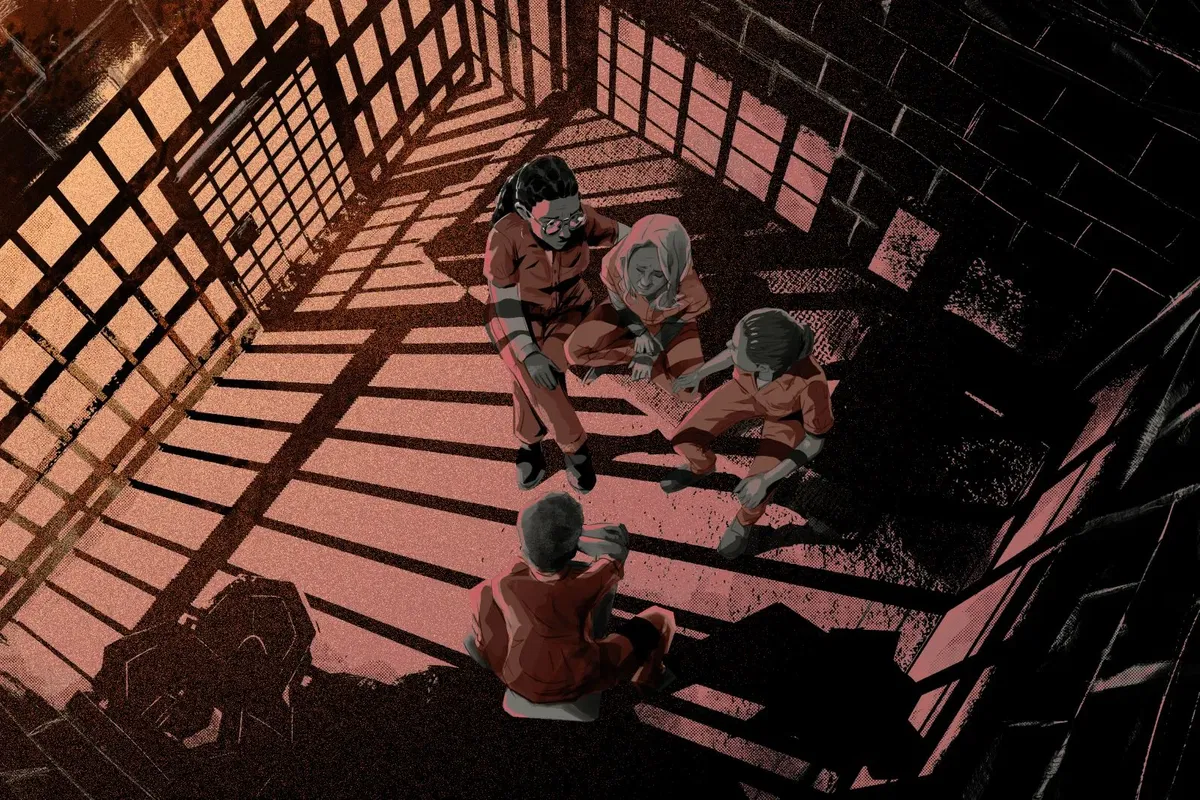
Women detained with Weiskircher flocked to console her. With a shaky voice, Weiskircher told the women how, years earlier when she was incarcerated at a state prison, a guard had kissed her in a janitor’s closet and rubbed her hand against his genitals. At a different Idaho prison, she told them, another guard had bribed her with a Pepsi to be the lookout while he had sex with her friend who was also incarcerated. And another guard, at a third Idaho prison, had instructed her to crawl under his desk and perform oral sex on him.
As Weiskircher caught her breath, one of the women by her side said that she had been sexually abused by prison staff, too. And so had another woman. And another. And another.
“They were like, ‘Screw IDOC. It happened to me too, dude,’” Weiskircher said, referring to the Idaho Department of Correction, the state agency in charge of prisons. “It just started a movement.”
Weiskircher’s complaints inspired other women throughout the jail to file their own, detailing stories of rape, assault, coercion and sexual harassment throughout the Idaho prison system.
Charee Nelson reported that a sergeant got her pregnant. Karyn Simpson said she was groped by her supervisor at an inmate work program, then written up and placed in segregated housing after reporting it. Ten years later, probation officer Saif Sabah Hasan Al Anbagi offered to help her in exchange for a video of Simpson and her wife having sex. Donya Tanner said she was ordered to take her clothes off in a prison bathroom by a guard who gawked at her for the next two minutes. Amy Bonning said she was raped by two employees in a potato factory bathroom where she and other female inmates worked.
 Andrea Weiskircher’s decision to file complaints inspired scores of women to step forward with their own allegations of abuse by Idaho prison staff. (Kyle Green/InvestigateWest)
Within weeks, seven victims had reported violations by Idaho Department of Correction staff or contractors.
And in the year that followed, those women and dozens more current and former female inmates have come forward to share similar experiences with InvestigateWest, the details of which are being reported here for the first time. In a state that incarcerates more women per capita than any other, never before have so many of them spoken out about the sexual abuse they faced behind bars. InvestigateWest interviewed more than two dozen of those women and identified another 10 victims through those accounts and documents obtained through public records requests.
They shared their experiences in phone calls and emails that are monitored by prison staff, knowing they had to be careful about what they said. Some women worried that they could be denied parole if they were written up for talking about what happened to them. And others who were already out on parole told reporters they could end up back in prison if their parole officer submitted a violation against them in retaliation for telling their story.
They did it anyway.
Justice denied
Sexual assault was a part of Weiskircher’s life long before she was imprisoned. Weiskircher was a product of rape, born in Nampa, 20 miles west of Boise, to a 14-year-old mother who used drugs and alcohol to cope, Weiskircher and her mother told InvestigateWest.
“She is only 14 years older than me, so she didn’t grow up as my parent,” Weiskircher said. “She grew up as my sister.”
Weiskircher was raped multiple times as a child and ran away from home often, she says. But she always came back to take care of her siblings. School offered an escape from her home life. Weiskircher was a good student. She made the honor roll and played the guitar and violin. But those influences couldn’t overcome her mother’s drug use and her own early struggle with addiction.
Weiskircher’s criminal history began in juvenile court where she was charged with truancy, running away, fighting at school, and possession of tobacco, marijuana, and Adderall. At 16, she married to get away from her parents, but her drug use continued. She began cashing fraudulent checks to pay for drugs and was arrested and charged with forgery when she was 19, resulting in the first of many prison sentences.
Weiskircher, now 43, has spent nearly 13 years in prison — and another six in jail — where, she says, she was harassed and coerced by guards to perform sexual favors in exchange for a cellphone that she used to call her family, or for sodas, candy and other prohibited items. But life outside was marginally better, she says.
“It’s like, you don’t have any reason to try,” Weiskircher says. “It’s not like I had a life that I was leaving behind. I didn’t have a home, I didn’t have a car, I didn’t have a job, I didn’t have any of the things that a normal person would say, ‘Oh, I’m sad I lost this.’ I didn’t have it. I didn’t have it to lose.”
 In a notebook Andrea Weiskircher kept in jail, on a page that began “God please forgive me when I want to give up,” she tracked everyone she contacted for help. (Kyle Green/InvestigateWest)
In 2021, while Weiskircher was incarcerated, she began providing information about drug dealers to Nampa police Detective Brian Rowe, who threatened to charge her with another felony if she didn’t comply, she says. The pair talked on the phone nearly every day, and Weiskircher even called one of the drug dealers from prison at Rowe’s request, she says. So when Rowe asked her to be an informant following her release in 2023, she quickly agreed. InvestigateWest confirmed Weiskircher’s role as an informant through a signed document, texts and emails, some containing screenshots of drug deals she made using social media messages.
“Based on Andrea’s assistance, investigators seized approximately 90 pounds of methamphetamine, 2.5 pounds of fentanyl, and several firearms,” Rowe wrote in a letter to the Idaho Parole Commission. “Investigators also made dozens of arrests based on these investigations.”
In April 2024, Weiskircher was arrested again and charged with grand theft after she was allegedly found with fraudulent checks, other people’s bank account information and stolen credit cards, according to police records. She was dismissed as an informant and sent to the Ada County Jail. It was there, surrounded by women like her, accused of nonviolent crimes and facing years in prison, that she began asking why the men who sexually abused her and others in prison hadn’t faced the same fate.
“I’m being charged … and I’m going to get five years in prison,” Weiskircher says. “And all of these illegal things are happening in the prison … and nobody cares. Where’s the justice in that?”
While she sat in jail awaiting news on her charge, Weiskircher’s frustration escalated. Nearly every day, she called her former Department of Correction case manager who shared her outrage. He had been fired by the department for policy violations less than a month after reporting an inmate-on-inmate sexual abuse violation and other safety concerns at one women’s facility. He encouraged her to speak up, too. And on June 9, 2024, she did.
For the next year, with her own criminal charge lingering, Weiskircher waged a campaign to hold accountable the prison workers who had sexually abused her and others.
Weiskircher helped other women file complaints against their abusers, but little came from the allegations. She studied Idaho Department of Correction policies and the federal standard that prohibits sexual assault and harassment by prison staff. She tried filing a federal lawsuit against the state prison system and assisted as two other women did the same, but none could afford the filing costs.
 Former Idaho Department of Correction Director Josh Tewalt at a Feb. 28, 2024 news conference in Kuna, Idaho. (AP Photo/Kyle Green)
In a notebook she kept in jail, on a page that began “God please forgive me when I want to give up,” Weiskircher tracked everyone she contacted for help. She wrote to the state Attorney General’s Office. She wrote to the governor and lieutenant governor. She wrote to judges and the Idaho Volunteer Lawyers Program and the Idaho American Civil Liberties Union. She wrote to the U.S. Department of Justice and an Idaho-based FBI agent. And she pleaded with the Department of Correction, writing to investigators, then-Director Josh Tewalt and the employee charged with ensuring prisons statewide comply with the federal Prison Rape Elimination Act.
But it wasn’t enough. The FBI agent interviewed Weiskircher, she said, but no sexual abuse charges were filed as a result. The Department of Correction’s Prison Rape Elimination Act coordinator responded with a notice that Weiskircher’s claims had been marked as “unfounded.” The governor, lieutenant governor and Department of Correction director never responded, Weiskircher said. And the rest wrote back to say they couldn’t help.
Weiskircher filed a victim protection order against the department and helped two other women file one, too. Maybe it would prevent them from being sent back to the facilities where they were abused, she thought. But protection orders can’t be filed against an agency, an Ada County judge told them as he dismissed their requests. Weiskircher implored the judge, explaining that none of their accusations had been criminally investigated.
At the end of the hearing, Judge Andrew Ellis promised to contact the county prosecutor, Jan Bennetts, saying he “would ask that she look into it and not just sweep it under the rug.”
 Charee Nelson at Christmas with her family’s cat in 2016. Nelson is one of seven women who filed complaints of sexual abuse against Idaho prison workers in the summer of 2024. InvestigateWest found that none of their complaints were properly investigated. (Photo courtesy of Nelson’s family)
The next day, the Idaho State Police opened an investigation into the three women’s claims. But detectives ignored leads, disregarded evidence and questioned only one of seven men accused of abuse before closing all three cases due to a lack of evidence. None of the men was charged with a crime. The detectives declined interview requests through an agency spokesperson.
Weiskircher described the abuse she experienced from four correction guards and a commissary employee to the detectives. None of the men she accused were questioned, according to the detectives’ notes. Neither was a guard who Weiskircher told police witnessed one of the abuses.
She thought she gave detectives the evidence they needed — including screenshots of sexual content sent to her by a guard while she was on parole. None of it was included in the investigative file provided to InvestigateWest by state police.
“They didn’t give a shit about anything I said, and I felt like they did just a huge injustice,” Weiskircher said. “They treated us like the plague.”
In her fight to be heard, Weiskircher gave InvestigateWest all of the evidence she had — text messages, phone logs, photos, Facebook messages and emails from the men she had accused. In one Facebook message, Joseph Mena, who delivered commissary items to Boise prisons where Weiskircher was housed, asked, “Who did you tell that we kissed in the back of the truck?” When reached by phone, Mena denied the allegation. Another message came from Tyson Aubrey, a guard who Weiskircher said kissed her in a closet and rubbed her hand on his genitals. After confirming that she was out of prison and under the supervision of a parole officer, Aubrey sent her photos of his genitalia and the message, “Was thinking about you today….”
Aubrey, who is now a correction officer in Oregon, told InvestigateWest he never kissed or touched Weiskircher. He did meet up with her once after she was released from prison and had a sexual relationship over calls and texts, Aubrey said. But he doesn’t remember sending the Facebook messages, which he confirmed came from his account. Jordan Saldate, the guard Weiskircher accused of requesting oral sex, sent messages, too, when he was no longer working for the Department of Correction. In one, he wrote, “You going to delete (our) conversation, lol.” Many included overtly sexual photos and memes. Saldate denied the allegations that he asked for and received oral sex from Weiskircher. But he told InvestigateWest that he heard many rumors of sexual abuse by guards while working at Pocatello women’s prison and that he believed Weiskircher had been a victim.
 Outside Boise, South Idaho Correctional Institution is a 700-bed men’s and women’s prison. Idaho incarcerates women at a rate higher than any other state, at three times the national average. (Whitney Bryen/InvestigateWest)
Some of the messages provided to InvestigateWest were emailed to police detectives and Department of Correction administrators. Yet Weiskircher’s complaints were marked as “investigated and determined not to have occurred.”
And Weiskircher insisted to InvestigateWest reporters, and anyone else who would listen, that she was just one of many women with a story like this.
A movement grows
Over the next year, InvestigateWest reporters sent messages to women with similar stories, many still incarcerated at the facilities where they were abused.
Reporters interviewed all seven women who filed reports from jail last year. They provided the names of other victims. And those victims knew of more. Altogether, reporters talked to more than three dozen women who either experienced or witnessed sexual abuse by Idaho prison workers. Many expressed guilt for their role in the abuse, sometimes giving into sexual requests for fear of what would happen if they said no. Others said they should have done more to stop it or told someone what happened. Most said it probably wouldn’t have made a difference even if they did report it.
Some phone and video calls between the women and reporters were abruptly disconnected by the jail with no explanation. An email to a reporter describing the sexual assaults one inmate experienced was blocked by the prison. It was released to the reporter nearly a week later — the same day one of the accused guards was fired, Department of Correction records show.
 Andrea Weiskircher goes over her case file with her lawyer, Craig Harrison of Ferguson Durham PLLC. (Kyle Green/InvestigateWest)
To verify the women’s claims, InvestigateWest submitted more than 100 requests for records from the department, law enforcement and Idaho courts. The news organization spent more than $3,000 on documents, audio recordings and calls to inmates, and worked with attorneys to obtain other records that the agencies heavily redacted, couldn’t find or refused to provide.
InvestigateWest compared names provided by the women with Department of Correction staff rosters and employment records. Reporters pored through sexual abuse reports provided by the department. Other inmates who were housed in the same unit, or even in the same cell, as some of the victims independently corroborated their stories. Reporters interviewed former department employees, including a warden and special investigator, about how reports of abuse are supposed to be handled and how often the process fails. And reporters reviewed hundreds of pages of police investigative files and listened to hours of audio of detectives interviewing victims, witnesses and suspects to determine what efforts were made to find evidence of alleged abuse.
All the while, reporters fielded constant messages and calls from incarcerated women who wanted their story told, like Weiskircher.
‘I won’t stop’
Five of the seven women who reported their abuse from jail during summer 2024 are back behind bars. But Weiskircher, who was released on parole on June 30 and admitted to drug court for the first time, continues to seek justice.
Weiskircher started working for a Boise civil rights attorney who has agreed to represent her in a lawsuit against the Department of Correction and possibly other state agencies. She’s studying to be a paralegal and assisting with research on other cases against the department. She spends six hours a day attending required counseling and addiction treatment programs.
A no-contact order placed on her by the court prohibits Weiskircher from talking to any men — except in a professional setting or with two of her sons. And her parole restrictions ban communication with other felons, which means Weiskircher can’t talk to the other women who filed sexual abuse claims. But those hurdles aren’t stopping her fight for accountability.
 Andrea Weiskircher on her way to a drug court hearing at the Ada County Courthouse. (Kyle Green/InvestigateWest)
“It’s not in me to give up,” Weiskircher said. “It was wrong, and I was not going to let a million no’s stop me. When I was told ‘no’ as a drug addict, I found another way. It’s ingrained in me. You’re not going to make me give up. I’m not going to shut up.”
After reviewing public records obtained by InvestigateWest, Weiskircher filed a complaint with the state police against the detectives who investigated her allegations. Last month, Weiskircher and her attorney met with internal affairs officers who told her they were looking into how her case was handled.
She called that a “small victory,” saying the bigger accomplishment is having her story broadcast to the public, which she hopes will put pressure on the Department of Correction, law enforcement and prosecutors to change their approach to women like her.
“I don’t know if I’ll ever feel like it’s enough until they stop (the abuse) or fix it,” Weiskircher said. “I won’t stop. They will have to answer at some point to somebody. That is an accomplishment to me.”
This reporting was supported by the Fund for Investigative Journalism and the Pulitzer Center.
Click here to follow the original article.