No injuries reported in Boone County house fire

Ryan Shiner

COLUMBIA, Mo. (KMIZ)

No injuries were reported after a house caught fire Monday evening in the 8400 block of Zumwalt Road in Boone County.

The Southern Boone County Fire Protection District wrote in a social media post that crews were called at 7:25 p.m. and saw heavy smoke coming from the home when they arrived.

“Firefighters quickly went to work to bring the fire under control,” the post reads. “Thankfully, everyone made it out safely, and no injuries were reported. Firefighters remained on scene to ensure all hot spots were fully extinguished.”

Click here to follow the original article.

Man accused of killing his girlfriend near Senator Wash back in court

Karina Bazarte

IMPERIAL COUNTY, Calif. (KYMA) – The man accused of killing his girlfriend near Senator Wash in Imperial County was back in court Tuesday for his preliminary setting.

56-year-old James Hill, who was extradited to Imperial County last month, is charged in the murder of 34-year-old September Lee Weisinger.

During Tuesday’s court appearance, Hill got a new attorney from San Diego after his previous attorney no longer represented him due to a conflict of interest in another case.

KYMA tried to speak with the new attorney, but he declined to comment. In addition, Weisinger’s mother was in attendance.

Hill will be back in court on December 18 for another preliminary setting.

Click here to follow the original article.

Fall cooldown: U.S. gas price average closes in on $3 a gallon; Oregon poised to drop below $4, AAA says

KTVZ

PORTLAND, Ore. (KTVZ) – The national average for a gallon of regular gas could soon fall to the $3 mark for the first time since May 2021. The Oregon average is close to dipping below $4 per gallon, though Bend’s has fallen well below that, AAA Oregon/Idaho reported Tuesday.

Here’s AAA’s full weekly report:

Oregon’s gas prices surged above $4 in early September, when the Olympic Pipeline was out of service.

Major factors behind falling gas prices include crude oil prices below $60 per barrel, lower demand for gas in the U.S., cheaper winter-blend fuel, and continued production increases in crude oil by OPEC+.

For the week, the national average for regular slips three cents to $3.05 a gallon. The Oregon average loses seven cents to $4.01 a gallon, while Bend’s average drops more than 11 cents to $3.83.

“Gas prices are cooling off like fall weather. Declines have been slow and steady, and drivers should continue to get relief at the pumps in the coming weeks,” says Marie Dodds, public affairs director for AAA Oregon/Idaho. 

“This week, a gas station in Evans, Colorado sold gas at $1.999 per gallon. This is the first time in four years for a retail price below $2 a gallon for regular gas. Other stations in parts of the U.S. may follow suit,” Dodds adds.

The Oregon average for regular gas began 2025 at $3.45 a gallon and is currently at $4.01. The highest price of the year so far is $4.297 on September 13 and 14. The lowest price of the year so far is just under $3.45 a gallon on January 2.  

The national average began 2025 at $3.06 a gallon and is currently at $3.05. The highest price of the year so far is $3.268 on April 4. The lowest price of the year so far is $3.036 on October 19 and 20.

This week 16 Oregon counties have averages at or above $4, compared to 23 a week ago:

Clackamas $4.16

Clatsop $4.04

Columbia $4.15

Curry $4.08

Harney $4.18

Jackson $4.00

Josephine $4.03

Lake $4.10

Morrow $4.

Multnomah $4.25

Sherman $4.07

Tillamook $4.11

Wallowa $4.21

Wasco $4.09

Washington $4.20

Yamhill $4.05

Demand for gasoline in the U.S. decreased from 8.92 million b/d to 8.46 million for the week ending October 10. This compares to 8.62 million b/d a year ago. Total domestic gasoline supply decreased from 219.1 million barrels to 218.8 million. Gasoline production decreased last week, averaging 9.4 million barrels per day compared to 9.8 million barrels per day the previous week.

Gas prices usually drop in the fall, due to the switch from summer-blend to winter-blend fuel, which costs less to produce. The switch starts in September. Many areas, including Oregon, can sell winter-blend fuel starting September 15. However, Northern and Southern California require summer-blend fuel through October 31. Prices usually decline to their lowest levels of the year in late fall and early winter before increasing again in the late winter and early spring.

Gas prices typically rise starting in mid-to-late winter and early spring as refineries undergo maintenance ahead of the switch to summer-blend fuel, which is more expensive to produce and less likely to evaporate in warmer temperatures.

The switch occurs first in California, which is why pump prices on the West Coast often rise before other parts of the country. The East Coast is the last major market to switch to summer-blend fuel. Most areas have a May 1 compliance date for refiners and terminals, while most gas stations have a June 1 deadline to switch to selling summer-blend until June 1.

Switch-over dates are earlier in California, with some areas in the state requiring summer-blend fuel by April 1. Some refineries will begin maintenance and the switchover in February.

The U.S. price of crude oil (West Texas Intermediate) plunged below $60 per barrel on October 10 and has remained below $60 since then. It’s the first time WTI fell below $60 since May 7, 2025. Easing tensions in the Middle East between Israel and Hamas have contributed to the decline, as well as increased oil production by OPEC+ and concerns of a cooling global economic climate.

WTI has been mostly in the low-$60s to mid-$70s since September 2024. Crude prices spiked to the mid-$70s in mid-June in response to the strikes between Israel and Iran, and then the U.S. strike on Iran’s nuclear facilities, but then prices fell back into the $60s on the belief that the conflict would not have a major impact on global oil supplies. Crude prices fell in early April as markets reacted to President Trumps tariffs and the impact on U.S. and global markets. Additional downward pressure on crude prices came after the decision by OPEC+ to increase production. The lowest closing price since September was $57.13 on May 5, which was the lowest closing price since February 2021. The recent high price for crude was $80.04 per barrel on January 15, which was the highest price since last August 2024.

Crude oil is trading around $58 today compared to $59 a week ago and $71 a year ago. In 2024, West Texas Intermediate ranged between $66 and $87 per barrel. In 2023, WTI ranged between $63 and $95 per barrel. WTI reached recent highs of $123.70 on March 8, 2022, shortly after the Russian invasion of Ukraine, and $122.11 per barrel on June 8, 2022. The all-time high for WTI crude oil is $147.27 in July 2008.

Crude prices are impacted by economic news, as well as geopolitical events around the world including the current economic uncertainty, unrest in the Middle East, the war between Israel and Hamas, and the war between Russia and Ukraine. Russia is a top global oil producer, behind the U.S. and Saudi Arabia.

Crude prices have been volatile after the attack on Israel by Hamas in October 2023. While Israel and the Palestinian territory are not oil producers, there were concerns that the conflict could spread in the Middle East, which could potentially impact crude production in other oil-producing nations in the region. In addition, production cuts by OPEC+ in previous years tightened global crude oil supplies, which continued to impact prices.

But this year, the cartel has boosted production, starting by 411,000 barrels per day in May, June, and July, 548,000 barrels per day in August, 547,000 barrels per day in September, and 137,000 barrels per day in October.  

Crude oil is the main ingredient in gasoline and diesel, so pump prices are impacted by crude prices on the global markets. On average, about 51% of what we pay for in a gallon of gasoline is for the price of crude oil, 18% is refining, 16% distribution and marketing, and 16% are taxes, according to the U.S. Energy Information Administration.

Meanwhile, crude oil production in the U.S. remains at record highs. The U.S. Energy Information Administration (EIA) reports that crude production in his country rose from 13.629 million barrels per day  to 13.636 for the week ending October 10. This beats the previous record high of 13.631 million barrels per day for the week of December 6. Production has been at 13.5 million barrels per day many times since October 2024. The U.S. has been the top producer of crude oil in the world since 2018 and has been increasing its oil production since about 2009.

Quick stats

Oregon is one of 46 states with lower prices now than a week ago. New Mexico (-11 cents) has the largest week-over-week decline in the nation. Ohio (+28 cents) has the biggest week-over-week increase in the nation, due to a fire last week at the BP refinery in Whiting, Indiana which is the largest in the Midwest.

California ($4.62) is the state with the most expensive gas in the nation for the fifth week in a row. Washington took over the top spot for a week in September when the Olympic Pipeline was out of operation. This week, Hawaii ($4.48) is second, Washington ($4.40) is third, and Oregon ($4.01) is fourth. These are the four states with averages at or above $4 a gallon.

This week, 14 states and the District of Columbia have averages in the $3 range. There are 32 states with an average in the $2 range this week.

The cheapest gas in the nation is in Oklahoma ($2.56) and Texas ($2.60). No state has had an average below $2 a gallon since January 7, 2021, when Mississippi and Texas were below that threshold. At the time, the COVID-19 pandemic drove significant declines in crude oil and gasoline demand in the U.S. and around the world.

As noted above, one gas station in Evans, Colorado sold gas this week at $1.999 per gallon.

The difference between the most expensive and least expensive states is $2.07 this week, compared to $2.09 a week ago.

Oregon is one of 49 states and the District of Columbia with lower prices now than a month ago. The national average is 13 cents less and the Oregon average is 23 cents less than a month ago. This is the seventh-largest month-over-month decline for a state in the nation. Iowa (-28 cents) has the largest month-over-month drop in the nation. The average in Hawaii is flat.

Oregon is one of six states with higher prices now than a year ago. The national average is 13 cents less, while the Oregon average is 35 cents more. Oregon has the largest year-over-year increase in the nation. Washington (+33 cents) has the second-largest increase. Michigan (-34 cents) has the largest yearly drop.

West Coast

The West Coast region continues to have the most expensive pump prices in the nation with all seven states in the top 10. It’s typical for the West Coast to have six or seven states in the top 10 as this region tends to consistently have fairly tight supplies, consuming about as much gasoline as is produced. In addition, this region is located relatively far from parts of the country where oil drilling, production and refining occurs, so transportation costs are higher. And environmental programs in this region add to the cost of production, storage and distribution.

Rank
Region
Price on 10/21/2025

1
California
$4.62

2
Hawaii
$4.48

3
Washington
$4.40

4
Oregon
$4.01

5
Alaska
$3.86

6
Nevada
$3.83

7
Idaho
$3.43

8
Arizona
$3.39

9
Utah
$3.33

10
Pennsylvania
$3.23

As mentioned above, California is the state with the most expensive gas in the nation for the fifth week in a row. Hawaii, Washington, Oregon, Alaska, and Nevada round out the top six. Arizona is eighth. Oregon is fourth most expensive for the 22nd week in a row.

All seven West Coast states have week-over-week decreases: Arizona (-8 cents), Oregon (-7 cents), Washington (-7 cents), Nevada (-4 cents), California (-3 cents), Alaska (-2 cents) and Hawaii (-3/10ths of a cent).

The refinery utilization rate on the West Coast dropped from 83.6% to 77.3% for the week ending October 10. This rate has ranged between about 72% to 93% in the last year. The latest national refinery utilization rate fell from 92.4% to 85.7%.

The refinery utilization rate measures how much crude oil refineries are processing as a percentage of their maximum capacity. A low or declining rate can put upward pressure on pump prices, while a high or rising rate can put downward pressure on pump prices.

According to EIA’s latest weekly report, total gas stocks in the region decreased from 29.64 million bbl. to 29.32 million bbl. An increase in gasoline stocks can put downward pressure on pump prices, while a decrease in gasoline stocks can put upward pressure on pump prices.

Oil market dynamics

Crude oil prices remain near five-month lows. WTI crude fell below $60 per barrel on Oct. 10 and has remained below that price since then. A major driver of the lower crude oil prices is easing tensions in the Middle East, including troop withdrawals from Gaza and the release of hostages. This has reduced the risk premium that was priced into the markets after Hamas attacked Israel in October 2023. Other factors putting downward pressure on crude oil prices include weakening global demand for oil, increased production by OPEC+, and rising U.S. inventories.

Meanwhile, the EIA reports that crude oil inventories increased by 3.5 million barrels from the previous week. At 423.8 million barrels, U.S. crude oil inventories are about 4% below the five-year average for this time of year. 

At the close of Friday’s formal trading session, WTI ticked up eight cents to close at $57.54. At the close of Monday’s formal trading session, WTI ticked down two cents to settle at $57.52. Today crude is trading around $58 compared to $59 a week ago. Crude prices are about $12 less than a year ago. ($70.56 on October 21, 2024)

Drivers can find current gas prices along their route with the free AAA Mobile app for iPhone, iPad and Android. The app can also be used to map a route, find discounts, book a hotel and access AAA roadside assistance. Learn more at AAA.com/mobile.
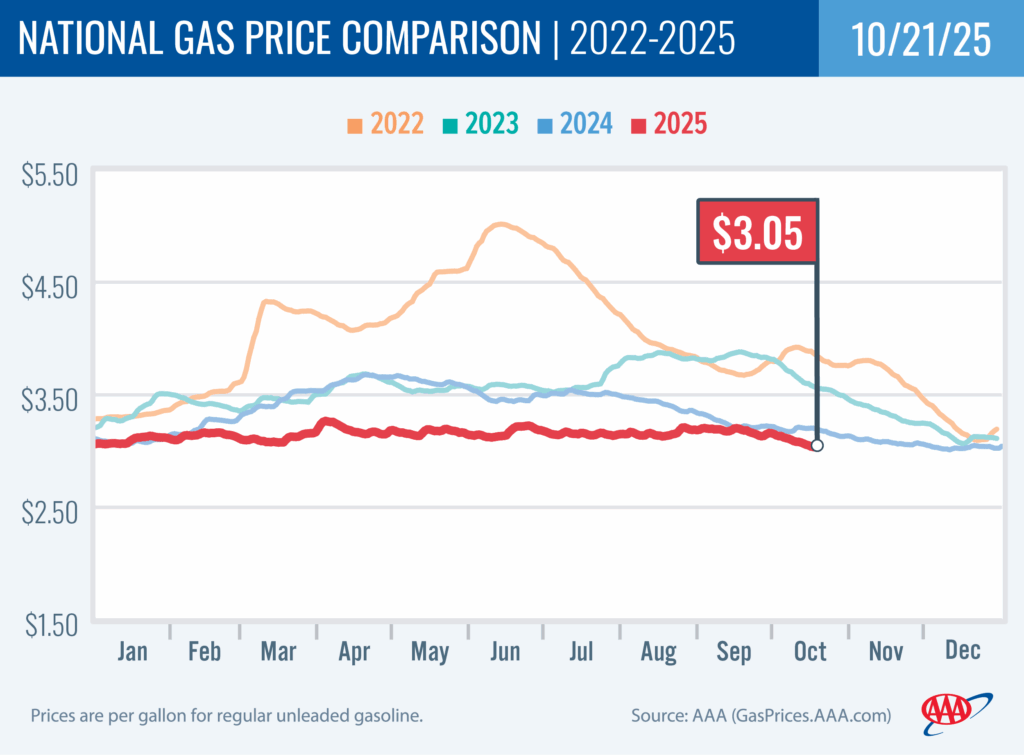
National Gas Price Comparison 10-21-25

Diesel

For the week, the national average falls four cents to $3.62 a gallon. The record high is $5.816 set on June 19, 2022. The Oregon average loses five cents to $4.40. The record high is $6.47 set on July 3, 2022. A year ago the national average for diesel was $3.59 and the Oregon average was $3.93.

Find current fuel prices at GasPrices.AAA.com.

Click here to follow the original article.

 SJSD invited public to speak on the future of school boundaries and facilities  

Praji Ghosh

ST. JOSEPH, Mo. (News-Press NOW) — Community members were invited to give input and be front and center as the St. Joseph School District reviews topics discussed at an Oct. 13 public hearing.

SJSD held a Town Hall meeting at 5:30 p.m. on Tuesday, Oct. 21, at Lafayette High School.  

District leaders went over what was discussed in the Oct. 13 public hearing — including an impact analysis that followed board policy.  

Leaders also revisited topics from the board’s recent work session, like a proposal to move Edison Elementary School to the north side as part of SJSD’s Plan 2. 

Plan 2 pointed to a Lafayette and Central High School model.

Another major point of discussion was boundary adjustments — giving students a chance to attend schools closer to home, ideally within a mile of where they live. 

Feeder maps Download

Plan 2 Feeder System and numbersDownload

SJSD also discussed Plan 7, which supports a Central High School and Benton/Hyde model, and Plan E, which keeps all three high schools open and proposes the “least amount of cost and disruption to implement, while achieving necessary cuts.

Plan 7 feeder systemDownload

Plan E feeder systemDownload

As with previous hearings, community members had the opportunity to speak for up to three minutes after providing their name and address. 

The focus centered on facilities and the district’s ongoing reorganization plans. 

Lafayette High School teacher Jeff Leake, who spoke at the hearing, said this could be one of the biggest decisions the district has ever faced.  

“The two plans that they were debating were just two schools and they had a lot of disruption with staff movement and I wanted to investigate a different path which is plan E, keeping three schools,” Leake said.  

He said he’s a strong believer in smaller schools and that keeping a sense of community is what matters most to him.  

He said this plan would benefit students the most and cause the least amount of disruption, even though the other options have some positives, they also come with more challenges.  

Another community member — a parent with two high school graduates and a current Lafayette sophomore — spoke in support of Plan B.  

She said the best way to restore the district’s financial health is by choosing Option Two, which would affect about 427 staff members and 3,878 students — saving roughly $31.6 million in staffing costs. In comparison, the alternative plan would impact 535 staff and 4,257 students, saving only $2.3 million.  

“The financial benefits of option two are higher reserve recovery by 19.89% by 2030 versus 16% lower disruption, 118 fewer staff and 379 fewer students impacted,” community member said.    

Another Lafayette student said she’s worried about the impact these changes could have on students’ mental health.  

She said many students feel overwhelmed by these decisions because they directly impact their lives, especially as seniors looking ahead to new opportunities.  

“I do feel like Lafayette is a better decision because its more cost effective since you can hold way more people in Lafayette Versus Benton and Hyde and you have to change Hyde from an elementary school to fit into a high school,” Erica Spiker said.  

Spiker said she hopes the board makes a decision that leaves everyone as satisfied as possible.  

The board is set to make its final decision at the next meeting on Monday, Oct. 27 — that’s when the community will find out which plan they choose.  

Click here to follow the original article.

Desert Regional S.W.A.T. brings departments together, works specialized cases

Kendall Flynn

PALM SPRINGS, Calif. (KESQ) – Desert Regional SWAT, also known as the Special Weapons and Tactics Team, is a group comprised of SWAT officers from the Indio, Palm Springs and Cathedral City Police Departments. 

“You never know what happens,” Sergeant Jason Lamb with PSPD said. “It’s good to have a team on standby that can respond to a, quickly escalating threat.” 

Lamb is on the Desert Regional S.W.A.T. team in addition to his usual patrol duties and said he’s enjoyed the camaraderie of the collaborative group. He said they have a joint mission to de-escalate situations and save lives no matter who is involved.

“Our end game is to preserve life,” Lamb said. “So having a S.W.A.T. team where you have the equipment and the people available to take more times in a call, preserve life.”

The team’s focus is to respond and resolve various highly volatile incidents such as hostage situations, active shooter situations, dignitary/site protection and for de-escalating situation. The three departments said working with each other is essential to completing these missions effectively.

S.W.A.T. Commander Erik Longoria, also a lieutenant with the Indio Police Department, said the three stations training together twice a month with nearly 35 personnel involved.

Desert Regional S.W.A.T. was on scene in Indio on Monday for a standoff after a vandalism situation. Palm Springs Police Department said Monday’s situation was a example of the S.W.A.T. team working to de-escalate a situation.

Longoria said the suspect assaulted a detective before the tactical team arrived, making their response time necessary to prevent further assaults. The collaborative team allows departments to use each others resources, including armored cars and protective equipment, which was essential in a case like Monday.

While officers are prepared for any crime, they also ensure they are at large events. Officers said the current political climate also impacts their presence for rallies and parades, as they need to train for specific situations.

“In the event somebody tries to, with everything going on across the nation, tries to attack one of these events, we have specially trained personnel to intervene between, and keep the community safe,” Longoria said.

Stay with News Channel 3 to hear the work Desert Regional SWAT does and why it’s necessary for the three departments to come together.

Click here to follow the original article.

Police Station Project Set Back by Contaminated Dirt Removal

John Palminteri

SANTA BARBARA, Calif. (KEYT) – The new Santa Barbara Police Station and parking project has been set back due to the discovery of contaminated soil.

It was recently removed, but there is a project delay. The city says the planned opening in Spring of 2027 will instead likely be pushed to September 2027.

The site is on the corner of Cota St. and Santa Barbara St. It was known for years as the site of the weekly Farmers Market and also a parking lot used by downtown workers. Before that it was an elementary school.

The work crews found contaminated soil and the footprint was determined with 60 samples.

The dirt has been taken to special sites for this kind of waste in Kettleman City and San Luis Obispo County.

In a presentation to the Santa Barbara City Finance Committee, Construction Manager Derek Troya said 40 percent of the contingency fund for the project went to this cleanup.

The city is preparing to backfill with more money from the voter approved Measure C funds which are being used for the overall project.

The Latest Breaking News, Weather Alerts, Sports and More Anytime On Our Mobile Apps. Keep Up With the Latest Articles by Signing Up for the News Channel 3-12 Newsletter.

Click here to follow the original article.

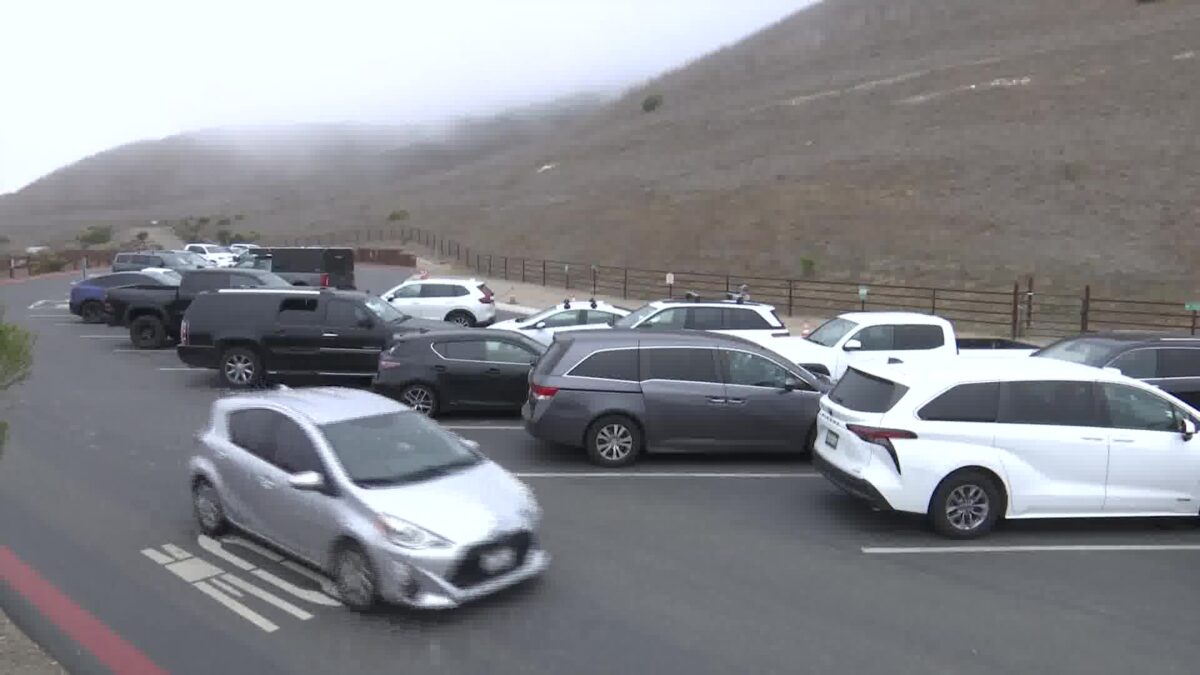
Visitors adjusting to new parking fee at popular Pismo Beach hiking trail

Dave Alley

PISMO BEACH, Calif. (KEYT) – A much-discussed new parking fee at the popular Pismo Preserve hiking trail is now in effort.

Visitors to the 888-acre coastal trail located along Highway 101 are now required to pay a daily fee for parking.

Parking on site will now cost daily visitors a fee of $5, while an annual pass is also available for $50.

Last Friday, the The Land Conservancy of San Luis Obispo County, which owns the property, started the new parking fee program.

According to the non-profit organization, the new policy has gone smoothly over the first few days and reaction from visitors so far has mostly been positive.

For many of the visitors on Tuesday, they said they understand the need for the fee and agree there is a need for the new policy.

“I think parking fee is great,” said Bob Armstrong of Nipomo. “I think it’s, long overdue. I think people need to support the Land Conservancy. “I think paying for these kinds of things to make lives people’s lives better. I think you’d be hard pressed to find a place where you can walk and hike or mountain bike ride, where you can see the ocean on your left, and you can see the mountains behind you on your right, and you’re on top of the hill. It’s a fantastic place.”

The Land Conservancy also acknowledged the new fee has been a hot topic since it was first announced two weeks ago, but said the money raised will allow the organization to help cover operational costs.

The organization pointed out does not receive any tax revenue for either local, state or federal agencies to support the Pismo Preserve, which costs $200,000 to operate annually.

Yearly donations to the Pismo Preserve add up to $50,000, so the Land Conservancy is hoping the new parking fee will cover the remaining $150,000 needed over the overall costs.

So far, the Land Conservancy reports it has sold 300 annual passes for total of $15,000.

“I come here two to three times a week,” said Howard Ingle of Grover Beach. “So $50 for a year doesn’t seem like anything. The $50 pass seems like a bargain.”

Visitors are able to purchase parking passes through a mobile app or with cash or credit card at a pay station located by the restrooms and kiosk.

“It was a really easy to,” said Kirsten Hatfield, visiting from Yucca Valley. “You scan the QR and you’re good to go. Super easy. It took us less than five minutes to get it all done.” 

The Pismo Preserve opened to the public in 2020 and provides hikers, mountain bikers and equestrian riders 11 miles of trails that travel through oak woodland and coastal ridgeways, which offer some of the most picturesque views in the entire state.

“I really like the views of the ocean,” said Ingle. “I like to get to the very top up there because that’s a good vertical challenge for me.  On certain times of year, you’ll see whales from up there. You can check out the surf at the Pismo Pier. There’s just some really cool things to look over at Shell Beach, all the way down to Avila and see all those views.”

Depending on weather conditions, visitors are able to look out to the Pacific Ocean and view panoramic scenery from the Irish Hills to the north to the Point Sal to the south.

For more information, click here to visit the Pismo Preserve webpage on the official website for The Land Conservancy of San Luis Obispo County.

The Latest Breaking News, Weather Alerts, Sports and More Anytime On Our Mobile Apps. Keep Up With the Latest Articles by Signing Up for the News Channel 3-12 Newsletter.

Click here to follow the original article.

Melodee’s Paternal Grandmother Announces Candlelight Vigil

Jarrod Zinn

SANTA MARIA / LOMPOC, Calif. (KEYT) – We are learning more about the extended family of the 9-year-old girl from Vandenberg Village who was reported missing a week ago today.

Law enforcement first made contact with Melodee’s paternal grandmother last Thursday to inform her the 9-year-old girl was missing, when her grandmother hadn’t seen her in years.

When she was six months old, Melodee’s father died in a motorcycle accident.

His name was Rolando Rubiell “Pinoy” Meza. 

His mother, Melodee’s paternal grandmother Lilly Denes, is a sales executive for KEYT and Telemundo.

“He was a really good dad, very good son,” says Lilly. “We used to argue a little bit like every mother, but he was a very good son. Loved his daughter.”

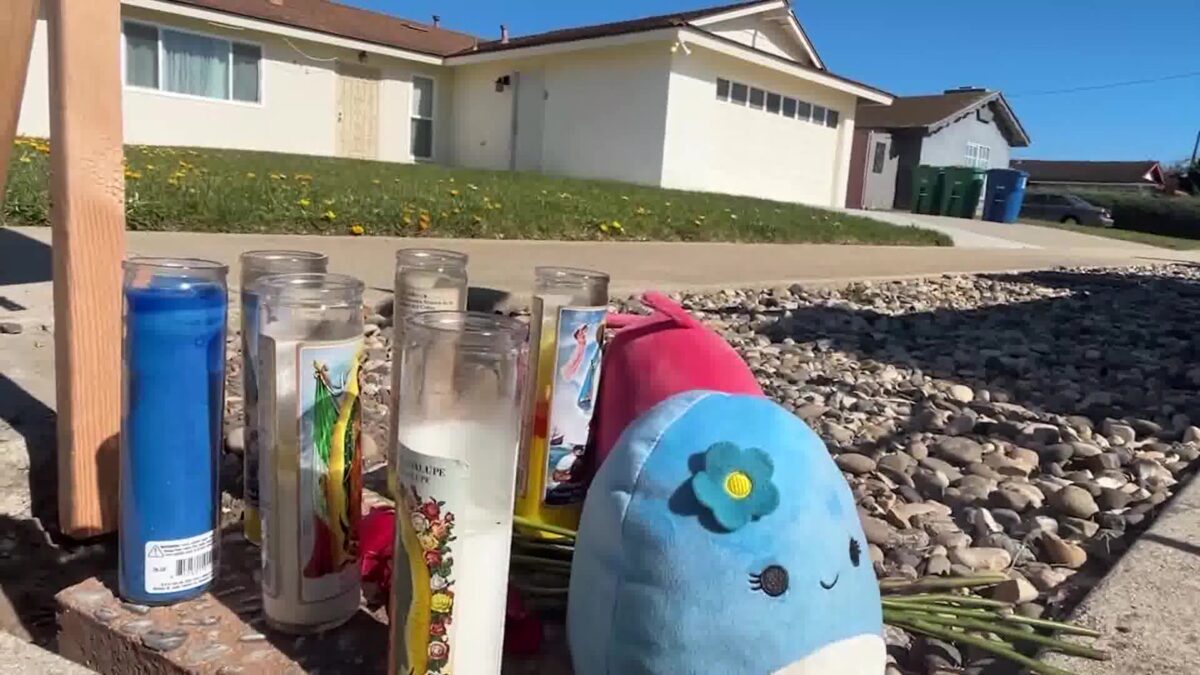
With a candlelight vigil this Friday, Melodee’s family on her father Rubiell’s side seeks to keep attention on the case until Melodee is found.

“I think everybody’s looking and they’ll find her,” she says. “I just hope in the Lord that they find her soon, because this is a lot of a lot of pain for us.”

She also has requested that from now on her missing granddaughter be referred to as Melodee Buzzard-Meza.

(UPDATED 10/22) She clarifies to us that some time after Rubiell died, Melodee had been placed in Lilly’s custody, but that Ashlee took Melodee from the school she had been attending at the time and left Santa Barbara county. Lilly hasn’t seen her granddaughter since.

“I didn’t even know she lived there,” she says. “She’s been hiding from us, especially from me, because I’m the grandma and they gave it to us. So she’s always been scared that I’m going to go and just grab her and take her and get a lawyer and fight with her. I don’t want to fight.”

She is welcoming the whole community to Friday’s vigil.

“We’re going to do a vigil, candle light for prayers for my baby to come home. Please, if you’re watching this come and join us. I really appreciate it, my family will, we’re all going to be there and we have family coming from out of town for to pray for our baby. So please join us if you can. Thank you.”

Santa Barbara County Sheriffs and the FBI continue to ask the public’s help in locating Melodee, who may have been driven by her mother Ashlee as far away as Nebraska.

If you have seen Melodee or have any information, you can call he Sheriff’s Criminal Investigations Division (805) 681-4150. Those wishing to remain anonymous can provide information through the tip line at (805) 681-4171 or online at https://www.sbsheriff.org/home/anonymous-tip/.

The Latest Breaking News, Weather Alerts, Sports and More Anytime On OurMobile Apps. Keep Up With The Latest Articles by Signing Up for theNews Channel 3-12 Newsletter.

Click here to follow the original article.

Local gun store explains impacts of the ‘Glock ban’

Gavin Nguyen

THOUSAND PALMS, Calif. (KESQ) – One of the most popular pistol brands in the world will be much harder to purchase for California gun owners next year.

Assembly Bill 1127, signed into law by Governor Gavin Newsom on October 10th, will ban the sale of firearms that include a cruciform trigger bar. It’s a key component within the trigger mechanism in Glock handguns.

According to the bill, licensed firearms dealers would not be able to sell any handgun that uses this component after July 1st, 2026. Legislators argued guns that use the cruciform trigger bar can easily be illegally modified to turn it into a fully-automatic firearm – in which multiple rounds can be fired with a single pull of the trigger.

Golden State Armory, a gun store in Thousand Palms, said sales of Glocks will still be possible between people who already own them. But for stores like Golden State Armory, new sales will be blocked by the law.

Kent Miller, the owner, said the bill will likely result in sales ahead of the ban, but worries that taking away a hugely popular firearm from his inventory will hurt his business in the long run.

“Come next year as a small business… you tell a grocery store you can’t sell milk and eggs anymore, how well are they going to do?” asked Miller.

Several gun rights groups, including the National Rifle Association and Firearms Policy Coalition, are challenging the state’s latest gun control law in court. The groups argue that AB 1127 violates the Second and Fourteenth Amendments by outlawing one of the most popular and commonly owned handgun platforms in America.

John Commerford, Executive Director of the NRA Institute for Legislative Action, called the ban “an outrageous attempt to suppress the constitutional rights of California gun owners.“ 

Commerford said, “Once again, they are attempting to violate landmark Supreme Court decisions and disarm law-abiding citizens by banning some of the most commonly owned handguns in America. This flagrant violation of rights cannot, and will not, go unchecked.”

Miller also said he thinks the move will do little to stop violent crime.

Coming up tonight on KESQ, you’ll hear from experts on the ban. Stay with us for the latest.

Click here to follow the original article.

As shutdown hits 3-week mark, here’s a new look at the number of Oregon, local federal workers and their pay

KTVZ

BEND, Ore. (KTVZ) — With unemployment reports paused due to the 3-week-old federal government shutdown, Oregon Employment Department Regional Economist Nicole Ramos instead provided a look Tuesday at how many federal workers there are in the state and in Central Oregon, and their pay.

Here’s that report:

The U.S. Bureau of Labor Statistics suspended the monthly employment and unemployment reports for the nation, states, and metropolitan areas as of Oct. 1, 2025. Oregon’s monthly jobs and unemployment rate for September are unavailable at this time. In the meantime, we will highlight data that we continue to produce and share when it becomes available. One such topic is federal government employment. 

Statewide and Regional Federal Government Jobs  

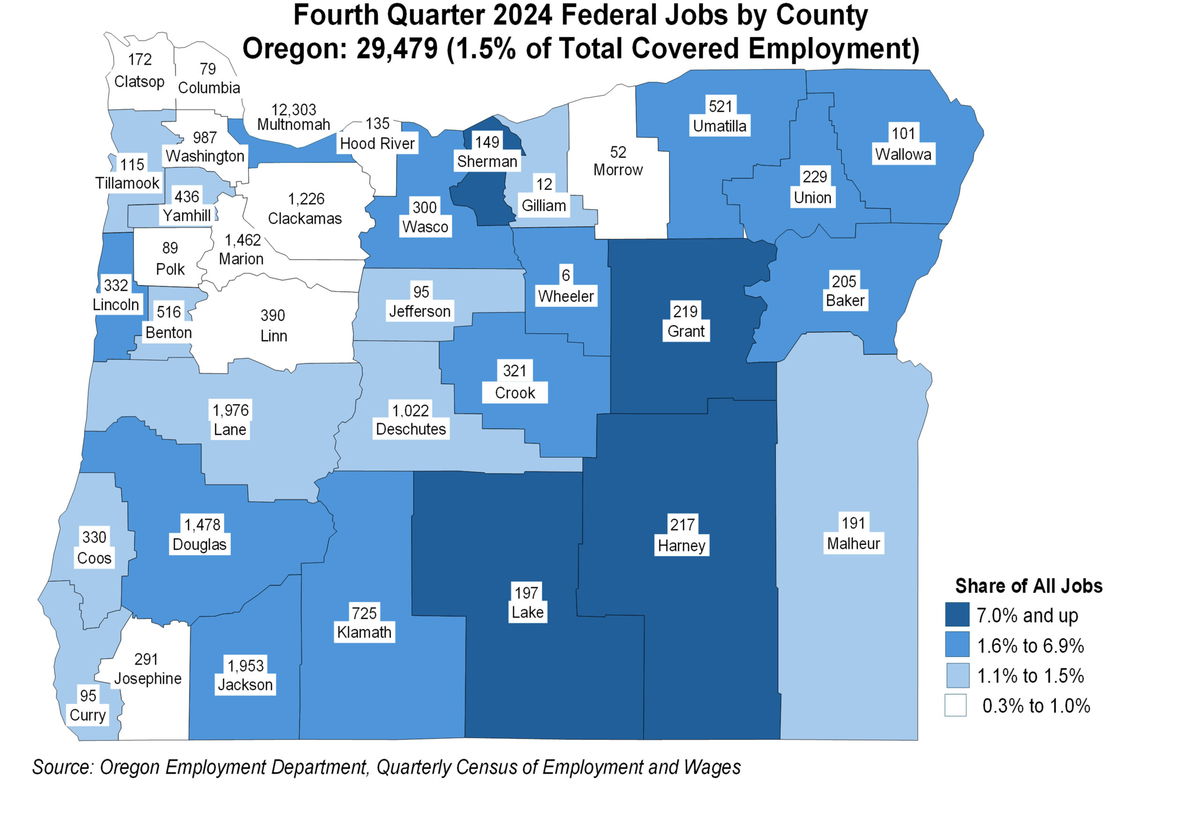
Oregon had an average of 29,000 federal government jobs covered by unemployment benefits during the first half of 2025. That accounted for about 1.5% of all jobs in the state.

The federal government share of all jobs was much higher in some rural counties. This time last year, the top 10 counties by share of all jobs in federal government were rural areas. More than 15% of all jobs in Sherman County were in federal government. The next-largest shares were in Grant (9%), Harney (8%), and Lake (8%) counties.  

Federal government employment in Crook County accounted for 4.2% of all county employment, representing 321 covered positions and placing it among the top five Oregon counties with the highest proportion of federal jobs relative to total county employment.

In comparison, 1.3% of all jobs in Jefferson County were in the federal sector. Deschutes County had the lowest share, with 1.1% of all fourth-quarter covered jobs last year classified as federal government positions. Still, in terms of absolute numbers, Deschutes County had the highest count of federal workers in Central Oregon, with 1,022 federal jobs. 

More recently, and not directly comparable due to seasonal differences between quarters, Deschutes County averaged 1,052 federal payroll jobs in the second quarter of 2025. By June 2025, there were 1,066 federal jobs, 32 fewer than in the same month the previous year. 

In June, federal payroll employment in Jefferson County was 100—nine more than in June 2024. In Crook County, it was 347, a decrease of 12 from the previous year. Federal employment in this region typically peaks in the third quarter and begins to decline in the fourth quarter, though. 

Federal government jobs also tend to pay relatively high wages. Looking at annual average wages, jobs on federal government payrolls in Oregon paid nearly $98,500 in 2024. That was 38% higher than the average annual wage for all jobs in Oregon. 

Crook County had one of the smallest wage gaps between federal and overall covered employment, ranking third lowest in the state. There, federal workers earned just 8% more than the countywide average. 

In contrast, in both Deschutes and Crook counties the wage gap was larger than average. In 2024, federal jobs in Deschutes County paid 48% more than the average for all jobs in the county. Similarly, federal payroll jobs in Jefferson County paid 43% more than the countywide average. 

For more about federal government jobs in Oregon, click here. 

Next Press Releases 

The Oregon Employment Department will publish the latest Oregon Job Vacancy Survey report on Oct. 23, and the next update on statewide trends on Wednesday, Nov. 19. We will update our schedule of future releases as federal services return. 

If you have questions about the South Central economy, feel free to reach out. We’re still at work providing quality information so employers and job seekers can make informed decisions. The most current data remains last month’s report, highlighting August employment figures. That data is available at qualityinfo.org

Click here to follow the original article.