El Paso County holds annual ‘Snow School’ training for public works employees

Scott Harrison

COLORADO SPRINGS, Colo. (KRDO) — Residents in unincorporated areas of El Paso County may see faster snow removal on their roads and highways for the first time since the start of the COVID-19 pandemic in 2020.

On Tuesday, the county’s transportation department told KRDO 13’s The Road Warrior that it has virtually erased a worker shortage that had affected operations during the outbreak.

“We’ve got 140 total that will go on a full call-out, and we are probably around that 135 mark right now,” Scott Hall, a training manager, revealed. “We’re very close again.”

As he prepared to lead the 50 newest employees on a three-day training session for snowplow operations, he elaborated on why the pandemic caused the worker shortage that was also experienced by other local governments in the Pikes Peak region.

“When you put people in close vehicles and have people together, we were all told to get away from each other,” Hall explained. “We can’t do that here. So, it was hard. No one knew what to do. We’ve moved past it and now we know how to play the game.”

The lack of employees led county officials to take several measures that have solved the problem.

Officials dropped the high school diploma requirement, while offering to help new hires earn their equivalency diploma (GED) if they sought to earn it.

In an effort to save applicants time and expense, the county also dropped the requirement to have a commercial driver’s license (CDL) — and now provides in-house training to receive it.

Finally, county commissioners approved increasing worker pay and benefits to be more competitive with other employers.

“Most of our employees are staying and not leaving,” Hall said.

Another factor in the turnaround is that the county now leans on high school students as an underutilized labor force.

The county holds career day events at the transportation complex on Akers Drive, and also sends transportation representatives to local schools — exposing them to the possibilities of a career in public works.

Students can enroll in paid internships during the school year and even be hired after they graduate.

“Not every kid is going to college or joining the military,” Hall said. “This is an opportunity for us and for them. I was exposed to all of this when I was a kid, but how are kids exposed to it now?”

One of thse kids, Angel Bustamante, was hired after graduating from Sand Creek High School.

“I was going to do concrete work,” he said. “Then, I met (Scott Hall) at his job fair. I got hired full-time after I worked a few hours a week in the program. I learned how to drive a snowplow and it was easy. I like working here. I’m here because of the people. We have fun.”

The annual training covers lasts ten hours daily for three days; trainees will learn snowplow driving, maintenance and tire chain installation.

Click here to follow the original article.

Violence prevention group discusses possible community center in east Columbia

Haley Swaino

COLUMBIA, Mo. (KMIZ)

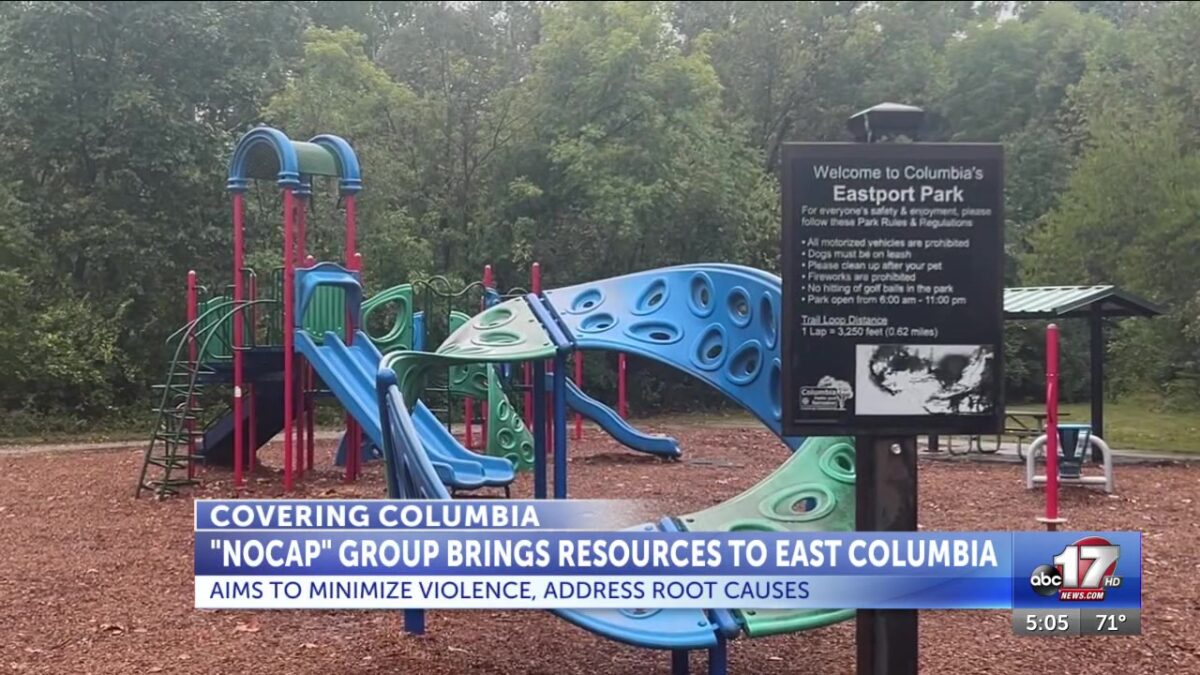
The Neighborhood Opportunity and Community Accountability Proconsul will discuss bringing a community center to east Columbia at its monthly meeting Tuesday night, according to Office of Violence Prevention Administrator D’Markus Thomas-Brown.

He said real progress is happening through NOCAP.

“We’re not capping,” Thomas-Brown said. “Whereas [there have] been times in the past, things have been said, things were not carried out. This is not what we’re doing.”

The group was formed in May 2025 by the Office of Violence Prevention Advisory Board to bring needed resources to NOCAP-identified areas. The hope is that the resources and new opportunities in the community will help address the root causes of, and ultimately minimize, violence.

After tracking 911 call patterns and using an overlay with stressor mapping to look at factors like income and access to fresh fruits and vegetables, east Columbia was identified as a NOCAP area.

Thomas-Brown said the “near east” is vast.

“We have residents from the Indian Hills area. We have residents from the Lake of the Woods roundabout areas. We have residents from the Merritt area. We have residents from El Chaparral area. So really it’s that near east corridor, if you will.” Thomas-Brown said. “We have residents from Hanover Village who are there and apart. And so hence we are able to use the Hanover Village.”

To help those in the community heal from past violence and break from cycles of violence, Thomas-Brown said it’s important that people who actually live in the community are a part of NOCAP’s conversations.

“Those who are closest to the problems are closest to the solutions, but lack the resources and the recognition,” Thomas-Brown said. “There are things going on that are unsafe, that are there [east Columbia] and inequitable, that are driving to root causes that would cause violence or anything else, for that matter, that limit flourishing and wellness. As neighbors, as residents that live there, they have the ability to hold those things accountable.”

He said NOCAP meetings don’t necessarily have an agenda; rather, they are more of a guided conversation for those living there.

“It’s their neighborhood, right? It’s their comfort zone. It’s their comfort level. It’s what they desire,” Thomas-Brown said. “I will bring resources in and those that I work with. From a city perspective and from a resource perspective, they can come and amplify your voices, but I’m not going to be the one drawing people to the meeting.”

About a dozen residents regularly attend the monthly meetings, alongside city leaders and local nonprofits like the Powerhouse Community Development Corporation. Two Columbia Public Schools students attend to help bring a youth perspective, something Thomas-Brown said is highly encouraged.

“We have moms who have kids who have lost kids to cycles of violence,” Thomas-Brown said. “And I mean not just gun violence. Cycles of violence could be substance use disorder. We have an overdose, right? That’s violence.”

Bringing a community center to the neighborhood is something adult attendees have been pushing for. Thomas-Brown said east of Highway 63 and north of Interstate 70, youth don’t have anything like that.

“They dream of what it would look like. And there’s a lot of green space, just healing gardens and stuff like that,” Thomas-Brown said. “Resources, access, design. What would it be planned for? What would be in the community center? So all those discussions are going on in real time.”

At Tuesday’s meeting, NOCAP will also discuss when it plans to hold its mental health training sessions. The Columbia City Council approved a $21,000 contract for it last week.

To get involved with NOCAP, people can contact Thomas-Brown. His information is available on the city’s website.

Click here to follow the original article.

Boone County stores make up a fifth of revoked liquor licenses statewide in past five years

Nia Hinson

EDITOR’S NOTE: This story has been corrected to say Casa Maria’s license was suspended and fix the date of a hearing.

COLUMBIA, Mo. (KMIZ)

Nearly two dozen Missouri businesses have had their liquor licenses revoked over the past five years, with more than a fifth of those located in Boone County.

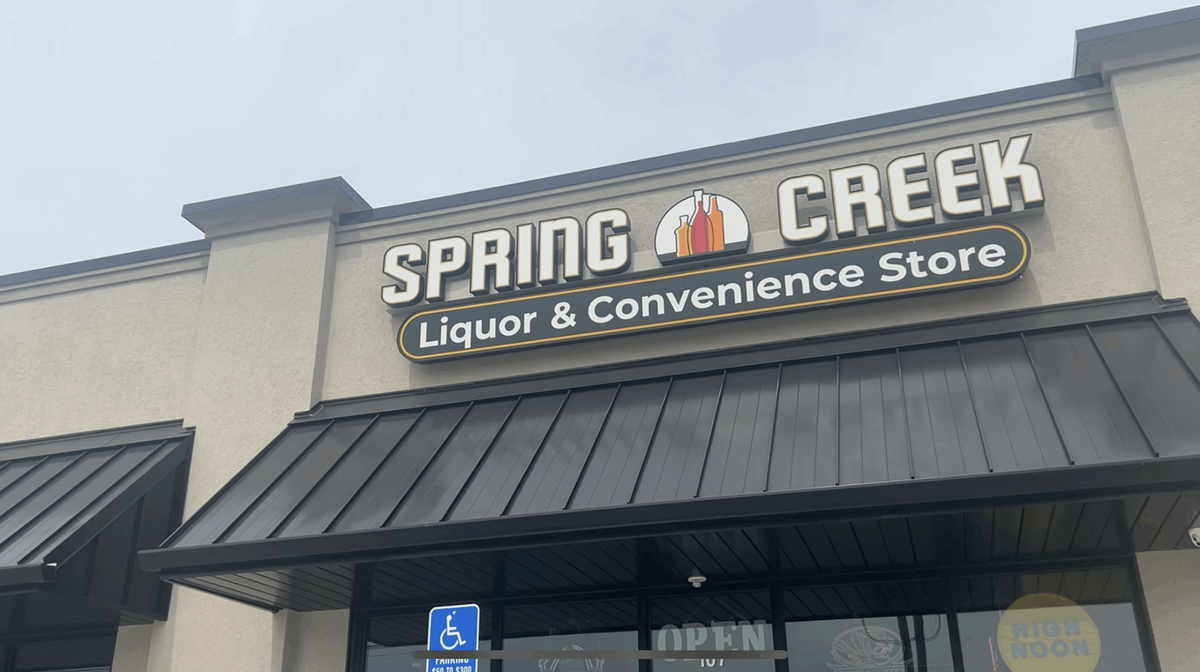
The latest was Spring Creek Liquor.

The Missouri Division of Alcohol and Tobacco Control revoked Spring Creek Liquor and Convenience Store’s license in August, accusing the southwest Columbia store of violations including providing false answers on its application.

According to records from the agency, several businesses across Missouri have had their state license revoked or have at least been given a warning over the last five years.

Records show 23 businesses have had their liquor license revoked over the last five years. Five of those were businesses in Boone County.

“Some of these cases originated in 2019, but because of appeals, the actual disciplinary actions for those were not finalized until 2020 and 2022,” Missouri Department of Public Safety spokesman Mike O’Connell wrote in an email.

Revocations in Columbia include Dash Convenience Store and Spring Creek Liquor. Records also show a nightclub located on Business Loop 70, Plush Lounge, had its license revoked in April 2024. The state alleged the business was open on a Sunday, failed to cooperate with law enforcement and Alcohol and Tobacco Control during an investigation and failed to report a change of fact.

The business was demolished in April 2024 after a fire broke out the month prior, destroying it.

Casa Maria’s– a restaurant located on the south side of Columbia– had its license suspended in May 2024 for 52 days. Alcohol and Tobacco Control claimed a name was forged on the liquor license application and that a felony charge involving its owner was not disclosed.

A Jefferson City business lost its state license in September 2020. The Kraken Bar and Grill — owned by Dane Investments LLC — was accused of improper acts and immoral character.

Dugout Bar and Grill in Mexico also lost its license in November 2021, following claims of immoral character from the state, records show.

ABC 17 News looks at what records revealed about why Spring Creek’s license was revoked on Wednesday at 10 on KMIZ.

Click here to follow the original article.

CVWD tables proposal to shift water service in Sky Valley, Desert Edge to MSWD

Shay Lawson

SKY VALLEY, Calif. (KESQ) – The Coachella Valley Water District tabled a decision that would have shifted water service responsibility in unincorporated areas east of Desert Hot Springs to Mission Springs Water District.

During Tuesday’s meeting, CVWD boardmembers made it clear this process isn’t being driven by them.

CVWD Statement:

The CVWD Board of Directors appreciates the public’s constructive input as we begin exploring complex issues that affect multiple municipalities and our shared community.

The Board voted at today’s public meeting to revisit the item regarding an application to the Riverside County LAFCO for review of the potential divestiture of water and sewer services, and the concurrent annexation of a portion of CVWD’s boundaries to Mission Springs Water District. This item will be revisited at a future meeting, following Mission Springs Water District’s discussion and potential vote to initiate a financial and feasibility analysis of the proposed acquisition.

CVWD is committed to working with the community and to operating efficiently and responsibly as we evaluate the course of action that best serves the interests of its customers and the broader community.

Statement from MSWD:

Today’s meeting does not alter our primary focus or our commitment to the residents of Desert Hot Springs and the surrounding communities. Before our board can take any action, MSWD must gather additional information and conduct the necessary due diligence to determine the best path forward for our customer base. 

At the staff level, we will continue to support the City of Desert Hot Springs’ economic development efforts while working with the CVWD team to develop a mutually beneficial path forward, whether this results in a service agreement between the agencies or a transfer of service to take part or all of the ID-8 area remains to be determined.

The CVWD board also discussed looking at other options to get water to that area — but again, nothing will move ahead unless MSWD takes action.

Last week, News Channel 3’s Shay Lawson spoke with Sky Valley and Desert Edge residents who pushed back on the proposal, citing increasing costs.

Stay with News Channel 3 for any new developments.

Click here to follow the original article.

Project progress seen at two familiar Bend River Promenade spots along Third Street

KTVZ

BEND, Ore. (KTVZ) — Two high-profile projects at the Bend River Promenade along Third Street are showing signs of progress.

This the former site of Deschutes Junction is being cleared to make way for a new AutoZone.

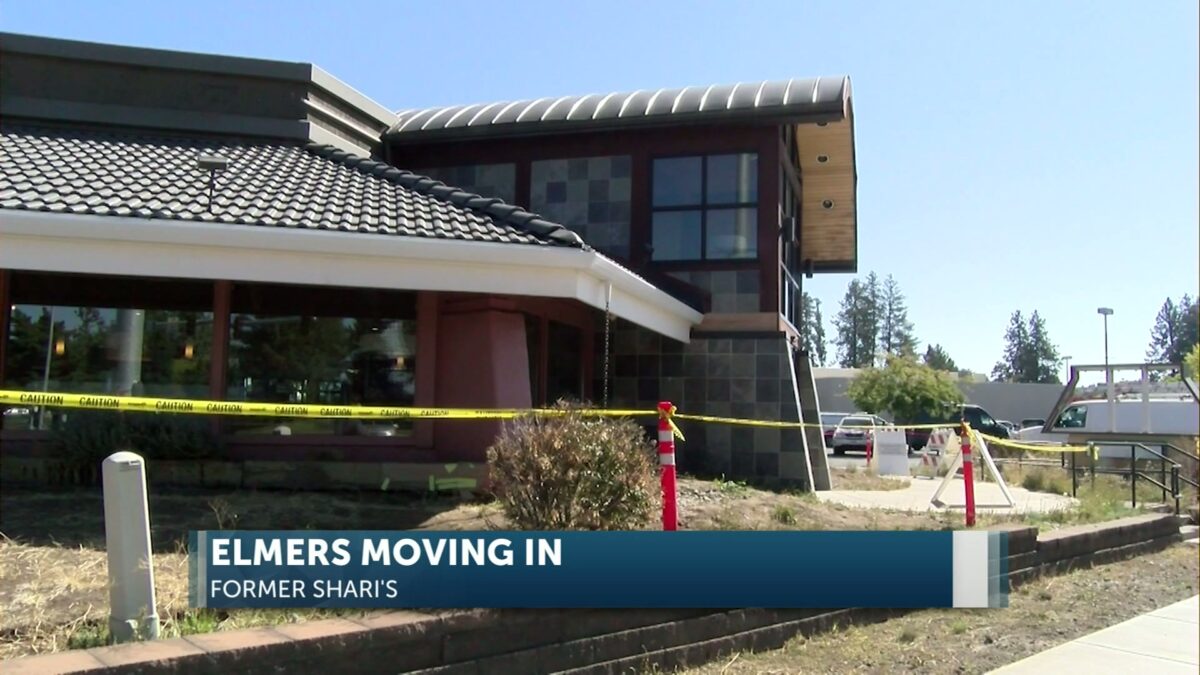
Meanwhile, less than a block away, the former Shari’s Restaurant sign has come down as renovation work ramps up on the future Elmer’s Restaurant, a similar family-style restaurant with an emphasis on breakfast.

Click here to follow the original article.

FIND Food Bank ribbon cutting and grand opening of Food Security Campus set for Friday

Peter Daut

INDIO, Calif. (KESQ) – FIND Food Bank will soon hold a grand opening and ribbon cutting for its new, 80 thousand square foot Food Security Campus in Indio.

The organization says it had outgrown its current facility, exceeding its storage capacity by 80 percent.

The new, expanded facility will also provide several services, including workforce development and financial literacy courses.

FIND Food Bank President and CEO Debbie Espinosa says the outreach services offered help others by “Looking at the root causes of hunger, and identifying what we can do to help people become truly independent from not receiving food in the future, but being able to self-feed because they’ve tackled those root causes.”

The grand opening will be this Friday, and the public is invited to tour the new facility starting next week.

For more information, visit findfoodbank.org.

Click here to follow the original article.

Indio mother pleads for action after her autistic son was beaten near school

Shay Lawson

INDIO, Calif. (KESQ)  – Update 9/24/2025

In a new statement to News Channel 3, Tamara Wadkins, The Desert Sands Unified School District Public Information Officer, said:

“There were two separate situations involving two different students. Both are being addressed, and the school is working closely with the families to provide care and support. In the instance that occurred off campus, school administration was not informed until several days later, which delayed our ability to respond right away.

Bullying is not tolerated at Thomas Jefferson Middle School or at any of our DSUSD campuses. We are committed to addressing incidents proactively as soon as we become aware of them. When concerns are reported, our staff investigate, conference with students, contact families, and assign appropriate support and consequences. In addition, our team works diligently every day to prevent incidents and to promote positive relationships among students.

If families have an incident to report, we strongly encourage them to reach out directly to their school site as soon as possible so we can respond quickly and effectively. The safety and well-being of our students and staff is our highest priority.”

Original report 9/23/2025

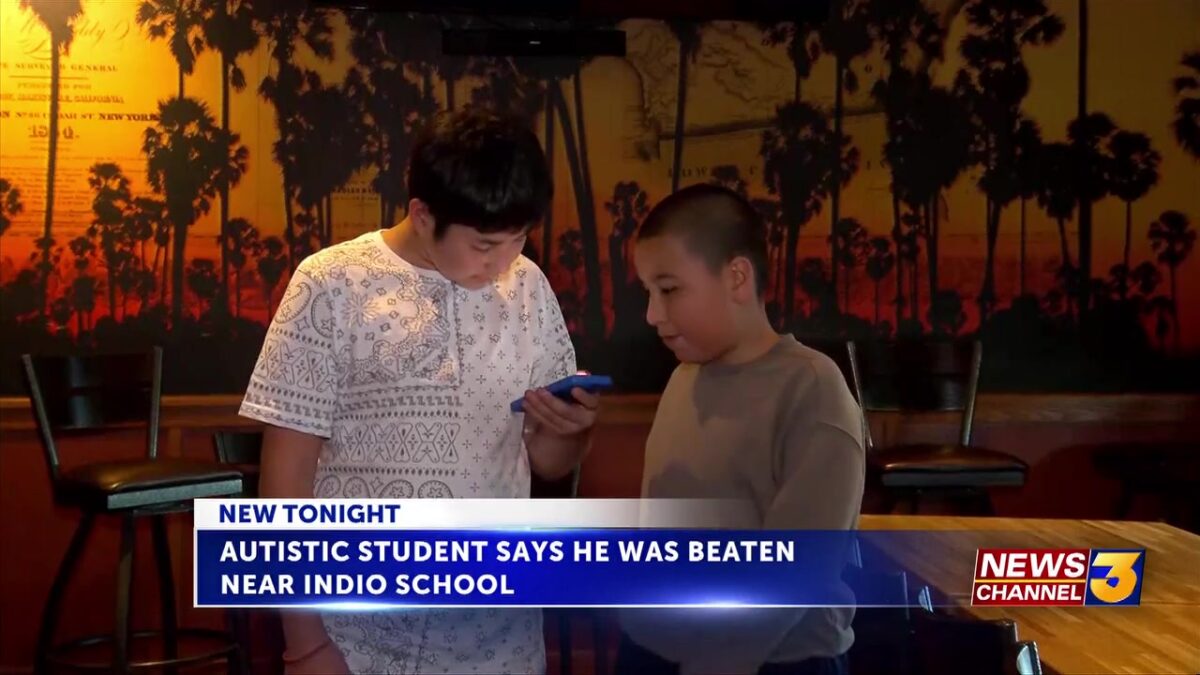
Sarai Cervantes, an Indio mother, is demanding answers after she says her autistic son was beaten by classmates near Thomas Jefferson Middle School in Indio.

“We come from Dr. Carreon, now Thomas Jefferson,” Cervantes said. “He’s been being bullied, targeted by other children because he’s in special ed. He’s autistic. He has ADHD and two different mood disorders.”

She said the violence escalated Monday afternoon when her son, Evan Cervantes, was followed to Pawley Pool, about a 4 minute walk from campus.

“Some kids got him, took him to the restroom and started beating him up,” Sarai said. “They covered his mouth. They told him not to say anything. They hit him several times in his face, upper body, back and his stomach.”

She said she took Evan to urgent care, where a doctor found swelling in his liver and kidneys caused by the assault.

“It makes me feel horrible,” Sarai said. “I sent him to school to learn. It’s already hard enough for him with all his disabilities. And it’s supposed to be his safe spot.”

In a statement to News Channel 3 Tamara Wadkins, The Desert Sands Unified School District Public Information Officer, said:

“There was one incident reported on the Thomas Jefferson Middle School campus. Upon learning of it, school staff took immediate action, investigated thoroughly, and worked directly with the parents of those involved. Appropriate consequences and discipline were administered.

DSUSD is committed to fostering a school culture where all students feel safe, supported, and valued. Our staff work diligently to prevent incidents and to promote positive relationships among students. If families have concerns or questions, we encourage them to reach out directly to their school site.”

“He is not the only one,” Sarai said. “There are several other kids who are being bullied.”

She said she’s filed a police report but has yet to hear from the school principal or district leaders.

“I just want answers,” Sarai said. “Today it was my son, tomorrow it’s going to be someone else’s. There’s no proof. There’s nothing. All there is is bruises, marks, pain and anxiety.”

Now, she’s asking the community for help identifying those involved.

Stay with News Channel 3 to hear directly from Evan in the full report at 10 and 11 p.m.

Click here to follow the original article.

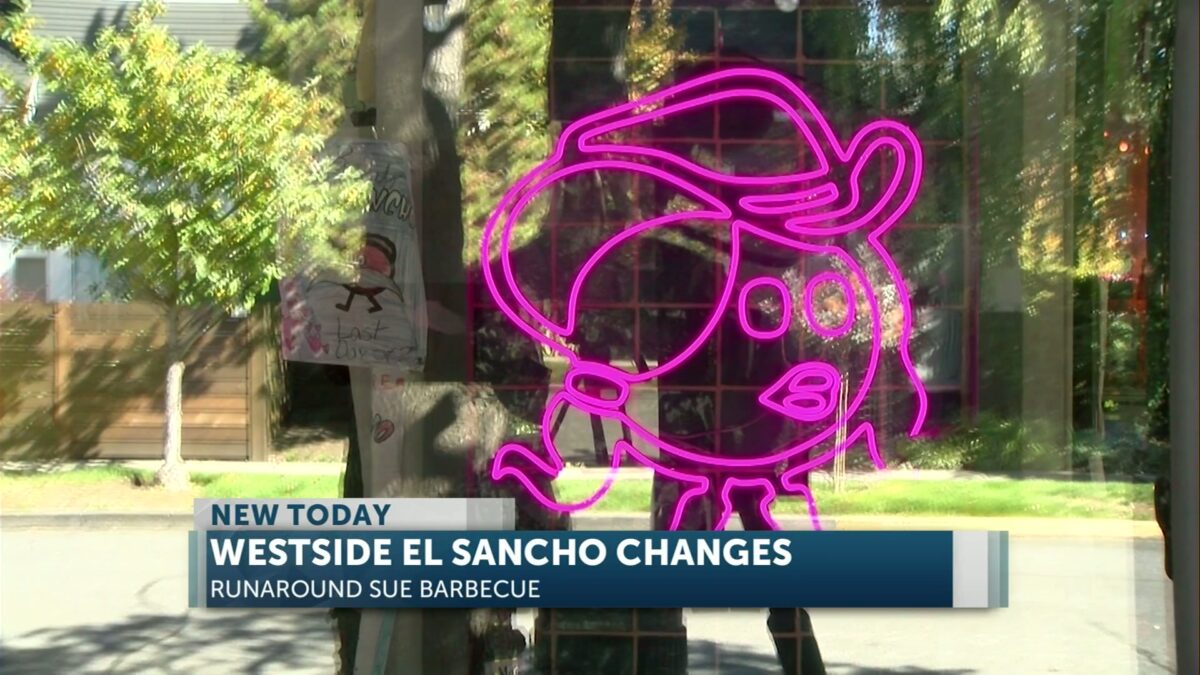
El Sancho on Bend’s Westside to become ‘Runaround Sue’ BBQ restaurant

Tyson Beauchemin

Bend, Ore. (KTVZ) — In an exclusive interview with KTVZ News, the owner of El Sancho taco shop laid out his plan to create a restaurant he’s wanted to make happen for a long time.

At the end of October, the El Sancho location on Galveston Avenue will close its doors. When it reopens, it will be a Western0themed barbecue place called ‘Runaround Sue.’

Bend foodies might remember ‘Runaround Sue Barbecue’ as a food truck back in 2019. In fact, the website for the truck is still up. While the truck did well, the owner wants more, calling it “something that’s always been on the back burner.”

During our interview, owner Jon Barvels called it “something we’ve always wanted to get going. We’ve done little things with it here and there, but nothing’s really stuck. So we kind of decided it was ready to to come out, and we’re going to start working on it this winter.”

Barvels mentioned that they’ve had a long-time collaborator working at El Sancho, who wanted to develop the ‘Runaround Sue’ concept. Now, he said, it’s time to make that a reality.

Barvels describes the restaurant as “Sancho-style barbecue,” with meat bowls and sandwiches, along side El Sancho staples like tacos on flour tortillas.

Runaround Sue may have some soft openings and pop-ups in January and February of next year, with the opening as late as March.

We’re told Bend’s Eastside El Sancho location will remain open and unchanged.

Click here to follow the original article.

Oregon Cultural Trust awards record $4.15 million to organizations statewide, including several local projects and programs

KTVZ

(Update: Adding video)

SALEM, Ore. (KTVZ) – An increase in fiscal year 2025 donations, as well as investment earnings, has resulted in an all-time high of $4.15 million awarded to cultural nonprofits and organizations statewide by the Oregon Cultural Trust.

The $4.15 million includes awards to 91 individual arts, heritage and humanities nonprofits, organizations and state cultural agencies.

Among them is a total of $1,038,285 for the Cultural Trust’s five statewide partners (Oregon Arts Commission, Oregon Heritage Commission, Oregon Humanities, Oregon Historical Society and the State Historic Preservation Office), and $1,038,285 for 45 County and Tribal Cultural Coalitions – who annually award an average of 450 local grants within their communities.

In addition, $2,076,570 in competitive Cultural Development Program grants were awarded to 91 cultural nonprofits serving most geographic regions of the state, according to the Cultural Trust, whose announcement continues below:

“Art and culture thrive in every corner of Oregon, and the Oregon Cultural Trust is proud to support this essential work in communities large and small. In the face of national funding disruptions, we invite all Oregonians to take advantage of our unique cultural tax credit right here at home and help ensure a steady, reliable endowment for culture both now and for generations to come,” said Sean Andries, Cultural Trust Board Chair.

The 91 Cultural Development grant awards range from $5,000 to $40,000, with an average grant award of $22,810. 

Cultural Development Program awards fund nonprofit projects or programs that increase access to culture, invest in organizational capacity, support community creativity and/or provide cultural heritage and historic preservation. Applications were reviewed and scored by peer review panels; final award amounts were determined and approved by the Cultural Trust Board of Directors at its Aug. 21 meeting.

Award recipients are recognized for their excellence, many of whom are receiving their first-ever Cultural Trust award.

Organizations receiving full funding include three in the Central Oregon region, and one nearby project many in the area are familiar with:

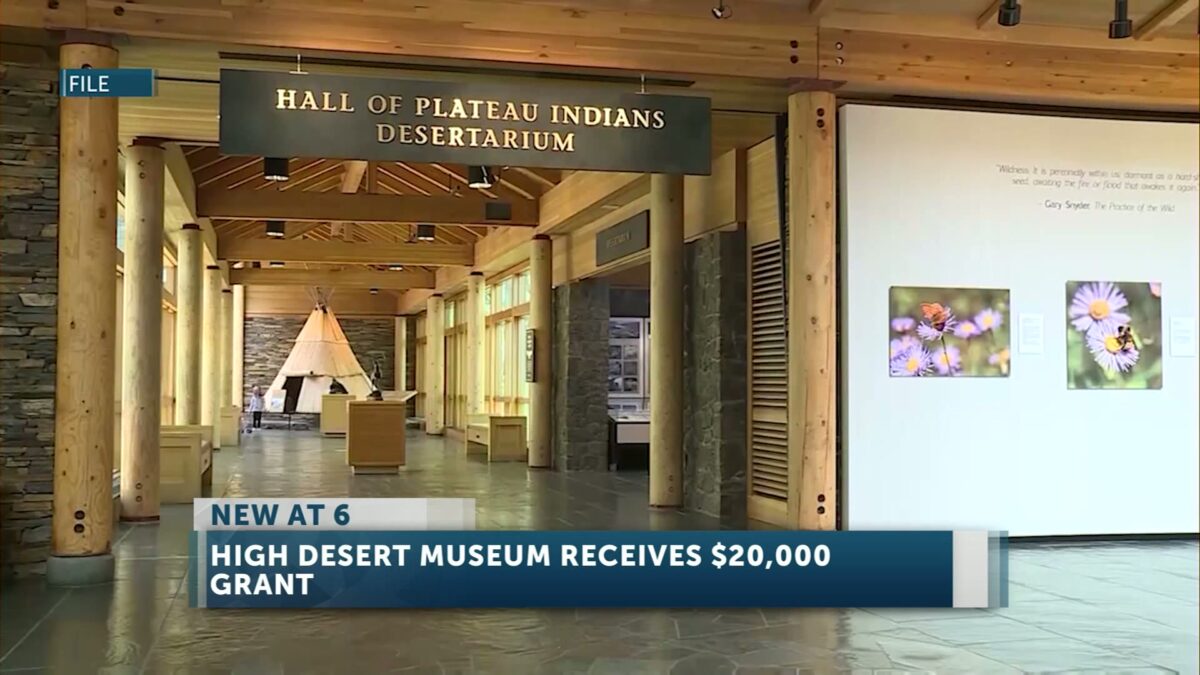
The High Desert Museum, Bend: $20,000

To support the development of the Volcanoes exhibition and associated programming, which will explore the cultural connections between humans and the volcanic landscapes that define Central Oregon and preserve the lesser-known stories rooted in this dynamic terrain. Multidisciplinary experiences will blend culture, art and science to illuminate the interplay between people and this evolving volcanic environment with a focus on the stories and knowledge of Indigenous communities.

Dry Canyon Arts Association, Redmond: $34,000To support the remodel of a 3,500 square foot space in a downtown Redmond building that will house the area’s only community art center—the Dry Canyon Community Art Center (DCCAC). The Dry Canyon Community Art Center will provide classroom space for art instruction and workshops, children’s hands-on art education and guest artist presentations. Area artists will now have the opportunity to display and sell their works.

Tower Theatre Foundation, Inc., Bend: $17,000To support the Tower Theatre Foundation’s LessonPLAN (Performing Live Arts Now) program, which engages and inspires Central Oregon students through transformative performing arts experiences. Since 2011, LessonPLAN has reached over 60,000 public, private and homeschool students through curated performances and assemblies that align with school district curriculum standards.

Friends of Santiam Pass Ski Lodge, Beaverton: $40,000

To support the restoration of the historic Santiam Pass Ski Lodge Community Center by funding the installation of an environmentally friendly and long-lasting septic system that will provide sanitary public lavatory and food services to visitors.

Other awards include:

Crow’s Shadow Institute of the Arts, Pendleton: $40,000

To support the artist-in-residence printmaking program and the traditional arts program helping to expand arts programming, increase educational opportunities and foster economic empowerment for Native artists. As well as for all Oregonians seeking to appreciate, learn and support both contemporary and traditional Native artists and art.

Wallowa Band Nez Perce Trail Interpretive Center, DBA Nez Perce Wallowa Homeland, Wallowa: $28,000

To support the continued growth and sustainability of the Tamkaliks Celebration and Friendship Feast, a vital cultural homecoming that honors Nez Perce heritage in their ancestral homeland of Wallowa, Oregon. For over 30 years, Tamkaliks has been a volunteer-led, intertribal gathering that brings together Nez Perce families from the Confederated Tribes of the Umatilla Indian Reservation, the Nez Perce Tribe of Idaho and the Confederated Tribes of the Colville Reservation. This investment will help sustain Indigenous cultural practices for future generations.

Josephy Center for Arts and Culture, Joseph: $40,000

To support increased access to Nez Perce culture and history for both tribal members and rural Oregonians through a cultural engagement project led by the Josephy Center for Arts and Culture. Public exhibits, community programs and educational events rooted in Indigenous history and guided by tribal voices bring powerful, place-based cultural learning to local audiences. These initiatives aim to restore cultural access, support healing and strengthen connections to the land for all participants while promoting a more inclusive understanding of Indigenous history and culture.

Medicine Bear Native American Spiritual Encampment, Portland: $20,000

To support the expansion of Medicine Bear’s Artist Apprenticeship Program and arts programming at the Donald E. Long Juvenile Detention Center, empowering system-impacted and underserved youth through culturally grounded creative expression, mentorship and public engagement. This project will provide yearlong opportunities for youth to work alongside professional Indigenous and BIPOC artists in studio sessions, workshops and community-based mural projects.

Northwest Alliance for Alternative Media and Education, Portland: $40,000

To support the Northwest Alliance for Alternative Media and Education’s (NAAME) arts programming that makes arts and culture accessible to 360+ justice-involved youth ages 14-25 living in youth correctional facilities (YCFs) throughout Oregon. Their programming offers culturally responsive, arts-integrated and trauma-informed arts workshops and mentorship for youth to explore creative outlets for self-expression and amplify their voices in a supportive community to foster community and cultural healing and disrupt cycles of recidivism, poverty and intergenerational trauma.

Old Church Society Inc., Portland: $20,000

To support roof repairs for this historic building. The Old Church’s roof is 31 years into its 50-year lifespan, with documented cracked slate tiles, moss-lifting shingles, leaks under decorative iron bolts and wood rot on pinnacles. This work is part of TOC’s broader strategy to resist disruption by preserving a historic venue and using it to uplift others.

Portland Street Art Alliance, Portland: $40,000

To support the launch the Clatskanie Mural Festival, a new regional initiative led by Portland Street Art Alliance (PSAA) in partnership with the Clatskanie Chamber of Commerce. This project will result in the creation of several vibrant public exhibits (murals) that celebrate and reflect the identity of the rural town of Clatskanie, Oregon. PSAA will engage regional artists to design and create murals that are stylistically and thematically aligned with the values and aesthetics of the local community. Educational opportunities in mural-making, along with artist residencies and public programming, will foster local engagement and support emerging creative leaders in rural Oregon.

Portland SummerFest (Opera in the Park), Portland: $30,000

To support the first-ever free public performance of a mariachi opera by presenting José “Pepé” Martínez and Leonard Foglia’s “Cruzar la Cara de la Luna” (2011), the world’s first mariachi opera at Peninsula Park (Portland) and Shute Park (Hillsboro) over one weekend in August 2026. This will mark the work’s Oregon premier and the first time it is offered free and open-to-the-public anywhere in the world. A bilingual concert opera blending mariachi and classical traditions, “Cruzar” tells a deeply moving story of migration, identity and family, resonating powerfully with Oregon’s Latin American, immigrant and bilingual communities. Portland SummerFest (AKA OPERA IN THE PARK Portland) has secured the performance rights at a significantly reduced cost available only because of its long-standing, non-ticketed model of presenting high-caliber opera to the public.

Restore Oregon, Portland: $27,200

To support Restore Oregon’s capacity to expand and redefine the Preservation Together Program to reach communities statewide, and provide technical and advocacy support to historic resources while also becoming a more effective service provider to the field of historic preservation.

SMART Reading, Portland: $10,000

To support access to culturally inclusive children’s literature and reading experiences for underserved Oregon communities by funding the purchase and distribution of new, culturally diverse books in rural parts of Oregon. SMART Reading is a children’s literacy nonprofit that provides free, one-on-one reading sessions and books to over 20,000 children annually in Oregon. This project will increase public access to culture by removing financial, geographic and systemic barriers that limit exposure to literature representing diverse cultures, identities and experiences.

Oregon Repertory Singers, Gladstone: $5,000

To support the upgrade of Oregon Repertory Singers’ outdated Constituent Relationship Management (CRM) system. A more modernized and updated CRM will enhance ORS’ organizational capacity, sustainability and community impact. Their current donor and program tracking systems are fragmented, limiting their ability to effectively steward donors, communicate with their audience and manage youth choir participation. ORS will build stronger, more connected relationships with the diverse communities they serve, ensuring that the choral arts remain accessible, inclusive and sustainable for years to come.

Fool House Art Collective, Lake Oswego: $8,000

To support the final phase of transforming “The House,” Fool House’s ADA-accessible rehearsal and performance studio, into an affordable, fully equipped black box venue for up to 40 guests in Southwest Portland. This project will fund the installation of professional lighting, sound and projection systems, blackout curtains and modular stage risers, eliminating their reliance on costly equipment rentals and enabling high-quality productions for local artists. By investing in the technical core of this space, Fool House Art Collective is creating a space where diverse stories, cultures and artistic visions can take center stage.

Astoria Arts and Movement Center, Astoria: $40,000

This project seeks to historically restore the Odd Fellows ballroom, home to the nonprofit Astoria Arts and Movement Center (AAMC) studio since 2011. Support will go directly to essential repairs and paint. This project will preserve the 1923 ballroom and allow the AAMC to continue its mission to provide dance, performing arts, cultural and movement classes that enhance and inspire the community.

Neskowin Coast Foundation aka Sitka Center for Art and Ecology, Pacific City: $40,000

To support access to high-quality arts education for over 5,000 low-income children and youth by partnering with Title 1 schools in rural areas of Oregon’s north coastal region.

Oregon Coast Youth Symphony Festival Association, Newport: $24,000

To support the expansion of activities and events, the number of high school orchestra students participating, and the number of professional conductors and composers participating in the 10-year anniversary of the Oregon Coast Youth Symphony Festival in Newport.

Ballet Fantastique, Eugene: $7,500

To support Ballet Fantastique (BFan) with a one-time purchase of a high-resolution laser projector for in-house theatrical use, increasing production quality, reducing recurring costs and streamlining workflow. Savings will be re-invested to protect affordable ticket options for BFan’s mainstage and outreach performances, ensuring access for underserved audiences at a critical time in the arts landscape. This strategic infrastructure purchase increases BFan’s sustainability and capacity.

Lane Arts Council, Eugene: $27,000

To support Lane Arts Council in a process of embedding belonging, inclusion and accessibility into all aspects of its work. LAC will partner with The Avarna Group, who will conduct an audit, provide actionable recommendations and assist in implementing strategies for LAC to: identify and address barriers to participation for marginalized communities; strengthen representation and inclusion across staff, board and programming; build trust and foster meaningful relationships with community members and partners; and increase accountability and alignment between LAC’s accessibility values and organizational practices.

Oregon Shakespeare Festival Association, Ashland: $40,000

To support the Oregon Shakespeare Festival’s FAIR Program, a transformative career development initiative that bridges equity gaps in the theatre industry by providing hands-on training, stipends and mentorship to emerging artists and administrators. FAIR cultivates the next generation of diverse theatre leaders through immersive fellowships and assistantships within OSF’s renowned repertory model, while infusing the organization with fresh perspectives. In 2026, FAIR will empower up to 20 participants (60% from underrepresented backgrounds) with skills, networks and public engagement opportunities, ensuring a vibrant future for both Oregon’s arts ecosystem and the national theatre field.

First-time recipients include 19 organizations, the majority serving communities outside the Portland/Metro area:

India Cultural Association (Portland)

Columbia Gorge Discovery Center (The Dalles)

Wild Rivers Coast Foundation for Dance (Brookings)

Casa de la Cultura Tlanese (Salem)

Mt. Hood Unida (Rhododendron)

Siletz Regalia Sharing Closet (Portland)

Fool House Collective (Lake Oswego)

Dry Canyon Arts Association (Redmond)

Portland-Kaohsiung Sister City Association (Portland)

Flip Museum Incorporated (Beaverton)

Dorymen’s Heritage Center (Pacific City)

Medicine Bear Native American Spiritual Encampment (Portland)

BASE (Medford)

Bedrock Theatre (Gresham)

Astoria Arts and Movement Center (Astoria)

Oaks Park Association (Portland)

Columbia Basin Basketry Guild (Portland)

Albina Music Trust (Portland)

Historic Jacksonville Inc. (Jacksonville)

See a full list of County and Tribal Cultural Coalition award allocations.

See a list of the 91 Cultural Development awards, alphabetical by region.

Click here to follow the original article.

Missouri declares drought alert after farmers face dry summer

Mitchell Kaminski

JEFFERSON CITY, Mo. (KMIZ)

Gov. Mike Kehoe signed an executive order on Monday declaring a drought alert in Missouri.

The executive order gives state agencies the authority to direct resources to communities and farmers struggling with dry conditions. The order, which runs through Dec. 1, covers 85 counties experiencing moderate, severe, or extreme drought.

“This executive order allows our state agencies to step in and direct resources to those struggling with the consequences of drought, while allowing for vigilant monitoring of conditions over the next few months,” Kehoe said in a press release. “While much of our state is anticipating rainfall this week, we expect drought conditions to continue impacting agriculture and waterway navigation.”

Kehoe also urged Missourians to report local conditions to help state and federal partners understand the impact.

Across the state, farmers are feeling the effects of the dry summer. Andy Clay, a seventh-generation farmer who grows corn and soybeans near Jamestown, said this year has been especially challenging.

“Things were great starting off this year,” Clay said. “We got some of our crop planted before the wet spring began, and then the rains continued through June and early July. But by mid-July, they just shut off and we entered what they call a flash drought, where we didn’t receive any rain until this past Thursday, any measurable rain to do anything good. Unfortunately, our cattle pastures had already died off or burnt up in lesser quality areas, and it’s been the same with some of our later planted soybeans.”

Clay said the drought will result in lower crop yields.

“We didn’t receive any measurable rain during August and then obviously had typical August temperatures,” Clay said.  “So there’s a lot of soybeans out here that are going to have really small beans  and fewer beans per pod.” 

Despite the challenges, Clay said market factors and input costs will play a bigger role than weather in next year’s decisions.

“Mother Nature is always in control,” he said. “This year’s weather doesn’t always affect next year’s decision-making. The biggest thing affecting decision-making is input prices, how they continue to rise.”

According to the U.S. Drought Monitor, about 5 million Missourians live in areas currently experiencing drought, up 17% from last week. August was the state’s third driest since 1895, with just 1.07 inches of rain compared with the average 2.64 inches. Still, rainfall from January through August totaled 29.52 inches, 1.5 inches above normal.

Adding to the stress is the trade war with China, once America’s top soybean customer, which hasn’t placed a single order.

On April 2, President Donald Trump levied a 34% tariff on all Chinese goods. Two days later, China responded with a retaliatory tariff on all US imports. 

The retaliatory tariffs have placed U.S soybean farmers at a 20% disadvantage compared to South American competitors. As a result, China has begun buying soybeans from Brazil, which shipped nearly 16 million tons of soybeans to China in March, its largest monthly volume ever. 

“It’s coming back to demand.  We’ve got to continue to look for markets that want to utilize the soybean prices. But with lower yields you typically would see increased prices. Clay said. “Unfortunately, next year, if things continue on the pace it is going  next year,  a lot of the commodity farmers are going to really start feeling  the effects of this.” 

Clay added that farmers are at the mercy of the elements and the market.

“We can’t control Mother Nature. We’re always at the hands of if she’s going to let us win or suffer,” he said.

Click here to follow the original article.