Colorado Springs hires 12 employees to increase number of pothole repair crews

Scott Harrison

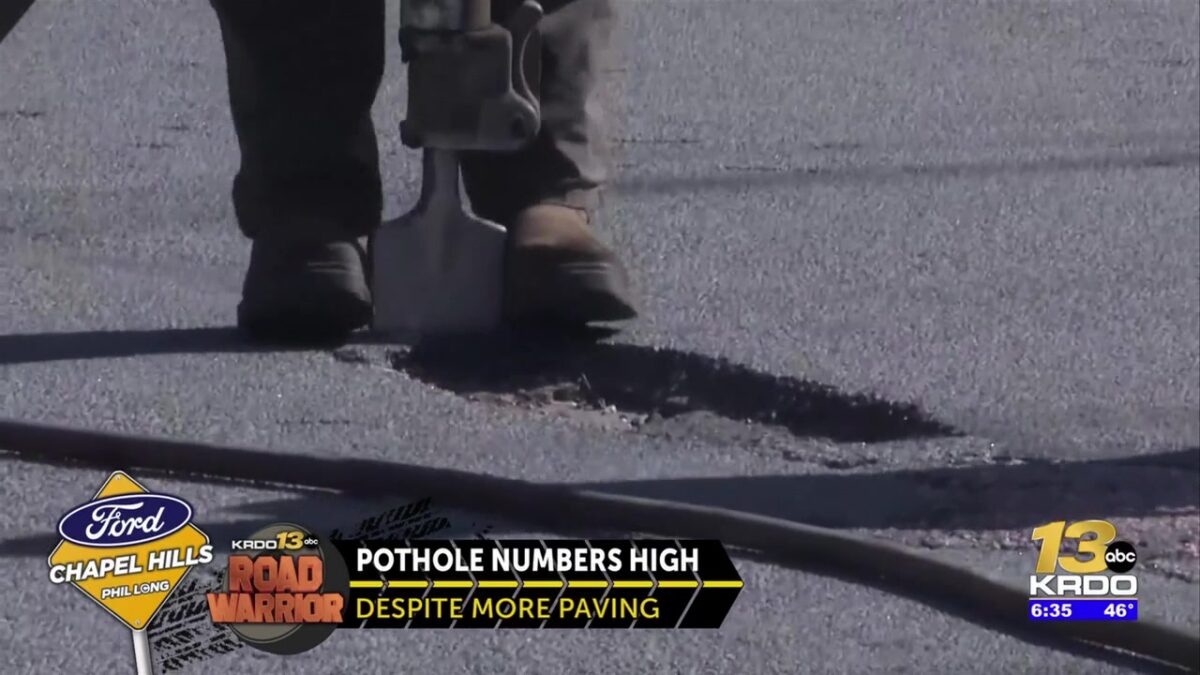
COLORADO SPRINGS, Colo. (KRDO) — Shortly after his election two years ago, Mayor Yemi Mobolade said that he wanted more crews repairing potholes on city streets and roads.

He announced that he had achieved that goal on Thursday, at the annual State of the City address, held at The Broadmoor.

“I recently added 12 new crew members to our pothole response teams so that we can respond more quickly and effectively,” he told his audience.

Mobolade said the most common complaint he hears from citizens is to do a better job of filling potholes.

The city has eight dedicated, full-time pothole crews and can increase that number to 12 when necessary.

Still, the mayor emphasized that officials depend on the public to report potholes that repair crews may be unaware of.

“And we have made it easier for you to help,” Mobolade revealed. “Last month, we rolled out the new and improved GoCOS app — a one-stop shop where you can report potholes, graffiti, broken sidewalks, downed trees, park maintenance issues, and more than 90 other non-emergency concerns. Think of the GoCOS app as your pothole app. Be our eyes because your reports do make a difference.”

The mayor added that filling potholes is only a temporary solution, and that’s why he thanked voters for their continued support of the taxpayer-approved sales tax increase to fund expanded street repaving.

That 2C program, created by the previous mayor, John Suthers, was initially approved in 2015, renewed in 2020, and was renewed again — for ten years — last fall.

In the early years of 2C, officials said that it would take time to see a significant decline in pothole numbers because the city had fallen so far behind in street maintenance.

“This initiative will invest $820 million into our roads and extend their lifespan,” Mobolade said.

Many citizens were surprised at how high the number of pothole repairs was at the beginning of 2C — in some years approaching or surpassing 100,000.

After crews filled 60,000 potholes in 2022, the figure increased to 85,000 in 2023, and again last year, to 94,000; with three months remaining in this year, the number is 52,000.

Click here to follow the original article.

Are you seeing spiderwebs flying in the air? Here’s why it happens

By Joseph Neubauer

Click here for updates on this story

    Oklahoma (KOCO) — Are you seeing spiderwebs flying in the air or resting on surfaces off the ground? Don’t worry. It’s normal.

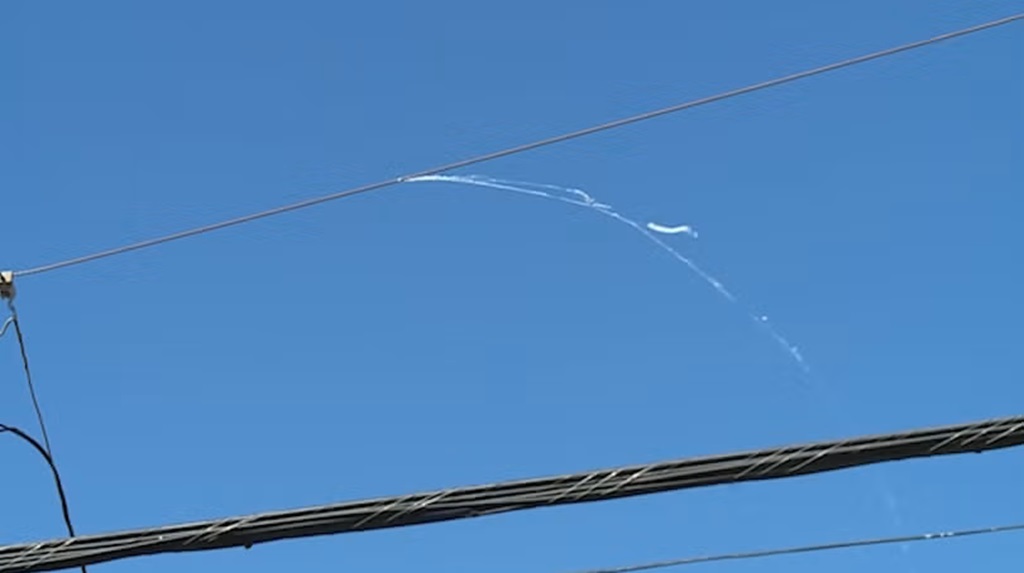
Ballooning season has returned to Oklahoma, and you’ll see a lot more of those flying spiderwebs over the next several weeks. KOCO 5 Meteorologist Joseph Neubauer says baby spiders are being born, and their silk and webs are filling the sky.

Ballooning season is when newborn spiders are competing for food with other spiders nearby, and they want to get to a new spot. So, they get up to the highest point they can, produce a web, and fly away to a new spot.

It’s important for spiders to do it when they’re small and young so the webs are easier to fly.

If you look at trees, car antennas, power lines and various poles, you’ll probably see the webs.

Please note: This content carries a strict local market embargo. If you share the same market as the contributor of this article, you may not use it on any platform.

‘This is awful discouraging’: Iowa farmer warns of potential crisis as China halts soybean purchases

By Todd Magel

Click here for updates on this story

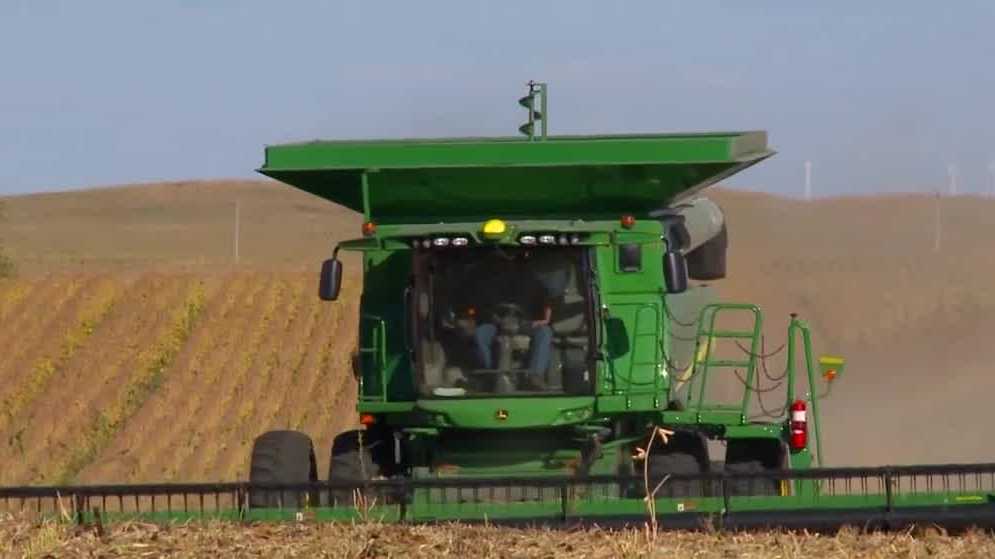
    DES MOINES, Iowa (KCCI) — Iowa soybean farmer Warren Bachman warns of a potential farm crisis after China halted purchases of U.S. soybeans in retaliation against new tariffs imposed by President Donald Trump.

Bachman, who has been growing corn and soybeans just west of Osceola for 64 years, said China’s decision is catastrophic.

“This is awful discouraging. You know, we do our very best to grow a good crop, to feed the world, and then we can’t hardly give it away,” he said.

Despite having voted for Trump, Bachman blames him for the soybean crisis, stating that the new tariffs are forcing China to buy soybeans from Argentina and Brazil. As a result, many Iowa farmers face selling this year’s crop at a significant loss.

“The way things are, there won’t be a farmer left in five years if things don’t change because our expenses are so high. And, the crop is worth less than it was 30 years ago,” Bachman said.

Having survived the farm crisis during the 1980s, which led to thousands of farm foreclosures, Bachman is skeptical of the Federal government’s crop payments as a solution.

“We would rather have free markets than a handout,” he said.

Bachman recently reached out to Iowa Sen. Charles Grassley for assistance with establishing free markets.

“I told him that the 1980s farm crisis is going to look like a picnic compared to today. If things don’t change and change fast,” Bachman said.

U.S. farmers are now looking for new markets to sell their soybeans, possibly for biodiesel, which could lead to fewer soybeans being planted next year.

Please note: This content carries a strict local market embargo. If you share the same market as the contributor of this article, you may not use it on any platform.

101 animals rescued from home, including snakes, sugar gliders and hedgehogs

By Gabriela Vidal

Click here for updates on this story

    Colorado (KCNC) — In a rural Brighton community in Colorado, residents were stunned by a heartbreaking discovery. It’s the third case of animal cruelty in Adams County in the last two months.

In July, 117 animals were rescued from a home in Northglenn, and in August, another 35 animals and three children were rescued from deplorable conditions in a Commerce City home.

“We noticed the whole street was lined with sheriffs’ vehicles, both marked and unmarked, and it was definitely something we’re not used to seeing out here,” said one resident in the area anonymously. “It’s just the most extreme neglect you could document. It’s heartbreaking, it made me tear up.”

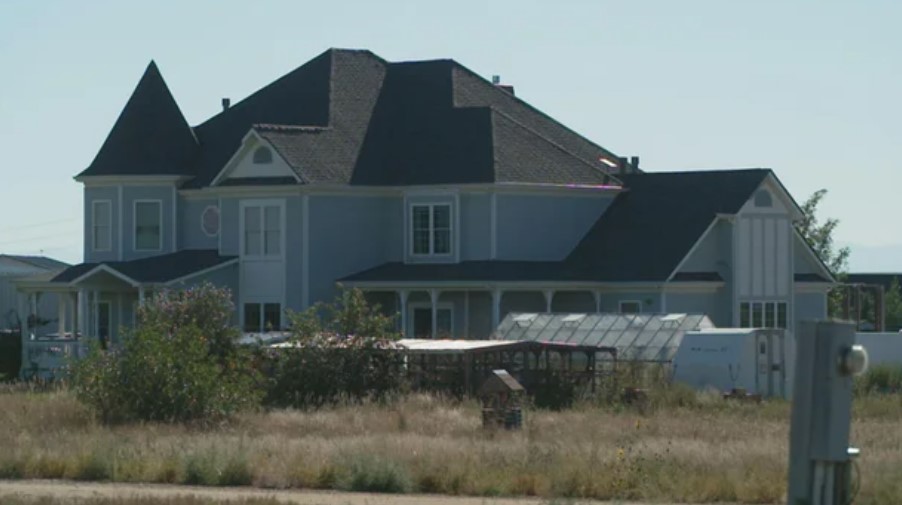
On Wednesday, the Adams County Sheriff’s Office and animal control helped lead an animal cruelty investigation inside a home on the 14000 block of Umpire Street.

“The last number I got was 101 animals [seized] from the property,” said Sergeant Shea Haney, public information officer with the sheriff’s office.

The list of animals included snakes, sugar gliders, a hedgehog, mice, and rats. The sheriff’s office tells CBS Colorado it was the Colorado Department of Agriculture that tipped them off to possible allegations of animal cruelty involving several animals.

“We can’t confirm who lives at the house, who owns and the relation to the investigation at this point,” said Haney.

However, documents uncovered by CBS Colorado and past coverage show the two homeowners listed on the property have faced charges for animal cruelty in the past. Those cases date back over a decade, involving the home and a pet store in Thornton that’s since closed.

We are not naming them as they have not been formally charged in this latest investigation.

“Honestly, since I’ve moved here, I’ve heard that place referred to as the quote rat house, and I knew that there were former cruelty charges,” said the anonymous resident.

This marks yet another case of animal cruelty documented in Adams County in the last few months.

“I’d hope that our system will start holding these people accountable instead of just dropping charges and letting them continue on for years and years. I’d like to see prison time,” said the resident.

The animals are currently being treated and cared for at the Riverdale Animal Shelter. As of Thursday, the sheriff’s office tells CBS Colorado there have been no reported deaths from this case.

Please note: This content carries a strict local market embargo. If you share the same market as the contributor of this article, you may not use it on any platform.

Detective recalls answering 911 call for 6 kids locked in storage locker, father pleads not guilty

By Zoie Henry

Click here for updates on this story

    MILWAUKEE (WISN) — Six children were found in a locked storage unit in Milwaukee, leading to charges of child neglect against their parents, who were found sleeping in a nearby car.

Detective Andrew Farina described the scene after responding to an unusual 911 call at a storage locker.

“When officers arrived on scene, they could hear a baby crying in unit B, five eight,” Farina said.

Upon arrival, he found a padlocked door.

“Law enforcement called the fire department. The fire department responded and cut the lock off,” he said.

Inside the unit were six children: a newborn, a 2-year-old, a 3-year-old, a 5-year-old, a 7-year-old, and a 9-year-old, all alone.

Farina said the 9-year-old boy was the caretaker.

“He said that he was basically in charge of taking care of the 2-month-old by giving her a pacifier or bottle when she cries.”

Photos from the Milwaukee Police Department showed a soiled mattress, a tattered couch, and a bucket used as a toilet. The three boys and three girls were found without electricity or running water in unit B at StorSafe near 27th Street and Silver Spring Drive.

When asked about the children’s feelings, Farina said, “She said sad and angry,” referring to the 5-year-old girl.

Officers found the children’s parents, Charles Dupriest and Azyia Zielenski, sleeping in a car parked nearby. The father told police they are homeless, but added that they didn’t have to stay in the unit.

“He admitted that the children stayed in the storage unit three days per week. He stated they could have stayed with family or friends,” Farina said.

The detective testified that the family received $2,000 in government assistance plus some foodshare benefits.

Dupriest said nothing in court and is being held on a $20,000 bond. The court will proceed to trial for the father, while the mother’s case was delayed due to her lack of an attorney.

The court will move forward to trial for Dupriest. The mother, Zielinski, was scheduled to appear in court on Thursday, but her case was delayed because a public defender has not been appointed to her case.

Please note: This content carries a strict local market embargo. If you share the same market as the contributor of this article, you may not use it on any platform.

Canadian tourist shot dead during golf vacation

By Nick Bohr

Click here for updates on this story

    SHEBOYGAN FALLS, WI (WISN) — Giovanni Robinson, 32, a Canadian tourist, was shot and killed in Sheboygan Falls, Wisconsin, while on a golf vacation to Whistling Straits, leaving his family and police desperate for answers.

Robinson, who went by Mike, was shot on a downtown sidewalk after leaving a restaurant and bar. He was with his brother-in-law and two friends when a single shot was fired from the driver’s seat of a dark SUV, causing him to fall and die moments later.

Family members, speaking from Toronto, shared that Robinson was celebrating a hole-in-one at a bar and restaurant with family and friends before the incident. The shooting occurred just two blocks from the police station.

Police reported, “We have an unknown situation of a subject who was shot and is not conscious, not breathing.” They said a small dark-colored SUV pulled up, the driver fired one shot at Robinson’s group, and then drove off.

“A caring young man, killed for no reason. Was outside on their way back to the hotel and a car shot him. Dead,” his aunt and godmother, Lydia Cirivello, told WISN 12 News Thursday. Police said they have no motive or suspect in custody and are asking for the public’s assistance in solving what is Sheboygan County’s first homicide of 2025.

Adding to the heartbreak for the family, Robinson had recently become a father to his baby daughter, Sara, six weeks ago. “He knew exactly how to take care of her. He was the best dad to her. And now she’s gonna not know him,” his cousin Amanda Modica said Thursday.

The family told WISN 12 News they have no idea what led to the shooting, as they said there was no trouble at the bars and restaurant the group had visited earlier.

This is Sheboygan County’s first homicide of 2025, according to the medical examiner.

Please note: This content carries a strict local market embargo. If you share the same market as the contributor of this article, you may not use it on any platform.

California destroys 21,000 cannabis plants in raids of illegal grow sites on public land

By Tim Fang

Click here for updates on this story

    California (KPIX) — Officials with the California Department of Fish and Wildlife (CDFW) said eight people were arrested and more than 20,000 cannabis plants were eradicated in raids targeting illegal growing operations on public lands across the state.

On Tuesday, CDFW announced results of the operation by the department’s Marijuana Enforcement Team (MET).

In July and August, officers raided six sites hidden within sensitive habitats and watersheds. Additional officers from the CDFW Cannabis Enforcement Program, local agencies and the U.S. Forest Service were also involved in the raids.

The agency said the raids were prompted by reports from the public, which included a hunter scouting for deer in one of the cases.

Lands where the grows were located included Forest Service property, land owned by municipal water districts and large, underdeveloped private properties accessible to the public.

“Our water is a delicately balanced system that enables communities to thrive and the environment to flourish. Illegal cannabis grows threaten that balance. If you violate the law, we will do everything in our power to hold you accountable,” Gov. Gavin Newsom said in a statement.

The growing sites were located throughout California, from Los Angeles and San Bernardino counties to the south, to Tehama County in the north. Sites in San Mateo County and Santa Cruz County were also targeted.

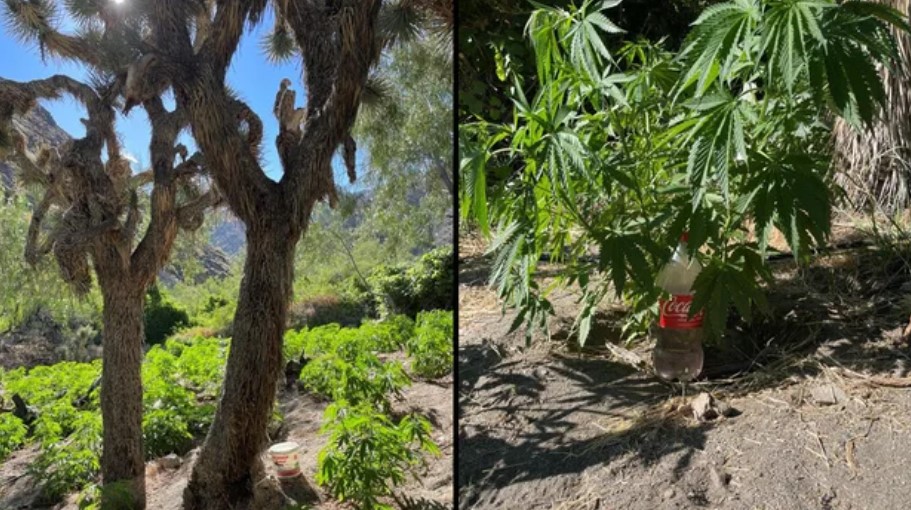
Photos shared by the agency of the San Bernardino County grow showed cannabis plants growing adjacent to Joshua trees, which are subject to a state conservation law. A container of rodenticide was found at the site, along with water being diverted by hoses and trash.

During the raids, officers arrested eight suspects on suspicion of multiple offenses, including depositing hazardous substances on land belonging to another, cannabis cultivation resulting in water pollution and causing “substantial” environmental harm to public lands, along with resisting arrest.

Officers said a suspect at one of the sites attempted to flee and was apprehended by an agency K-9. Authorities did not identify the suspects.

At the grow sites, officers seized the pesticides carbofuran and methamidophos, which are described as highly toxic and banned for use in the United States. Two illegally possessed firearms were also seized.

Officers also restored water flow at five locations where it was illegally diverted. The agency said 2,300 pounds of trash and infrastructure were also removed and the sites were staged for future cleanup.

At least 21,000 cannabis plants were eradicated, which the agency estimates would have consumed 9.5 million gallons of water over their growing cycles. In addition, 150 pounds of cannabis processed for sale were also eradicated.

CDFW said based on evidence and interviews with the suspects, officers have concluded that transnational criminal organizations operated the illegal cannabis grows.

“When criminals steal or destroy the natural resources that support California’s extraordinary biodiversity, we are committed to stopping them—and we have the teams in place to do that, no matter how far into the wilderness they try to hide their operations,” said Charlton Bonham, the Director of the Department of Fish and Wildlife.

Please note: This content carries a strict local market embargo. If you share the same market as the contributor of this article, you may not use it on any platform.

Los Angeles Zoo welcomes 2 baby girl chimpanzees

By Chelsea Hylton

Click here for updates on this story

    LOS ANGELES (KCAL, KCBS) — The Los Angeles Zoo is celebrating the birth of two baby girl chimpanzees.

Over the past several weeks, two unnamed female chimpanzees were born. The first infant was born on Aug. 20 to 35-year-old mother Yoshi and 26-year-old father Pu’iwa. The second infant was born on Sept. 9 to 18-year-old first-time mother Vindi.

Both infants and their mothers are doing well and are bonding, the L.A. Zoo said.

“These are significant births for the Zoo and both are welcome additions to the dynamic, multi-male, mixed-age troop which closely mirrors the species’ natural social structure in the wild,” said Candace Sclimenti, curator of mammals at the L.A. Zoo.

The L.A. Zoo has a long-standing history of caring for chimpanzees, including a breeding program that is part of the Chimpanzee Species Survival Plan (SSP), which is administered by the Association of Zoos and Aquariums (AZA). The goal is to increase genetic diversity and sustainability of the North American Chimpanzee population.

Senior Animal Keeper Megan Fox said she has known Yoshi and her family for nearly 30 years and it’s “lovely to see her as a new mother again.”

“Yoshi is an experienced mom and this is Vindi’s first baby, but moms and infants are bonding and have been settling into the role of motherhood very well,” Fox said. “It’s exciting to have these new additions to the troop, and they are adding a whole new social dynamic to the troop.”

Chimpanzees are one of the closest genetic relatives. They are native to forests and grasslands in parts of east, west and central Africa. The L.A. Zoo said chimps are known for their facial expressions, gestures and vocalizations.

According to the International Union for Conservation of Nature (IUCN), chimpanzees are classified as Endangered.

Please note: This content carries a strict local market embargo. If you share the same market as the contributor of this article, you may not use it on any platform.

‘Very concerning’: Persistent sinkhole on Highway 231 in St. Clair County leaves drivers on edge

By Scott Carpenter

Click here for updates on this story

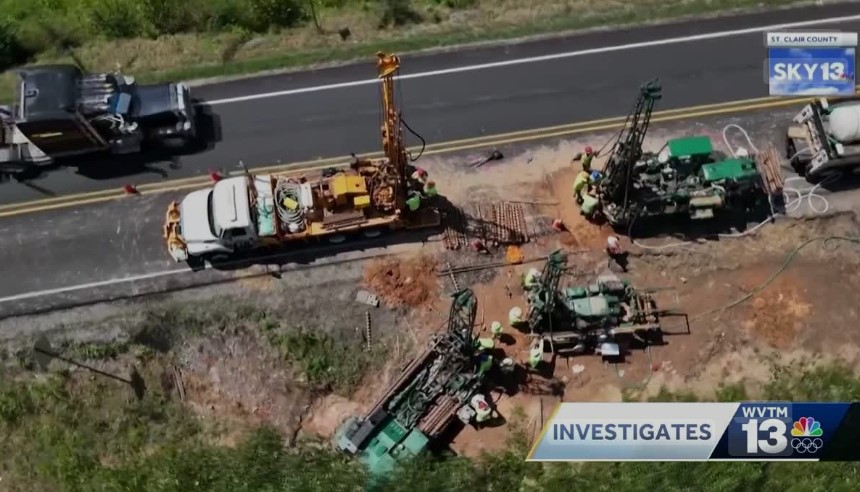
    ST. CLAIR COUNTY, Alabama (WVTM) — A large sinkhole along U.S. 231 near Pell City, Alabama, has opened multiple times since July, causing concern for drivers in St. Clair County as the Alabama Department of Transportation (ALDOT) works to find a permanent fix.

The sinkhole is dangerously close to the road, with patchwork visible in the northbound lane. ALDOT warns that the sinkhole could open again.

Laura Kohler, who drives past the sinkhole, said, “I don’t want to be around it.” She tries to avoid the area but must drive past it when heading to Pell City. Kohler added,”Part of the road is caved in.”

Jason Thrasher drives over the sinkhole for work. Both Kohler and Thrasher find the sight frightening. “Very concerning because you don’t know how big it’s gonna get the next time it opens up,” said Kohler.

Thrasher shared his experience, “I left one morning, they were working on it, fixed it. Then in two hours, I came across it and it had sunk some more.”

The sinkhole first opened in late July, reaching a depth of about 30 feet, and has reopened several times since. Video footage shows ALDOT crews filling the sinkhole with rocks and soil in August after it opened for the third time.

Scott Brande, a UAB associate chemistry professor with expertise in geology and sinkholes, explained the complexity of fixing a sinkhole. “You want to plug the hole at the bottom and so you want to put the larger size grains and gravel and stones at the bottom and gradually fill it with finer materials as you work toward the surface to fill all of the openings up,” Brande said.

He described the underground holes as complex and interconnected, similar to a sponge, and suggested they might be part of a complex cavern system.

Brande said, “My guess is in many areas the holes interconnect and they’re part of a maybe complex cavern system and whatever is poured into one opening may break through a narrow neck into another one.”

He noted that there are several reasons sinkholes can open up.

Residents in St. Clair County mentioned that construction work was being done on the road right before the sinkhole first appeared.

Kohler said, “They had resurfaced it recently, and right after it opened up.”

ALDOT refers to it as a “naturally occurring sinkhole” discovered during resurfacing work on U.S. 231.

Drivers are less concerned with how it opened. “Just fix it. That way we don’t have to deal with it,” said Thrasher.

ALDOT denied multiple requests for an interview, but sent the following statement.

“The naturally occurring sinkhole was originally discovered in late July while ALDOT crews were carrying out an unrelated resurfacing project on US-231. Sinkholes are relatively common in Alabama due to underground limestone deposits, which can dissolve over time, causing subterranean voids. Heavy rainfall recorded during the spring and early summer months may have contributed to the sinkhole’s original growth. Since our original emergency repair, ALDOT has performed additional work on the site’s foundation. That included sealing the bottom of the hole with concrete and compacting more dirt and rock with heavy equipment. We would not have reopened the road to traffic if we had any reservations about motorists’ safety. Over the last several weeks, ALDOT commissioned a thorough geotechnical analysis of the site to determine the best path forward. With that knowledge now in hand, ALDOT is monitoring the site on a daily basis and considering options for a more permanent repair if it becomes necessary to ensure the roadway’s stability and motorists’ safety.”

There are currently thousands of sinkholes across Alabama.

Please note: This content carries a strict local market embargo. If you share the same market as the contributor of this article, you may not use it on any platform.

Shifting Seasons: Sustainable agriculture in Central Oregon

Shannon Brady

Bend, OR (KTVZ) –

Agriculture is one of the biggest contributors of climate change, accounting for roughly 10% of all greenhouse gas emissions in the United States. In an attempt to reduce their footprint, farms in Central Oregon are finding ways to stay sustainable while providing healthy, quality food for their community. 

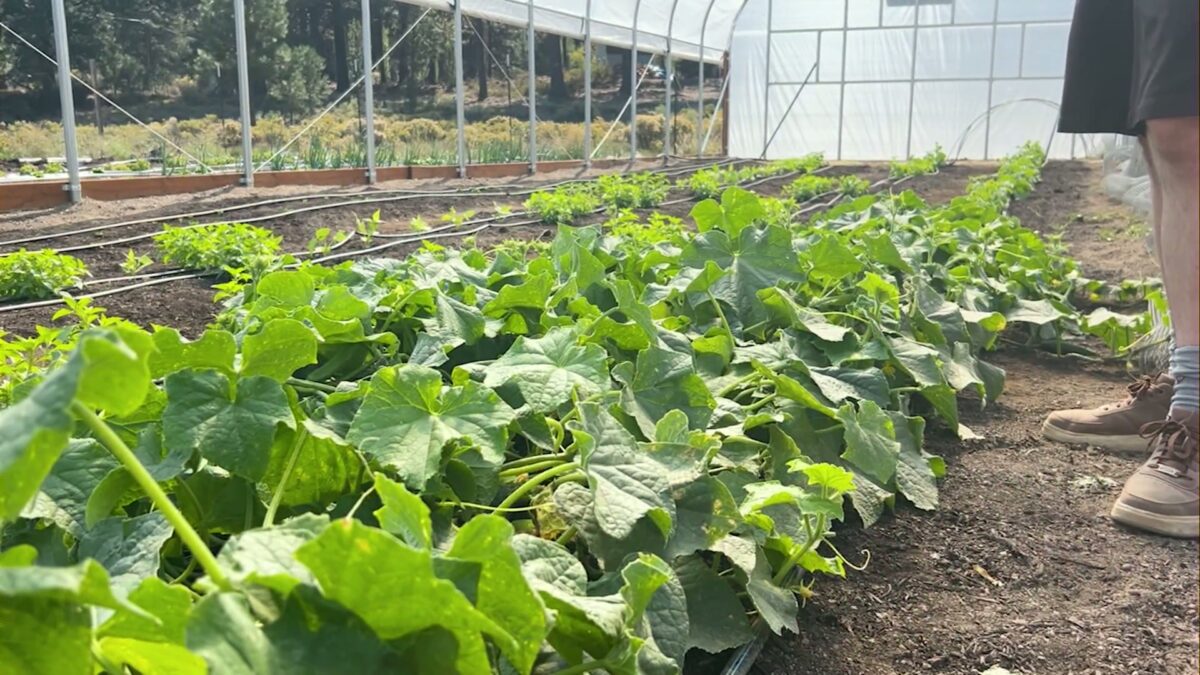
Russel Simpson from Around the Bend Farms in Bend told KTVZ about some of their methods. He said, “We use organic principles here at Around the Bend Farms. That includes having no pesticides, no herbicides, minimum amount of fertilizer. We have drip lines installed rather than overhead sprinklers, which use a lot less water than overhead sprinklers do.”

Techniques can include everything from crop rotation, special irrigation practices, reducing waste, and promoting biodiversity on a farm. Around the Bend Farms has two beehives to help pollinate their plants.

Katie Williams from Flying w Bend prioritizes eco-friendly practices with her produce and animals.

“We’re planting clover and wildflowers that our livestock goes on an eat, but that brings in the bees, and those bees pollinate my garden. And then that just puts more fruit and vegetables on my shelves. And in the big picture, it helps everyone.” She told KTVZ in January 2025.

The purpose of sustainable agriculture is to protect the environment so that future generations can continue to farm and feed their communities with nutrient rich food.

Whether you’re a farmer, a rancher, or just someone who enjoys fresh food, you can rest assured that many Central Oregon Farmers are doing their part to protect the environment so that you can always eat fresh, healthy, and local.

Click here to follow the original article.