First Alert Weather Alert until 7pm, Showers & Storms Decreasing this Evening

Katie Boer

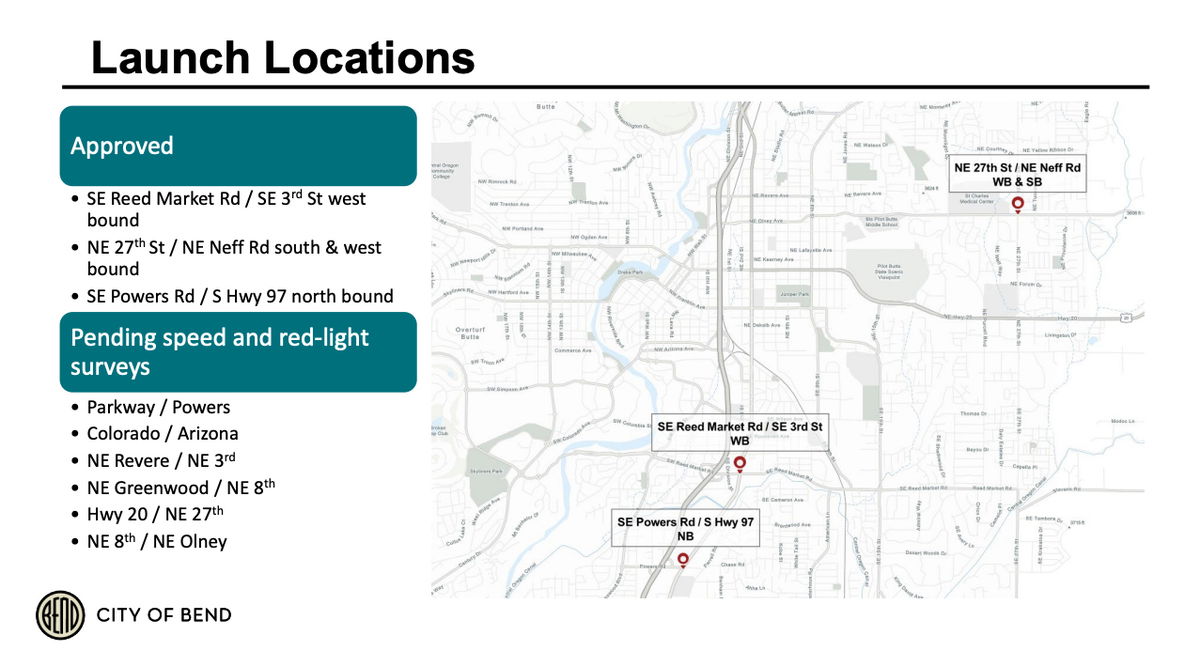
It’s been a wet and stormy Thursday across the Coachella Valley, with widespread showers and thunderstorms fueled by tropical remnants from Mario interacting with a low-pressure system to our northwest. Most of the storm activity concentrated over the mountains and deserts, but a few stronger cells moved into the northern Inland Empire and valley floor.

Several Severe Thunderstorm Warnings were issued throughout the afternoon and evening—including parts of the Coachella Valley, areas just north of Cabazon, and northwest of Desert Hot Springs. The most recent warning ended around 9:30 PM near Twentynine Palms. These localized storms brought brief heavy rain, nickel sized hail, and damaging wind gusts. In some locations, rainfall rates reached up to 1.5 inches per hour.

There has also been significant lightning activity, with thousands of lightning strikes across the region in the last 24-hours, including several hundred cloud-to-ground strikes, so hazardous conditions for many.Currently, a Flood Watch remains in effect through 2:00 AM Friday for much of Southern California—including the Coachella Valley, San Gorgonio Pass near Banning, and surrounding mountain and desert areas. Excessive runoff from these downpours could still lead to flooding in flood-prone areas.

Tonight, lingering storms from earlier activity, are weakening and expected to clear out. While tropical remnants still drift over the region overnight, our chances of additional showers or storms is pretty minimal.

Looking ahead, we’ll see gradual drying and warming Friday into Saturday. But conditions stay sticky Friday.

Another low-pressure system off the coast may help draw in additional tropical moisture early next week, but there will likely be changes to the forecast models this far out. By the latter half of next week, drier and warmer conditions are expected to return as high pressure builds back in.

Click here to follow the original article.

Summer heat takes a toll on Missouri’s dairy cattle and milk production

Abigail McCluskey

ST. JOSEPH, Mo. (News-Press NOW) — This summer’s heat has been hard on people across Northwest Missouri, but it’s also taken a toll on other residents: cattle.

When temperatures climb above 72 degrees Fahrenheit, cattle begin to experience heat stress. Unlike humans, they can’t run and escape to an air conditioner. A combination of high temperatures and humidity can also leave herds exhausted.

“The cow starts stressing over 72 degrees. And so you’re talking on a day when it’s 95, you know, 25 degrees warmer plus heat index. Milk production is seriously affected by that,” said local Buchanan County farmer Tim Gach, who raises beef cattle and previously operated a dairy farm.

This summer, temperatures across northwest Missouri soared into the 90s, with heat indices over 100 F for several days. Humidity makes sweating more difficult and raises the “feels-like” temperatures or heat index.

Red lines show temperatures soaring in the 100s.

Storm Tracker Chief Meteorologist Jared Shelton explained the science behind humidity and sweating.

“The way sweat works is you get the cool-off when it evaporates. And when you have higher humidity, you have a lower rate of evaporation. So temps could be far away from 100, but if the humidity is high enough, you could have feels-like temperatures over 105,” said Shelton.

Cows are especially vulnerable because they can only produce about 10% as much sweat as humans. This makes it harder for them to regulate body heat and more susceptible to heat-induced stress.

“They can sweat fairly effectively, but of course not nearly as good as humans,” said Jay Johnson, associate professor of animal welfare and stress physiology at the University of Missouri. “That’s really why the humidity can play a large role in a cow’s ability to deal with heat stress.”

Temperature Humidity Index (THI) for cattle shows what stress level cattle will be in depending on relative humidity and temperature.

Researchers and farmers use a scale called the “temperature humidity index”, which helps provide an easy visual and indicates when cattle might experience stress.

Even with mild temperatures in the 70s, elevated humidity percentages can push cattle into that stress threshold.

Heat stress in cattle isn’t just about comfort — it directly affects their biology. When cows overheat, their feed intake drops dramatically, which lowers the energy available for milk production.

Then, when cows do produce and consume energy, it’s redirected to cooling their body instead of milk production.

Over time, this nutritional imbalance can weaken immune systems, making cows more vulnerable to illnesses. Researchers note that prolonged periods of heat stress can even affect reproductive performance, delaying calving cycles and further impacting farm productivity.

According to research done by the University of Missouri, heat stress can reduce milk production by three to 20%.

This loss in milk production can add up quickly, especially across the Midwest, where dairy farming is a key industry.

A four-year trend has shown a steady decrease in milk production between May and August, some of the warmest months of the year.

While Dairy is still retally available on store shelves, the strain on farmers is evident.

The red line shows milk production trends for 2025. A noticeable decrease in production is noticed from May through August.

“If we’re trying to finish out cattle for butcher, they almost shut down and virtually quit eating, which makes it difficult when you are trying to get them ready for market,” said Gach.

Besides a change in eating habits, Johnson said there are other ways to notice if cows are in distress.

“They’re going to try to dissipate body heat, usually through panting. You’ll see increased respiration rate, greater breathing, and even open-mouth breathing,” said Johnson.

The University of Missouri Department of Animal Sciences recommends several strategies for helping herds endure the summer heat: providing shade wherever possible, using sprinklers or misting systems, ensuring constant access to clean, cool water and monitoring body temperature for signs of stress.

For farmers like Gach, it comes down to giving their herds relief whenever possible.

His cattle have access to both shade and ponds for cooling off — two simple measures which can make a big difference on triple-digit days.

As summers trend hotter and more humid, experts say managing heat stress will remain one of the biggest challenges for Missouri’s cattle industry. And while dairy may still reach our tables, the work behind it is growing more difficult each year.

Click here to follow the original article.
Red-light and speed enforcement cameras are coming soon to three Bend intersections; here’s where and when

Barney Lerten

(Updated: Quotes from Bend City Councilor Ariel Méndez)

BEND, Ore. (KTVZ) — Bend city councilors on Wednesday evening unanimously approved a $2.34 million contract to begin installing an automated traffic enforcement system, better known as “red-light cameras,” at several intersections around the city early next year.

Bend Police Chief Mike Krantz asked councilors to approve the three-year contract with American Traffic Solutions Inc., doing business as Verra Mobility, with the ability to extend it for up to two more years at up to $780,000 a year. 

City Councilor Ariel Méndez told KTVZ News, “This program is designed to scale up. So if it looks like people aren’t speeding that much, then it’s going to be a really small program, and if it looks like there’s a bigger need for it, it will scale up. The kind of things that they’re looking for are a history of speeding, a history of citations, or a history of crashes.”

City councilors gave preliminary approval to the proposed Automated Traffic Enforcement Program in January of last year. Krantz explained that as directed by council, the program is expected to generate enough revenue from citations to cover the costs. (You can read more details in the issue summary and the council presentation at the bottom in this article.) 

City Councilor Ariel Méndez told KTVZ News, “So the program is designed to be self funded (…) The citations themselves pay for the cost of the program. The way photo enforcement works in Oregon is it does take a picture of the driver. It a citation is issued for anyone traveling beginning at 11mph or over the speed limit and a citation is issued to the registered owner of the vehicle.”

“The intent is to change (driver) behavior” and to boost safety, the police chief explained – to stop drivers running red lights and speeding through intersections. Krantz said experience with the system elsewhere show it “does increase compliance with the rules designed to make roads safer for everyone. 

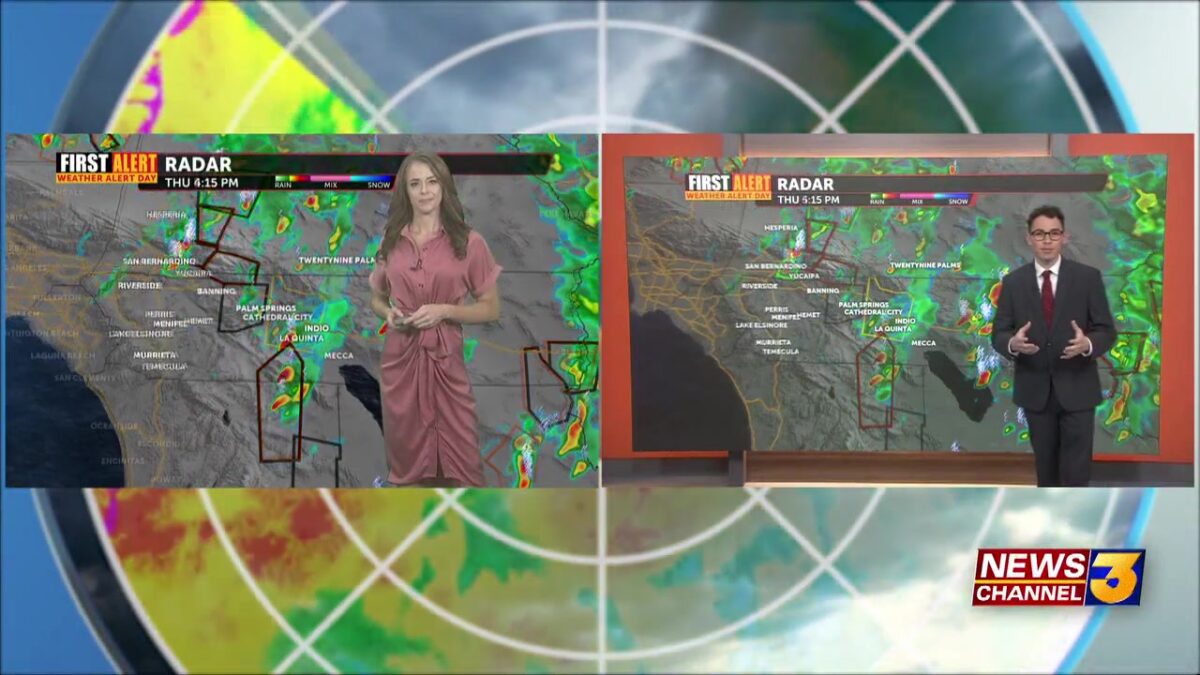
The first three intersections chosen: westbound SE Reed Market Road at Third Street, NE 27th Street and Neff Road south and westbound, and northbound SE Powers Road and South Highway 97. 

A half-dozen other intersections are under consideration, pending speed and red-light surveys, because they are at ODOT-controlled intersections and need their approval, which Krantz said is “not a quick process.”

If all goes well, the first camera systems could be installed and citations begin by January, after a 30-day “warnings-only” period for drivers.

Krantz told councilors they also want a mobile system that could be used under state law in construction, school and residential speed zones. A recent law change could drop a requirement to have a person on scene in a van when deployed; instead, the footage could be reviewed afterward, to prove and verify a violation occurred.

After the 7-0 approval vote, Mayor Melanie Kebler told Krantz shes “really excited to get this tool on the streets.”

Automated Traffic Safety PresentationDownload

Automated Traffic Enforcement Issue SummaryDownload

Click here to follow the original article.

Man accused of assaulting man with metal pipe in Ashland arrested

Ryan Shiner

COLUMBIA, Mo. (KMIZ)

A Columbia man who was wanted in an assault case from Ashland was charged for evading law enforcement earlier this week.

Michael Garrett, 47, was charged with resisting arrest on Thursday. Last month, he was charged with second-degree assault, armed criminal action and misdemeanor second-degree property damage.

He is being held at the Boone County Jail without bond. An initial court appearance was held on Thursday afternoon. He was wanted for alleged parole violations in various Boone County cases.

According to the probable cause statement filed on Thursday, he allegedly tried to drive away from a deputy who tried to conduct a traffic stop in southern Columbia. At a point in the chase, Garrett allegedly got out of the car and told his passenger to drive away, the statement says.

He is also accused of assaulting a man with a metal pipe on July 1 in Ashland after he an argument, the statement says. He allegedly fractured a man’s skull and broke the windshield of the victim’s vehicle, court documents say.

Click here to follow the original article.

Eastbound I-10 lanes closed after seven-vehicle crash in Cabazon, two people seriously injured

Jesus Reyes

CABAZON, Calif. (KESQ) – Two eastbound lanes on Interstate 10 in Cabazon are shut down following a seven-vehicle crash Thursday afternoon.

The crash was reported at around 1:50 p.m. near the Main Street on-ramp.

The California Highway Patrol said there were several separate crashes in the same area.

The incident started at around 1:45 p.m. when officers located an overturned vehicle that had left the roadway and overturned onto the frontage road, near the train tracks. At the same location, officers located two separate crashes, a two-vehicle non-injury crash and a two-vehicle minor-injury crash.

Authorities said two patients were hospitalized with serious injuries.

Three additional patients suffered minor injuries and were taken to the hospital. Two patients with minor injuries refused further medical treatment.

All eastbound lanes were initially shut down; however, the #1 and #3 lanes were reopened by 3:00 p.m.

Stay with News Channel 3 for continuing updates.

Click here to follow the original article.

Two men arrested, out on bail in connection with seizure of illegal marijuana in Thousand Palms

Jesus Reyes

UPDATE: 9/19/2025

THOUSAND PALMS (CNS, KESQ News Team) – Two men suspected of illegally cultivating marijuana in Thousand Palms are out on bail Friday.

Riverside County Sheriff’s officials say the two suspects were arrested and booked into the Smith Correctional Facility in Banning on Thursday on suspicion of illegal marijuana cultivation and sale or transportation of marijuana. They were released later that day on $5,000 bail.

Officials add that the arrests were a result of a search warrant and investigation in the 31000 block of Dunham Way, where they seized about 15,000 marijuana plants, which were taken “for destruction.”

The investigation remains ongoing.

Stay with News Channel 3 for updates.

THOUSAND PALMS, Calif. (KESQ) – A marijuana-related search warrant was served in Thousand Palms, briefly prompting a heavy police presence.

The warrant was served in the area of Dunham Way.

The Riverside County Sheriff’s Office confirmed two people were detained.

The investigation remains ongoing.

Stay with News Channel 3 for continuing updates.

Click here to follow the original article.

Pocatello Valley Montessori School hosts ‘Human-Powered Rodeo’ with Idaho Walk Bike Alliance Thursday

Sam Ross

POCATELLO, Idaho (KIFI)– The Idaho Walk Bike Alliance, a Boise-based nonprofit dedicated to promoting accessible pedestrian travel, will host a ‘Human-Powered Rodeo’ event at Pocatello Valley Montessori School on Thursday.

During the event, students and families will get a chance to try classic rodeo events like roping and barrel racing adapted for bicycles, scooters, or walking.

The Human-Powered Rodeo will be offered to students only during the school day, but parents and families can return at 6 p.m. to try their own hands and feet at the activities.

For more information on the event, you can visit the Idaho Walk Bike Alliance or Pocatello Valley Montessori School Facebook pages.

Click here to follow the original article.

More resources are heading to families that kinship foster. Here’s where you can learn more

Celeste Springer

PUEBLO, Colo. (KRDO) — A new Colorado law is going into effect, offering more support to kinship care foster families. Kinship care fostering is when a child is cared for by a family member, like a grandparent, or a close family friend.

SB24-008, a bipartisan effort, was signed into law last year. It extends foster care certification to kinship placements, making families eligible for resources like tutoring and mental health treatment.

On Thursday, Sept. 18, Kids Crossing is holding an informational seminar for families from 5:30 p.m. to 6:30 p.m. at the Pueblo Library located at 100 E. Abriendo Ave.

Information will be available to families who want to get certified as a kinship care foster family. It will also include information on the resources available to current foster families.

“This is a major step forward in ensuring kids in foster care can stay with relatives or close family friends whenever possible, instead of a stranger,” said Ben Schoch, Director of Foster Care, Kids Crossing. “Research shows the entry into foster care is less traumatic when children are able to remain with family or someone they know.”

According to the Administration for Children and Families, about 38% of foster children in 2023 were living with a relative. With such a large number of foster children living in that type of placement, officials say it’s important that they receive the same resources as other children in the system.

“We’ve crafted this legislation to remove barriers to kinship care by making it easier for relatives or others who have a significant relationship to the child to access certain resources such as housing, clothing and training,” said Representative Mary Young last year.

According to Kids Crossing, their mission is to provide resources like management services, emergency support, respite, and support services to foster families. A spokesperson for the nonprofit says they have offices in Denver, Colorado Springs, Pueblo and La Junta. 

“Kids Crossing has over 30 years of supporting Colorado children in the child welfare system. We have 2 full mental health clinics and numerous support services in place to help children of all ages,” said Schoch.

Anyone interested in learning more is encouraged to attend the informational meeting on Thursday evening. Schoch also encourages families to visit their website by clicking here.

Click here to follow the original article.

St. Vincent de Paul Thrift Store celebrates grand reopening after expansive renovations

Sam Ross

POCATELLO, Idaho (KIFI)– The St. Vincent de Paul Thrift Store and Food Pantry officially reopened on Thursday with new renovations to the store showroom and shopping experience, thanks to community donations and volunteers.

Renovations to the thrift store include an additional 360 square feet of showroom space, which has allowed the store to double its clothing capacity. A new point-of-sale transaction system will also be installed at the store in October for easier inventory taking and sales tracking.

“I am hoping that this is going to help us increase our revenue in the thrift store,” said Beth Huston, manager of the St. Vincent de Paul Thrift Store. “In the past, our revenue in the thrift store has been pretty small–enough to pay the bills and payroll and keep the building open–I’m hoping that we can increase the revenue enough to where we can supplement or augment the social services, which we’ve never been able to do.”

Along with the thrift store and weekly food pantry, St. Vincent de Paul also provides services like rent and utility assistance, medical bill assistance, and vouchers for free clothing and gasoline for people in need. The social services have been funded, primarily, through grants and private donations.

The store renovations were made possible by local businesses, like Acoustic Specialities Inc., which donated materials and labor to install a new wall, and volunteer workers from Construction Services Inc., the Knights of Columbus, and store staff.

For more information on St. Vincent de Paul’s services and thrift store hours, you can visit their website HERE.

Click here to follow the original article.

Problem Solvers: Former caregiver of Desert Sage Memory Care speaks out after second heat-related incident in a year

Matthew Draxton

(Update: Adding video)

BEND, Ore. (KTVZ) — In the fall of 2024, KTVZ’s Problem Solvers broke the story of a resident at Aspen Ridge Memory Care facility passing away after being left in the sun on a hot August day. This spawned a multi-part series, investigating claims made by former staff and resident familiy members of alleged abuse and neglect.

Less than a year later, and only a month after Oregon state agencies removed licensing restrictions, a second heat-related incident occurred at the same facility, now known as Desert Sage.

Fortunately, though, this patient survived. 

“Were you surprised when an incident occurred just one month after the state left?” KTVZ’s Matthew Draxton asked former caregiver Audrianna George.

She responded: “I was not surprised at all.”

 On July 14th, 2025, 90-year-old resident Dorris Howard fell in the courtyard at Desert Sage Memory Care during a day of very high temperatures in Bend. According to a family member, it was 20 minutes before anyone found her.

“I think the high temperatures in the Bend area around 94, 95 degrees that day,” said Fred Steele, the director of the Oregon Office of Long-Term Care Ombudsman.

According to a family member close to Howard, her legs had been sunburned and she had a temperature read of 100.5 degrees by the time she arrived at the hospital 

“Would you say it was preventable?” Draxton asked George. She responded: “Yes, I would say it was very much preventable. I would say it was very much negligence on the caregivers’ part.”

George is a former caregiver at Desert Sage Memory Care, formerly Aspen Ridge Memory Care, and worked closely with Howard. She worked at Aspen Ridge from 2022 to 2023, and then again from January 2025 to June 2025, meaning she was present during the management change.

According to the Oregon Department of Human Services, Howard had previously been determined to be a fall risk, and was supposed to have safety checks every hour by staff, as stated in her care plan.

“She was left a lot to wander around, especially outside. She loved to go outside,” George explained. She continued, “A couple of times, the doors would be left open. If you’re going to do that, you need to keep a close eye on what’s outside.”

ODHS found that facility had failed to provide a safe environment, due to a lack of safety checks and because she was not properly supervised 

Speaking from her experience as a caregiver at the facility, George claims, “No one was paying attention. I noticed a lot of people on their phones, and it was a huge worry.”

Desert Sage Memory Care, formerly known as Aspen Ridge, was on a licensing restriction since September 13th, 2024, according to ODHS, due to the August 30th death of a resident.

KTVZ’s Problem Solvers reported last year that the resident was left in the sun in 97-degree weather for two hours while wearing a winter fleece.

“The initial reaction was, ‘How did this happen again at the same facility?’” questioned Steele. He continued, “I mean, clearly, there’s a concern with the setup at that facility.”

The managmenet company at the tine of the 2024 incident was Frontier Senior Living.

George claims, “They kind of would turn a blind eye to the problems at hand.”

By February, though, Areté Living, a new management company, took over and renamed it Desert Sage Memory Care.

Areté Living released a statement to KTVZ’s Problem Solvers, saying,”A recent incident at our community has been linked by the state to a separate matter involving the previous operator last year. This association was made based on preliminary information that has not yet been thoroughly investigated or finalized.”

“We remain confident that the completed investigation will show our community has operated fully in accordance with Oregon’s rules, regulations, and quality standards — as we have consistently done throughout Areté Living and Avamere’s long history of service in the state of Oregon.”

“Although the current situation is a setback and premature comparisons have been made to a former operator, we are proud of the high standards of care, transparency, and meaningful improvements we have consistently delivered to this community.”

“It is a new day at Desert Sage Memory Care, and we stand by the exceptional work our team continues to deliver,” the statement concluded

George claims she was “really excited” when Areté Living took over. However, she says, “Not even a month into being with the new management, things were no different. In fact, some of it (was) even worse.”

George claims other caregivers were neglectful and abusive to residents.

“Residents are being left in the same clothes for weeks., she said. “Residents are being overdosed with meds. Residents are not being given meds, the proper meds and-or meds at all. And it’s been put in the computer that they have been.”

George also alleges staff were rough with residents, specifically when trying to get them to use the restroom. “They would like slam them down on the toilet and just like hold them there and not just let them go at their own pace.”

In spite of this, George says things were different during ODHS inspections. She said caregivers were “instructed what we could and couldn’t say, what we could and couldn’t do,” and “everybody was just on their best behavior.”

The 2025 investigation found staffing to be an issue leading to a lack of oversight. In order to remove the licensing condition, the facility needed to ensure suffice staffing through the day and that caregivers are trained caregivers, not facility staff covering for them.

They were also required to do 30-minute courtyard checks, as well as detail resident visits to the courtyard, including when they entered, left, and the state of condition residents were in when in the courtyard.

Another requirement was reviewing care plans for residents who consistently utilize the courtyard.

But George said after they would pass inspection, “or state wouldn’t be there, things would just fall back into the same old same old.”

Desert Sage Memory Care ultimately had their restrictions lifted on June 4th after ODHS found the facility to be in “substantial compliance,” according to ODHS records.

The state agency specifically noted: “Systems are in place to ensure similar deficiencies do not reoccur.”

Ironically, Steele said, “Within a month of ODHS not providing their regulatory day-to-day oversight that they were with that condition in place, another incident occurs,”

George added that if “you’re not sincere or passionate about what you do and you put on a show, the quality of care, it’s never going to last long.”

Desert Sage Memory Care is now under a new set of conditions as of August 1st ,2025. That includes limited admission, with only one resident allowed every seven days, each of whom must be approved by oversight. The courtyard must be monitored every 15 minutes and staff must submit regular updates to ODHS.

ODHS will also be conducting bi-weekly check-in, and written reports are to be given to the state agency every seven days.

Click here to follow the original article.