Feds again ask appeals court to stay ruling barring roving patrols

City News Service

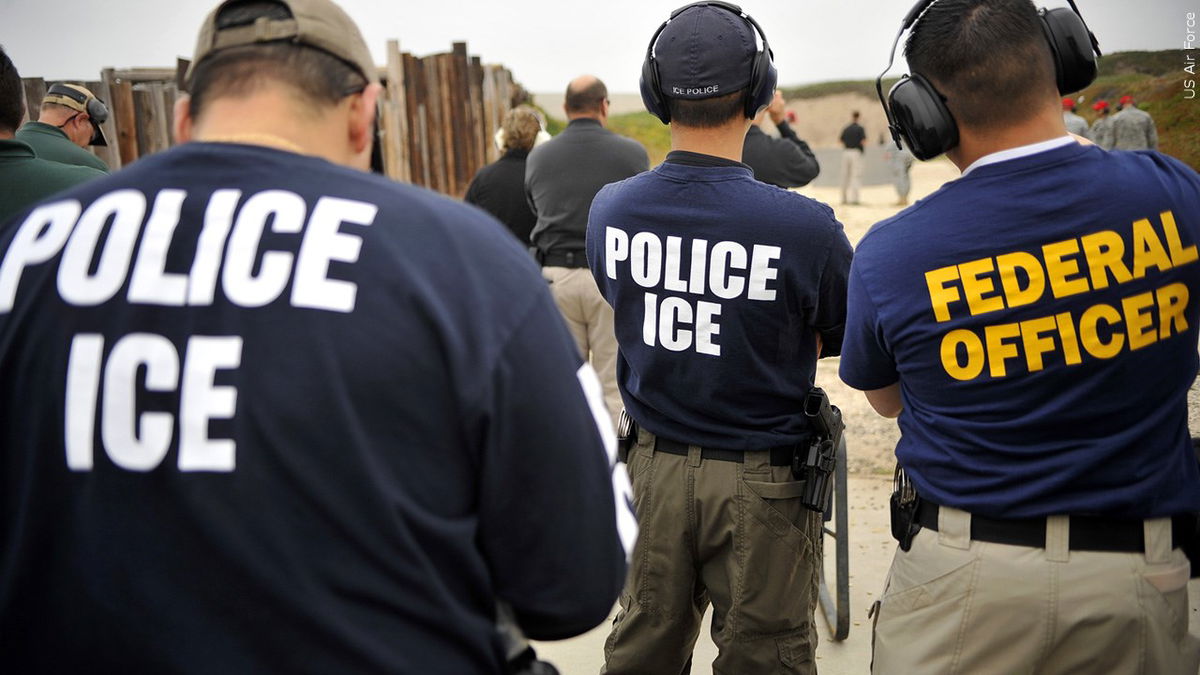
LOS ANGELES (KESQ) – With a Los Angeles federal judge rejecting a request by government attorneys to pause her ruling barring immigration agents from detaining people without reasonable suspicion beyond their race, ethnicity or occupation, government attorneys have again asked an appeals court to issue a stay of the order, according to court papers obtained today.   

Government lawyers contend the judge’s order halting so-called “roving patrols” of federal immigration agents in the Los Angeles area is a “straight-jacket” that prevents President Donald Trump “from ensuring that immigration laws are enforced.”  

On Thursday evening, U.S. District Judge Maame Ewusi-Mensah Frimpong denied the government’s request for a stay of the ruling, writing that the government hadn’t shown that it will suffer any harm from the restraining orders she issued last week and because “the federal government did not follow the rules for making this request.”  

The judge also denied a request from Southland cities for an expedited hearing on their request to formally participate in the case. A hearing is currently set next month to discuss the proposed intervenors’ request.   

Immediately following the judge’s written ruling Thursday evening, the government filed an appeal with the 9th U.S. Circuit Court of Appeals for a second time, asking that the court overturn Frimpong’s order and allow immigration patrols to resume.

The first time the government appealed to the 9th Circuit requesting a stay pending appeal of Frimpong’s temporary restraining order, the judge had not yet ruled on the matter, so the appellate panel on Wednesday denied the motion.

After the federal appeal was lodged with the 9th Circuit, the American Civil Liberties Union immediately filed a response, arguing that a stay would be “inappropriate,” and asking that if the court grants the government’s request, an expedited briefing schedule be put into place.   

Frimpong previously set a briefing schedule for the ACLU and other individuals and organizations that brought the lawsuit July 2 to file their arguments on whether the court should issue a preliminary injunction order, which would last far longer than the temporary restraining orders the court issued last week.   

The judge set a hearing for Sept. 24 in downtown Los Angeles.   

In a statement provided to City News Service, Tricia McLaughlin, assistant secretary for public affairs at the U.S. Department of Homeland Security, said the administration’s position remains unchanged.

“The facts of this case haven’t changed,” she said. “An unelected district judge is undermining the will of the American people. America’s brave men and women of law enforcement are removing murderers, gang members, terrorists, pedophiles, rapists — truly the worst of the worst from Golden State communities.”  

In their emergency motion lodged with the appellate court for a stay pending appeal, government attorneys argued the TRO places “coercive restraints on lawful immigration enforcement affecting every immigration stop and detention.”

The ruling levels “systemic challenges to federal immigration enforcement in the Los Angeles area,” according to the appeal.   

Frimpong’s ruling came in response to the lawsuit filed in Los Angeles federal court by Public Counsel, the ACLU and attorneys representing Southern California residents, workers and advocacy groups who allege residents were unlawfully stopped or detained by federal agents targeting locations where immigrant workers are traditionally hired.   

It accused immigration officials of carrying out “roving patrols” and detaining people without warrants and regardless of whether authorities have actual proof that individuals are in the country legally.

It further alleged federal agencies, including DHS, U.S. Immigration and Customs Enforcement and U.S. Customs and Border Protection, engaged in unconstitutional and unlawful immigration enforcement raids by targeting Angelenos based on their perceived race and ethnicity and denying detainees constitutionally mandated due process.

White House border czar Tom Homan also criticized the order.   

“Look, we’re going to litigate that order, because I think the order’s wrong. I mean, she’s (Frimpong) assuming that the officers don’t have reasonable suspicion. They don’t need probable cause to briefly detain and question somebody. They just need reasonable suspicion. And that’s based on many articulable facts,” Homan told CNN’s “State of the Union” Sunday.

Click here to follow the original article.

Man, 2 juveniles accused of armed robbery in Boonville

Ryan Shiner

COLUMBIA, Mo. (KMIZ)

A man and two juveniles were accused of robbing someone at gunpoint on Thursday in the 500 block of Leroy Street in Boonville.

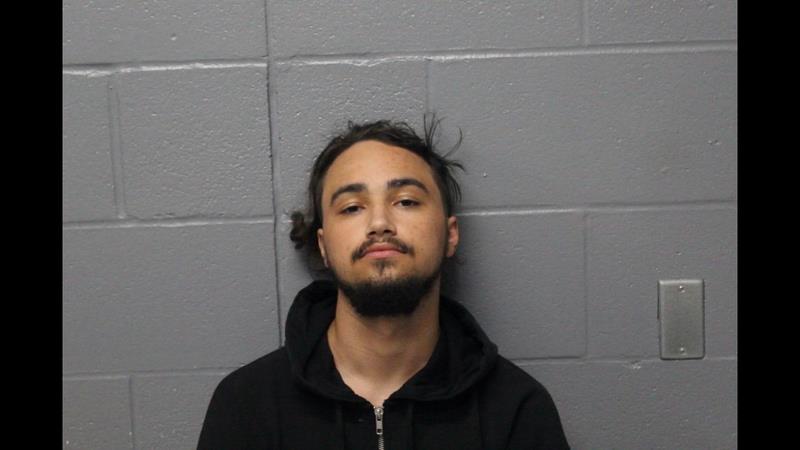
Trenton Schoen, 18, was charged on Friday with first-degree robbery, armed criminal action and illegally having a weapon. He is being held at the Cooper County Jail on a $200,000 bond. A court date has not been scheduled.

The probable cause statement says that the victim was invited over to another teenager’s home on Leroy Street after they sent a Snapchat message showing they made $400 from his paycheck. Once he arrived to the house, Schoen and two juveniles allegedly pulled out gun and told him to empty his pockets, which included taking the money, a vape and his cellphone, the statement says.

The three eventually gave back the phone and vape, but kept the money, the statement says. The victim left the house after the three threatened to kill him, court documents say. All three people were detained during a traffic stop and police found loaded guns in the vehicle, the statement says. One of the juveniles allegedly admitted to having guns used in the robbery in his bedroom, the statement says.

Schoen allegedly denied pointing a gun at the victim or taking his money, the statement says.

Click here to follow the original article.

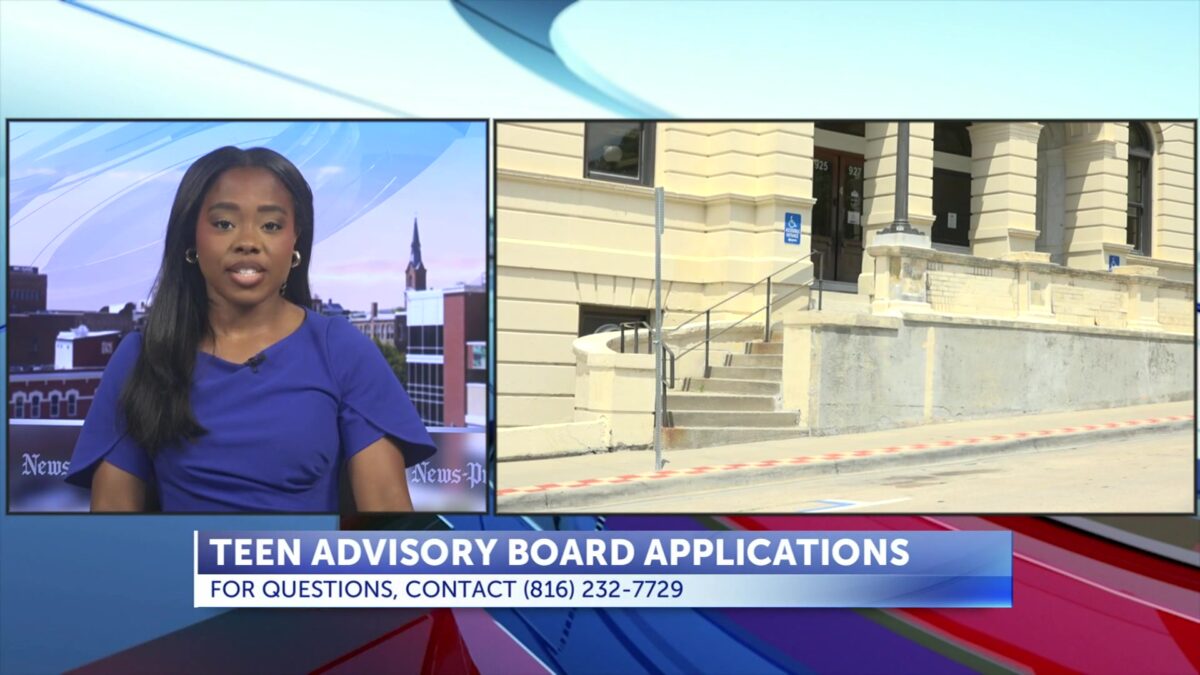
St. Joseph Public Library accepting applications for Teen Advisory Board

News-Press NOW

ST. JOSEPH, Mo. (News-Press NOW) — The St. Joseph Public Library is offering local teens a chance to get volunteer hours and to get involved with the community through its Teen Advisory Board.

The Teen Advisory Board (TAB) is open to students in sixth through 12th grade. Teens on the board get to suggest new books, movies, graphic novels and more.

TAB members can also help plan events and programs to enjoy themselves along with their friends.

Participants are expected to show up to all meetings and be active, as well as attend planned events. If a member is unable to participate or attend an event, they are encouraged to contact a TAB coordinator.

The first meeting will be held from 4:45 p.m. to 5:45 p.m. on Thursday, Sept. 4, at the Downtown Library, located at 927 Felix St.

Applications are available at the Downtown and East Hills branches or online at sjpl.lib.mo.us/teen-advisory-board.

Applications are due by Sunday, Aug. 10. Filling out an application does not guarantee acceptance to the TAB; however, applications will be kept on file for a year.

For questions about the TAB, contact Evelyn Holtzclaw by phone at (816) 232-7729 or by email at eholtzclaw@sjpl.lib.mo.us.

Click here to follow the original article.

California Indian Nations College on track to become state’s only federally accredited tribal college

Kendall Flynn

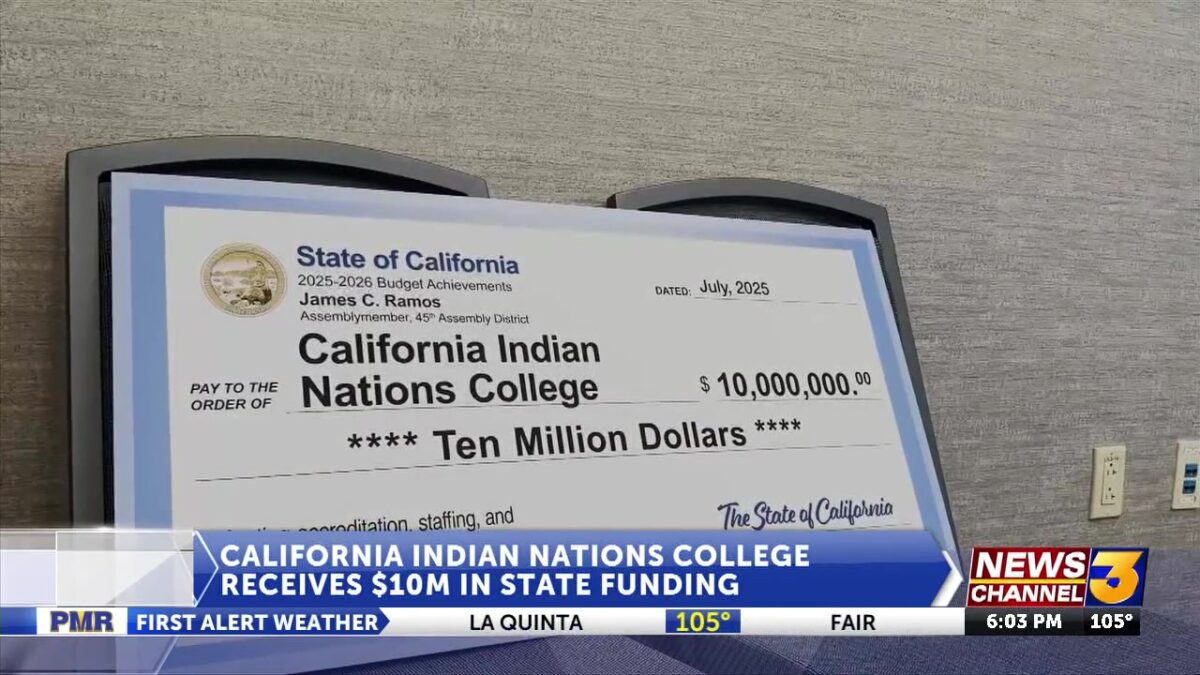
PALM SPRINGS, Calif. (KESQ) – The California Indian Nations College in Palm Desert is receiving help to become California’s only federally accredited tribal college.

Friday morning, Assemblymember James C. Ramos (D-San Bernardino) presented a $10 million state general fund check to CINC. The check presentation will help it become the state’s only federally accredited tribal college.

Becoming federally accredited is crucial for the college to access funding opportunities and it recognizes the college’s programs. A federally accredited tribal college, like the two-year CINC, is controlled and operated by a federally recognized American Indian tribe and offers programs incorporating indigenous culture.

California has the greatest numbers of Native Americans in the United States, but has not had an institution accredited, compared to the more than 30 accredited tribal colleges with 75 campuses throughout 13 states.

CINC was granted candidacy/pre-accreditation status in January by the Accrediting Commission for Community and Junior Colleges.

Officials with CINC said this accreditation is particularly important because the “high school graduation rate for American Indians is 11.4% lower than the overall rate, and the college going rate is 14.4% lower than the overall.”

According to Friday’s event organizers, CINC does not receive ongoing federal or state support. The tribal college has received one-time state funding for $5 million in 2022 to help reach accreditation, and $9 million in seed money from the Twenty-Nine Palms Band of Mission Indians.

Stay with News Channel 3 to hear from officials on the check presentation and its importance for reaching accreditation status.

Click here to follow the original article.

Arroyo Grande Police Department Hosts Coffee with a Cop

News Channel 3-12

Below is a press release from the Arroyo Grande Police Department regarding their community event, Coffee with a Cop

ARROYO GRANDE, Calif. – On July 25, 2025, police officers from Arroyo Grande Police and community members will come together in an informal, neutral space to discuss community issues, build relationships, and drink coffee. All community members are invited to attend. All questions are welcome.

The event begins at 9:00 am and ends at 11:00 am on Friday, July 25, 2025, at Café Andreini located at 131 E. Branch St. in Arroyo Grande. Please contact Sergeant Jason Castillo with questions: 805-473-5110 ext. 5127 jcastillo@arroyogrande.org

The majority of contacts law enforcement has with the public occur during emergencies or emotionally charged situations. Those situations are not always the most effective times for relationship building with the community, and some community members may feel that officers are unapproachable on the street. Coffee with a Cop breaks down barriers, allowing for a relaxed, one-on-one interaction.

Coffee with a Cop provides a unique opportunity for community members to ask questions and learn more about the department’s work in our neighborhoods.

“We hope that community members will feel comfortable asking questions, bringing concerns, or simply getting to know our officers,” said Interim Chief David Culver. “These interactions are the foundation of community partnerships.”

Coffee with a Cop is a national initiative supported by the United States Department of Justice, Office of Community Oriented Policing Services. Similar events are being held across the country, as local police departments strive to make lasting connections with the communities they serve. The program aims to advance the practice of community policing through improving relationships between police officers and community members, one cup of coffee at a time.

The Latest Breaking News, Weather Alerts, Sports and More Anytime On Our Mobile Apps. Keep Up With the Latest Articles by Signing Up for the News Channel 3-12 Newsletter.

Click here to follow the original article.

Fairwell Festival in Redmond, new exit route added to ease traffic

Jillian Fortner

(update: adding new exit information from Sheriff’s Office)

REDMOND, Ore. (KTVZ) — Tens of thousands of people are in Redmond for the third annual Fairwell Festival at the Deschutes County Fairgrounds.

“It takes a tremendous amount of time to get ready for this, fantastic team that works almost year-round of making this happen,” said Geoff Hinds, executive director of the Deschutes County Fairgrounds.

Despite concerns about nearby wildfires and air quality, no changes to the festival had been announced as of midday Friday.

Temperatures are expected to be warm this weekend, so it’s important to stay cool and hydrated during the outdoor event.

Hinds said, “There’s a ton of shade, misting tents, free water stations here on grounds. Make sure you come prepared for being out in the sun.”

Local and state law enforcement will have extra patrols in the area. With traffic congestion expected, attendees are encouraged to allow extra travel time and consider using ridesharing or carpooling if possible.

Deschutes County Sheriff’s Office has been working with organizers to improve Saturday night’s exit experience. Here’s what they shared on Facebook: 

An alternative exit route from the fairgrounds to Highway 126 will be available for those heading to Bend. Additional staff will be on-site to assist with directions.

SW Airport Way will be closed to all inbound traffic, except for rideshare, guest pickup and airport-bound vehicles entering from Highway 97 and SW Veterans Way.

The festival runs through Saturday.

Click here to follow the original article.

Man seeking ‘fresh start’ accused of arson, setting SUV on fire north of Bend that spread to nearby trailer

Barney Lerten

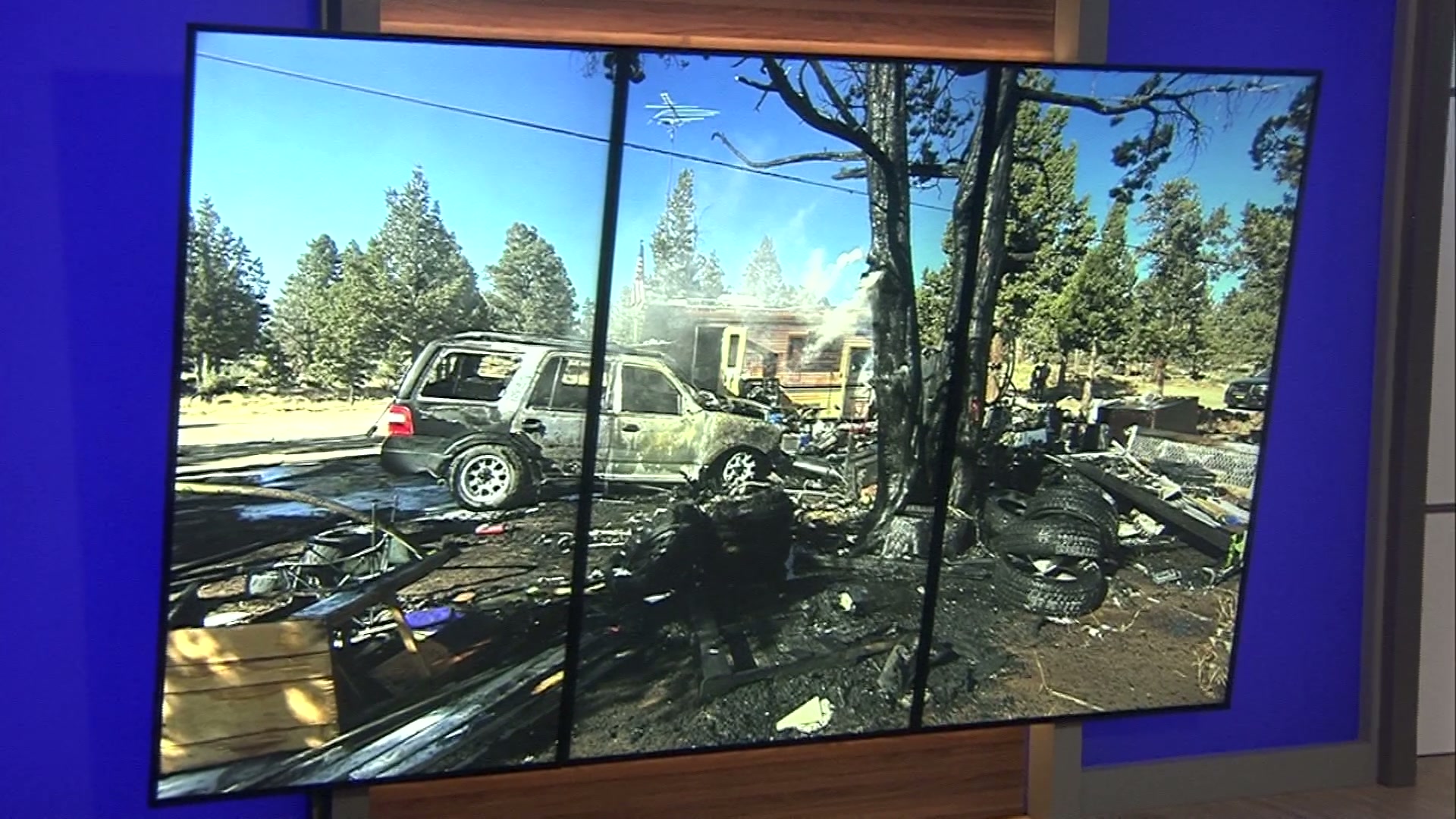
BEND, Ore. (KTVZ) — A resident of a small homeless encampment north of Bend was arrested on arson and other charges Friday, accused of setting a vehicle fire that spread to a nearby trailer and trees.

Deschutes County 911 dispatchers received a report just after 8 a.m. of a fire near milepost 131 on Highway 97, just south of Deschutes Junction, sheriff’s office Public Information Officer Jason Carr said.

Bend Fire crews arrived quickly and were able to knock the flames down before they could spread further, Carr said, adding that no injuries were reported.

Sheriff’s deputies determined that Charles Smith Harris Jr., 55, allegedly set fire to an SUV, which then spread to another man’s nearby trailer, Carr said. The fire also ignited several small trees in the area.

Harris was booked into the county jail on charges of first-degree arson, reckless burning, first-degree criminal mischief, second-degree criminal trespass and second-degree disorderly conduct.

Harris was cooperative with deputies, Carr said, and reportedly told them he started the fire in an attempt to “get a fresh start.”

Carr told KTVZ News Harris and the trailer owner “knew each other because of living near each other,” but that no altercation occurred.

Harris claimed the SUV was his, but Carr told us there’s “some question as to who owns it.”

It was the second arson arrest to occur north of Bend in less than a day. Jodie Wakeman, a resident of Green Acres RV Park south of Redmond, is accused of setting her trailer ablaze, a fire that spread to two other RVs and killed a dog.

Carr said the two crimes were not related.

Click here to follow the original article.

Jefferson City man pleads guilty to sexually abusing child, gets 5 years of probation

Ryan Shiner

COLUMBIA, Mo. (KMIZ)

A Jefferson City man who was accused of sexually assaulting a child pleaded guilty to a felony earlier this week.

Bryan Klempke pleaded guilty on Monday to second-degree sexual abuse and was sentenced to five years of parole. He was originally charged with first-degree sexual abuse and incest.

Court documents in previous reporting say that police were called on Feb. 28, 2024, for a report of two incidents regarding Klempke, one being sexual abuse and the other was an allegation of domestic abuse.

Court documents stated the child victim told Christina Garza they were sexually assaulted on Jan. 1, 2024, but was then threatened by Garza.

Garza was previously a reserve officer for the Jefferson City Police Department. She pleaded guilty in August 2024 to misdemeanor failing to report child abuse and was fined $2,000. She was originally charged with first-degree endangering the welfare of a child and failure of a mandated reporter to report child abuse.

Previous reporting indicates the Callaway County Children’s Division reported to investigators that it received a tip on Feb. 24, 2024, who alleged Garza told them about the abuse. Garza allegedly told that person that they didn’t report the assault because she owed him $30,000, court documents say.

Click here to follow the original article.

What NPR Cuts Mean for KCLU and Public Radio on the Central Coast

Ryder Christ

SANTA BARBARA, Calif. — Congress has voted to rescind nearly $1.1 billion in funding for public media — a move that eliminates all federal support for NPR, PBS, and their member stations, including KCLU on the Central Coast.

House Republicans passed the spending cuts bill shortly after midnight Friday. Roughly $8 billion will be pulled from congressionally approved foreign aid programs as part of the White House’s broader effort to dismantle the U.S. Agency for International Development. Another $1.1 billion will be cut from the Corporation for Public Broadcasting, which helps fund NPR and PBS. President Trump, who proposed the cuts, is expected to sign the bill into law.

Mary Olson, general manager of KCLU, called it a “dark day for public media in our country” and said, “$300,000 is now gone immediately from our budget, so that’s quite a shortfall.” Despite the loss, Olson says no jobs or programs will be cut.

The cuts represent roughly 12% of KCLU’s annual operating budget. Olson said the station will now turn to its listeners for support.

“We are operating under the premise, effective immediately, that it’s going to be OK,” she said.

KCLU broadcasts across San Luis Obispo, Santa Barbara, and Ventura counties, with coverage stretching from Santa Margarita to Agoura Hills. Olson said that despite the loss in federal support, that reach will remain unchanged.

“We’re not going to let that happen,” she said in response to whether the coverage area might be reduced. “They [KCLU reporters] are burning up the 101… getting local news, and we’re going to continue that coverage.”

The station’s news department is led by News Director Lance Orozco and Caroline Feraday, who produce award-winning local coverage.

“Newsrooms are dying across the United States. Local news is critical,” Olson said. “The last thing we need to do is think about cutting services or cutting back.”

KCLU plans to maintain current programming and staffing levels, unlike other NPR affiliates across the country that have already begun laying off employees and altering lineups due to similar cuts.

“Already today, I’ve been consoling general managers across the country that they’re having to lay off staff and they’ve already announced programming changes,” Olson said. “We have colleagues that have lost over 50% of their budget.”

KCLU, which has served the tri-counties for 30 years, remains optimistic that community support will help fill the funding gap.

“We’re going to just buck up. We’re going to find a way,” Olson said. “We’re going to keep on keeping on.”

KDRW (88.7 FM) in Santa Barbara and KCBX (90.1 FM) in San Luis Obispo also carry NPR programming.

The federal cuts to public broadcasting come as PBS SoCal, Southern California’s flagship PBS organization, announces an expansion of coverage in the Santa Barbara region.

Channel 26 and Channel 56 will expand PBS’s over-the-air signal to communities in Lompoc, Vandenberg Space Force Base, Solvang, Santa Ynez, Los Olivos, Santa Maria to the north, and Santa Barbara, Goleta, Montecito, Summerland, Carpinteria, and Ventura to the south. Viewers will need to rescan their TVs to access the new channel options.

At the national level, here’s what might happen now that federal funding for public broadcasting has been zeroed out.

What will viewers and listeners notice?

Over time, some local stations may be forced off the air, while others may carry fewer shows or reduce their news and educational programming. The exact impacts are hard to predict because the public radio and TV system is decentralized and complex.

At the center of that system is the Corporation for Public Broadcasting (CPB), an independent entity established by Congress in the 1960s to support local radio and TV stations across the U.S.

CPB has received $535 million in taxpayer support annually, which it distributed to about 1,500 local stations, programmers, and infrastructure providers. That funding has now been rescinded by congressional Republicans. Democrats opposed the move.

When will the cuts take effect?

Trump’s rescission targeted CPB’s federal funding for the period from October 2025 through September 2027, so stations are expected to face budget shortfalls beginning this fall. Some public media executives have already begun planning layoffs and cost-cutting measures.

While NPR and PBS affiliates do receive significant support from donations — including from “viewers like you” — the federal appropriation has historically served as the foundation of their operating model.

“For every public dollar provided, stations raise nearly seven dollars from donors, including state and local governments, universities, businesses, foundations, and individual viewers and listeners,” according to CPB.

Won’t the affected stations just raise more money from listeners?

Yes and no. Larger stations in metro areas may be able to recover lost revenue more easily. But smaller, rural, or economically disadvantaged stations tend to rely heavily on federal funding to keep their antennas powered and staff employed.

“Without federal funding, many local public radio and television stations will be forced to shut down,” the Corporation for Public Broadcasting warned.

What about the national NPR and PBS networks?

In the public media system, federal dollars flow first to CPB, then to local stations — which in turn pay dues and fees to national networks like NPR and PBS. Those dues help fund national programming like Morning Edition and All Things Considered.

NPR noted that while only 1% of its revenue comes directly from the federal government, about 30% of its funding comes indirectly through member station fees — which will likely be impacted by the CPB cuts.

NPR has warned that “elimination of federal funding would ultimately result in fewer programs, less journalism — especially local journalism — and eventually the loss of public radio stations, particularly in rural and economically distressed communities.”

Why are Republicans trying to strip the funding?

The vote marks the culmination of decades of conservative opposition to federal funding for public broadcasting. Critics argue that public media is unnecessary in the age of streaming and say taxpayers shouldn’t be on the hook for media content.

“Nowhere in the Constitution does it say Congress should fund a national media,” said the libertarian Cato Institute, which has long advocated for defunding CPB.

For Trump and many of his allies, the issue is also ideological. They claim NPR and PBS promote a liberal agenda — a charge both organizations deny. The Trump campaign has described public broadcasting as “radical, woke propaganda disguised as ‘news.’”

Some moderate Republicans have expressed concern. Sen. Susan Collins called the cuts “excessive” and acknowledged that local stations “provide important coverage.” However, she said she still supported defunding NPR at the national level, citing concerns about bias.

After the House passed the bill with Senate revisions early Friday, Speaker Mike Johnson said: “The American people will no longer be forced to fund politically biased media.”

What are Democrats saying and doing?

Democrats were unable to block the bill, but they strongly defended the public media system. Sen. Maria Cantwell called the cuts a “reckless endangerment” of the roughly 13 million Americans who rely on public stations for emergency alerts and local reporting.

Sen. Bernie Sanders accused Trump of seeking to defund public media because, “like all authoritarians, he doesn’t like criticism or objective reporting.”

Anna M. Gomez, the lone Democrat on the Republican-controlled FCC, echoed that sentiment. “This isn’t about saving money,” she posted on X. “It’s about silencing those who report the news accurately, without fear or favor.”

CNN contributed to this report.

Click here to follow the original article.

Columbia public radio station sounds alarm about federal cuts

Olivia Hayes

COLUMBIA, Mo. (KMIZ)

Two radio stations in Columbia that rely on public funding say they’re facing an uncertain future after the U.S. House passed President Donald Trump’s rescissions package.

House Republicans gave the green light late Thursday for $9 billion in spending cuts from the federal government, which includes a $1.1 billion cut for the Corporation for Public Broadcasting.

The final vote tallied in at 216 for the rescission bill to 213 against. The cuts recommended by the Department of Government Efficiency cancel funding Congress previously approved. Trump is expected to sign the bill.

Kyle Felling, general manager for Mid-Missouri’s National Public Radio affiliate KBIA, said Friday that about $500,000 in KBIA’s funding was rescinded. Felling said those funds had been allocated for the next two years.

“For us, it goes to our ability to directly cover the community and to keep people educated and informed about things that are going on. So we’re disappointed by it,” Felling said.

KBIA broadcasts out of the University of Missouri’s McReynolds Hall. Felling said the effects of the funding cuts could trickle down to students.

“How those students are taught are by our professional and full-time staff who does editing work with them. This has the potential to affect our staffing and our programs and how we’re able to put that together for students,” Felling said.

That’s why Felling says KBIA started what it’s calling a “Resilience Fund.”

“We’re looking for additional grant funding. We’re reaching out to some of our other partners, hoping for bigger gifts that we can add into the fund to be able to weather the storm,” Felling said.

Felling said there is no set date to finish gathering donations for the fund, but he hopes over the next two years that KBIA can at least cover its budget.

“We’re looking towards our donors becoming regular, ongoing givers,” said Felling. “That’s a large part of our fundraising model is to have people who are donating, not doing so on an emergency basis, but to be regular, ongoing contributors to the station, and we’re going to be reaching out to people with that.”

Felling said the cuts will be felt hardest by the smallest communities.

“If you’re in, big city federal funding makes up a relatively small part of the overall picture. As you move into smaller and rural communities, that percentage goes up,” Felling said. “Places that are rural, small communities, underserved communities. Those are the ones that get impacted the most and that’s, that’s really sad.”

KOPN Radio in Columbia also spoke out in a post on social media about its loss of funding. Without CPB funding KOPN said it will lose $250,000.

“While we are proud to rely on your listener support to operate KOPN, this abrupt and significant change in the budget will be disruptive to operations, staffing, and programming. You know that KOPN is a shoestring operation with only two staff members and a frugal, thrifty approach to all we do,” the statement read.

Katherine Maher, CEO OF NPR, predicts immediate impacts could be seen within weeks.

“The federal cycle starts on October 1st. So we’re talking really, truly just weeks away. It’s very possible that by the end of this year, we will see harm to the station. It’s possible that we’ll see stations go dark,” Maher said.

Congressman Mark Alford, a Republican representing Missouri’s Fourth District, was one of the 216 votes in favor of the rescissions bill. In a statement to ABC 17 News, Alford expressed his praise for the funding cuts.

“With the proliferation of free, high-quality education content across the internet, NPR and PBS have outlived their usefulness. In addition, these outlets — especially at the national level — routinely show a clear left-wing bias, which should not be subsidized by taxpayers,” Alford said.

As publicly funded organizations, NPR and the Public Broadcasting Service are legally required to follow principles of fairness, balance and objectivity in their programming, according to the Public Broadcasting Act of 1967. The use of these guidelines by public and private news media has come under question during both Trump terms with the President coining the phrase “fake news.”

Alford said his position comes from his personal experience in the broadcast industry.

“For more than 25 years as a television news anchor, I competed against these taxpayer-subsidized entities. NPR and PBS should compete in the marketplace for advertising dollars just like ABC 17. It’s time for Big Bird to leave the nest,” Alford said.

Republican U.S. Sen. Eric Schmitt tells ABC 17 News the rescission bill “makes good” on the DOGE promise to weed out “fraud, waste and abuse” within the federal government.

“Getting rid of this crazy programing that, that people were really alarmed by, whether it’s Guatemalan sex changes, or DEI in Burma, or Sesame Street in Iraq with your taxpayer dollars was really just sort of out of line with our interest and we were able to find that waste and then pass rescission package to pull that money away,” Schmitt said.

The bill now sits in the Oval Office awaiting a final signature from the president.

Click here to follow the original article.