KRDO13 gets up in a helicopter with kids learning about aeronautics

Bradley Davis

COLORADO SPRINGS, Colo. (KRDO) – The Arapahoe Flight Club and Falcon AeroLab are teaming up this week to take kids up on a helicopter ride.

“For some, this is the coolest thing they’ve gotten to do in their lives, and for these kids, once they have a ‘Why?’ in their life, the ‘How?’ doesn’t matter,” said Falcon AeroLab founder Mark Hyatt.

“We’re motivating the generation that’s going to replace us as pilots,” said Arapahoe Flight Club founder Diego Blandon.

Today’s flight group was a private camp of high school students interested in aviation from across the country. The crew took KRDO13’s Bradley Davis up in the helicopter on the final flight, but it’s safe to say the experience was tailored for these kids.

“It’s the earliest way of travel I remember from when I was four years old. I saw airplanes take off and land at the airport, and I was immediately hooked,” camper Rydell Wilkins said.

“So, the highlight of your vacation is flying there and back, huh?” Davis asked Wilkins.

“Exactly. I’ve been excited since I got to the airport and then came here,” Wilkins said.

The campers will also tour the Air Force Academy, experience a wind tunnel and build large plane replicas that they will launch and repair after impact.

Multiple kids said they are actively pursuing a post-high school career at the Air Force Academy.

“I think it would be fun to experience the brotherhood and things like that, and I think it would be good to serve the country for at least some part of my life since I’ve been here all of my life,” camper Carson McElvain said.

Falcon AeroLab and the Arapahoe Flight School also provide local public school students helicopter rides at free or reduced rates, primarily through Colorado Springs School District 11.

Click here to follow the original article.

Salvation Army asks City Council for help making-up $1 million budget shortfall

Michael Logerwell

COLORADO SPRINGS, Colo. (KRDO) – The Colorado Springs branch of the Salvation Army went to Colorado Springs City Council on Monday asking for help raising up to $1 million.

“The situation that we’re in now is due to the increasing needs of the community, and just that, the dollars have not kept pace with that over the years,” Major Steve Ball was one of the Salvation Army representatives who made a presentation to the city council.

One slide from the Salvation Army presentation to the city council.

This slide was shared at Monday’s city council meeting. It shows the decrease of government funding Salvation Army has received over the years, decreasing steadily as COVID-era funds run out.

Maj. Ball says they used those funds at the time to expand the reach of their services to meet the rising community need at the time. Now, those funds are running out, but the community need is still present.

One service the Salvation Army provides that is at risk of being reduced if the shortfall isn’t made up is the Family Hope Center.

“There is nothing else in the entire Pikes Peak Region that does what we do with the Family Hope Center,” Sandra Haley, a case manager at the Family Hope Center, told the city council today.

The center is the only low-barrier family shelter in the area. That means families can come in and get beds in a private room with no application or drug test. Once they’re in, a case manager helps them find private housing.

The Salvation Army touts a high success rate at the Family Hope Center. They say that since February, 83% of families who have come to the center have gone on to find more permanent housing. In the past year, they’ve helped 176 families transition into housing.

“The worst case scenario, we may have to see about trimming down the number of rooms we have available or something like that, but we’re going to do everything possible,” Maj. Ball told KRDO13.

Right now, the Family Hope Center has 31 rooms, but that could change, and families could start being turned away. People who’ve gone through the program say that would be a big loss.

Rae and her daughter Olivia had been staying at the center until this week, when they’ll be moving into their own apartment. Rae tells KRDO13 the Family Hope Center has turned their lives around.

“Having complete strangers do more for you than your own family. It’s a lot to take in, but the confidence that I have now to be on my own is great,” Rae said.

Without the shelter, Rae and Olivia would have had even more instability. “There were times that I thought me and her were going to be sleeping in the car, and that’s scary. I don’t want to put my kid through that. So this place gave us a bed and somewhere that was safe.”

Despite the predicament, the Salvation Army says they’re confident the community will come through and help. Starting in August, Salvation Army is starting its Hope Needs Help fundraising campaign.

You can learn more here.

Click here to follow the original article.

Bethlehem Inn welcomes Jon Baker as its new development director

Barney Lerten

BEND, Ore. (KTVZ) — The Bethlehem Inn, a local nonprofit providing shelter and support for individuals and families experiencing homelessness, is happy to announce the hiring of their new Development Director Jon Baker. 

Jon has been a Central Oregon community member for nearly 20 years and in recent years has served as the director of development for a partner agency serving youth experiencing homelessness here in Bend. 

Serving businesses and organizations who help vulnerable youth and adults has been the focus of Jon’s professional work for his entire career. 

As the development director, Jon will help continue the wonderful work of the organization and will strive to maintain the high level of service that the Central Oregon community has been able to rely on for the past 26 years. 

“Bethlehem Inn has been a beloved and valuable resource for Central Oregon since 1999.  The amazing team, the caring approach, wonderful facilities, and dedication to those in need make this organization the ideal place for me to serve and bring my efforts.” 

Executive Director Michael Hancock shared, “Jon is a tremendous addition to our team. His depth of experience, deep compassion for those we serve, and strong belief in our mission make him uniquely suited to help lead our development efforts. We’re thrilled to welcome him to the Bethlehem Inn family.” 

Transforming lives together through shelter, help, and hope.  Bethlehem Inn is a community-supported, high barrier emergency shelter that provides a warm, safe place to sleep, nourishing meals, and case management services for adults and children experiencing homelessness in Central Oregon. 

For more information or to support the mission of Bethlehem Inn, please visit www.bethleheminn.org or call 541-322-8768. 

Click here to follow the original article.

Columbia, LiUNA 955 remain at odds in wage talks as outsourcing costs face scrutiny

Mitchell Kaminski

COLUMBIA, Mo. (KMIZ)

The City of Columbia and local union LiUNA 955 remain locked in wage negotiations, with the next bargaining session scheduled for July 24. The union has criticized the city for only offering a 1% cost-of-living adjustment. 

Talks have been ongoing since April as union members continue to push for higher wages, citing low pay and heavy reliance on outsourcing by the city.

On Monday, LiUNA Local 955 and Missouri Jobs With Justice held a press conference outside Columbia City Hall, where roughly 20 people — most of them city employees- carried picket signs and called for better pay. Union leaders argue that the city spends more than $6 million annually on outsourced labor that could be handled in-house by union employees.

The union’s economic proposal includes a cost-of-living adjustment, a 7% scale adjustment, and step increases for all union-eligible employees. The estimated cost of the proposal, excluding benefits and retirement contributions, is approximately $938,000.

Krista Murray, a paratransit driver who has worked for the city for three years, said wages for many union-represented workers fall below the poverty line.

“It is absolutely an atrocity for anyone who works full-time for their city to not be able to afford to live in their city,” Murray said. “I’m from here. All I want is for Columbia to hold true to its own promises. I work for the city. Why aren’t they working for me?”

“If the city invests in us, we will turn around and invest right back in the city. No more poverty wages, reasonable cost-of-living increase, 1% does not pay the rent,” she added. “Our working conditions are everyone’s living conditions.”

Andrew Hutchinson, a LiUNA Local 955 union representative, said low pay and morale have forced many employees to work multiple jobs.

“I think there would have been more people here, to tell you the truth. But so many of our members are working second jobs or they’re unable to afford child care right now,” Hutchinson said. “I think there’s a real sad morale in the city right now.”

Hutchinson pointed to the city’s temporary labor contracts — over $1.25 million combined for 22nd Century Technologies Inc. and PeopleReady Inc. during 2023 and 2024 — as evidence of misplaced priorities.

 “The less staffing we get, the more willing we are to fill with outsourcing,” Hutchinson said. “The work has to get done, but we need to invest it in our own people to get the work done so that folks are paid well and it’s sustainable.”

City Manager De’Carlon Seewood said negotiations are ongoing and the 1% cost-of-living adjustment offered so far is not final.

 “It’s not a hard line. So we’re in the process of doing negotiations for a contract,” Seewood said. “With the contract negotiations, you start low, you get high, and it’s just a back-and-forth process. So we have not put the line in the sand and said it’s only a 1%. It’s just part of a negotiation process.”

Seewood defended the city’s use of outsourcing, citing both cost efficiency and the challenge of maintaining services with current staffing levels.

“You have to look at the bottom line of your expenses. So we don’t outsource just for the sake of outsourcing,” Seewood explained. “When you look at the city, you look at the number of parks that we’ve now acquired, we don’t have the staff to do that all in-house and so you do outsource some of that.”

Seewood emphasized that outsourcing has not been used to cut city jobs.

“We have not outsourced to eliminate jobs,” Seewood said. “We’re actually adding some staff. But the goal is just to be able to provide the jobs that our residents are calling for as expeditiously as possible.”

According to city records, Columbia spent a combined $8 million on outsourced fleet maintenance during the last two fiscal years. Additional outsourcing costs from the 2024 fiscal year included:

Fleet Operations: $2.1 million

Water Distribution: $1.8 million

Solid Waste: $468,000

Parks and Recreation: $423,000

Sewer and Stormwater: about $58,000 combined.

Union leaders claim city employees averaged nearly 100 hours of overtime annually due to understaffing. The number of unfilled union positions has fluctuated between 51 and 87 in recent years. Hutchinson fears that the recent progress they have made could backslide unless the cost-of-living adjustments improve. 

Chris Scott, a city employee, also criticized the city’s approach to managing funds.

 “The city does not have a revenue problem, they have a spending problem,” Scott said. “They make easy choices to outsource, waste paper money instead of handing management choices on how to do more with less.”

Seewood said he hopes to wrap up negotiations before the city begins presenting its fiscal 2026 budget.

Click here to follow the original article.

Goleta Reprograms $100,000 to Help Families Impacted by ICE

Tracy Lehr

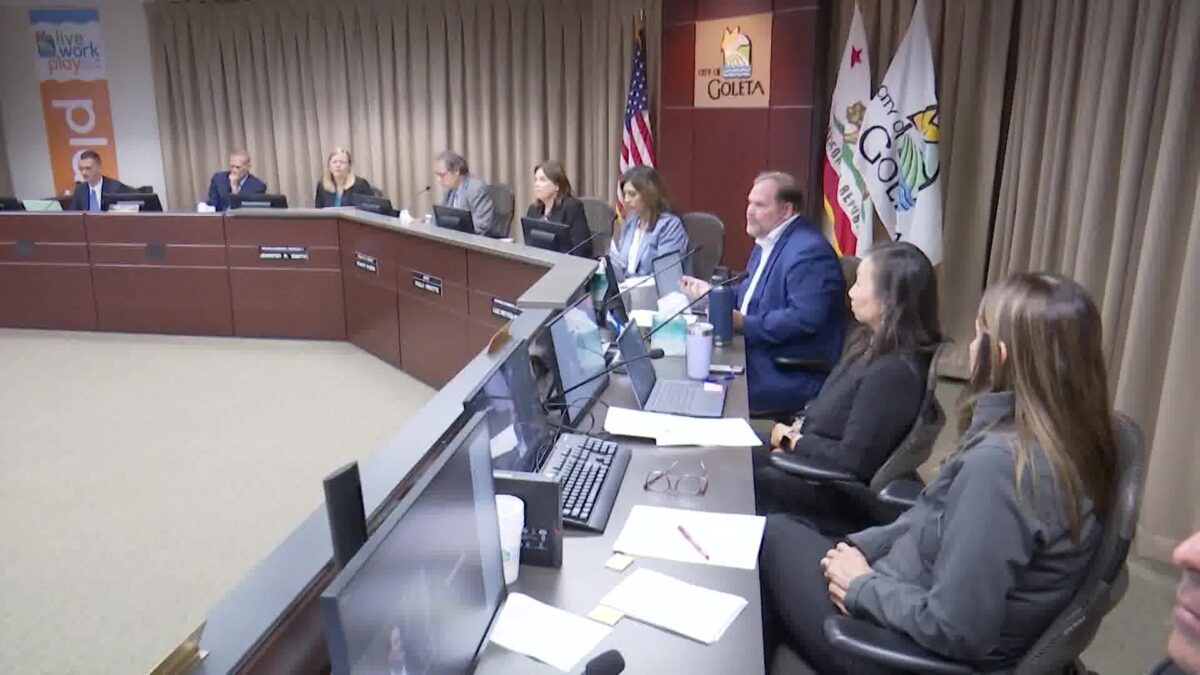
GOLETA, Calif. – In the wake of recent ICE activities, the Goleta City Council voted unanimously to reprogram $100,000 to support services such as legal aid and defense and financial assistance to separated families.

The vote follows a four and half hour Special City Council Meeting called to discuss ICE activities under the President Trump’s Department of Homeland Security.

The council ultimately chose to reprogram $100,000 of the $250,000 from existing childcare initiatives.

That money will go to the Human Services Committee to determine how it will be allocated.

Councilmember Luz Reyes-Martin suggested the amount after sharing her story. Reyes-Martin said she was an immigrant and the daughter of a farmworker.

She said the people impacted by ICE activity in the community look like her and her children.

“Please see them, and support them, speak up for them, I have seen so many of our community members do that tonight, I am so proud of that,” said Reyes-Martin.

The city staff seemed well aware of the need for overflow seating.

They set up dozens of chairs and a video monitor in the parking lot, beneath solar panels, outside the council chambers.

During public comments, community members said they have seen ICE agents near businesses including 7/11 and laundromats. They have also seen them in neighborhoods.

Santa Barbara County District Attorney John T. Savrnoch said the fear and anger is real.

He wants to make sure people know they can still reach out to local law enforcement and his office for help, however, he said they can’t stop ICE.

“We also can’t stop it, we can’t interfere with it either, but we will continue to do our job in the way that California requires us to do and that is with respect for everyone that calls Santa Barbara County home,” said Savrnoch.

He said he is not told when there will be ICE activity.

Diego Avila brought a megaphone that he has been using to warn community members.

“Trying to do something about it and this is one way showing up here, networking, connecting, making ourselves heard in this institution, so that is one way we can voice our opinions,” said Avila.

“I think it is really sad that we are having masked men just going out into the community and causing havoc,” said Cesar Trujllo, “I am a father and I have two daughters, a lot of women are afraid to leave their homes.”

Both men are part of a chapter of Union Del Barrio, based in San Diego, that tries to warn people about ICE activity.

“This is a good opportunity for our communities to unite and come together as a community as one,” said Trujillo.

The city also had an interpreter on hand to help those speaking and listening.

Julissa Peña told the council that Goleta and the Central Coast are sandwiched between ICE processing centers.

“One in north Santa Maria and we have Camarillo and so we feel so surrounded,” said Peńa, who serves as the Executive Director of the Immigrant Legal Defense Center (ILDC).

“Folks facing deportation proceedings cannot afford private attorneys and are not appointed government council,” said Peña.

They have five attorneys helping hundreds of people taken into custody by ICE.

Speakers said they worried about the Mixteco indigenous community members.

“We are now trying to figure out how to get families back together, a lot of people are reaching out to figure out how to do family prep planning,” said Josue Vasquez with the MICOP Legal Assistance Program.

Vasquez told the council about three local brothers missing their parents due to recent raids.

They are asking the city leaders to rise up and help the undocumented workers who are impacted by so-called collateral arrests during Enforcement and Removal Operations.

After hours of public comments, the Goleta City Council voted unanimously in favor a six-pronged approach to help those impacted by ICE raids.

The resolution from the council agenda posted online includes the following:

Work closely with regional partners, including the County of Santa Barbara and nearbysouth county cities to formulate a consistent message and any collaborative actionitems. Pertinent information and any updated guidance are important to regularlydisseminate throughout the community.

Submit Freedom of Information Act (“FOIA”) requests on the federal government,seeking access to ICE records on raids and enforcement actions conducted within theCity. Staff would seek information about recent operations in the area to betterunderstand what activities have occurred, when and where such activities haveoccurred, and who has been subject to such activities, among other items.

Follow, support and advocate for state legislation aimed at addressing recent ICEactivities. The following state bills (which may be subject to change) are currentlyunder consideration, and, with Council direction, the City can send official letters ofsupport.

Work with the region’s federal representatives, including U.S. Representative SaludCarbajal, to follow and support federal legislative and administrative efforts aimed ataddressing the way ICE activities are occurring, including:a. S.2212 (Padilla) — 119th Congress (2025-2026). A bill to amend section 287of the Immigration and Nationality Act to require all immigration enforcementofficers to display visible identification during public-facing immigrationenforcement actions and to promote transparency and accountability.

Track lawsuits filed by the American Civil Liberties Union (ACLU) and other entitiesand nonprofits aimed at protecting the community from tactics employed by ICEalleged to be unlawful.

Provide funding to local nonprofit organizations who are providing frontline assistanceto those affected by ICE activities. Services that City Council may wish to supportcould include legal defense, mental health services, and direct services or financialassistance.a. Any funding assistance to a nonprofit organization that provides services tocommunity members impacted by ICE activities serves a broad public purpose,with only incidental private benefit, consistent with the California Constitution.

For more information visit https://www.cityofgoleta.org

The Latest Breaking News, Weather Alerts, Sports and More Anytime On Our Mobile Apps. Keep Up With the Latest Articles by Signing Up for the News Channel 3-12 Newsletter.

Click here to follow the original article.

Donations Coming in to Help Those Impacted by Immigration Raids

John Palminteri

CARPINTERIA, Calif. – Boxes and bags of donations are arriving at several locations to help those who have been impacted by immigration enforcement, especially families who have lost someone who was the main financial support.

The immigration actions have led to several hundred arrests.

Community members who want to help are being asked to donate specific items to collection points.

They include beens, rice, canned goods, pasta, peanut butter, and other necessities including diapers.

One of the drop off spots has been Island Brewing Company in Carpinteria at 5049 6th St. just off Linden Ave.

Already multiple boxes have been filled and some have been distributed through the Carpinteria Children’s Creative Project and specific churches in Ventura County who that assisting those in need.

In Santa Barbara, La Casa de la Raza at 601 East Montecito Street has a food collection site that’s open seven days a week. It is also setting up a mobile food pantry where supplies can be brought to neighborhoods for a fast distribution.

Some of the recipients say they are scared to go out during these tense times and these donations will help them get through this situation.

Sunday at Island Brewing, hundreds of dollars in purchases came in from one of the donations.

The Latest Breaking News, Weather Alerts, Sports and More Anytime On Our Mobile Apps. Keep Up With the Latest Articles by Signing Up for the News Channel 3-12 Newsletter.

Click here to follow the original article.

Deschutes River Conservancy hails legislative approval of pilot water bank for Deschutes River Basin

Barney Lerten

 BEND, Ore. (KTVZ) — The Oregon Legislature has passed House Bill 3806, approving pilot water bank authorities in the Deschutes Basin.

“This legislation marks a significant step forward in helping Central Oregon expand more flexible and efficient water management to support farms, cities, and rivers alike,” the Deschutes River Conservancy said in a recent news release applauding the bill. It continues in full below:

Water is over-allocated in the Deschutes River Basin. Shortages to meet instream, agricultural, and municipal needs can range upwards of 300,000 acre-feet in a dry year (for reference, Wickiup Reservoir holds about 200,000 acre-feet of water). Rivers and streams bear the brunt of shortages, as do farmers in Jefferson County with more ‘junior’ water rights.

What Is Water Banking?

Water banking is a process that allows unused water to be moved and used where it’s needed most. It’s a flexible tool that helps balance agricultural, environmental, and urban water needs. All transactions are voluntary, transparent, and governed by clear protections for water rights and the environment.

Examples of how a water bank works:

Water Rights Holders/Irrigators who don’t need all their water in a given season can deposit it in the water bank and receive payment.

Farmers can lease banked water to reduce fallowing and increase crop productivity.

Cities and towns can access banked water to help meet growing demand.

Rivers benefit from reserves of banked water specifically dedicated to improving instream flows and supporting overall river health.

What HB 3806 Does

Oregon’s current water laws make it difficult to share water among users in an efficient and coordinated way. HB 3806 addresses this by authorizing the Water Resources Commission to approve a Deschutes River water bank pilot program that will: 

Help coordinate and expand processes for short-term water transfers

Protect water rights in the bank from forfeiture due to non-use (water rights must be used once every five years under Oregon water law)

Ensure water rights users engaging in water conservation do not lose water rights

HB 3806 accomplishes this in a way that:

Protects against speculation, waste, and harm to rivers and other water users

Provides economic incentives while maintaining water rights security

Establishes clear annual reporting requirements for transparency and accountability

Includes additional oversight opportunity with tribal and state agency review and public comment

Supports local priorities like agricultural viability, economic resilience, and river health

This pilot represents a locally driven, innovative approach to managing the region’s limited water supply more sustainably. The Deschutes River Conservancy will manage the water bank in coordination with irrigation and municipal partners. Bank activities will focus on mainstem middle and upper Deschutes River systems and can include irrigation districts and cities that use water from these sources

“We are excited to get to work with our partners to make it easier to get water to where it is most needed in the Deschutes,” said Kate Fitzpatrick, Executive Director of the Deschutes River Conservancy. “We hope this pilot bank can demonstrate how basin-specific flexibility under Oregon water law can help solve increasingly complex water problems.”

“This water bank provides another tool for North Unit Irrigation District to meet patron needs and support the district in fulfilling instream flow requirements associated with the Deschutes Basin Habitat Conservation Plan requirements,” said Josh Bailey, General Manager, North Unit Irrigation District.

According to Jeremy Austin from Central Oregon LandWatch, “We’re optimistic that this bill will help address inefficient water management practices in the Deschutes Basin, better align water deliveries with crop water needs, and open up pathways to move water more easily to better meet agricultural, environmental and municipal needs into the future.”

“This is a good step towards smart water movement in the basin,” said Mike Buettner, City of Bend Water Services Department Director.

“This is one of many tools we can use, alongside system modernization efforts, to help meet the flow targets outlined in the Deschutes Basin Habitat Conservation Plan,” said Craig Horrell, General Manager, Central Oregon Irrigation District.

To learn more about water banking, please go to: www.deschuteswaterbank.org

About the Deschutes River Conservancy:The Deschutes River Conservancy (DRC) was formed in 1996 with a mission to restore streamflow and improve water quality in the Deschutes River Basin. The DRC has a multi-stakeholder board and, through collaborative efforts, has restored up to 350 CFS (equivalent to over 14 Olympic-sized swimming pools per hour) of flow in the basin with non-litigious, voluntary, and market-based programs. For more information about the DRC, visit www.deschutesriver.org.

Click here to follow the original article.

Palm Springs Hockey Academy coming to the Coachella Valley in the Fall

Zachariah Perez

PALM DESERT Calif. (KESQ) –The Berger Foundation Iceplex announced a new partnership and arrival of the Palm Springs Hockey Academy (PSHA).

The academy is a new elite high school prep program that will offer top-tier hockey training and  competition for elite-level players set to begin in September. It will bring an exclusive group of athletes from Europe, Canada, Los Angeles, and San Diego for a unique training experience in the Coachella Valley at the Berger Foundation Iceplex. 

The Palm Springs Academy players will receive elite-level training Monday through Friday from 7:15 a.m. to 8:45 a.m, while also having educational support and partnership from Desert Christian Academy.

It will offer a flexible path designed for student athletes to ensure that they will have the tools to succeed both academically and athletically while balancing the training schedule.

“We’re thrilled to bring this level of hockey to the desert,” said Justin Reynolds, President and Co-Founder of the Palm Springs Hockey Academy. “Our partnerships with Desert Christian Academy and the Berger Foundation Iceplex create a one-of-a-kind environment where student-athletes can train like pros while receiving a top-tier education.”

The program will feature the following for athletes during their stay here in the Coachella Valley.

Program Features:

Daily On-Ice Training focused on skill development, team systems, and hockey IQ at the Berger Foundation Iceplex

Academic Instruction through Desert Christian Academy, a respected faith-based private school in Bermuda Dunes, CA

Competitive Game Schedule against top North American prep programs, with 1–2 games per month scheduled for Saturday evenings

Mentorship and Development from experienced coaches, advisors, and scouts

Exposure to USHL, WHL, NCAA, and other junior programs

As the popularity of hockey grows in Southern California and the success of the AHL Coachella Valley Firebirds, PSHA is in an ideal position to become a national leader in elite player development. 

With an addition of the PSHA the Burger Foundation will now offer a pipeline at all skill levels. This includes:

 Beginners: Learn to Play programs

Intermediate: Youth Rec leagues

Progressive: Jr. Firebirds Travel Hockey

Elite: Palm Springs Academy

“The launch of Palm Springs Hockey Academy has transformed the Berger Foundation Iceplex into a true center of excellence,” said Leslie Deason, Vice President of the Berger Foundation Iceplex. “We now offer a fully integrated developmental pipeline that supports every skill level, from Learn to Play for beginners to elite training through the Academy. This not only strengthens our commitment to player growth but also solidifies the Iceplex as a regional leader in hockey development.”

For recruitment and enrollment for the 2025–26 academic year is currently underway, with limited spots available visit pshockey.com or contact admin@pshockey.com.

Stay with KESQ News Channel 3 for the Latest

Click here to follow the original article.

Shepherd’s House Ministries’ Lighthouse Navigation Center celebrates three years of impact in Bend

Barney Lerten

BEND, Ore. (KTVZ) — Shepherd’s House Ministries invites the Central Oregon community to celebrate the third anniversary of the Lighthouse Navigation Center, a transformative low-barrier shelter and day-use facility in Bend that has become a critical resource for hundreds of individuals experiencing homelessness and crisis.

Since its opening in 2021, the Lighthouse has done more than provide food and shelter — it has delivered hope, dignity, and tangible pathways toward stability. Through case management, counseling, classes, and vital collaborations with other local nonprofits and agencies, the Lighthouse has become a place where basic needs are met and long-term transformation is made possible.

Over the past year alone (June 2024–June 2025), the Lighthouse has:

Welcomed 951 daytime participants and 481 overnight guests

Supported 70 transitions into institutional (20), temporary (23), and permanent (27) housing

Engaged 175 individuals in case management services

Anniversary Celebration Details:? Date: Wednesday, July 23? Time: 11:30 a.m.-2:30 p.m.? Location: Lighthouse Navigation Center, 275 NE 2nd Street, Bend, OR

This milestone celebration will feature food, fellowship, guest stories and gratitude, highlighting the community partnerships and shared efforts that have made three years of life transformation possible.

“Every person we serve has a story, and every step forward is because our community chose to care,” said Curt Floski, executive director of Shepherd’s House Ministries. “The Lighthouse has become a space of safety and renewal because of the support and compassion we receive from this region.”

The event is open to the public. All are welcome to attend and see firsthand the impact of what’s possible when we meet people where they are and walk with them toward a better future.

For more information, visit www.shministries.org or call (541) 388-2096.

About Shepherd’s House Ministries

At Shepherd’s House Ministries, we provide food for the hungry and shelter for the homeless. We aim to support those facing life-controlling challenges and break cycles of pain. Our goal is to heal hearts and transform lives.

Click here to follow the original article.

Quagga mussels found on boat at Grand Teton National Park

Curtis Jackson

The following is a news release from Grand Teton National Park.

MOOSE, Wyo. (News Release)— An Aquatic Invasive Species (AIS) technician at Grand Teton National Park recently discovered quagga mussels on a boat arriving from Utah. The mussels, which measured about 6–8 mm (about the width of a pencil) were found during a routine AIS inspection at one of the park’s check stations. Although the mussels were no longer alive, their presence is a serious concern. 

The boat was decontaminated and sealed for a mandatory 30-day dry period, in accordance with Grand Teton National Park policy.

Wyoming remains one of only five states with no bodies of water that have tested positive for or been infested by quagga or zebra mussels. Once introduced and established these species often cause dramatic ecological and economic damage, making prevention critical.

“Finding mussels at a Grand Teton AIS check station is uncommon but it’s a good reminder that the risk of an introduction is real,” said Chad Whaley, Fisheries Biologist and AIS Coordinator. “We cannot become complacent. The risk level is not going down.”

AIS check stations have operated in Grand Teton National Park since 2015 and serve as the final line of defense in protecting the park’s waters. 

Protecting Grand Teton National Park’s waterways is a shared responsibility. Prevention is an essential duty for boaters, anglers, and resource managers alike. Grand Teton National Park works with numerous partners throughout the community and region to support and enforce AIS prevention.

Park leadership extends appreciation to the vigilant technician who identified the mussels and to the cooperating boater. Both played a vital role in helping keep Grand Teton and Wyoming’s waters free of invasive species. The park also thanks the public for supporting watercraft inspections before launching in Grand Teton waters.

Boaters are reminded that they are required to stop if they pass an open watercraft inspection station, regardless of prior inspection history or destination. Out-of-state boaters must be inspected before launching on any waters in Wyoming. Arriving with a clean, drained, and dry watercraft speeds the inspection process and helps protect aquatic resources.

For more information on AIS regulations and how to help prevent the spread of invasive species, visit Get on the Water – Grand Teton National Park (U.S. National Park Service).

Click here to follow the original article.