The Rock Creek Fire near Inkom is out, cause under investigation

Curtis Jackson

UPDATE:

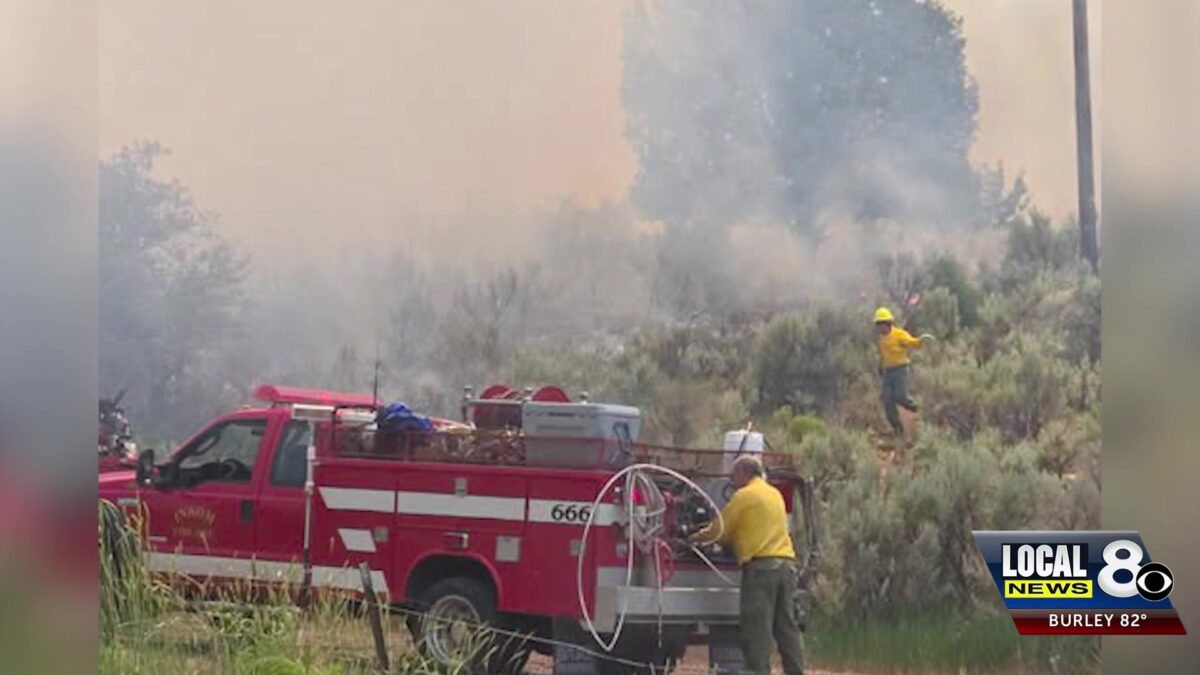
BANNOCK COUNTY, Idaho (KIFI) — Fire crews battled to contain the Rock Creek Fire near Inkom Thursday despite steep terrain and gusty winds. The latest report from the Inkom Volunteer Fire Department confirms the fire was contained last night, June 19.

Their swift response, aided by the McCammon and Lava Hot Springs Fire Departments, protected five structures, including nearby homes.

The Inkom Volunteer Fire Department says that a 20-person handcrew and four engines were on-site Friday morning, monitoring and mopping up hotspots. No injuries have been reported.

However, the cause of the fire remains under investigation by the Bannock County Sheriff’s Office, as there was no lightning activity in the area.

In a recent press release, Fire Chief Johnny Ketner urged caution for property owners considering burns: “Always contact your local fire department, get a permit, ensure you have plenty of water, and closely monitor wind conditions.” He also warned against leaving fires unattended, as hidden heat can reignite.

Crews will likely remain in the area through Saturday, anticipating strong, gusty winds.

ORIGINAL:

BANNOCK COUNTY, Idaho (KIFI) — A second fire is burning in Bannock County right now, this one near Inkom.  The Bannock County Sheriff’s Office tells Local News 8 a fire was called in around 11:40 Thursday afternoon in the Upper Rock Creek Area, near Jackson Creek and Nestor Road.  The Sheriff’s office says Inkom, McCammon, and Lava Fire Departments are working to control the flames. Search and Rescue is on hand for traffic control.

No evacuations have been reported, but we’re told several homes are on standby. The cause is under investigation.

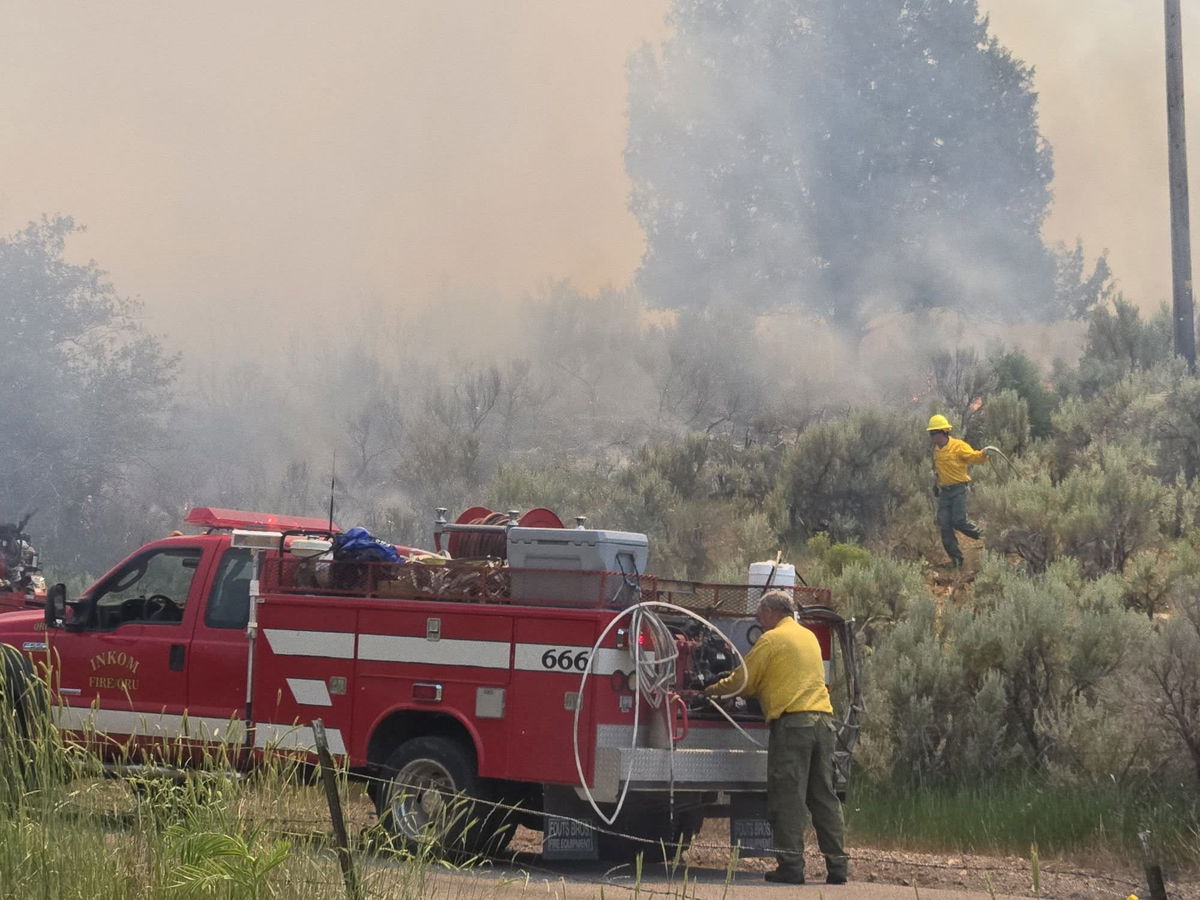
Ryan Perrigouge says the fire crews were able to protect his home in an area near the blaze. He shared the following photos with Local News 8.

“These guys deserve a grand round of applause. And they let me in as much as I could without a word. I just kept as clear as possible,” Ryan Perrigoue told Local News 8 over Facebook.

Click here to follow the original article.

As sewer hike looms, St. Joseph re-envisions long-term plan to address mandates

Cameron Montemayor

ST. JOSEPH, Mo. (News-Press NOW) — Over the last 25 years, St. Joseph sewer rates have risen by more than 400%, a significant increase fueled by more than half a billion dollars in mandated improvements to address regulations and prevent sewage overflows into the Missouri River.

From around $13 a month in 2000, the average sewer bill now sits at $65.70 for an in-city resident in 2025. On Monday, City Councilmembers will vote on a proposal to raise rates by 3% in both 2025 and 2026, with the first increase taking effect July 1 if approved.

Local parents Marc and Stephany Carpenter often pay a sewer bill more than twice the average. The longtime Lake Contrary residents see a higher rate due to their home falling outside city limits but still being connected to the city’s sewer system, as is the case with many residents surrounding St. Joseph.

“It’s always been about $100 to $150 on the sewer bill,” Marc said.

With five kids at home to care for, the Carpenters lament how much sewer costs have grown over time. The family’s challenges are compounded by large increases for almost every major utility this year, including water (17% monthly increase), electricity (7% monthly increase) and proposed increases for natural gas.

“Having five kids, it puts a toll on us,” Stephany said. “Instead of using the money for the kids, I put it on an extra bill.”

If new sewer rates are approved, residents would see back-to-back years of increases after six years without one between 2017 and 2023. A previous council voted to use roughly $5 million in American Rescue Plan Act funding to keep sewer bills stable for several years, a short-term fix.

City, regulators create retooled plan

After more than 15 years and roughly $250 million spent on a wide range of critical projects to address sewer overflows and federal water regulations in phase one, city leaders are ready to move on a re-envisioned phase two plan that guides the next 20 to 30 years of infrastructure improvement projects for the Water Protection Facility, sewer overflow controls and new technologies for the pre-treatment process.

But unlike previous requirements that came with challenging schedules that often created significant cost concerns for the city and its customers, particularly lower-income households, the new Water Quality Integrated Plan (IP) strikes a stronger balance between prioritizing new investments for sewer and water quality requirements and long-term financial constraints on customers.

“It takes all of those into account and sequences out the projects in a way that allows us to not have debt weighing us down to the point we have to continually raise rates,” said Eddie Leaverton, superintendent of water protection. “There is significant rate savings over the next two to three decades due to the change in this plan.”

One of the IP’s key provisions is a longer project timeline that extends to 2050, versus the previous date of 2035, which likely would have caused the average residential sewer bill to jump to more than $120 a month in the next 10 years.

Sewer bills are now expected to average around $80 a month by 2035 under the new plan. A longer timeline also buys time for bonds from previous sewer projects like the $48 million Blacksnake Creek Project to mature, creating more financial flexibility for future projects instead of stacking debt.

Other Midwest river cities like Omaha, Nebraska ($60.12 a month) and Kansas City, Missouri ($79.01) both have comparable sewer rates to St. Joseph.

“Kansas City and Omaha. They’re going through the same struggle as the city of St. Joseph community is with their sewer rates,” Leaverton said.

Integrated Planning was approved by Congress in 2018 through the bipartisan Water Infrastructure Improvement Act to assist municipalities with regulatory challenges. In 2023, the city retained HDR Engineering, Inc., to assist in developing the IP, an 18-month process that required extensive coordination with the Missouri Department of Natural Resources and the U.S. Environmental Protection Agency.

The city has received an initial letter from the Missouri DNR approving the plan. Leaverton said he expects to have a five-year schedule for the first round of projects finalized by the end of the summer.

“What we’ve been doing is evaluating our system and our collection system and our treatment plant, looking at projects completed … What is still left to be done to meet the regulatory requirement?” he said.

Key progress to date: an aging system and sewer overflows

One of the root causes of the city’s dramatic rise in sewer rates lies with its 415-mile-long combined sewer system, 60% of which was built pre-1920.

Combined sewers are a commonly used system where sewage as well as stormwater are both captured in the same system and directed to the Water Protection Facility off Stockyards Expressway, which treats and safely discharges it into the river.

For years, storms and heavy rain events would overwhelm sewers and collection spots, resulting in overflows of untreated wastewater into the Missouri River. Untreated wastewater can contain contaminants, including microbial pathogens, suspended solids and chemicals, creating public health and environmental hazards.

“The EPA and DNR stepped in and said you have to do something to rectify this … due to the fact that we are violating the Clean Water Act with our combined sewer overflows,” Leaverton said. “The city has completed phase one of that.”

Two of the largest projects to date worth an estimated $60 million, the Blacksnake Creek and Whitehead Creek separation projects, required the construction of massive stormwater pipes to intercept water from flood-prone creeks and direct it to the Missouri River.

The Blacksnake Creek project in 2018 saw a massive 300-foot excavating machine cut a 6,700-foot-long pipe deep underground, a multi-year process that finished in 2022, taking considerable pressure off the treatment facility and sewer system.

“That separated out millions of gallons per day that came to the plant, whether it was raining or not,” Leaverton said. “Those separation projects were big.”

Construction of a new $26 million Candy Creek Pump Station by Riverside and Pickett roads was key in replacing a smaller and outdated facility that was struggling to service the growing east side of town.

The city also made sizable improvements to large retention ponds like Corby Pond. Along with being a popular recreation spot, the pond is also designed to hold water during rain events and slowly release it to the plant over time, reducing pressure on the entire system.

A key project carried out at the Water Protection Facility in 2016 was the Ammonia Removal Improvements project, a $50 million effort that upgrade the treatment process by adding a BioSolids dryer facility, grit facility and replacing aging headworks.

“All those projects were important, but we would like to be able to prioritize what those projects are,” said Abe Forney, director of St. Joseph Public Works and Transportation. “We can’t have these massive projects all pile up in the same couple of years.”

Integrated plan lays out a wide range of new projects

The city has aggressively pursued grants as well as state and federal funding sources to try and reduce costs and the impact on ratepayers, including using millions in ARPA funds and $7 million from the Water Resources Development Act spearheaded by Congressman Sam Graves in 2022.

“We run down every avenue that we can to try to save money at any place that we can. We live in this city. You know, we pay the sewer bill that everybody else pays,” Leaverton said.

In April, Councilmembers unanimously approved an ordinance to accept a $2.1 million grant from the U.S. Army Corps of Engineers for the blower replacement project at the Water Protection Facility, a critical device that pumps air into water to boost its oxygen content.

He said one of the IP’s biggest enhancements is an additional $26 million re-allocated for sanitary sewer rehabilitation work, called cured-in-place pipe lining, a modern and less invasive method of rebuilding aging sewer pipes.

“It’s almost like a new pipe inside of the old pipe. It’s a structural apparatus that just basically makes a new pipe, but it’s just inside of the old infrastructure,” Leaverton said. “We spend around $2 million to $2.5 million every year doing that. The integrated plan is going to step that up.”

The largest project on the horizon involves upsizing the Whitehead Pump Station and implementation of a high-rate treatment facility at the Water Protection Facility, a 20-acre site, allowing them to rapidly treat more water that comes in during rain events.

One of the first key efforts though carrying out the first hydraulic study in 12 years, which will help provide a thorough and updated picture of how captured storm and wastewater travels throughout the city, which has changed with new development occurring on the east and north sides.

“It’s going to be a completely redone citywide hydraulic model. That will allow us to target the projects in a sequential order to do the biggest gains first,” Leaverton said. “And then we’ll start more on the ground construction work.”

Inflation has also had a significant impact on the cost of required projects and the need to create more flexible timelines, which will prove to be critical with new regulations on the horizon in 2030 on how much phosphorus can be discharged in treated water.

“That ten-year gap. You know, that’s a pretty big jump typically. But then after 2020 and COVID and all the supply chain issues and all the inflation, above what would be normal, it really did put pressure on those projects,” Leaverton said.

Wastewater is treated through an extensive process at the Water Protection Facility before being safely transported to the Missouri River. Cameron Montemayor | News-Press NOW

Click here to follow the original article.

‘Eyes in the sky’: Task Force 1’s drones prove effectiveness for agencies across the state

Nia Hinson

COLUMBIA, Mo. (KMIZ)

St. Louis Fire Chief Dennis Jenkerson will never forget May 16, 2025.

It was a Friday around 3:15 p.m., meaning major roads in the city were already packed with traffic as rush hour approached. That would lead to even more issues down the road.

It was the day an EF-3 tornado struck the city of St. Louis and parts of St. Louis County, killing five and leaving behind miles of destruction.

Jenkerson said the tornado tore through the central and north-central sections of the city and was on the ground for roughly 8 miles. The storm was anywhere from a mile to three-quarters of a mile wide and took out electrical substations, affecting between 8,500 and 10,000 homes before it crossed the river into Illinois.

As if the thought of rescue efforts wasn’t enough for first responders to ponder, they now had to deal with the issue of getting equipment into the affected areas because of congestion on major roads.

“It was established fairly early on that this was a major event, that we had multiple homes involved. It kind of clipped the corner of where one of our major hospitals was located,” Jenkerson said.

That hospital was the Barnes-Jewish Hospital, along with the children’s hospital.

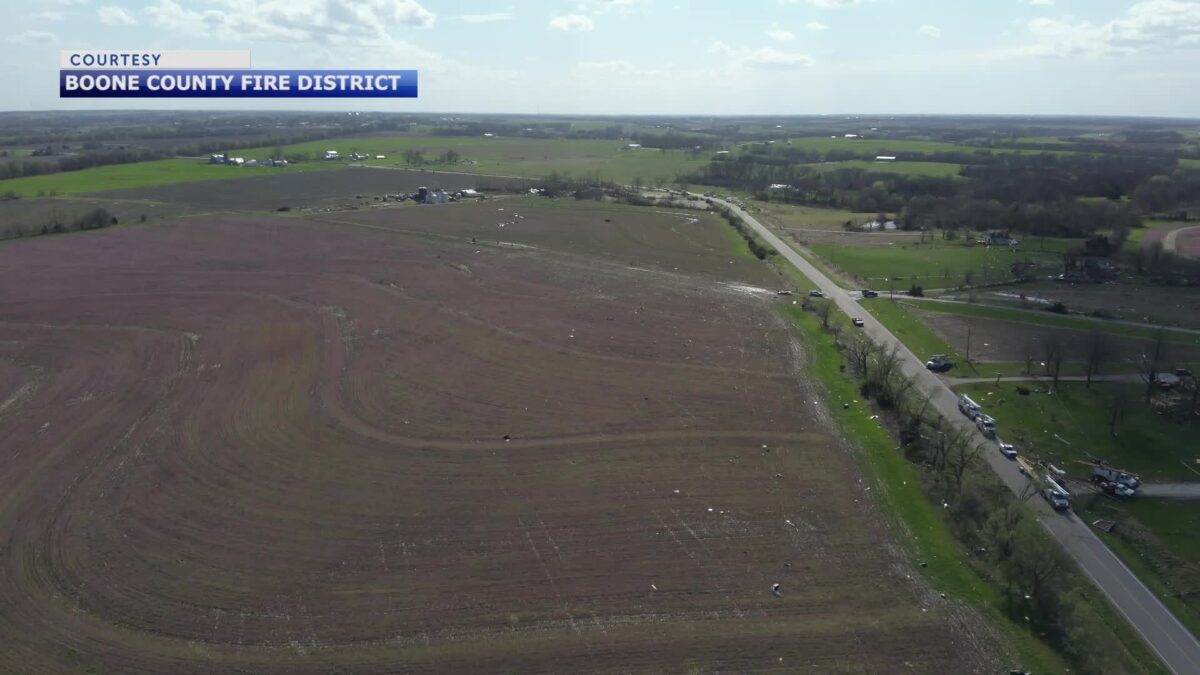
The St. Louis-area responders needed help. Missouri Task Force 1 — an urban search and rescue team based at the Boone County Fire Protection District headquarters in Columbia — was among the five agencies that answered the call during the 72-hour search.

Fearing mass casualties

Jenkerson said a little more than half of Kingshighway in the city limits, up to about Delmar Boulevard, was impassable at the time. That, along with major destruction to buildings that they could see from the ground, led emergency responders to think they were looking at a mass casualty event.

“So, the call was made out to Region C, which I’m the co-director in the state of Missouri, that we were going to need the task forces as soon as possible and to notify Missouri Task Force 1,” Jenkerson said. “Based on the radio reports we were getting from our dispatch center for calls for assistance, we had a very wide section of the city that was in need of immediate emergency response.”

Missouri Task Force 1 arrived in St. Louis around midnight and immediately got to work.

Jenkerson said they had already searched about 2,500-3,000 buildings within the first 24 hours of their response, thanks in part to Missouri Task Force 1’s manpower and equipment. But it was one small piece of equipment that proved vital during while saving people who were trapped: the drone.

“Immediately, we were probably looking at 12 or 15 to 20 areas that concerned us,” Jenkerson said. “A couple big churches, a couple commercial buildings, quite a few residential structures. And the drones gave us the ability to get a quick overhead look at what we were searching, how big the area was.”

Jenkerson said the drones helped emergency responders with their operational plan as they entered buildings. He said responders not only had to be worried about entering collapsed buildings, but also about the structural soundness of surrounding buildings.

The drones also allowed them to see what areas were stable and which areas were not, as they continued the process of delayering and digging down to people who were trapped.

Jenkerson said he flew over the area in a helicopter early on after the storm. However, being able to physically move the drones around near possible areas of entrapment and having an extra pair of eyes in the sky made all the difference.

“It just gives you a little more speed to get at buildings, but it gives you another set of eyes from a position that you normally can’t get eyes on,” Jenkerson said.

Jason Warzinik is Missouri Task Force 1’s technical information specialist and is the manager of the group’s Disaster Situation Awareness and Reconnaissance Team. He comes up with all of the training and leads the teams out in the field.

Warzinik said he believes the drones were highly effective during their deployment to St. Louis.
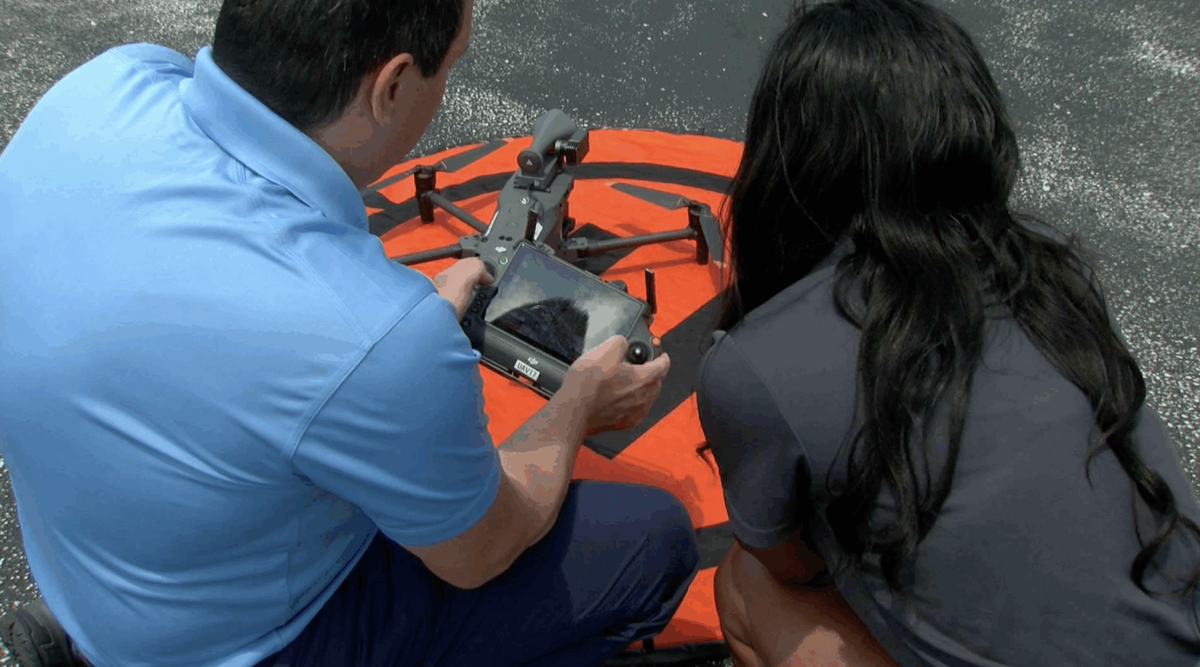
Jason Warzinik demonstrates one of the many capabilities of Missouri Task Force 1’s drones. (KMIZ)

Part of that was the ability to stream live drone video that night to the incident command. The next morning, crews were able to go out into the hardest-hit areas.

“Then, throughout those next two days, we had our areas that we were assigned,” Warzinik said. “But then of course when you get to the edge of your area, you’re doing a 360 kind of pan and based on those, it was pretty quick where incident command was going, ‘Hey, we need to go across that area, make a new assignment up to that path of that tornado.”

Task Force 1’s drones have helped other agencies, too.

In Mid-Missouri, Cooper County Emergency Management director Larry Oerly remains grateful for Missouri Task Force 1 more than two months after an EF-2 tornado struck Pilot Grove. The tornado was on the ground for about 5 miles and packed winds up to 135 mph.

Oerly said the county immediately started receiving reports from police and ambulance crews about damage and power lines down. During that time, Oerly said a determination was made that it was going to be an extended event.

He then made calls to the State Emergency Management Agency and eventually reached out to Missouri Task Force 1 for help. The Cooper County Sheriff’s Office had deployed its drones in the response, but they didn’t prove to be enough.

That’s where Missouri Task Force 1 came into play.

“Their drones are much more advanced than the ones we have,” Oerly said. “The drone can see things from the air that we can’t see from the ground. If there would have been maybe a body or something laying in a field or something, they could pick that up. Foot search would take forever to do that.”

How drones help local law enforcement and firefighters

It was about 7 p.m. on May 2, a Friday. Several law enforcement agencies gathered around a monitor and a vehicle on East Prathersville Road for hours. They were searching for two youths who had escaped from the Juvenile Justice Center. One of the two was being detained for murder, the other on a first-degree assault charge.

Law enforcement had searched the heavily wooded area and field after the two escaped on foot.

After hours of searches by the Boone County Sheriff’s Office, Columbia Police Department and the Missouri State Highway Patrol, the last youth was found just before 10:30 p.m. That was thanks to a drone provided by Missouri Task Force 1.

The drone was able to pick up a “heat signature” from the juvenile, which led law enforcement to locate him about 30 feet high in a tree.

Brian Leer with the Boone County Sheriff’s Office said he thinks more fugitives would get away if it weren’t for the help of the drones.

“I’d just be guessing the percentage, but I’ve seen these drones help us find people that, in my mind, I go home and I think, ‘I don’t know that we would have found them had it not been for their drone,'” Leer said.

The vehicle belonged to Missouri Task Force 1, as well as the monitor. The screen allowed law enforcement to see what the drone saw in the woods. Leer said the technology was “instrumental” in the search.
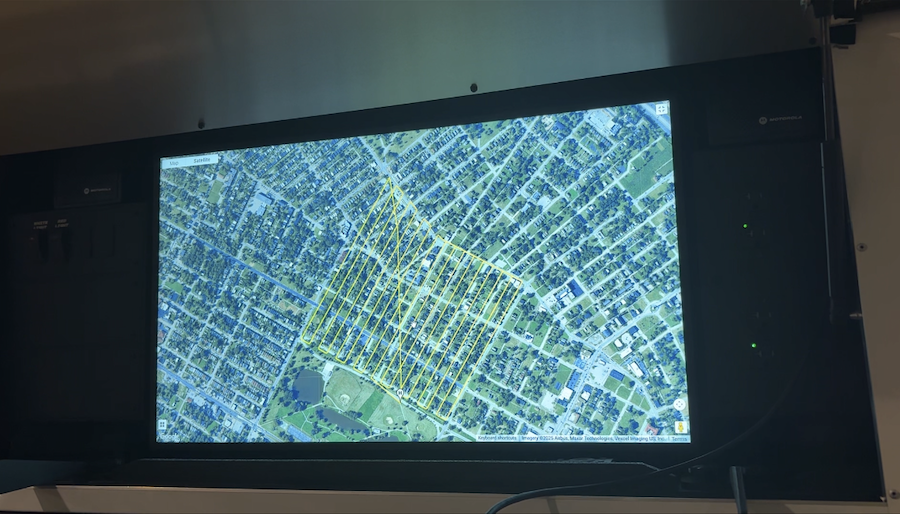
A photograph of one of the large screens on one of Missouri Task Force 1’s vehicles. (KMIZ)

The drones are also useful during searches for missing people or in vehicle crashes when it’s believed someone has been ejected. Drones can see locations that are inaccessible to humans. GPS capabilities and the ability to see in the dark make them key.

The drones are also used in responses to wildfires and structure fires to determine where there’s potentially still fire or excessive heat, Boone County Fire Protection District Chief Scott Olsen said. They can also assist local law enforcement by flying into homes to locate potential suspects.

Olsen said he believes all drones are effective, but Task Force 1’s many pilots and variety of drones are what make them different.

“We’ve done a lot of training together with the existing drone pilots and other agencies, so a lot of times we get called because they need just additional resources, and we wouldn’t hesitate to call them if we need additional resources on something that we’re doing,” Olsen said.

Missouri Task Force 1 began flying drones in 2017. The district has roughly 30 drones, along with 30 pilots.

Since Jan. 1, the task force has hosted four training events and responded to five local fire and mutual aid callouts, as well as five severe weather deployments. All of that together adds up to a total of 240 flights, with an air time of 43 hours, 11 minutes and 16 seconds for a total distance flown of 348 miles.

In 2017, the task force received $10,000 in state funding to launch a course on safe drone operations. Initial funding that year also included $65,000 to build a GIS-equipped vehicle from an existing fire district command vehicle.

The task force received additional funding from the state over the years since then to create additional vehicles and expand training efforts. Another $302,000 was allocated to the team from the state this year to purchase equipment, software and to further team development, according to Warzinik.

The drones come in varying sizes and are quadcopters. They have a flight time of roughly 40 minutes. The largest drone is used for overwatch and has live streaming capabilities. The drone has a speaker, spotlight, superzoom and thermal capabilities that allow it to operate at night.
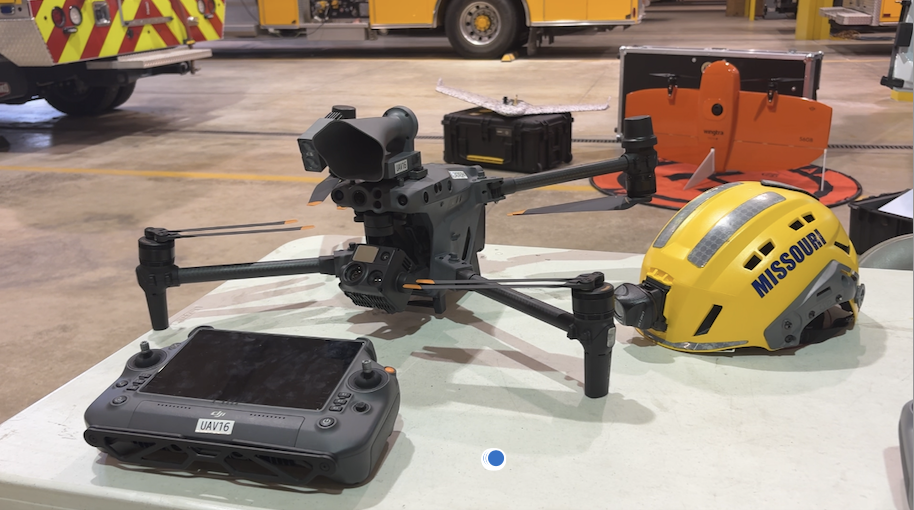
Missouri Task Force 1’s largest drone

Missouri Task Force 1’s medium sized drone

Missouri task force 1’s interior drone

A rangefinder allows pilots to zoom in on something and drop a pin on a map without having to fly the entire drone to the area.

The medium-sized drone is geared towards mapping and was used in the St. Louis storm response, after being purchased just two weeks earlier.

The task force’s smaller interior drones come in handy during structural collapses. They have lighting that allows pilots to see inside dark buildings. Pilots have to use first-person goggles when flying this type of drone, and can then view what the drone sees from a screen.

“For example, if its a hazmat situation, we’ll have the hazmat tech from the task force watch that screen, get the lay of the land … figure out the floor plan … look for hazards and then they know, ‘Hey, when we suit up we need to take A, B and C inside so they’re not walking in blind,'” Warzinik said.

Warzinik said the interior drones cost roughly $600, while some of the fixed wings can cost up $40,000 because of pricey thermal and mapping sensors.

The task force also has technology that allows pilots to see when other drones or aircraft are flying in an area.
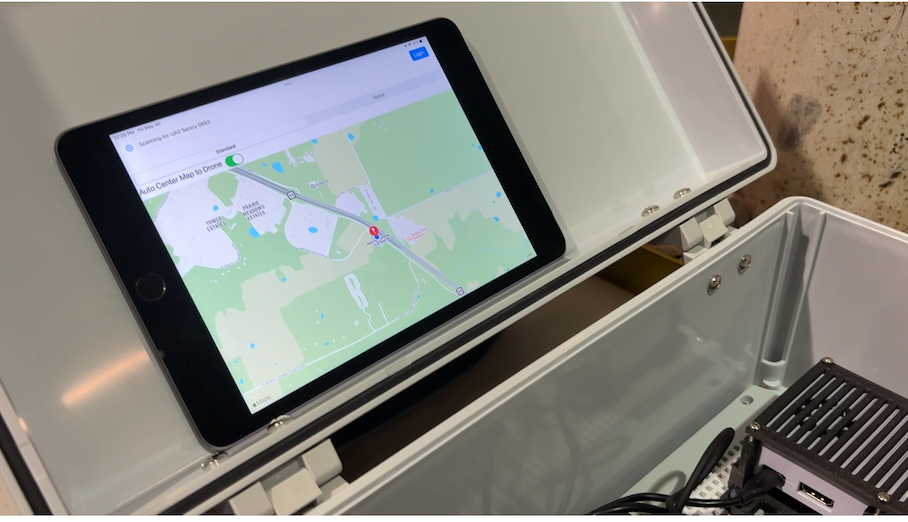
This tablet demonstrates how the task force can view other aircraft in the area during a deployment. (KMIZ)

Missouri Task Force 1 also has two different types of fixed-wing drones. These sorts of drones have a flight time of 60 to 90 minutes. They can be useful when they need to map larger areas, like the path of a tornado or hurricane, and can map in two dimensions or three.
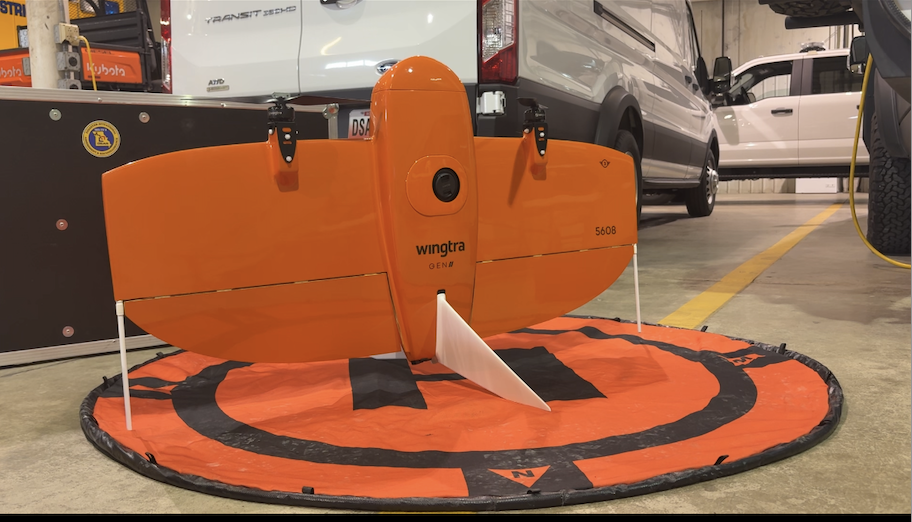
One of the task force’s “Fixed Wing” drones
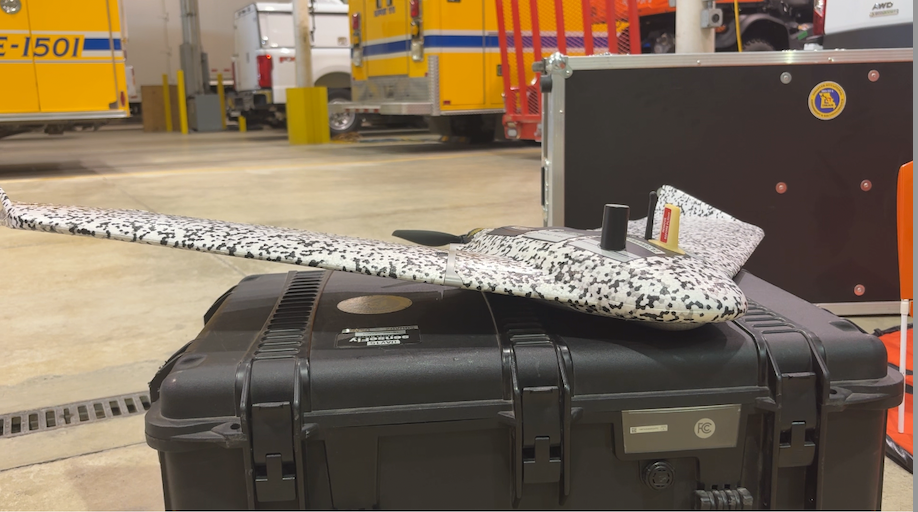
A second “Fixed Wing” drone

One can be programmed to fly over an area and take photos that the task force can stitch together.

The task force also has two vehicles designed specifically for drone and geographic information system work. The vehicles allow them to take data from the drones and upload the data online through a system called Starlink.

That data is then uploaded online to a central system called SARCOP. This allows photos and mapping layers to be uploaded online, where incident command, SEMA and the White House can view them.

The vehicles are equipped with a camera that can be used during the day or at night, two large-format printers for printing maps and radios for communicating with local and federal agencies.

“It was not too many years ago where our map that we would get is literally stopping by Sam’s Club and getting the map book out of Sam’s Club and taping it together,” Warzinik said. “Now, you look at what we can produce inside of that truck, almost live images of the impacted area.”
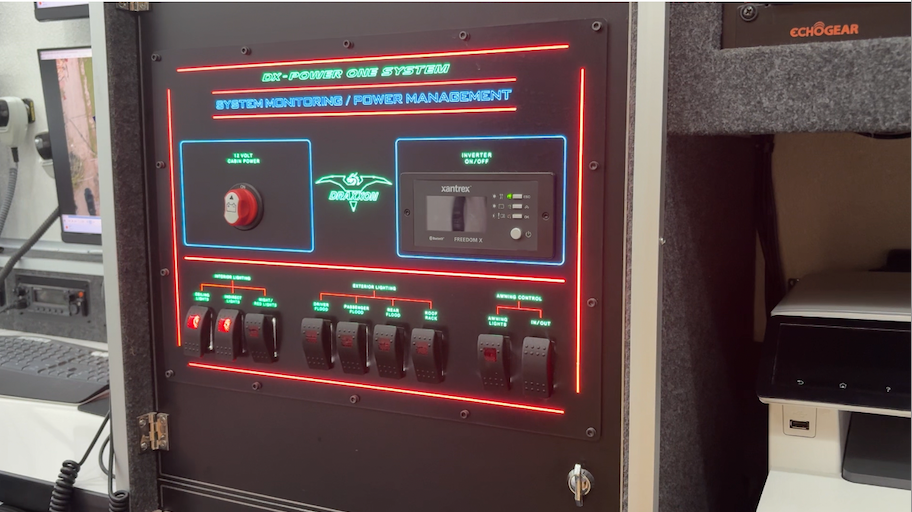
A look inside one of Missouri Task Force 1’s vehicles that allows them to upload data from the field. (KMIZ)

The task force also has pickup trucks designed specifically for drone squads. The trucks also allow pilots to upload data quickly from the field.

That is also where live streaming platforms are used. Operators will hook up the drone’s controller to the truck’s monitor, allowing law enforcement and other agencies to see what the drone sees.

“The live feed was used throughout the event. It gave the incident commanders, who most of them were back at the command post, an idea of what was going on in the neighborhood,” Jenkerson said. “It’s like I said, any information you can add to the overall plan while it’s in operation gives you a better handle on what you’re doing of your search pattern.”

The future of drones and public safety

Missouri Task Force 1 is hoping to expand its use of drones.

Olsen said the task force isn’t able to fly its own drones when deployed on federal disasters. That included a recent trip to North Carolina, where the task force was sent for several days after Hurricane Helene.

Olsen said while there, the task force had to use other agencies’ drones. They’re working with FEMA to fly their own drones during federal deployments. A decision could come this month.

Olsen said his passion for wanting to expand how the drones are used stems from Hurricane Katrina in 2005. He said he was one of five people who had to go into New Orleans and set up for urban search and rescue teams.

Olsen said at the time, they made maps by hand and received Excel spreadsheets from police listing people who were trapped. He then started learning how to use some of the task force’s GIS capabilities to download data and make a map to show teams where trapped people were.

Olsen said searchers immediately found about 25 people within areas they had already searched.

“So, I saw the utility of this sort of system to be able to No. 1, get drones out and find out where people are and get aerial imagery to see what’s actually going on in the area. And then secondly, to take that information and marry it with data that we were getting to be able to find people more quickly,” Olsen said.

The Boone County Sheriff’s Office has about seven drones, Leer said. He said the sheriff’s office drones are also used in vehicle crashes and in outdoor homicide investigations.

The Columbia Police Department has five drones. Digital forensic specialist Chad Craig said the drones are typically used to monitor large events, like parades in the city, or for finding missing children.

“The use of drones at CPD is still growing,” Craig said. “I mean, we’re still in our infancy stage of trying to see how best to use, both for documentation, for real-time information and for assisting patrol operations and that kind of thing.”

Jenkerson said his fire department would love to expand its drone fleet.

“Any department in the state of Missouri is not going to handle this [tornado] by themselves, so having a regional asset, if you will, to come in and be on the ground within 24 hours, which they did, kind of allows you a little bit of room not to have every toy that you want,” Jenkerson said. “Drones that are made for hazardous material response, drones that are made for large-scale incidents like this, there’s always room for it and it’s something we’re looking at.”

Click here to follow the original article.

EOD: Sally Mayes and the CV Rep Summer Cabaret Series

Haley Meberg

Click here to follow the original article.
EOD: Alix Korey and the CV Rep Summer Cabaret Series

Haley Meberg

Click here to follow the original article.
Windy Friday with slightly cooler temps and a few thunderstorms

Michael Coats

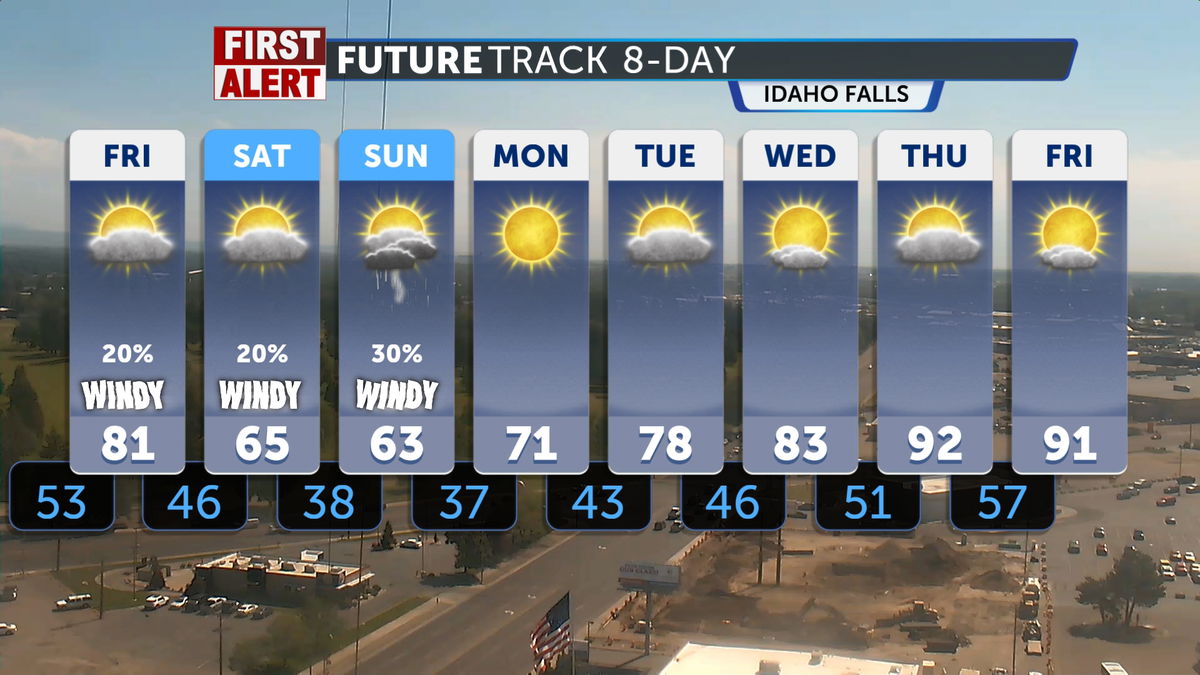
Tonight, there’s just a slight chance of a thundershower. The clouds will gradually give way to clearer skies, and temperatures will dip to around 53°. Winds will shift from the southwest to the northeast after midnight, staying breezy with gusts possibly reaching up to 25 mph.

Looking ahead to Friday, it’s shaping up to be a mostly sunny day with a high near 81°. Winds will start off light but will pick up in the afternoon, coming from the southwest at 15 to 25 mph, with gusts as strong as 35 mph. Friday night will be mostly cloudy and a bit cooler, with lows around 46° and continued gusty southwest winds.

Saturday brings more sunshine, but it’ll be noticeably cooler with a high near 65°. Winds will stay brisk from the southwest, gusting up to 30 mph. By Saturday night, clouds return and there’s a slight chance of showers after midnight. Expect a low around 40° and continued breezy conditions.

Sunday has a 30% chance of showers, mainly in the afternoon, but it’ll still be mostly sunny with a high near 62°. The day wraps up with a clear and chilly night, with lows dropping to around 36°.

Click here to follow the original article.

Juneteenth celebration kicks off at Oscar’s Downtown Palm Springs

Athena Jreij

PALM SPRINGS, Calif. (KESQ) — In honor of Juneteenth, Oscar’s in Palm Springs is ringing in the cultural holiday with a celebration hosted by Sunset Music & Education Foundation, Juneteenth: The Fight for Freedom.

From 5-7 p.m., the free event will feature a panel, live music, and entertainment. According to organizers, the event is sold out.

It’s not the only celebration in Palm Springs. Villagefest will also celebrate the holiday from 7-9 p.m. with free paints and crafts.

Tune in tonight from 4:30-6 p.m. for live coverage of the events.

For more information on the celebration, visit: https://gaydesertguide.com/events/juneteenth-the-fight-for-freedom-oscars/

Click here to follow the original article.
New Deschutes County 2025-26 budget preps for five-member board, building youth mental health care facility

Barney Lerten

BEND, Ore. (KTVZ) — The Deschutes County Board of Commissioners has unanimously adopted the budget for Fiscal Year 2026 (FY 26), following a series of budget committee hearings held in May.

The total revised FY 26 budget, excluding Service Districts, is $658.7 million, which represents a modest 0.3% increase from the FY 25 revised budget. It was developed under a collaborative budget strategy that limited the growth of County expenditures and prioritized savings. The strategy allowed the County to identify $2.5 million in savings within the General Fund.

“I am incredibly proud of the hard work of our staff and elected and appointed officials who made difficult decisions to help us realign County expenditures with incoming revenues,” said Deschutes County Administrator Nick Lelack in a news release. “Through this budget, we have built a strong foundation for structurally balanced budgets for years to come.”

The FY 26 budget underscores the County’s commitment to providing essential services and public safety while navigating economic challenges, such as a widening gap between General Fund expenditures and revenues, rising personnel costs, inflation and federal funding changes.

Notwithstanding the fiscal pressures, the FY 26 budget allocates funding for an additional Deputy District Attorney, which is crucially needed to help manage a substantial and growing caseload.

The budget also includes funding a variety of important projects and initiatives, including:

Preparing for a five-member Board of Commissioners, with two new members taking office in January of 2027

Facilitating a citizen committee to propose Board of Commissioner districts and a ballot initiative for voters to decide during the 2026 election cycle

Reconvening the Solid Waste Advisory Committee to identify a location for a future county landfill or solid waste solution

Initiating the process of building a mental healthcare facility specifically for youth in Central Oregon

Continuing to develop the County Deflection Program with initiatives that promote drug education, addiction treatment and recovery

Working in partnership with the City of Bend to support the houseless population in a Temporary Stay Safe Area at Juniper Ridge

Completing and making significant progress on transportation projects in Terrebonne and Sunriver

To find more County budget information, visit deschutes.org/budget.

Click here to follow the original article.

Family of woman killed in Chiefs rally shooting sues city, gun sellers and others

Associated Press

By: Robert A. Cronkleton

KANSAS CITY, Mo. (AP) — Kansas City stations are reporting that the family of Lisa Lopez-Galvan has sued Kansas City and other defendants, including event organizers and gun sellers, over the mass shooting at the mass shooting at the Kansas City Chiefs Super Bowl rally, calling her death a “preventable tragedy.â€

Lopez-Galvin, along with her husband, Michael Galvan, and their children, Marc and Andriana Lopez-Galvan, traveled to downtown Kansas City to celebrate the Kansas City Chiefs’ Super Bowl victory on February 14, 2024.

They gathered with thousands of other Chiefs fans, as they crowded in the area surrounding Union Station to watch and listen as the Chiefs players celebrated.

A flurry of gunfire erupted at the end of the rally, striking around 24 people, including Lopez-Galvin and her son. Lopez-Galvin, a 43-year-old mother and beloved local party DJ, died in the shooting.

“This was a preventable tragedy,†the family contends in the lawsuit, filed Wednesday evening in Jackson County Circuit Court.

“Gun sellers ignored their responsibilities under the law. Premises owners and event planners turned a blind eye to foreseeable risks of violence,†the lawsuit said. “And young men armed with pistols and rifles turned a mass gathering into a mass shooting. Each defendant played a part in this tragedy. So each must be held accountable.â€

©2025 The Kansas City Star. Visit kansascity.com. Distributed by Tribune Content Agency, LLC.

This article was written by the Kansas City Star and picked up by the Associated Press.

Click here to follow the original article.

Over 100 carcasses of snakes, lizards, tortoises and tarantulas found in abandoned La Pine-area home; owner arrested

Barney Lerten

(Update: Adding map, indictment)

BEND, Ore. (KTVZ) — A 65-year-old Bend-area man was arrested Thursday on 25 felony counts of first-degree animal neglect, more than eight months after a welfare check at an abandoned La Pine-area home led to a raid that turned up over 100 dead and rotting animal carcasses inside.

Here’s the full news release from Deschutes County Sheriff’s Sgt. Chris Barringer:

On 6/19/25 at 12:00 p.m., Detectives with the Deschutes County Sheriff’s Office arrested William Griffiths in Bend.  Griffiths had an active warrant for his arrest after a Deschutes County grand jury returned an indictment on 6/13/25 charging him with 25 counts of Animal Neglect in the First Degree. 

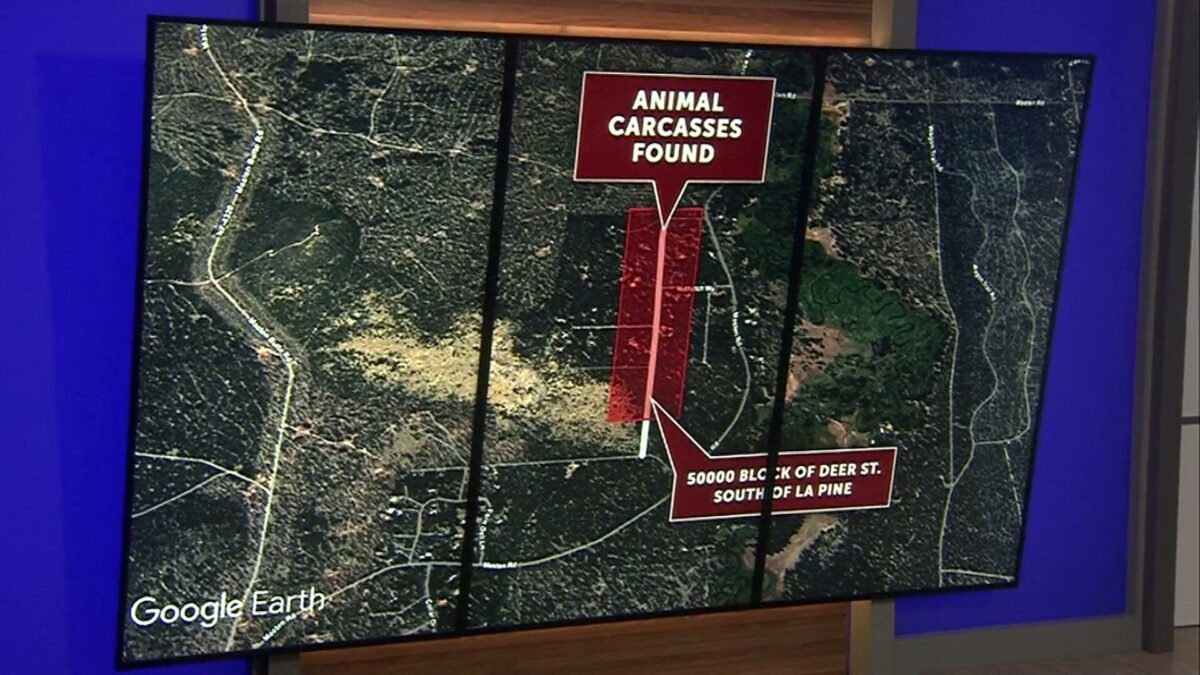
The indictment stemmed from an investigation that began last October south of La Pine.  On 10/6/24, a Patrol Deputy with Deschutes County was dispatched to a welfare check in the 50000 block of Deer St. south of La Pine.  The caller reported to the Deputy that she had arrived at the house in question to retrieve property that originally came from a private business in Bend where Griffiths used to work, and she believed the property was most likely still at the house.  She said when she went to the house, she discovered what she believed to be several dead reptiles in and around the house, and the house appeared to be abandoned.

The Patrol Deputy and an Animal Control Officer responded to the address and conducted a welfare check inside the residence to determine if there were any people or animals that were in need of medical care.  No humans were discovered, but they discovered over 100 dead and rotting animal carcasses inside the house, including the carcasses of snakes, lizards, and turtles.  There were also carcasses of rodents and tarantulas within the house.  No live animals were located.

Oregon Revised Statutes specifically include reptiles in its definitions of animals as applied to animal neglect statutes.

Detectives with the Deschutes County Sheriff’s Office responded to the residence.  They applied for and were granted a search warrant, which was executed the same day to search the residence for evidence of criminal activity. 

A Detective later located and interviewed the owner of the house and animals, William Griffiths.  During the interview, the Detective developed probable cause for the crimes of Animal Neglect in the First Degree listed in the indictment. 

Griffiths was located in a trailer in the 63000 block of Dickey Road east of Bend.  He was taken into custody without incident and booked into the Deschutes County Adult Jail on the warrant for his arrest.  

William Griffiths Animal Neglect IndictmentDownload

Click here to follow the original article.