39 Columbia streets to be treated for two months beginning Monday

Ryan Shiner

COLUMBIA, Mo. (KMIZ)

Beginning Monday, June 23, a contractor is scheduled to start treating the first of 39 residential streets, according to a Friday press release from the City of Columbia.

Work begins at 7 a.m. Monday and will continue on weekdays through July until all street have been treated with Reclamite, an asphalt rejuvenating treatment, the release says. “No parking” signs will be posted about 24 hours in advance, the release says. Vehicles in “no parking” zones may be towed.

Streets receiving treatment include:

Luan Court from Hulen Drive to the end of the street

Hulen Drive from West Rollins Road to Summit Road

Mission Court from Concordia Drive to the end of the street

Concordia Drive from Bourn Avenue to Martin Drive

Wee Wynd from Thistledown Drive to the end of the street

Thistledown Drive from West Broadway to Highland Drive

Dundee Drive from West Broadway to Highland Drive

Heather Lane from West Broadway to Highland Drive

Heather Lane from Highland Drive to Braemore Road

Balow Wynd from Highland Drive to Highland Drive

Highland Drive from West Broadway to Braemore Road

Loch Lane from Highland Drive to Concordia Drive

Skye Wynd from Braemore Road to the end of the street

Braemore Road from Highland Drive to Loch Lane

Braemore Road from West Broadway to Highland Drive

Longwell Drive from English Drive to Bray Avenue

English Drive from Jake Lane to Cunningham Road

Highridge Drive from Ridgemont to Mills Drive

Ridgemont from Highridge Circle to the bridge

Shannon Place from Highridge Drive to Mills Drive

Ridgemont Court from Highridge Drive to the end of the street

Highridge Circle from Mills Drive to Mills Drive

Wayne Road from Bingham Road to Brandon Road

Westmount Avenue from West Lathrop Road to the south end of the street

Crestmere Avenue from South Garth Avenue to East Parkway Drive

Lyon Street from North Fifth Street to North Eighth Street

Circus Avenue from Rogers Street to the south end of the street

Hickman Avenue from North Fifth Street to North Eighth Street

Alton Avenue from North Seventh Street to North Eighth Street

Florence Avenue from West Worley Street to Donnely Avenue

Dean Street from McBaine Avenue to Banks Avenue

Mikel Street from West Sexton Road to Orange Street

Parkade Boulevard from Business Loop 70 West to the north end of the street

Starlight Drive from Lamp Lane to the south end of the street

Lightview from Lamp Lane to the south end of the street

Lamp Lane from Starlight Drive to Boyd Lane

Boyd Lane from Rice Road to a point 70 feet north of Ria Street

Barberry Avenue from Hibiscus Drive to Mayberry Drive

Bernadette Drive from North Stadium Boulevard to West Worley Street

West Worley Street from North Fairview Road to the concrete area

North Keene Street from the north roundabout to East Broadway

Click here to follow the original article.

Pediatrician Seeing More Patients with Swimmer’s Ear in Santa Barbara

Patricia Martellotti

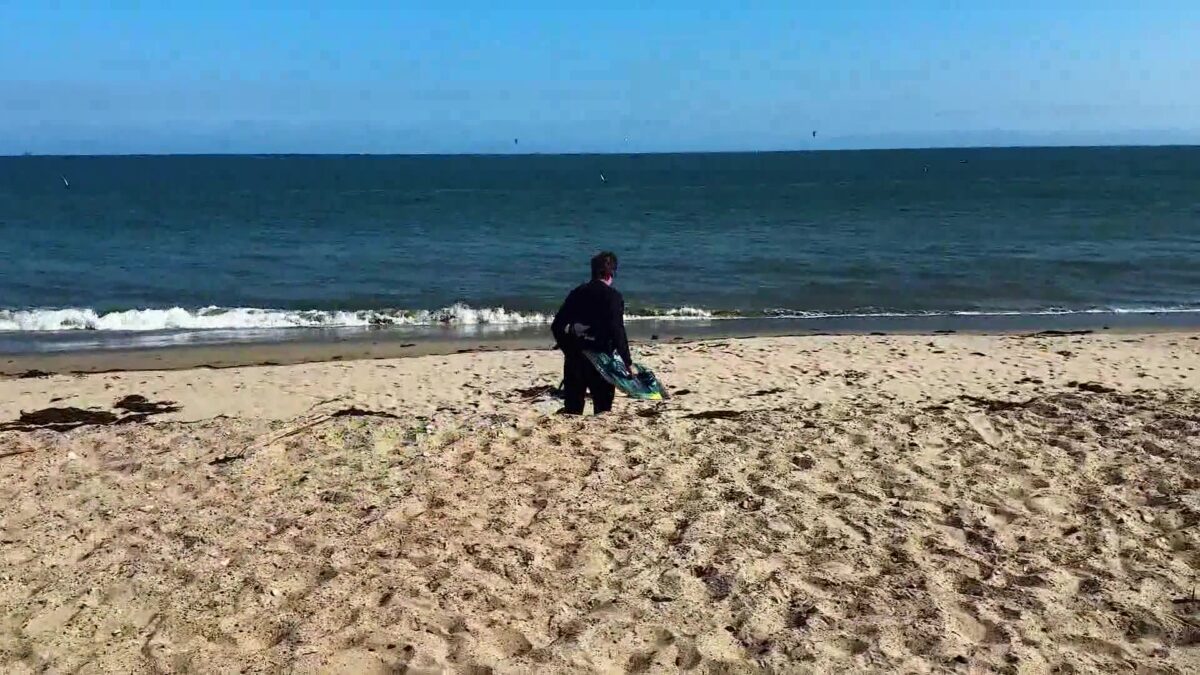
SANTA BARBARA, Calif. – Several beach goers are going kite surfing at Ledbetter beach this week.

But before entering the water, they take extra precaution to protect their ears by putting on ear plugs.

They’re trying to avoid a common ear condition called swimmer’s ear.

But not everyone knows what it is.

“Swimmers ear is an infection of the ear canal between the middle ear and the outer ear,” said Dr. Dan Brennan of Sutter Health.

As summer time kicks off, Brennan believes more people go swimming. 

Sometimes, moisture will build up inside your ear afterwards.

“That allows for bacteria to build up, and they start to get a little ouchi in the ear,” said Brennan.

Occasionally, Brennan has seen fungus leading to swimmers ear.

But the condition is preventable.

“We recommend swimmers eardrops, and so this is usually a rubbing alcohol-based solution that you can just buy at your drugstore and when you get out of the water can put some drops in the ears … with the drops do as they flush the water out,” said Brennan.

If your child has ear pain, Brennan says you’ll want to see your doctor right away.

“We push and pull on the earlobe and if we think it’s a swimmer’s ear thing we will give you some antibiotic steroid prescription,” said Brennan.

From Sutter Health:

Pediatrician Dr. Dan Brennan

If your child suddenly experiences ear pain after swimming, or if you want to know what to do if the problem pops up over the summer months, Dr. Dan Brennan, board-certified pediatrician at Sansum Clinic, now part of Sutter Health, and Children’s Health Service Line Medical Director for Sutter’s Central Coast, answers your common questions about a condition known as swimmer’s ear.

What Is Swimmer’s Ear?  

Swimmer’s ear is an ear canal infection associated with excessive water exposure. It occurs most frequently during summer and is different from the middle ear infections closely associated with colds during the winter months. 

What Causes Swimmer’s Ear?  

Swimmer’s ear is most commonly caused by a bacterial infection. Frequent water exposure and in some cases, the moist environment caused by a wet ear canal, allows the bacteria to grow.   

What Are the Symptoms of Swimmer’s Ear?  

Early on, kids may complain that their ear itches. As the infection progresses, the ear may become very sensitive to the touch.  

A pull or push on the outside of the ear may be painful.  

The ear canal may be filled with debris or pus. In that case, your doctor may take a culture (swab the ear) to identify the presence of bacteria or fungus.  

How is Swimmer’s Ear Treated?  

A doctor will need to examine the ear to confirm if it’s swimmer’s ear. Treatment is based on the cause of the infection.  

The most common remedy for a bacterial swimmer’s ear is prescription ear drops. These contain both an antibiotic to kill the bacteria and a steroid to help reduce inflammation, swelling and pain. Pain relievers, such as ibuprofen or acetaminophen, may also be prescribed.  

During the treatment period, your doctor will likely recommend keeping the ears dry. Treatment with the antibiotic/steroid drops might not work if exposure to water continues while the ear is healing or if there is a fungal infection.  

Fungal infections are tougher to diagnose and treat. A visit with an ENT (Ear, Nose and Throat) specialist might be needed to remove fungus from the canal, if that’s recommended, or to begin the use of a topical antifungal treatment.  

What Are Ways to Prevent Swimmer’s Ear?  

Use inexpensive, over-the-counter rubbing alcohol-based ear drops after swimming. (These are not antibiotics.) The alcohol will flush water out of the ear canal and then evaporate. You won’t need drops every time your child swims but keeping them in your pool or beach bag will help you remember to use them.  

If your child develops ear pain and you suspect swimmer’s ear, skip the alcohol-based drops which will only sting. Don’t wait too long to visit your doctor for an accurate diagnosis. If you start treatment right away, the infection will clear up sooner.  

Earwax can work as nature’s way of waterproofing your ear canals, so it’s best to leave it alone. In a regular exam, your doctor can determine if it needs to be removed and has the tools to do it safely. 

The Latest Breaking News, Weather Alerts, Sports and More Anytime On Our Mobile Apps. Keep Up With the Latest Articles by Signing Up for the News Channel 3-12 Newsletter.

Click here to follow the original article.

First Major Historical Filipino Exhibit in Santa Barbara wraps up this Weekend

Patricia Martellotti

SANTA BARBARA, Calif. – A historical Filipino exhibit in Santa Barbara is wrapping up on Sunday.

The exhibit, Manongs on the Central Coast: Forming Communities Across Generations, marks the first major historical display in Santa Barbara County.

It focuses on Filipino American immigration.

Local Filipino descendants believe the history of the pioneers has been overlooked.

Descendants in Santa Barbara hope this exhibit helps make their history more known throughout the community.

Hosted by the Santa Barbara Trust for Historic Preservation, the exhibit is currently open and runs through Sunday at Casa de la Guerra.

The Latest Breaking News, Weather Alerts, Sports and More Anytime On Our Mobile Apps. Keep Up With the Latest Articles by Signing Up for the News Channel 3-12 Newsletter.

Click here to follow the original article.

Santa Maria Police Council Holds Annual Fundraiser to help support Police Department

Dave Alley

SANTA MARIA, Calif. – The Santa Maria Police Council (SMPC) is holding its annual golf tournament and comedy night all day Friday at the Santa Maria Country Club.

Now in its 16th year, the popular event is the biggest fundraiser of the year for the non-profit organization, which provides financial support to the Santa Maria Police Department (SMPD).

Since it was first created in 2007, the Police Council has raised more than $2 million, which has supplied the department with valuable equipment and training.

According to the Police Council, some of the equipment that has been purchased through its fundraising efforts includes, Bearcat armored vehicles, airsoft training weapons, crime lab equipment, gem cart batteries and upgrades, hobble restraints, K-9 units, K-9 training, K-9 training bite suits, badge patches for the SMPD explorer program, state-of-the-art property and evidence management system, SWAT simulation/specialized training weapons, tasers for every officer and night vision training.

For more information about the Santa Maria Police Council, click here for the SMPC website.

The Latest Breaking News, Weather Alerts, Sports and More Anytime On Our Mobile Apps. Keep Up With the Latest Articles by Signing Up for the News Channel 3-12 Newsletter.

Click here to follow the original article.

‘Eyes in the sky’: Task Force 1’s drones prove effectiveness for agencies across the state

NPG Content Share

var cachebuster = Math.round(new Date().getTime() / 1000); var player = new Playerjs({id:”player_kyma”, file:”https://vz-9a0191b3-e78.b-cdn.net/b561dbba-1434-4689-8c1d-9d7c6e756987/playlist.m3u8″, poster:”https://vz-9a0191b3-e78.b-cdn.net/b561dbba-1434-4689-8c1d-9d7c6e756987/thumbnail.jpg”, label:”‘Eyes in the sky’: Task Force 1’s drones prove effectiveness for agencies across the state” , vast_replace:{“[wpcategory]”:”spanish”,”[wprand]”:””+cachebuster+””}});

Nia Hinson

COLUMBIA, Mo. (KMIZ)– St. Louis Fire Chief Dennis Jenkerson will never forget May 16, 2025.

It was a Friday around 3:15 p.m., meaning major roads in the city were already packed with traffic as rush hour approached. That would lead to even more issues down the road.

It was the day an EF-3 tornado struck the city of St. Louis and parts of St. Louis County, killing five and leaving behind miles of destruction.

Jenkerson said the tornado tore through the central and north-central sections of the city and was on the ground for roughly 8 miles. The storm was anywhere from a mile to three-quarters of a mile wide and took out electrical substations, affecting between 8,500 and 10,000 homes before it crossed the river into Illinois.

As if the thought of rescue efforts wasn’t enough for first responders to ponder, they now had to deal with the issue of getting equipment into the affected areas because of congestion on major roads.

“It was established fairly early on that this was a major event, that we had multiple homes involved. It kind of clipped the corner of where one of our major hospitals was located,†Jenkerson said.

That hospital was the Barnes-Jewish Hospital, along with the children’s hospital.

The St. Louis-area responders needed help. Missouri Task Force 1 — an urban search and rescue team based at the Boone County Fire Protection District headquarters in Columbia — was among the five agencies that answered the call during the 72-hour search.

Fearing mass casualties

Jenkerson said a little more than half of Kingshighway in the city limits, up to about Delmar Boulevard, was impassable at the time. That, along with major destruction to buildings that they could see from the ground, led emergency responders to think they were looking at a mass casualty event.

“So, the call was made out to Region C, which I’m the co-director in the state of Missouri, that we were going to need the task forces as soon as possible and to notify Missouri Task Force 1,†Jenkerson said. “Based on the radio reports we were getting from our dispatch center for calls for assistance, we had a very wide section of the city that was in need of immediate emergency response.â€

Missouri Task Force 1 arrived in St. Louis around midnight and immediately got to work.

Jenkerson said they had already searched about 2,500-3,000 buildings within the first 24 hours of their response, thanks in part to Missouri Task Force 1’s manpower and equipment. But it was one small piece of equipment that proved vital during while saving people who were trapped: the drone.

“Immediately, we were probably looking at 12 or 15 to 20 areas that concerned us,†Jenkerson said. “A couple big churches, a couple commercial buildings, quite a few residential structures. And the drones gave us the ability to get a quick overhead look at what we were searching, how big the area was.â€

Jenkerson said the drones helped emergency responders with their operational plan as they entered buildings. He said responders not only had to be worried about entering collapsed buildings, but also about the structural soundness of surrounding buildings.

The drones also allowed them to see what areas were stable and which areas were not, as they continued the process of delayering and digging down to people who were trapped.

Jenkerson said he flew over the area in a helicopter early on after the storm. However, being able to physically move the drones around near possible areas of entrapment and having an extra pair of eyes in the sky made all the difference.

“It just gives you a little more speed to get at buildings, but it gives you another set of eyes from a position that you normally can’t get eyes on,†Jenkerson said.

Jason Warzinik is Missouri Task Force 1’s technical information specialist and is the manager of the group’s Disaster Situation Awareness and Reconnaissance Team. He comes up with all of the training and leads the teams out in the field.

Warzinik said he believes the drones were highly effective during their deployment to St. Louis.
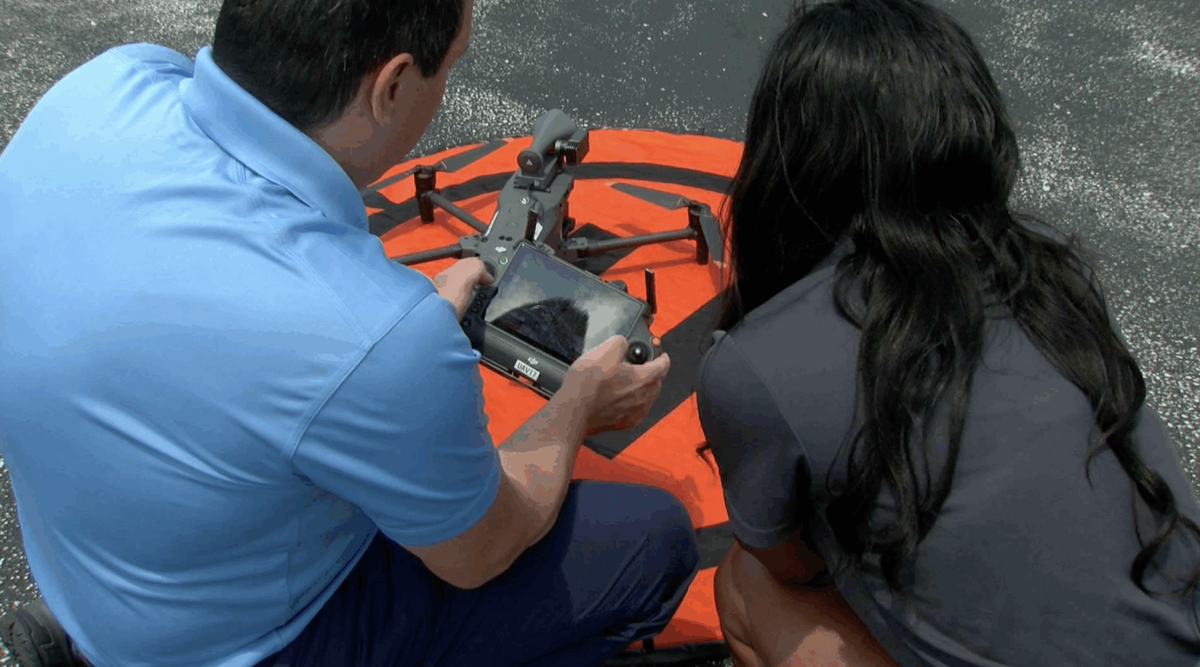
Jason Warzinik demonstrates one of the many capabilities of Missouri Task Force 1’s drones. (KMIZ)

Part of that was the ability to stream live drone video that night to the incident command. The next morning, crews were able to go out into the hardest-hit areas.

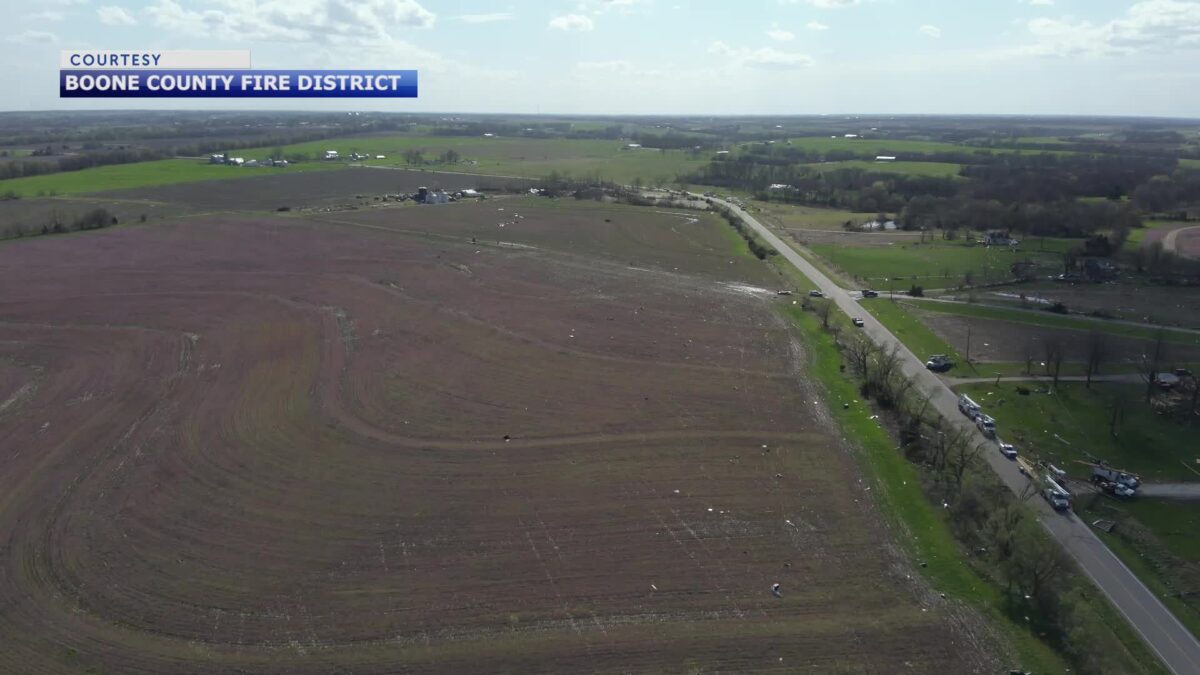
“Then, throughout those next two days, we had our areas that we were assigned,†Warzinik said. “But then of course when you get to the edge of your area, you’re doing a 360 kind of pan and based on those, it was pretty quick where incident command was going, ‘Hey, we need to go across that area, make a new assignment up to that path of that tornado.â€

Task Force 1’s drones have helped other agencies, too.

In Mid-Missouri, Cooper County Emergency Management director Larry Oerly remains grateful for Missouri Task Force 1 more than two months after an EF-2 tornado struck Pilot Grove. The tornado was on the ground for about 5 miles and packed winds up to 135 mph.

Oerly said the county immediately started receiving reports from police and ambulance crews about damage and power lines down. During that time, Oerly said a determination was made that it was going to be an extended event.

He then made calls to the State Emergency Management Agency and eventually reached out to Missouri Task Force 1 for help. The Cooper County Sheriff’s Office had deployed its drones in the response, but they didn’t prove to be enough.

That’s where Missouri Task Force 1 came into play.

“Their drones are much more advanced than the ones we have,†Oerly said. “The drone can see things from the air that we can’t see from the ground. If there would have been maybe a body or something laying in a field or something, they could pick that up. Foot search would take forever to do that.â€

How drones help local law enforcement and firefighters

It was about 7 p.m. on May 2, a Friday. Several law enforcement agencies gathered around a monitor and a vehicle on East Prathersville Road for hours. They were searching for two youths who had escaped from the Juvenile Justice Center. One of the two was being detained for murder, the other on a first-degree assault charge.

Law enforcement had searched the heavily wooded area and field after the two escaped on foot.

After hours of searches by the Boone County Sheriff’s Office, Columbia Police Department and the Missouri State Highway Patrol, the last youth was found just before 10:30 p.m. That was thanks to a drone provided by Missouri Task Force 1.

The drone was able to pick up a “heat signature†from the juvenile, which led law enforcement to locate him about 30 feet high in a tree.

Brian Leer with the Boone County Sheriff’s Office said he thinks more fugitives would get away if it weren’t for the help of the drones.

“I’d just be guessing the percentage, but I’ve seen these drones help us find people that, in my mind, I go home and I think, ‘I don’t know that we would have found them had it not been for their drone,’†Leer said.

The vehicle belonged to Missouri Task Force 1, as well as the monitor. The screen allowed law enforcement to see what the drone saw in the woods. Leer said the technology was “instrumental†in the search.
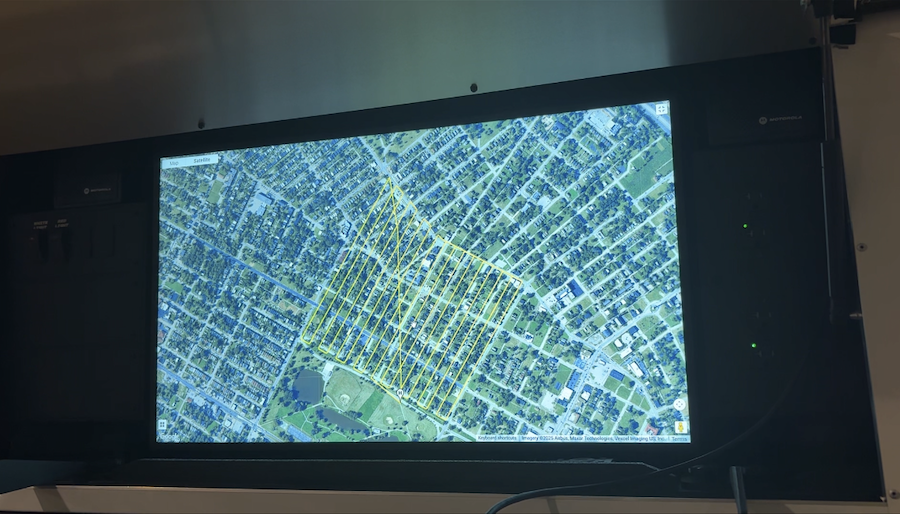
A photograph of one of the large screens on one of Missouri Task Force 1’s vehicles. (KMIZ)

The drones are also useful during searches for missing people or in vehicle crashes when it’s believed someone has been ejected. Drones can see locations that are inaccessible to humans. GPS capabilities and the ability to see in the dark make them key.

The drones are also used in responses to wildfires and structure fires to determine where there’s potentially still fire or excessive heat, Boone County Fire Protection District Chief Scott Olsen said. They can also assist local law enforcement by flying into homes to locate potential suspects.

Olsen said he believes all drones are effective, but Task Force 1’s many pilots and variety of drones are what make them different.

“We’ve done a lot of training together with the existing drone pilots and other agencies, so a lot of times we get called because they need just additional resources, and we wouldn’t hesitate to call them if we need additional resources on something that we’re doing,†Olsen said.

Missouri Task Force 1 began flying drones in 2017. The district has roughly 30 drones, along with 30 pilots.

Since Jan. 1, the task force has hosted four training events and responded to five local fire and mutual aid callouts, as well as five severe weather deployments. All of that together adds up to a total of 240 flights, with an air time of 43 hours, 11 minutes and 16 seconds for a total distance flown of 348 miles.

In 2017, the task force received $10,000 in state funding to launch a course on safe drone operations. Initial funding that year also included $65,000 to build a GIS-equipped vehicle from an existing fire district command vehicle.

The task force received additional funding from the state over the years since then to create additional vehicles and expand training efforts. Another $302,000 was allocated to the team from the state this year to purchase equipment, software and to further team development, according to Warzinik.

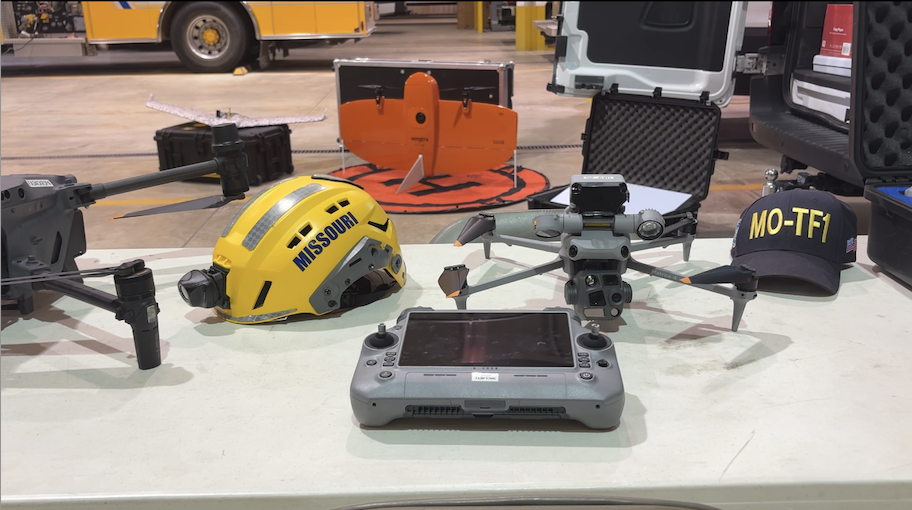
The drones come in varying sizes and are quadcopters. They have a flight time of roughly 40 minutes. The largest drone is used for overwatch and has live streaming capabilities. The drone has a speaker, spotlight, superzoom and thermal capabilities that allow it to operate at night.
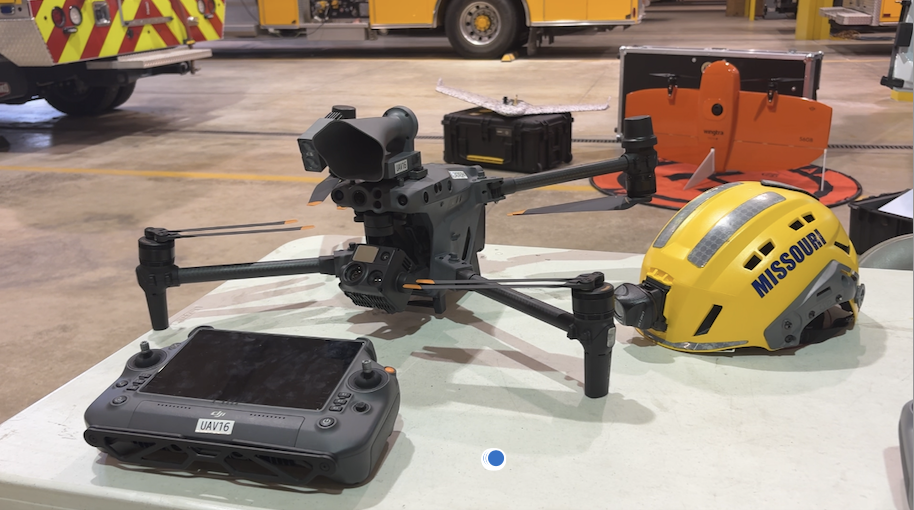
Missouri Task Force 1’s largest drone

Missouri Task Force 1’s medium sized drone
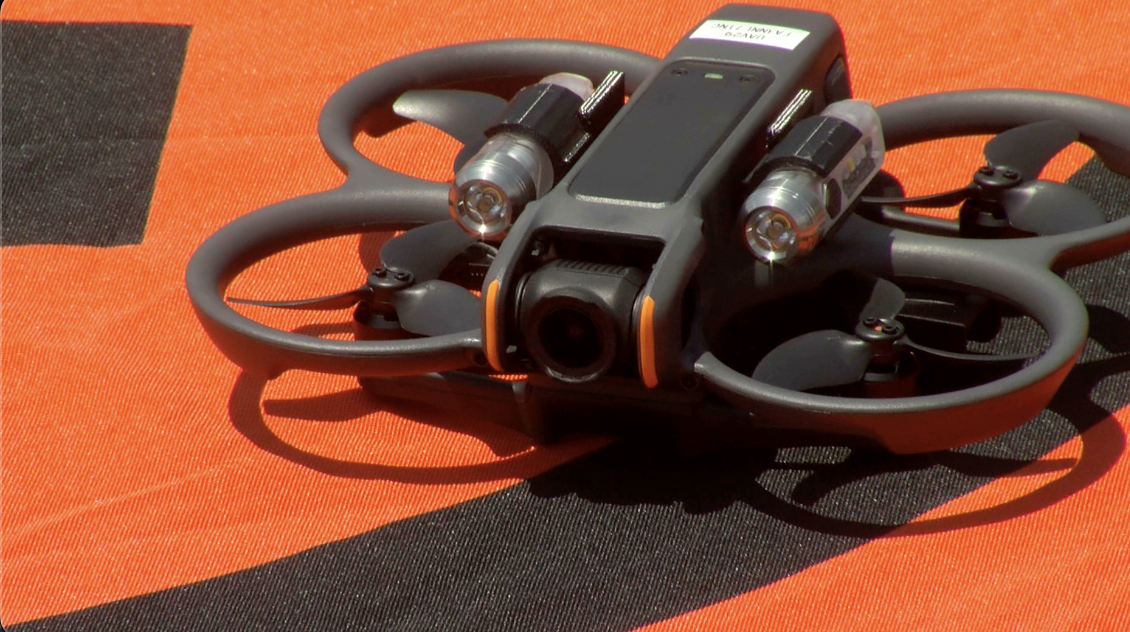
Missouri task force 1’s interior drone

A rangefinder allows pilots to zoom in on something and drop a pin on a map without having to fly the entire drone to the area.

The medium-sized drone is geared towards mapping and was used in the St. Louis storm response, after being purchased just two weeks earlier.

The task force’s smaller interior drones come in handy during structural collapses. They have lighting that allows pilots to see inside dark buildings. Pilots have to use first-person goggles when flying this type of drone, and can then view what the drone sees from a screen.

“For example, if its a hazmat situation, we’ll have the hazmat tech from the task force watch that screen, get the lay of the land … figure out the floor plan … look for hazards and then they know, ‘Hey, when we suit up we need to take A, B and C inside so they’re not walking in blind,’†Warzinik said.

Warzinik said the interior drones cost roughly $600, while some of the fixed wings can cost up $40,000 because of pricey thermal and mapping sensors.

The task force also has technology that allows pilots to see when other drones or aircraft are flying in an area.
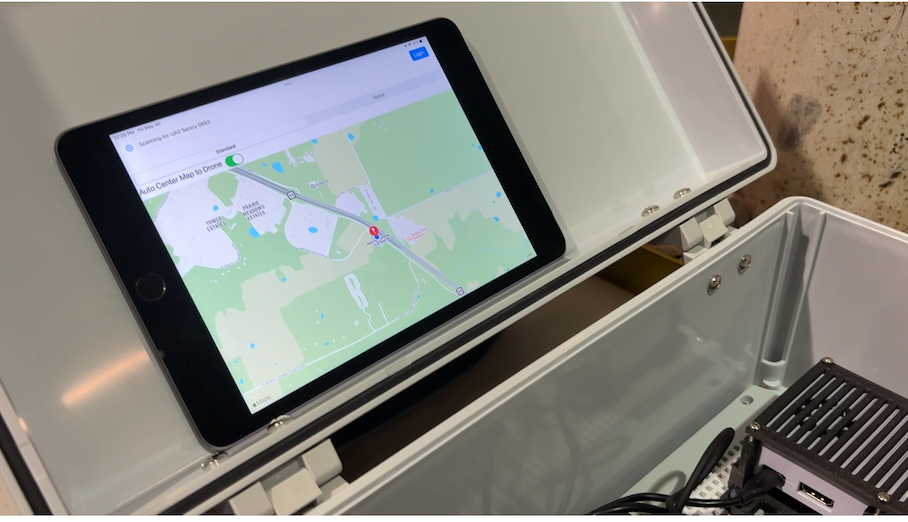
This tablet demonstrates how the task force can view other aircraft in the area during a deployment. (KMIZ)

Missouri Task Force 1 also has two different types of fixed-wing drones. These sorts of drones have a flight time of 60 to 90 minutes. They can be useful when they need to map larger areas, like the path of a tornado or hurricane, and can map in two dimensions or three.
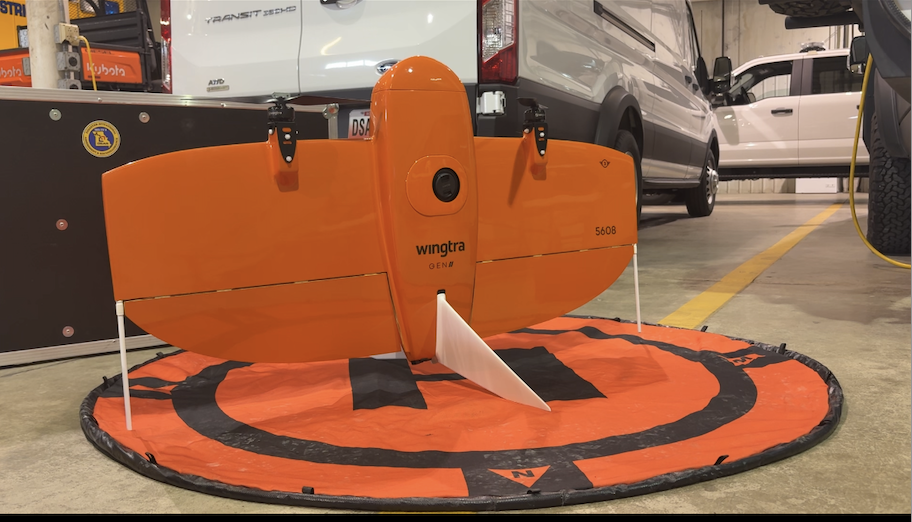
One of the task force’s “Fixed Wing†drones
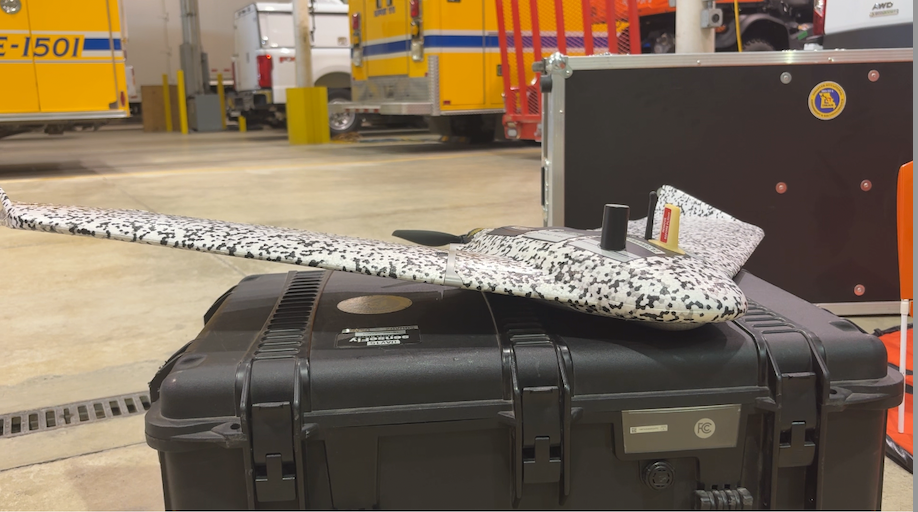
A second “Fixed Wing†drone

One can be programmed to fly over an area and take photos that the task force can stitch together.

The task force also has two vehicles designed specifically for drone and geographic information system work. The vehicles allow them to take data from the drones and upload the data online through a system called Starlink.

That data is then uploaded online to a central system called SARCOP. This allows photos and mapping layers to be uploaded online, where incident command, SEMA and the White House can view them.

The vehicles are equipped with a camera that can be used during the day or at night, two large-format printers for printing maps and radios for communicating with local and federal agencies.

“It was not too many years ago where our map that we would get is literally stopping by Sam’s Club and getting the map book out of Sam’s Club and taping it together,†Warzinik said. “Now, you look at what we can produce inside of that truck, almost live images of the impacted area.â€

A look inside one of Missouri Task Force 1’s vehicles that allows them to upload data from the field. (KMIZ)

The task force also has pickup trucks designed specifically for drone squads. The trucks also allow pilots to upload data quickly from the field.

That is also where live streaming platforms are used. Operators will hook up the drone’s controller to the truck’s monitor, allowing law enforcement and other agencies to see what the drone sees.

“The live feed was used throughout the event. It gave the incident commanders, who most of them were back at the command post, an idea of what was going on in the neighborhood,†Jenkerson said. “It’s like I said, any information you can add to the overall plan while it’s in operation gives you a better handle on what you’re doing of your search pattern.â€

The future of drones and public safety

Missouri Task Force 1 is hoping to expand its use of drones.

Olsen said the task force isn’t able to fly its own drones when deployed on federal disasters. That included a recent trip to North Carolina, where the task force was sent for several days after Hurricane Helene.

Olsen said while there, the task force had to use other agencies’ drones. They’re working with FEMA to fly their own drones during federal deployments. A decision could come this month.

Olsen said his passion for wanting to expand how the drones are used stems from Hurricane Katrina in 2005. He said he was one of five people who had to go into New Orleans and set up for urban search and rescue teams.

Olsen said at the time, they made maps by hand and received Excel spreadsheets from police listing people who were trapped. He then started learning how to use some of the task force’s GIS capabilities to download data and make a map to show teams where trapped people were.

Olsen said searchers immediately found about 25 people within areas they had already searched.

“So, I saw the utility of this sort of system to be able to No. 1, get drones out and find out where people are and get aerial imagery to see what’s actually going on in the area. And then secondly, to take that information and marry it with data that we were getting to be able to find people more quickly,†Olsen said.

The Boone County Sheriff’s Office has about seven drones, Leer said. He said the sheriff’s office drones are also used in vehicle crashes and in outdoor homicide investigations.

The Columbia Police Department has five drones. Digital forensic specialist Chad Craig said the drones are typically used to monitor large events, like parades in the city, or for finding missing children.

“The use of drones at CPD is still growing,†Craig said. “I mean, we’re still in our infancy stage of trying to see how best to use, both for documentation, for real-time information and for assisting patrol operations and that kind of thing.â€

Jenkerson said his fire department would love to expand its drone fleet.

“Any department in the state of Missouri is not going to handle this [tornado] by themselves, so having a regional asset, if you will, to come in and be on the ground within 24 hours, which they did, kind of allows you a little bit of room not to have every toy that you want,†Jenkerson said. “Drones that are made for hazardous material response, drones that are made for large-scale incidents like this, there’s always room for it and it’s something we’re looking at.â€

Click here to follow the original article.

Click here to follow the original article.

Suspect in Columbia infant death apparently released from custody

NPG Content Share

var cachebuster = Math.round(new Date().getTime() / 1000); var player = new Playerjs({id:”player_kyma”, file:”https://vz-9a0191b3-e78.b-cdn.net/fe923eb9-94a4-4084-97bd-2b00fe2f0cb8/playlist.m3u8″, poster:”https://vz-9a0191b3-e78.b-cdn.net/fe923eb9-94a4-4084-97bd-2b00fe2f0cb8/thumbnail_f9c95e48.jpg”, label:”Suspect in Columbia infant death apparently released from custody” , vast_replace:{“[wpcategory]”:”spanish”,”[wprand]”:””+cachebuster+””}});

Mitchell Kaminski

COLUMBIA, Mo. (KMIZ) — A Fayette woman charged with second-degree murder in the 2021 death of an 8-month-old girl is the subject of an active arrest warrant.

But two days after the warrant was issued, court and prison records indicate she still isn’t in custody.

Jennifer Johnson was scheduled to appear in court at 9 a.m. Monday, July 14 for charges including second-degree felony murder and first-degree endangering the welfare of a child. She is accused in the death of Hannah Kent.

A Tuesday court filing shows that she was sent to the Arkansas Department of Corrections.

However, Arkansas DOC spokesperson Rand Champion told ABC 17 News in an email that a Jennifer Johnson was put on parole on June 16 and no one with that name is in custody. The spokesperson said a middle name was not available in their system.

According to the Missouri Department of Corrections, Johnson was released Monday. She had previously been incarcerated in Missouri from April 27-May 19, 2022, and again from May 23, 2022-June 16, 2025, despite the Boone County Jail having her listed on a no-bond hold.

Boone County courts issued a warrant for her arrest on Tuesday. Prosecutor Roger Johnson declined to comment on Thursday.

Court records list Johnson’s address in the 2001 block of Holly Avenue. But when ABC 17 News visited the property, the home appeared abandoned, and the lot surrounding it was under construction.

Columbia police arrested Johnson in April 2021, after being called to a home in the 1000 block of Elleta Boulevard in north Columbia.

According to court documents, police were dispatched to the Women’s and Children’s Hospital in Columbia on the morning of April 18, 2021, where they were informed that an 8-month-old, Hannah Kent, who was under Johnson’s care, had died.

Court documents indicate the parents left Kent and other children in Johnson’s care beginning around 5 p.m. the previous day.

The mother found the child around 8:30 a.m. unresponsive and cool to the touch after returning home and immediately noticed bruising, court documents indicate. The parents then took the child to Women’s and Children’s Hospital, where the infant was pronounced dead at 8:45 am.

Johnson allegedly told police that she last saw the infant alive at 2:15 a.m. after giving a bottle to the child, the probable cause statement says.

According to court documents, Johnson took a call from the parents saying the baby had died and the parents wanted to see Johnson.

Two people who knew Johnson brought items that Johnson had at the home to the Columbia police, court documents say. Investigators allegedly found baby formula on Johnson’s clothes, and a swab of the same shirt tested positive for blood.

Johnson was previously charged with two counts of assault in Howard County in 2019. The complaint in the case states she strangled and bit another woman.

Kent’s family declined to comment.

DOC041921_04192021170840Download

Click here to follow the original article.

Click here to follow the original article.

Ray Solley retires July 1st from leading Bend’s Tower Theatre: ‘We made some magic happen’

Claire Elmer

(Update: Adding video)

BEND, Ore. (KTVZ) — After 16 years at the helm of the Tower Theatre, Executive Director Ray Solley is taking his final bow. He leaves behind not just a legacy, but an iconic institution with community spirit, creativity, and resilience.

“When I took the job, I had no idea I would be sitting here today, talking about retirement,” Solley said. “I had no idea someone would be asking me, ‘What’s your legacy?’”

Under Solley’s leadership since 2009, the Tower has grown into more than a historic downtown venue — it’s become a place for educational growth, artistic experimentation, and unforgettable moments.

“You don’t put things on the Tower stage that only you like,” Solley said. “That’s not what this is about. So you take some chances.” 

That mindset shaped a wide-ranging and inclusive programming that welcomed performances across genres, cultures, and experiences. It has connected audiences to something greater than themselves.

“People come here for a social evening. They come here for entertainment, for education, for a celebration… and to experience something they could never otherwise experience,” Solley said. 

When asked to describe what the Tower means to him in one word, Solley didn’t hesitate: “Responsibility.”

From navigating the recession to reinventing operations during the COVID-19 pandemic, Solley took that responsibility seriously. “It would’ve been very easy to retire during the pandemic, but that didn’t seem right or fair. I felt like I had a responsibility—to my staff, to our sponsors, our patrons, and to myself,” said Solley.

That sense of duty helped guide the Tower through turbulent times. Whether it was finding innovative ways to engage the public — like staging performances on flatbed trucks — or keeping the doors open against the odds, Solley and his team found a way forward.

“If we can’t be creative as the creative community, then maybe we’re in the wrong business,” he said.

Over Solley’s tenure, the Tower Theatre served more than 60,000 students through the “LessonPLAN” educational program, which continues to grow. “That happened under my watch, but it was the staff that made it soar,” he said. “They took it to the next level and cemented that legacy.”

Not to mention all of other accomplishments the Tower Theatre reached under Solley’s leadership…attendance grew by 50%, full-time staff tripled, and memberships quadrupled. 

He speaks humbly of the word ‘legacy’. If it means anything to him, it’s the moments that made the building come alive for others. “There have been families who’ve celebrated marriages, deaths, reunions, and retirements here. Kids who started dancing here, came back to act in plays. If that’s a legacy—then so be it,” said Solley.

As he enters retirement, Solley acknowledges the uncertainty. “What I’ve learned is that retirement is intensely personal. You don’t know what’s ahead. You just have to embrace the not knowing,” said Solley.

Still, there’s comfort in what he leaves behind. “Leave it better than you found it,” Solley said.

KTVZ News congratulates Ray Solley on his retirement, and thank him for his years of incredible service to our community.

Click here to follow the original article.
City of Sisters announces its second Community Conversation on homelessness, set for June 24

KTVZ News Partners

SISTERS, Ore. (KTVZ) — Community members are invited to attend a second Community Conversation on homelessness on Tuesday, June 24 from 5:00 to 6:30 p.m. at the Sisters Park and Recreation Community Center.

The event, hosted by a coalition of local organizations and agency partners, will focus on how wework together to address houselessness in the Sisters area.

The latest point in time count shows an increase in the homeless population. KTVZ News has reported on several stories in Sisters involving homeless camps, from concerns about unattended fires, to a man having to physically defend himself and kill 3 dogs that were attacking him from a nearby homeless camp.

It is the second Community Conversation held about the topic. The first Community Conversation in October 2024 gave residents a chance to voice their questions, concerns, and suggestions about houselessness in the Sisters area. Based on this input, the partners developed four strategic Priorities and a related Action Plan.

This meeting is designed as an opportunity to introduce the Action Plan and gather community feedback. Your participation and insights are important as we work to address houselessness in our community.

Priorities from the Action Plan are:

PRIORITY A: Support & Services – Coordinate services and support for the unhoused.

PRIORITY B: Safety – Effectively manage safety concerns and mitigate risks.

PRIORITY C: Housing Transitional to Affordable – Support for programs that addressaffordability.

PRIORITY D: Coordination of information & Community Education – Keep citizensinformed about ongoing initiatives

Click here to follow the original article.

Jobless rate unchanged in Riverside County

City News Service

RIVERSIDE, Calif. (KESQ) – Modest gains offset minor losses across the regional economy, leaving Riverside County’s unemployment rate unchanged last month, according to figures released today by the California Employment Development Department.

The countywide jobless rate in May, based on preliminary EDD estimates, was 4.9%, equaling the rate published in April.   

According to figures, the May rate was four-tenths of a percentage point higher than the year-ago level, when countywide unemployment then stood at 4.5%.

The combined unemployment rate for Riverside and San Bernardino counties — the Inland Empire — was 4.8%, down from 4.9% in April, the EDD said.   

Data showed Cherry Valley had the highest unemployment rate countywide in May at 10.2%, followed by Coachella at 8%, Rancho Mirage at 7.9%, Banning at 6.6% and Hemet at 6.5%.

Bi-county data indicated that payrolls increased by the widest margin last month in the agricultural sector, which added 1,500 positions.   

Further gains were recorded in the construction, hospitality, information technology, professional business services and public sectors, which expanded by a total 3,100 jobs, while miscellaneous unclassified industries added another 400, according to figures.

The only sector drop identified in May was in the trade, transportation and utilities sector, which shed an estimated 400 jobs, according to the EDD.

The financial services, health services, mining and manufacturing sectors were unchanged.

The statewide non-seasonally-adjusted unemployment rate in May was 4.9%.

Click here to follow the original article.

Research Reveals Women Are Now Drinking Alcohol More than Men to Cope

Alissa Orozco

SANTA BARBARA, Calif. – Researchers are finding that for the first time in history, women are now drinking just as much as men, and younger women are engaging in binge drinking more than younger men.

A JAMA study published in April found women are closing the gap when is comes to heavy drinking levels, with only a -3.9 overall rate difference between men and women from 2021-2023. Women ages 18 through 25 years showed higher binge drinking levels than males in the same age group.

What the study did not show was: what changed?

Dr. Kavin Mistry, a neuroradiologist and author of Primal Health, says the shift could stem from biological changes and feelings of disconnect in women in particular.

Dr. Mistry says more women are stepping away from traditional roles, and stepping into stronger and more demanding roles usually occupied by men.

“I think we both have two parts within us. One is that sort of a hunter-taker within us, which wants to take control, take land, and very important for survival, and then there is that caretaker side of us, which wants to give love, get love and connect with people. Men tend to have more of the hunter and women tend to have a balance of both, and so what we’re seeing is women stepping into these more high power roles in military, in business, in medicine.”

Studies say people typically drink alcohol to induce endorphins and reduce stress and anxiety. As women begin to take over male-dominated roles, the male-dominated coping mechanisms follow. Women are now beginning to engage in binge drinking habits to cope with stress.

“That sets up interesting conflicts then anyway, so that senses. A conflict where women then use alcohol as an escape, you know, in these situations.” 

These research results should act as a warning to women to analyze their drinking pattern. They also suffer a bigger risk as women are more prone to getting liver disease if they continue with a heavy drinking pattern.

Dr. Mistry says the best thing women can do is step back and look at the signs.

“If you monitor yourself over the past few weeks and you just monitor that are you hitting that heavy drinking pattern. Then you gotta control it.”

“As clinicians, as leaders in the society, we have to be kind of compassionate towards women and help them, guide in the proper direction and make those connections so that they’re not going down this trend and and using alcohol as an escape.”  

The National Drug Helpline at (844) 289-0879 is a free, confidential, 24/7 drug and alcohol hotline. 

The Latest Breaking News, Weather Alerts, Sports and More Anytime On Our Mobile Apps. Keep Up With the Latest Articles by Signing Up for the News Channel 3-12 Newsletter.

Click here to follow the original article.