Battle of the Books returns to the Souza Center in Santa Maria

Jarrod Zinn

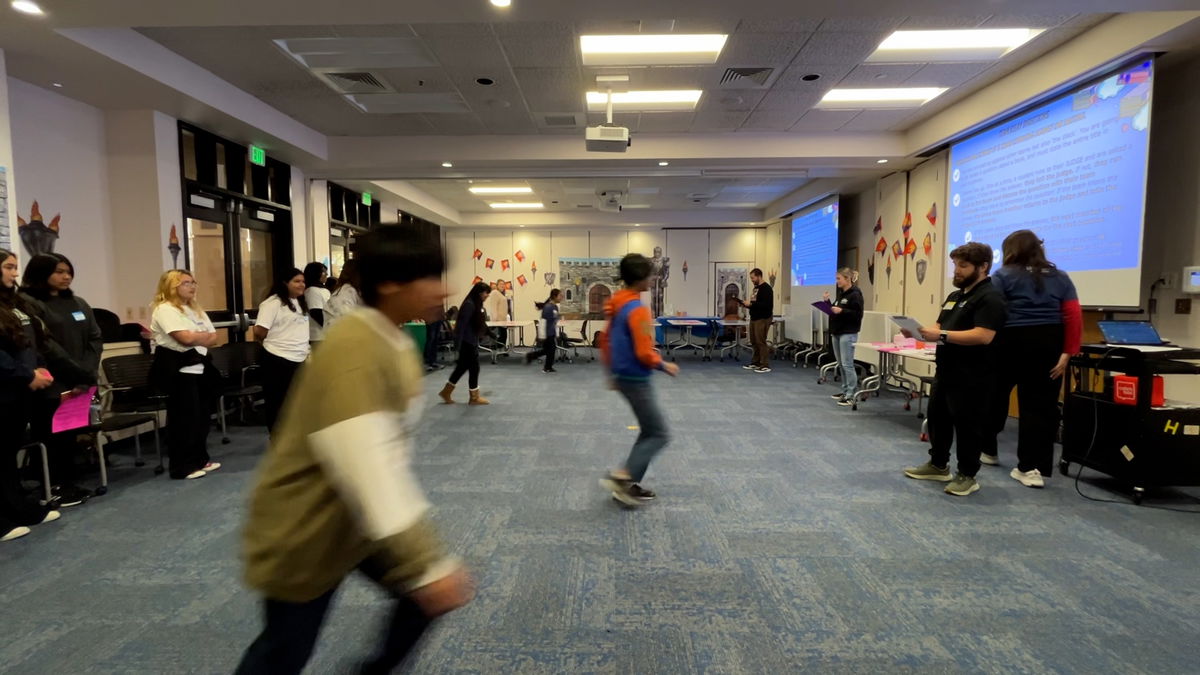
SANTA MARIA, Calif. – ‘America’s Battle of the Books’ was held in Santa Maria on Tuesday at the Souza Student Support Center.

This was a return to familiar turf for the competition.

The idea of reading competitions has been around in schools for well over a hundred years.

At 25 years old, ‘America’s Battle of the Books’ has been adopted into school curriculums all around the world.

‘It’s a national organization. And we get our questions from there, from Battle of the Books,” says Kelly Hargett, El Camino Jr. High School’s English and Language Development coach.

Students read books in groups and test their knowledge with a variety of games and competitions.

“They send out a list every year. They have an elementary, and then they have a six through eight middle school that we use every year,” says Hargett.

During the pandemic in 2020, the competition had to go virtual, and staff say it was clear the students weren’t engaged nearly as much.

“So last year, we decided to go back and do an in-person, and we held it at El Camino,” says Hargett.

This year’s competition has students returning to the Souza Center.

Staffers are thrilled to be hosting the competition once again.

“I love seeing the kids from the different schools intermingling and talking about books. It’s awesome,” says Hargett.

The list chosen by Battle of the Books contains 28 titles; this year, the junior highs challenged themselves by choosing an additional two books.

“My favorite book that I’ve read this year was A Long Way from Chicago. And I liked that book because it was filled with a lot of funny stories. I’d say my favorite genre is like mysteries because I like detective stories,” says Royal Augustt, an eighth-grade student at Fesler Junior High.

The three junior highs that competed this year hope to see other schools around the Santa Maria Valley return to the competition in the coming years.

Your news team was notified this afternoon that El Camino Jr. High beat defending champion Fesler Junior High.

New SLO County dispatch center nearing completion to modernize emergency services ‘from the 1980s to the 21st century’

Dave Alley

TEMPLETON, Calif. – San Luis Obispo County is drawing closer to finally open its brand new Public Safety Communications Center in Templeton.

When completed, the $39 million, 19,000 square foot, two-story facility will house dispatching services for both the San Luis Obispo County Sheriff’s Office and San Luis Obispo County Fire Department/CAL FIRE.

“With every week, the anticipation builds as this building gets more complete,” said Chief Deputy Nate Paul, San Luis Obispo County Sheriff’s Office. “It is getting very exciting and we’re really looking forward to be able to commission it and bring it online to transfer our operations up here.”

The project broke ground in October 2023 and is now moving into the its final stages over the next few months.

At the same time work continues this week, construction is now taking place during National Public Safety Telecommunicators Week, an annual celebration held during the second week of April to honor public safety telecommunicators for their commitment, service and sacrifice.

“We’re super thankful for the community and the way that the county has kind of shown us support,” said San Luis Obispo County Sheriff’s Office Dispatch Supervisor, Becky Watson. “We’re often the faceless voices in this profession, so it’s awesome to get kind of a week where we’re people say thank you.”

This marks the final year Sheriff’s Office and San Luis Obispo County Fire Department dispatchers will celebrate the National Public Safety Telecommunicators Week in their current facilities.

Both sites are located within about five miles of each other along Highway 1.

The Sheriff’s Office dispatch center is located the the agency’s headquarters on Kansas Avenue close to Cuesta College, while County Fire is just down the highway at the CAL FIRE/San Luis Obispo County facility close to the Santa Rosa Street entrance to Cal Poly.

Both dispatch centers are antiquated, cramped and inefficient for current demands and needs.

“We’re going to move from 1980s technology in terms of a 1980 type building to a 21st century building that will be able to serve us for at least the next 50 years,” said Paul. “The building is going to be significantly bigger, both the dispatch floor, as well as the administrative and support offices, that help dispatch and help manage it.”

According to San Luis Obispo County, the new telecommunications center will provide the public with a number of key features and benefits:

Faster and better coordinated 911 and emergency response for a safer community

Better able to manage and communicate with emergency personnel during major fire events, earthquakes, flooding or other natural disasters

Co-locating dispatching services saves on operational and maintenance costs in lieu of two separate 24-hour facilities for Fire and Law Enforcement

Ability to add dispatching capacity and staff as service levels grow

San Luis Obispo County Public Works Department has projected completion of the new Public Safety Communications Center to take place in mid-August.

It’s expected dispatch operations will be moved into the new center sometime later on in the fall.

Fremont County crews responding to multiple fires

Seth Ratliff

UPDATE:

FREMONT COUNTY, Idaho (KIFI) – Emergency crews are reporting multiple fires burning in Fremont County limits.

A fire, last reported to be 2 acres wide, is currently burning near the Warm River Campground off Highway 47. In addition, two other fires are burning near 3300 E and 900 N just south of Ashton and off of Hwy 32 near 900 N, according to several posts on the Fremont County Sheriff’s Facebook page.

Sheriff’s deputies are asking the public to avoid the areas of the fire as crews work and to “please stop burning.”

ORIGINAL:

FREMONT COUNTY, Idaho (KIFI) – Emergency crews are responding to a large brush fire burning near the Warm River Campground off Highway 47, according to a post on the Fremont County Sheriff’s Facebook page.

Sheriff’s deputies are asking people to avoid the area so “responders can work safely and get it extinguished.”

There is no word on the exact size or cause of the fire. Local News 8 will continue to update this story as more information becomes available.

City of Desert Hot Springs planning tax cut on cannabis

Garrett Hottle

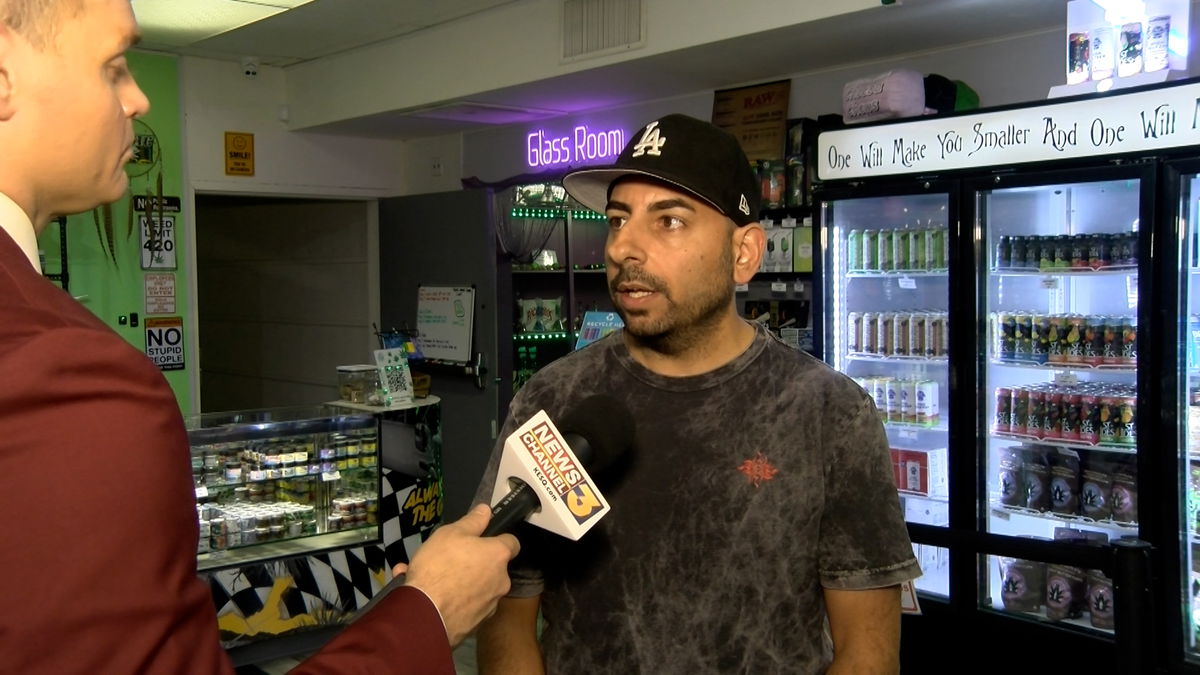
DESERT HOT SPRINGS, Calif. (KESQ) – Desert Hot Springs, long known as a hub for cannabis in the Coachella Valley, is making a dramatic move to help struggling dispensaries – cutting the city’s cannabis tax from 10% to 5%.

The proposal for the tax cut came as local cannabis businesses face rising pressure from high taxes, the illicit market, and dispensaries on tribal land that don’t face the same tax requirements.

“They struggle as every business does, you know, up and down,” Mayor Matas explained. “But for the most part, it stays strong. And, we have 5 or 6 that have been in business since day one, and they continue to be in business. And we want to make sure that we’re there to support them.”

At Tuesday’s city council meeting, Council members had the first reading of the ordinance that outlines the proposed tax cut. The Council voted unanimously to pass the ordinance pending a second reading and final adoption of the ordinance on May 6.

Cannabis dispensaries as whole are experiencing a bit of an industry lull, multiple cities across the Coachella Valley have recently taken steps to support the industry.

Desert Hot Springs Mayor Scott Matas says valley cities are competing to develop the best climate for the cannabis industry to survive. (KESQ).

“I mean, you you you always look at your region and you always look at the competitiveness between the cities. And most of the cities are lowering their rates right now,” Mayor Matas said.

Mayor Matas says competition is fierce in the industry right now, with new dispensaries opening up shop across the Golden State, and it’s the perfect time to take a hard look at things.

“You have a lot of dispensaries opening across the state of California,” he explained. “You have the local tribes that are getting involved in it. So it’s time for us to take a hard look. See, desert Hot Springs was really fortunate to pass a 1% sales tax in the last, election cycle. And so we were able to take in anywhere from would be an average, anywhere between 2 and 3 extra million dollars a year. So this is a perfect time for us to look at this in our budget cycle, and to be able to cut back if necessary.”

Mayor Matas and Desert Hot Springs are looked upon as trailblazers in the cannabis industry. Desert Hot Springs was the first city to open up a legalized operation in the state of California, said Mayor Matas.

But business owners say they’re paying nearly 40% in combined taxes between the city, county and state.

“You have to remember, we have a sales tax that we pay to Riverside County, said Abrahim Robbin, co-owner of the Inland Valley Therapeutic Healing Center, IVTHC, in Desert Hot Springs. “It’s 8.75%. Then you have an excise tax to the state of California, which is 15%. So when you add it all up, it’s a pretty significant amount.” 

Abrahim Robbin is co-owner of Inland Valley Therapeutic Healing Center in Desert Hot Springs. (KESQ)

Robbin says taxes coupled with the inability to compete with dispensaries on tribal reservations and the success of the illicit market are taking a toll on their ability to thrive.

“The state promised a lot of enforcement,” Robbin said. “If anything, all they’ve done is regulated our businesses that are legal and legitimate… and the people in the illicit markets have just been able to get slaps on the wrist. They close down shop. They reopen a couple of weeks later like nothing even happened.”

Mayor Matas doesn’t anticipate any issue in the rate cut being adopted.

“I think the city council is very supportive and unanimous in the fact that we should reduce it to 5%,” Mayor Matas explained. “I don’t think there’s going to be an issue passing this going forward.”

Dangerous student bus stop location leads to a possible traffic re-assessment in Royal Oaks

Sandra Iveth Santos

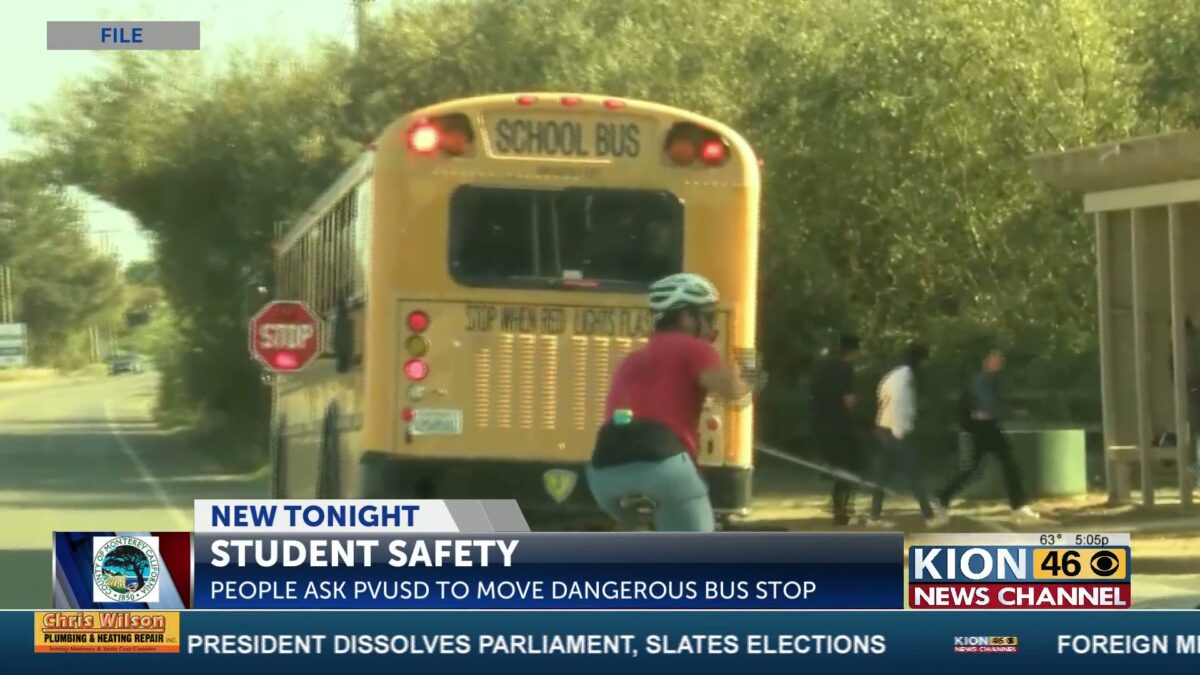
ROYAL OAKS, Calif. (KION-TV) — A north Monterey County community is asking the Pajaro Valley School District (PVUSD) to consider relocating a bus stop they believe is dangerous to student safety.

In a press release by Amigos de Medina Newsletter, PVUSD’s District Three representative stressed this need, citing parents’ concerns.

At the council meeting on Monday, the Bus Safety Route and Advocacy proposal outlined the bus stop’s relocation at the corner of Las Lomas Market and Hall Rd. in the Royal Oaks community.

The press release detailed that the curve has posed a risk to young people and children crossing the road with blind spots.

“On April 9, I toured Willow Road with our new Transportation Director to assess one of the most dangerous student routes in our district. From the bottom of the hill near Las Lomas Market to the current stop at Hall Road, the conditions are alarming – no sidewalks, no crossing signs, no speed controls, and traffic coming in hot from the right turn at Hall,” wrote the press release.

According to Medina and assessments with PVUSD, the solution would be a new bus stop on the safe stretch of Las Lomas Market. This would allow students to wait in a covered space near an existing Metro stop and would eliminate the danger of having to cross traffic where vehicles are speeding.

According to the press release, the owner of Las Lomas Market agrees to address this proposal. However, the response from Monterey County authorities to make these adjustments is still pending, according to Medina.

Added dangers loom around this stop because buses are exempt from flashing their red “Stop” lights when stops are along a state highway with speed limits of 55 MPH or higher, according to road safety guidance for school bus stops with PVUSD.

Just last week, a California Highway Patrol was involved in a major car accident on that same corner. The patrol car was overturned on its side.

Click here to follow the original article.

Correctional officer in Fremont County arrested after allegedly strangling coworker

KRDO.com Staff

FREMONT COUNTY, Colo. (KRDO) – A correctional officer at Centennial Correctional Facility in Fremont County has been arrested after allegedly strangling a coworker.

Seth Lee Davis, 20, was arrested after the victim, a male coworker, reported the alleged incident.

The coworker told investigators that on April 2, Davis confronted him about speaking with a female coworker. The victim said he was told to “stay away from her.”

The victim claimed that Davis then put him in a chokehold, and he came close to losing consciousness. He said that at some point, the two fell to the ground while Davis allegedly continued to choke him.

It wasn’t until the victim was able to grab a can of pepper spray off a nearby wall that he said he was released.

Investigators said they were able to review security camera footage of the alleged assault. In the video, they say they witnessed Davis wrapping his arms around the victim’s neck. Shortly after, the two fall to the ground and out of view of the camera.

When interviewed by investigators, Davis told a completely different tale of events, according to his arrest affidavit. Davis said he thought they were “horseplaying” and the two were laughing before they fell to the ground.

Davis said he didn’t know the victim was upset about the incident until the victim grabbed the pepper spray.

The arrest affidavit says Davis told investigators that they then stood up and “were joking about the incident afterwards.”

Davis was arrested for assault and was released on bond. According to the Colorado Department of Corrections, effective April 3, Davis was placed on administrative leave pending the outcome of an internal investigation.

Fish and Game reminds people to leave baby animals alone this spring

Sam Ross

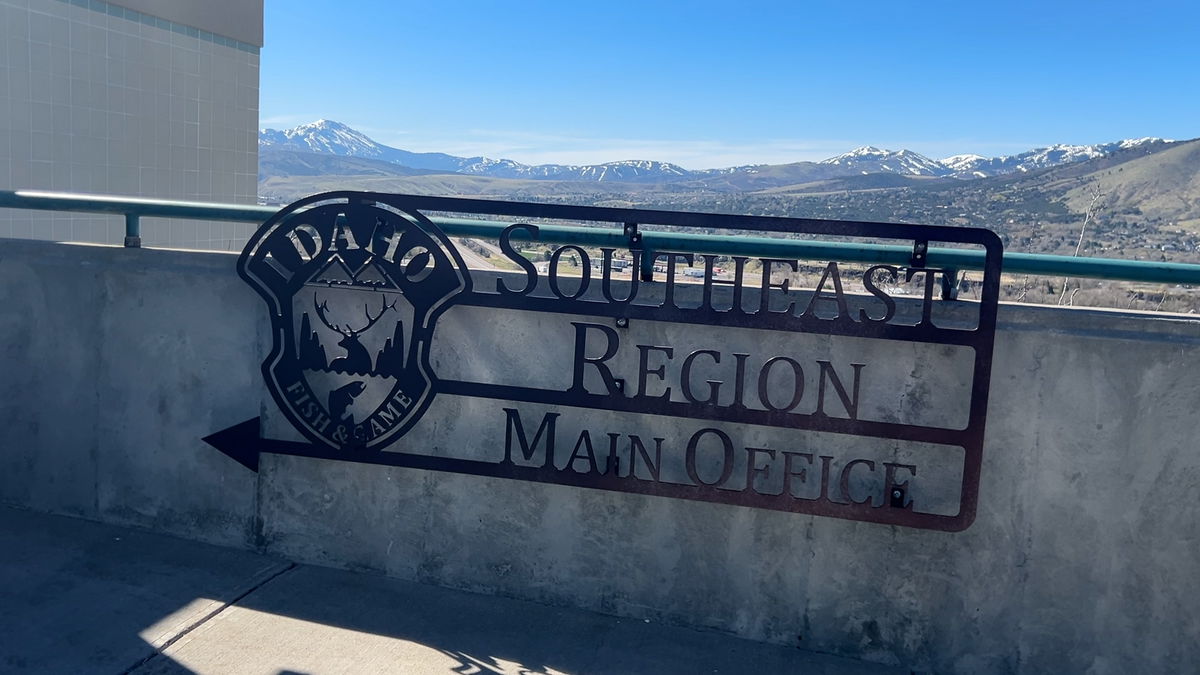
POCATELLO, Idaho (KIFI)– Spring means mating season for many of Idaho’s native animals, and the Idaho Department of Fish and Game wants to remind people to leave baby animals alone if you stumble across them in the wild.

According to Jennifer Jackson, communications manager for Fish and Game’s Southeast Region, Idaho’s wild birds and big game will soon start to find places to make their nests and have their young, and moving into baby season in May and June, it is especially important people remember to let baby animals lie.

“In order for us to continue with an abundant wildlife population, if you want to see wildlife grow, it’s important to let mothers do their job of raising their young and continuing to grow their herds or their flocks,” said Jackson. “When you bring an animal to us, you put that animal in danger.”

Jackson said every year, Fish and Game gets visits from well-meaning outdoorspeople who bring wild chicks or fawns to the department office, thinking the animals were abandoned. In reality, wild baby animals are often left alone for hours at a time while their parents search for food or draw potential predators away from their babies’ hiding places.

The best thing people can do for baby animals is leave them alone and trust their parents are nearby. Fish and Game prioritizes returning baby animals to their parents when they’re brought in to the office, but it is not always possible to find where they came from, and some babies may need to be taken elsewhere for care.

For more information, or if you have questions or concerns about an animal’s safety, you can contact the Idaho Department of Fish and Game Southeast Regional Office by calling (208) 232-4703 or visiting their website.

Gov Little approves SNAP benefits ban on soda and candy

Seth Ratliff

BOISE, Idaho (KIFI) – The state of Idaho is attempting to ban the Supplemental Nutrition Assistance Program from covering the purchase of candy and soda.

Governor Brad Little has signed House Bill 109 into law, under which the Idaho Department of Health and Welfare will seek a waiver from the federal government to ban candy and soda from being purchased using food stamps, or SNAP benefits.

While similar legislation has failed in the past, the bill’s cosponsor, Senator Ben Toews, R-Coeur d’Alene,   told lawmakers 20 other states are considering similar legislation in a movement called “Make America Healthy Again” (MAHA), promoted by the U.S. Health Secretary Robert F. Kennedy Jr.

“Idaho welcomes the MAHA movement. It is all about looking for creative ways to improve nutrition and increase exercise, the two main factors that influence overall health,” Governor Little wrote in a statement to the press. “Secretary Kennedy said it so well: we need to take better care of ourselves and each other. He said it is an act of patriotism, and the future of our nation depends on it. Idaho couldn’t agree more.”

In a prepared statement to the press, the U.S. Health Secretary applauded Governor Little’s approval of the bill.

“I urge all governors to follow Idaho’s lead and submit innovative SNAP waivers to the USDA to reverse the childhood chronic disease epidemic and Make America Healthy Again,” wrote U.S. Department of Health and Human Services Secretary Robert F. Kennedy, Jr.

A “simple issue” or “missing the mark?”

The amended bill passed the Idaho Senate in a 25-10 vote and the Idaho House 48-20.

Opponents of the bill argued that the legislation would create difficulties for Idaho businesses and may even cause grocery stores to stop accepting SNAP benefits.

Other opponents argued that the bill’s definition of candy was too broad and may impact other foods.

The bill’s text defines candy as “a preparation of sugar, honey, or other natural or artificial sweeteners combined with chocolate, fruits, nuts, or other ingredients or flavorings in the form of confections, bars, drops, or pieces.”

“I do recognize the complexities of defining candy and soda, but at the same time, this issue is not complex at all. It is actually quite simple: assistance from the government should go toward healthy foods, not foods that cause so many health problems,” Governor Little wrote in a prepared statement.

Senator Melissa Wintrow, D-Boise, argued that the bill misses the mark in both health and combating the obesity epidemic.

“If we really wanted to address obesity, we would be providing more cash incentives for low-income folks so they could actually purchase foods that cost more, that are healthy,” said Sen. Wintrow. “This is just one more way to control poor people, (and) show our disdain for their lack of good decision making.”

A warning to others after Cathedral City man falls victim to online pet adoption scam

Gavin Nguyen

CATHEDRAL CITY, Calif. (KESQ) – A report released last month showed Californians lost $3.54 billion to cybercrime in the form of scams, fraud, and ransomware. 

While it’s easy to brush off this data and think you’d never fall victim to an online scam, one Cathedral City man, Bill Lewis, learned his lesson the hard way.

Just a couple of months ago, Lewis lost his pug, Betty Boop. He had adopted her two years ago when she was 11 years old.

With his precious pug gone, Lewis says he wasn’t quite ready for another. But when he was tagged under a post in a Facebook group he’s been a part of for several years, he reconsidered. Lewis says an administrator of the group, called “Pugs Up for Adoption,” was looking for someone to adopt a pug, named Leo, whose owner had recently died.

“When I saw that that post on Facebook and the guy gave me the story, you know, a dog that lost his owner and I lost my Betty Boop, it felt like it was a match,” Lewis recounts.

Lewis reached out to the seller, but recalls that when he talked it over with his husband, they made the decision to hold off on adopting the pup. But the seller begged him to reconsider, writing in messages, “I really thought your husband would be on board with the adoption” and “Really sad for Leo.” Feeling the pressure, Lewis agreed to move forward with the adoption.

The seller asked for $600 – $350 for the pug, and $250 for transportation. Lewis says he thought it was a reasonable price, explaining, “I didn’t know anything about this adoption. I’ve never done anything like this before. But it was on Facebook. I thought it was legitimate.”

“I was really, really excited. So I had Zelled him some money and he said, ‘All right, that’s great. Send in the confirmation screenshot.’ And he said, ‘Now we can discuss a delivery.'”

Everything was going smoothly up to this point. But when the day of the delivery came, something was off. Lewis received messages from the shipping company, which told him he had to pay $1,000 to purchase an air-conditioned crate to transport the pug. Alternatively, they said he could rent one for $800 and $750 would be refunded to him after he received the pug.

Lewis reached out to the seller and told him of the additional, unexpected charge. Eventually, he convinced Lewis to pay a lesser amount – $300 – but after that payment went through, Lewis knew he’d done something wrong.

After the charge, he kept digging – and made a startling discovery.

“There was no breeder’s license associated with his name, so I knew at that point he was. It was fraud,” he explains. He began asking other administrators in the Facebook group and several other Facebook accounts that gave glowing reviews of the seller.

But as he asked these questions, he began to notice a pattern. Some accounts would send identical messages, while others would reference details that he told different accounts. He believes that the accounts were being run by the same person.

Cybersecurity experts, like Matt Disher, the President of Southwest Networks, a cybersecurity company based in Palm Desert, say there are things consumers should look out for if they’re purchasing online.

“You can check on the Facebook profile of the seller if it seems fairly new, doesn’t have a lot of posts, doesn’t have a lot of activity, that’s a telltale sign that it’s a scammer that just set up something to do stuff like this,” Disher says.

In Lewis’s case, the accounts that were being used did not have much activity, as Disher explains.

Disher also says that the sale of stolen pets is a growing business – and a growing problem. He advises that those purchasing pets online pay close attention to paperwork and microchipping.

“When something looks too good to be true, just just slow down a little bit when you’re doing those transactions and really think through what’s going on and then how you’re going to proceed to the next step.”

Lewis has not yet been able to recover his money. He says he has filed a claim with his bank, but isn’t optimistic about getting his $900 back.

Although he is embarrassed that he fell for this scam, he hopes his ordeal can keep others from making the same mistakes he made. “This is my this is my mistake. This is my mess. And I don’t like being a victim,” he says.

Lawmakers approve ballot measures bill that challenges Amendment 3

Marie Moyer

COLUMBIA, Mo. KMIZ

A state Senate bill is heading to the governor’s desk that could affect ballot language and may also take out abortion access in Missouri.

The most controversial aspect of the bill will allow the attorney general to appeal any preliminary injunctions issued before Aug. 28. A preliminary injunction allowed abortion access to open back up in the state after voters approved Amendment 3 in November.

“When you allow a party to go back in and say, ‘I want a do-over’ after the court has already ruled, that is inappropriate and it tears down our existing system of checks and balances,” Director of Missouri Voter Protection Coalition Denise Lieberman said.

The House also approved the emergency clause, making the attorney general provision effective as soon as the governor signs SB 22.

In a statement, Missouri Right to Life asked legislators to pass Senate Bill 22 to Kehoe’s desk as soon as possible.

Ballot summaries or titles are written for initiative petitions. Titles are limited to 50 words and have to be finalized at least 56 days before the election. Signature collection could also can also be put on pause if a petition’s title is being challenged in court.

The secretary of state typically handles writing ballot titles to prevent petitioners from using persuasive language in titles. If deemed misleading, courts can take over and rewrite the ballot.

Under SB22, the secretary of state would have up to three tries to rewrite a ballot title before a judge steps in. It also pushes the deadline for the finalization of ballot titles to 70 days before the election, making the window for finalization closer. If the bill reaches the deadline in the middle of the revision, the most recent title will be used, regardless if it was approved by the courts.

The bill will also allow up to 100 words in a title and allow signatures to be collected in the middle of a title being disputed and rewritten.

Supporters argue that the changes will help clearly define what an initiative petition will do and also accelerate the finalization process.

The bill’s sponsor Sen. Rick Brattin (R-Harrisonville) added that courts have previously overstepped in bill title rewrites for Amendment 3 during a hearing for the bill in January, adding that the task isn’t their role as a judicial official.

“We had a Secretary of State that wrote the ballot language, it was challenged and the courts rewrote that.” Brattin said. “They completely rewrote it to slant in favor of Amendment three and I think that’s egregious.”

Opponents argue that SB22 gives too much power to the secretary of state and possibly politically biased officeholders. With the tighter deadline, there is also concern that the back-and-forth of hearings and revisions was done purposefully to have the title fall on the secretary of state. The multiple changes could also confuse people signing petitions.

“We did the math, we laid out these deadlines on the calendar, and what this would allow is the secretary of state or other partisan actors to keep the debate tied up,” Lieberman said.

Rep. Kathy Steinhoff (D-Columbia) — who voted against the bill on Monday — said that just one back-and-forth could take up to three weeks.

“Certain timelines that have to be granted for people to respond to requests for these sort of things, three weeks is not nearly enough time to be able to take care of that.”

Steinhoff adds that if the bill stands, the risk of biased ballot titles can affect both parties, depending on the secretary of state.

During the January hearing, Brattin stood by the changes.

“I think it’s absolutely workable,” Brattin said. “Is it not also the constitutional duty of the court to ensure that the actions that we take in that the executive branch take are fair and in line with the law? That’s by their interpretation, where they interpret that, not where they rewrite it.”

Republican lawmakers are also working to put a ballot measure to overturn Amendment 3 on the ballot. The House perfected the bill on Tuesday. A final vote had not been scheduled by Tuesday evening.

Gov. Mike Kehoe has not said publicly if or when he will sign SB 22. In a statement to ABC 17 News, Kehoe’s office said, “SB 22 is still going through a bill review process.”

ABC 17 News reached out to Brattin for an updated statement and SB22’s co-sponsor Sen. Mary Elizabeth Coleman (R-Arnold). State Rep. Ben Keathley (R-Chesterfield) declined to comment.